What is Commodity Swap?





Key takeaways
- A commodity swap is a financial agreement in which two parties exchange cash flows linked to a commodity's price, helping them manage price fluctuations without necessarily buying or selling the physical commodity.
- Commodity swaps can be structured around fixed prices, floating market prices, or differences between commodity prices and benchmarks.
- Producers, manufacturers, airlines and other commodity-dependent businesses use these contracts to manage price uncertainty. However, swaps also carry counterparty, liquidity and basis risks.
Commodity prices can change quickly. Crude oil may become more expensive because of supply disruptions, while agricultural commodities can experience price swings due to weather conditions, changes in demand or transportation costs. For businesses that produce, buy or process these commodities, such movements can make budgeting and planning difficult.
An airline requires a huge amount of aviation fuel. If the price rises sharply, it directly impacts their profit margins. Opposite to that, a farmer may worry about the price falling before the harvest is sold. Both businesses have uncertainty, but in opposite directions.
To hedge against this uncertainty, companies employ a financial instrument called a commodity swap. It is a commodity derivative contract in which two parties exchange cash flows based on the underlying commodity's price for a fixed period of time.
What is a commodity swap?
A commodity swap is a derivative contract in which two parties undertake to exchange payments calculated using the price of a specified commodity over an agreed period. The contract defines the commodity, pricing benchmark, quantity, settlement dates and other terms. It is usually used to hedge against unexpected price swings.
For example, suppose a manufacturer wants protection against rising copper prices. It enters into a swap with a financial institution at an agreed fixed price. If the market price rises above that level, the swap may generate a payment for the manufacturer, offsetting some of the higher cost of purchasing copper. If the market price falls below the agreed price, the manufacturer may have to pay the difference under the swap.
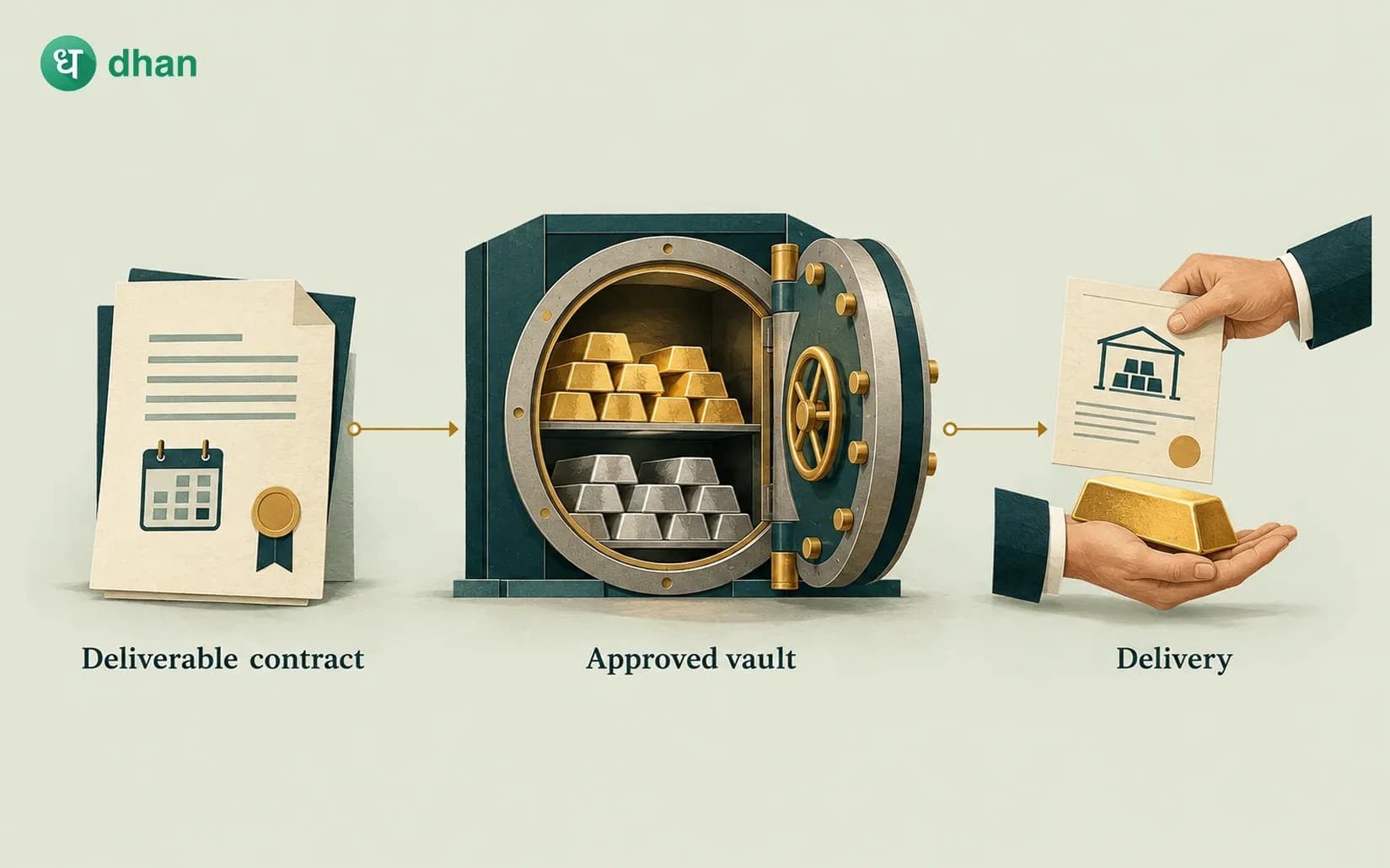
The contract typically settles the price difference in cash rather than requiring the delivery of copper. The manufacturer can continue buying the physical commodity from its usual supplier.
Commodity swaps are executed outside the exchanges. These agreements are usually customised as per the buyers' and sellers' requirements without regulatory oversight. Financial service companies usually make these deals.
How does a commodity swap differ from a physical commodity purchase?
A physical commodity purchase is the buying and taking delivery of a commodity that is subject to the deal's delivery terms. A commodity swap is an agreement between two parties to buy and sell a commodity cash flow based on a fixed price and does not require physical delivery at the time of agreement
This distinction matters because a business can use a swap to manage its price exposure while keeping its existing purchasing arrangements unchanged.
For example, an airline can continue purchasing fuel from its regular suppliers while using an oil-linked swap to offset some of the financial impact of rising fuel prices. The swap does not supply the fuel itself; it addresses the price risk associated with buying it.
How does a commodity swap work?
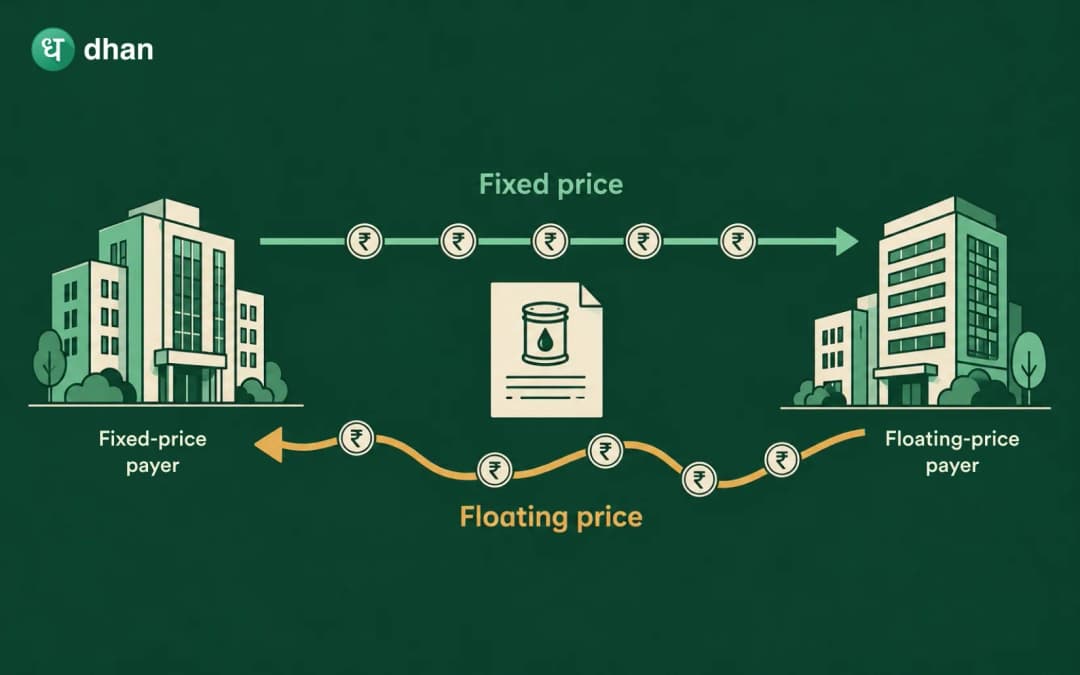
The structure can vary, but a typical fixed-for-floating commodity swap follows a straightforward process.
The parties agree on the contract terms
They specify the commodity, fixed price, reference market price, quantity, contract period and settlement schedule. The agreement also defines how the floating price will be calculated.
The market price changes
The floating price is determined using the agreed benchmark for the relevant settlement period. It may be based on an average price rather than a single day's closing price.
The payment difference is calculated
The fixed price is compared with the floating price and multiplied by the contract quantity, subject to the agreement's calculation method.
The parties settle the difference
The party that owes money makes the agreed payment. Depending on the contract, settlement may occur monthly, quarterly or at another specified interval.
Example of a commodity swap
An industrial company expects to buy 1,000 barrels of oil every month for the next three months. The company has exposure to rising prices. It wants to reduce this exposure. So, it enters a swap with a financial firm.
Assume the contract has the following terms:
- Commodity - Crude oil
- Fixed price - $75 per barrel
- Monthly quantity - 1,000 barrels
- Settlement basis - Floating market price versus fixed price
The following examples show how the swap settlement could work for one month, ignoring fees and other contract adjustments.
Scenario 1: Market price rises to $85
The company purchase 1,000 barrels at the market price of $85 from the regular supplier.
Company paid to supplier = $85,000
During the settlement with the financial institution, the floating price is calculated.
Floating price = $85-$75=$10 per barrel above the fixed price
The financial institution pays the company $10 × 1,000 barrels, or $10,000. Hence, the net cost to the company is:
Net cost = $85,000 purchase cost − $10,000 swap receipt = $75,000
Scenario 2: Market price falls to $65 per barrel
The company buys 1,000 barrels from its supplier at $65 per barrel, which costs $65,000. During the commodity swap settlement, the market price is now below the agreed fixed price of $75. Hence, the company must pay the financial institution the difference.
Company pays the financial institution = ($75-$65)1,000=$10,000
Net cost to the company = $65,000 purchase cost + $10,000 swap payment =$75,000
This illustrates the central trade-off: a commodity swap can reduce price uncertainty, but it also limits the financial benefit of favourable price movements.
Types of commodity swaps
Commodity swaps can be structured in several ways, depending on the price exposure a business wants to manage.
Fixed-for-floating swap
This is a common structure. One party pays a fixed commodity price, while the other pays a floating price linked to an agreed market benchmark.
An airline concerned about rising fuel costs might use an oil-linked swap to offset part of its exposure. If oil prices increase, the swap can generate a payment to compensate for some of the higher fuel expense. If prices decline, the airline may owe money under the contract.
Basis swap
A basis swap involves exchanging payments linked to two different floating commodity prices or benchmarks. The difference between these prices is known as the basis.
For example, a company may purchase crude oil priced against one benchmark but use a swap referencing another. The contract can help manage the difference between those price references. However, if the relationship between the benchmarks changes unexpectedly, the hedge may not fully offset the company's actual costs.
Commodity index swap
A commodity index swap is an agreement where payments are linked to a commodity index’s performance. Under the contract, one party may receive a fixed return while the other party may receive a return based on the index or other agreed payment terms.
These swaps can provide exposure to a basket of commodities without requiring direct ownership of the underlying materials. Their results depend on the index methodology, contract terms and applicable costs.
Average-price swap
An average-price swap calculates the floating price using an average of commodity prices over a specified period. This is more suitable for businesses whose purchases or sales occur regularly and not on a single date.
For example, consider a manufacturer buying aluminium throughout a month. Instead of calculating the floating price for every day, it can be compared with the company's average purchase price.
Why do businesses use commodity swaps?
Commodity swaps are primarily used to manage price risk. Their usefulness depends on how closely the contract matches the business's actual exposure.
Managing input costs
Manufacturers that rely on metals, energy or agricultural products can use swaps to make some future expenses more predictable. This helps with budgeting and pricing decisions, although it does not eliminate every cost-related uncertainty.
Protecting sales revenue
Commodity producers may use swaps to reduce the impact of falling market prices on expected revenue. A producer that agrees to receive a fixed price can give up some gains if the market price rises above that level.
Planning cash flows
In volatile commodity markets, it can be difficult for businesses to estimate future payments or receipts. A well-structured swap can help to make the financial impact of price movements more predictable.
Managing price exposure without physical delivery
A business can enter into a commodity swap and still buy and sell the physical commodity through its existing suppliers and customers. This distinguishes financial hedging from the logistics of storing, transporting or delivering the commodity.
Commodity swaps vs futures contracts
Commodity swaps and futures contracts are both valuable for market participants to hedge against unforeseen movements in commodity prices. But they have different structures and trading arrangements.
What risks should you understand before using a commodity swap?
Commodity swaps can reduce one type of risk while introducing others. Before entering into a contract, businesses should consider the following factors.
Counterparty and credit risk
Evaluate the other party’s ability to fulfil its obligations. The bank or financial institution may fail to pay the money it owes you. For example, oil prices rise, and the bank owes your company $10,000 under the swap, but the bank fails to pay.
Market and basis risk
The swap price may not match the actual price you pay for the commodity. Differences in commodity grade, location, delivery date or benchmark can produce an imperfect hedge.
Liquidity risk
You may find it difficult or expensive to exit the swap before it expires. For example, you want to cancel your contract early, but the bank demands a termination payment.
Operational and legal risk
Errors or unclear contract terms can cause disputes. For example, the contract does not clearly specify how the oil price will be calculated, so the company and bank disagree on the settlement amount.
Conclusion
A commodity swap is a financial contract that allows two parties to exchange payments based on fixed and market-linked commodity prices. It’s often used by businesses that want to manage the uncertainty in the cost of raw materials, or the revenue they receive from selling commodities.
However, a swap does not eliminate all financial risk. Counterparty default, benchmark mismatches, liquidity constraints and unfavourable price movements can affect the outcome. Understanding the contract terms and the underlying exposure is therefore essential before using this instrument.
FAQs
What is a commodity swap in simple terms?
A commodity swap is an agreement in which two parties exchange payments based on an agreed fixed commodity price and a market-linked price.
What commodities are used in swaps?
Commodity swaps can reference crude oil, natural gas, electricity, gold, silver, copper, wheat, corn and other commodities.
Are commodity swaps traded on stock exchanges?
Commodity swaps are generally traded over the counter (OTC), with terms negotiated between the parties or through intermediaries
Are commodity swaps risky?
Yes. Commodity swaps carry risks such as counterparty default, basis risk, liquidity constraints and unexpected payment obligations.
What is the difference between a commodity swap and a commodity option?
A commodity swap typically creates contractual payment obligations based on agreed price terms. A commodity option gives its buyer the right, but not the obligation, to buy or sell an underlying asset or enter into a specified transaction at agreed terms, depending on the contract. Options generally involve a premium, while swaps use a different payment structure.