Why do Silver ETFs and Silver mutual funds differ in returns?




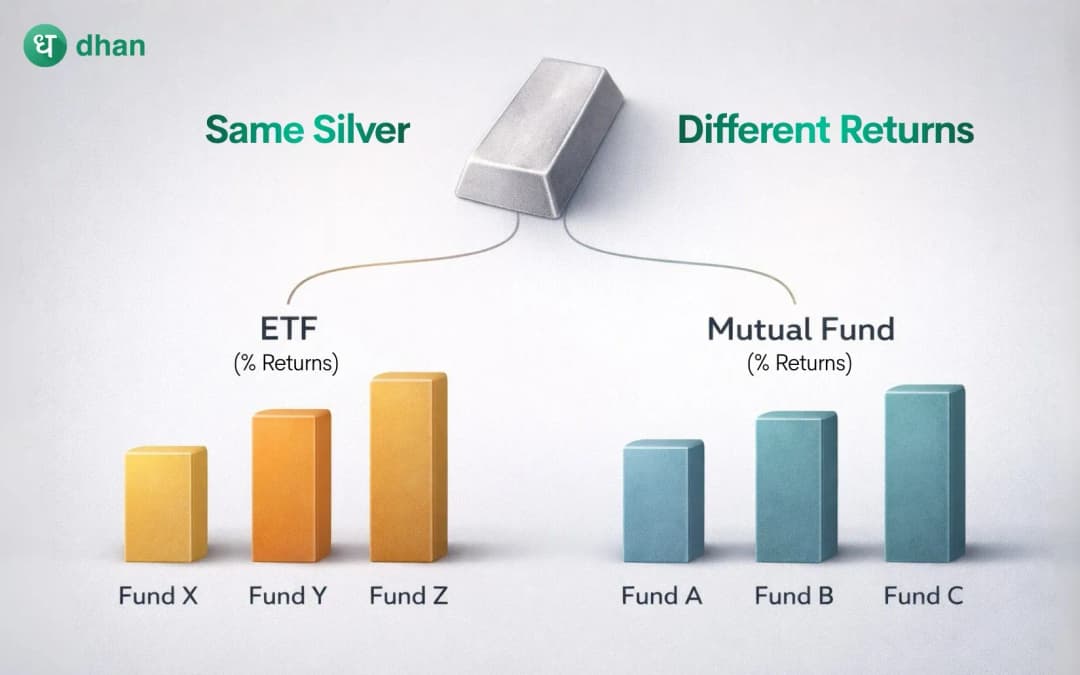


In recent years, Indian investors have expressed an increasing interest in silver investments. Silver exchange-traded funds (ETFs) and silver mutual funds provide accessible ways for investors to gain exposure to the silver metal without the need to store physical silver.
But many investors are often left confused when they observe their silver ETFs and silver mutual funds showing varying daily price changes and returns, even though they all intended to reflect the performance of the silver metal. Here, we will explore the key reasons behind these differences in returns and daily change between silver ETFs and silver mutual funds.
What are Silver ETFs and Silver mutual funds?
Silver ETFs are exchange-traded funds that track the price of domestic silver. These ETFs are listed and traded on stock exchanges similarly to stocks. They are regulated by the Securities and Exchange Board of India (SEBI) under the norms for commodity-linked ETFs, and have the mandate to invest at least 95% of their net assets in silver and silver-related instruments. The rest can be held in cash and cash equivalents for liquidity purposes. The silver ETFs publish their daily Net Asset Value (NAV) based on the price of silver.
On the other hand, silver mutual funds invest directly in silver ETFs or a basket of silver-oriented commodities, depending on their investment strategy. These can include Fund of Funds (FoFs), which purchase units of silver ETFs, and they trade at the end-of-day NAV, unlike ETFs.
Factors behind the difference in returns between Silver ETF vs MF
Some factors that lead to the difference between silver ETFs and silver mutual funds' returns and daily change are:
Tracking error
One of the primary reasons why silver ETFs and silver mutual funds exhibit different returns is due to tracking error. Tracking error is the standard deviation of the difference between the daily returns of the ETF's NAV and the underlying silver price. SEBI mandates that tracking error for silver ETFs should not exceed 2% on a rolling basis under normal market conditions, and funds must disclose this regularly.
Even with strict norms, tracking error and resulting tracking difference (aggregate return differences over time) can vary across different funds due to operational costs, cash holdings for liquidity, timing of investment in physical silver and minor structural differences. These small variances lead to different return outcomes across ETFs and mutual funds, especially over short periods of time.
Expense ratios
ETFs usually have lower expense ratios than actively managed mutual funds because they do not attempt to beat the market, but instead passively track the silver price. Even among different silver ETFs, slight differences exist in terms of the expense ratio.
Over time, these differences can lead to significant differences in performance between different funds that track the same underlying asset. Mutual funds that invest in silver or silver ETFs have additional costs of management in addition to the cost of ETFs due to active management, which affect their net return and daily performance.
Liquidity and market dynamics
Silver ETFs are highly sensitive to the physical silver prices and market liquidity. Although ETFs are listed on exchanges and theoretically should trade at or close to their NAV, in reality, the trading prices of silver ETFs also vary according to supply and demand dynamics of the trading session. This can cause minor variations in daily percentage change between similar ETFs, especially in less liquid funds, which will have implications on the return of both the silver ETFs and the silver mutual funds.
Market makers and Authorised Participants (APs) contribute to the process of arbitraging the difference between market prices, though the speed and efficiency of this process can vary from fund to fund, affecting short-term price movements and returns.
Investment structure
Silver ETFs trade like stocks throughout the trading day, and their prices fluctuate in real time based on the silver price and market dynamics. In contrast, silver mutual funds transact at the closing NAV, which is determined only once per trading session.
This structural difference leads to significant daily variance in the reported performance of ETFs and mutual funds holding similar assets. Furthermore, timing differences in execution also cause the mutual fund's returns to differ from the ETF's daily performance.
Final thoughts
All silver ETFs and silver mutual funds do not move or report the same returns because of differences between the tracking efficiency, expense ratios, liquidity dynamics and the fundamental differences between intraday trading and end-of-day mutual fund valuation. While ETFs reflect the domestic price of physical silver, variations in returns and daily performance occur because of individual fund characteristics and the impact of market forces.
Therefore, before making an investment, understanding these nuances can help the investor find the right silver exposure that best correlates to their investment goals and risk preferences.