What is an Equity Savings fund?








These mutual funds are suitable for investors who prefer a smoother ride, while still benefiting from equity markets.
Equity mutual funds combine different asset classes into a single portfolio. Thus, it helps you reduce risk without completely sacrificing your returns.
In this blog, we have explained how these funds work and whether they would be a right fit for your portfolio.
Understanding the meaning of equity savings funds
Now, let’s understand what is equity savings fund. It’s a type of balanced mutual fund that helps investors benefit from growth and stability at relatively lower risk.
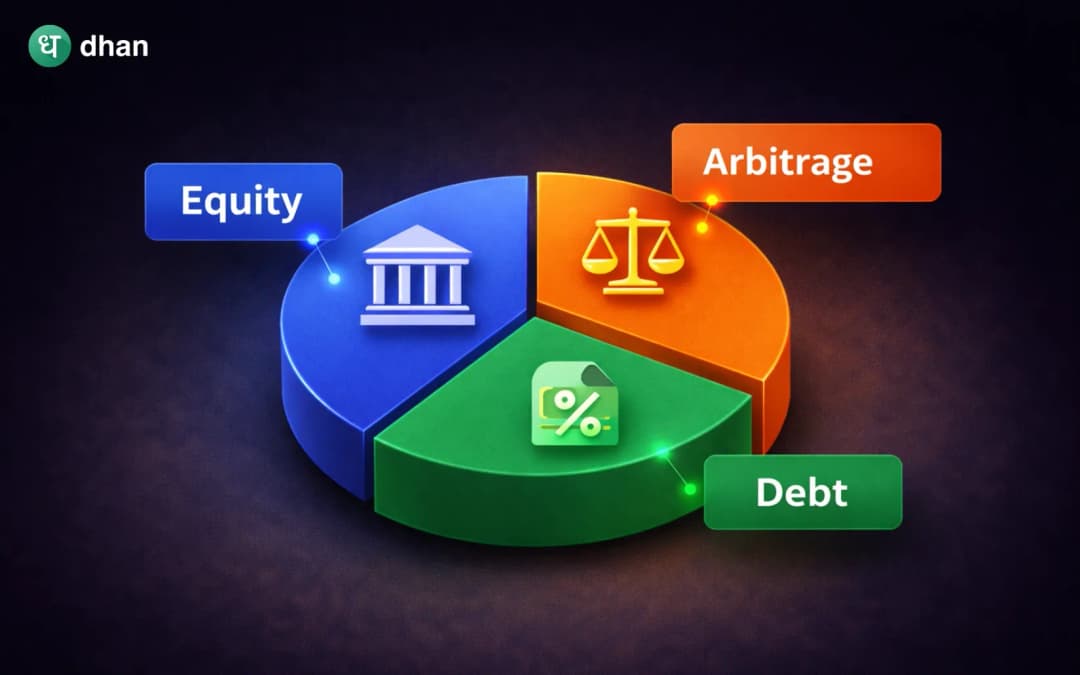
Being a hybrid mutual fund, it invests in three key areas:
- Equities
- Arbitrage opportunities
- Debt instruments
So, these funds do not solely rely on stocks for returns. Instead, they spread their investments across other segments, like debt, for better risk management.
For investors, the goal in this case is to gain moderate growth with stable returns over time. It’s different from pure equity funds, which aggressively aim for higher returns. Equity saving funds particularly appeal to investors who are looking for exposure to equities, but are not comfortable with high volatility.
Simply defined, it’s a middle path between high-risk equity funds and low-return debt investments.
Types of equity savings funds
Investors can choose from different types of equity savings funds, depending on how the fund manager allocates the assets across equity, arbitrage, and debt categories.
Aggressive equity savings funds
These equity savings funds are slightly aggressive, as fund managers allocate a larger portion of the portfolio to equities. This improves the return potential over the long term, but can also be slightly volatile compared to other categories.
Conservative equity savings funds
If you’re more conservative with your approach to investments, these funds may suit your portfolio since they offer more stability. A significant portion of the portfolio is allocated to debt and arbitrage, which keeps equity exposure relatively low.
Balanced equity savings funds
As the name suggests, these funds strike a balance between aggressive and conservative equity savings funds. The allocation is evenly spread across equity, debt, and arbitrage. Investors looking for a mix of growth and stability may find this fund suitable for them.
Key components of an equity savings fund
When investors explore an equity savings fund and how it works, it’s important to know its underlying components. These are:
- Equity: The equity portion is invested in stocks. Its objective is to generate long-term growth.
- Arbitrage: Here, fund managers exploit differences in prices between markets to earn low-risk returns.
- Debt: This segment includes bonds and fixed-income instruments. These components provide stability to the fund, making the returns somewhat predictable.
Therefore, each component in an equity savings fund plays a specific role.
How does an equity savings fund work?
An equity savings fund strategically balances its allocation across the three underlying segments. While equity brings in returns, arbitrage reduces volatility, and debt stabilises the portfolio. Particularly, the debt component is crucial as it helps to cushion market fluctuations.
The allocation is adjusted strategically by the fund manager, based on market conditions. For instance, when the market is volatile, the fund manager may reduce direct exposure to equities. During these phases, they may increase allocations in arbitrage and debt to manage risk better.
This approach helps to smooth out returns. As a result, the fund remains less sensitive to sudden swings in the market compared to pure equity funds.
Let’s take an example where you invest INR 1,00,000 in an equity savings fund. The fund manager allocates:
- ₹40,000 in equities
- ₹30,000 in arbitrage opportunities
- ₹30,000 in debt instruments
Now, the market rises sharply. The equity portion benefits the most, boosting your overall return. In case the market falls, the arbitrage and debt portions serve as a cushion, which reduces the overall impact on your investment.
Therefore, you can benefit from the growth trajectory of equity markets while enjoying downside protection.
Difference between equity savings funds and ELSS
Often, investors confuse Equity Savings funds with ELSS mutual fund schemes. This comparison table will help you understand what each means.
Benefits of investing in equity savings funds
Equity savings funds are gaining popularity as they help investors strike the balance that they usually look for.
Lower volatility
One of the biggest advantages of equity savings funds is lower volatility. These funds tend to fluctuate less compared to pure equity funds. This makes them easier to hold during market downturns.
Return potential
Equity savings funds offer better return potential compared to traditional fixed-income options like fixed deposits or savings accounts. They may not be as aggressive as equity funds. However, they can outperform conservative instruments over time.
Diversification
With equity savings funds, you benefit from built-in diversification. Therefore, you do not have to manage three different investments in equities, arbitrage, and debt funds separately. A single fund offers exposure to all three segments.
Smoother experience
As three asset classes are combined into a single fund, it helps reduce ups and downs. Particularly, new investors find these funds appealing as they aren’t overwhelmed by sharp volatility.
For investors looking to step into equity markets with caution, equity savings funds can be a comfortable entry point.
Risks you should know before investing
Equity savings funds are relatively balanced, but they are not completely free from risks. Here’s what investors must be careful about.
Limited returns
A portion of the portfolio is allocated to debt and arbitrage funds. So, even during strong bull runs, you may enjoy limited returns compared to pure equity funds.
Interest rate risk
The debt component of an equity savings fund brings in the interest rate risk. In case there’s a change in interest rates, it can impact the value of debt instruments. However, this impact is generally moderate.
Inconsistent arbitrage opportunities
Arbitrage opportunities are not always consistent. The returns from this segment depend on market inefficiencies, which may vary over time.
No guarantee of returns
As an investor, you should remember that equity saving schemes are still market-linked instruments. There is no guarantee of returns, and you may notice fluctuations in the short term.
Common mistakes investors make
Many investors fail to understand the actual goal of equity savings funds. Eventually, they end up making poor decisions.
Expecting high returns
One common mistake is expecting high returns like purely equity funds. Remember, the purpose of these funds is to offer stability, not aggressive growth.
Very short-term mindset
Another issue is investing with a very short-term mindset. Eventually, some investors prematurely sell off their units without capitalising on the gradual growth. Equity savings funds do not offer quick gains.
Ignoring the allocation strategy
Some investors also ignore the allocation strategy of the fund, which plays a crucial role in performance. Over time, this may influence their expectations in terms of returns.
Considering only past returns
One of the other mistakes investors make is choosing these funds based on past returns. Unless you understand the risks associated with the market, it can lead to disappointment.
Who should invest in equity savings funds?
Equity savings funds are not for everyone. You may consider including these funds in your portfolio under the following conditions.
- If you’re a first-time investor, you can enter equity markets through these funds without taking on excessive risk.
- Conservative investors may consider including equity savings funds in their portfolios for equity exposure. This way, they can earn better returns compared to traditional options. The debt and arbitrage exposures help them stabilise their portfolios.
- Equity savings schemes are also suitable for investors who are transitioning from fixed deposits or debt funds to equity markets and want gradual exposure.
These funds can be a good fit if you have an investment horizon of 2 to 4 years. They help investors establish a balance between growth and capital protection. So, if you are looking for steady progress without extreme volatility, these funds may be suitable for you.
Conclusion
With equity savings funds, you get a balanced approach to investing. This is something many investors struggle to find.
In this guide, we have explained what are equity saving funds and why cautious investors must include them in their portfolios. It’s a big advantage for those who are just stepping into equities or want stability along with moderate growth. So, if you’re after steady growth without extreme volatility, check out the best equity savings funds and invest in one.
FAQs
Where does an equity savings fund invest?
An equity savings fund spreads your investments across equity, arbitrage, and debt instruments. It offers moderate returns with volatility compared to pure equity funds.
Are equity savings funds risky?
Equity savings funds carry some market risk, but are usually less volatile than equity funds. The inclusion of arbitrage and debt components reduces overall risk, which makes them suitable for conservative investors.
What returns can I expect from equity savings funds?
The returns from equity savings funds are usually moderate. They are higher than traditional fixed-income options like savings accounts and fixed deposits, but lower than aggressive equity funds.
How long should I invest in an equity savings fund?
Ideally, investors must consider a minimum horizon of 3 to 5 years in equity savings funds. This investment period allows the fund strategy to deliver relatively stable returns over time.
Is SIP a good option for equity savings funds?
Yes, you may consider creating an SIP in equity savings funds. While it helps to reduce the risk of timing, it allows you to build your investment gradually and benefit from market averaging.