Long Butterfly Option Strategy explained






You can use this strategy after a big event like earnings or a news release, when the volatility has already settled, and the market usually goes sideways. This article will help you understand the basics of a long butterfly option strategy and how to build and execute this strategy.
What is the Long Butterfly Option Strategy?
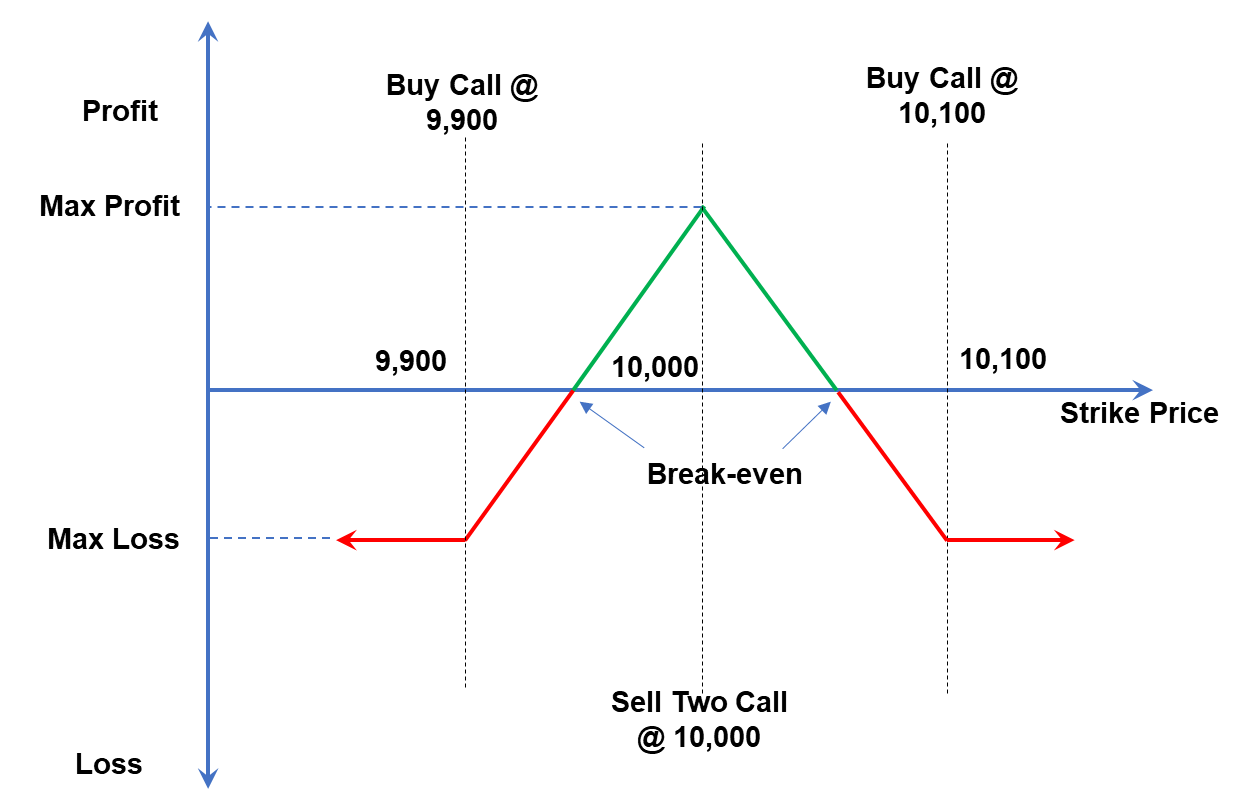
A long butterfly option strategy is a combination of a bull call and a bear call spread strategy, which results in a net debit. This strategy uses four call options on the same underlying asset, all with the same expiry, with two options sharing the same strike price and two strike prices equally spaced from the middle strike price. This strategy has below setup:
- Buy one call at a lower strike price
- Sell two calls at the middle strike price
- Buy one call at a higher strike price
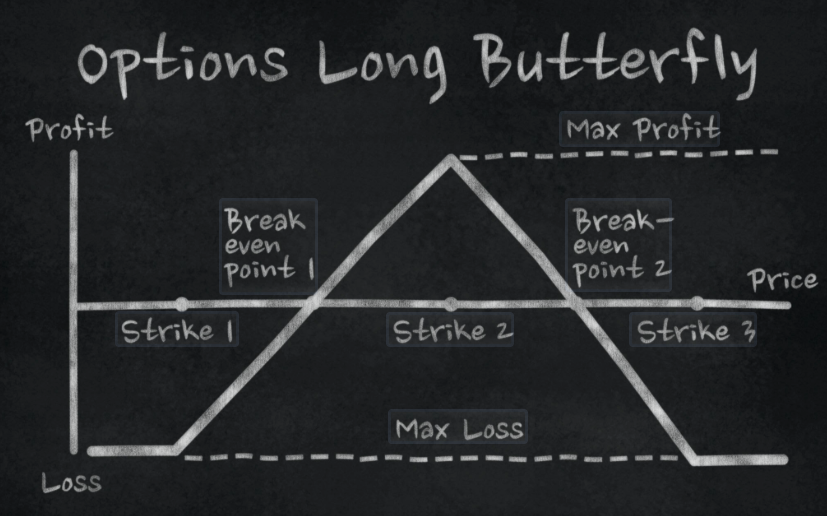
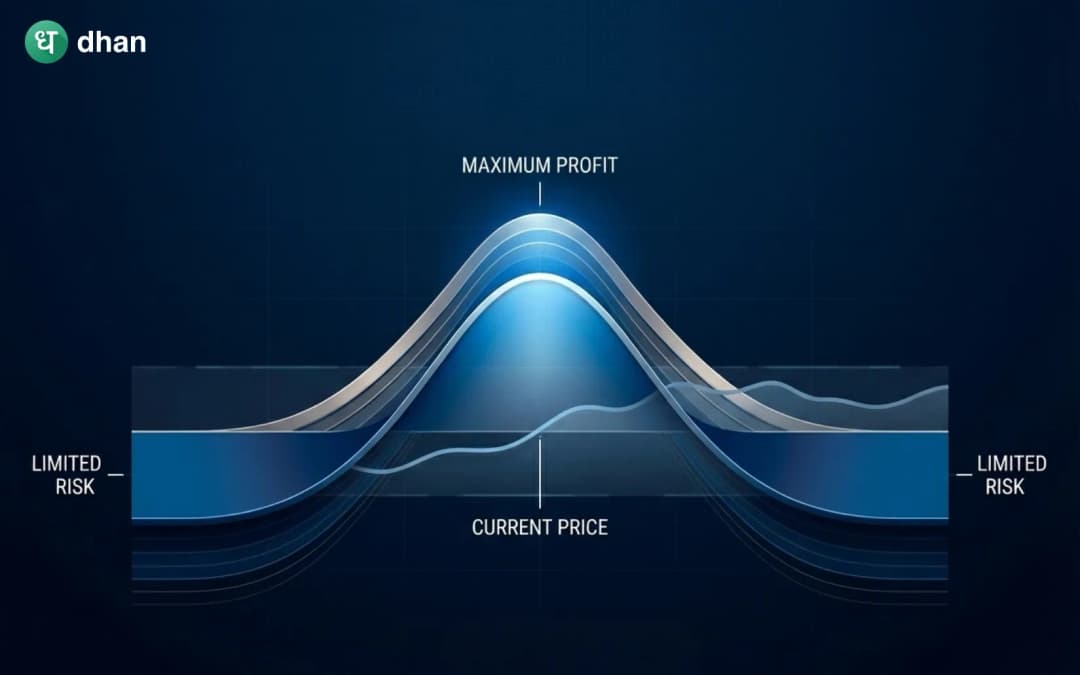
As shown in the figure above, maximum profit is achieved when the price of the underlying asset equals the middle strike price at expiration. Maximum profit is the difference between the middle strike price and either of the outer strike prices minus the net debit.
Maximum loss can be the net debit paid at the time of trade. The trader will incur a loss if the price of the underlying asset moves beyond the break-even points, and the maximum loss will occur if the price expires beyond the outer strike price.
For instance, if a stock is trading at ₹10,000, and you anticipate the closing price will be close to this amount. The following strikes are used to create a long call butterfly:
Purchase one call for ₹150 at 9,900
Sell two calls for 10,000 each for ₹90, for a total of ₹180.
Purchase one call for ₹60 at 10,100.
150 − 180 + 60 = ₹30 is the net premium paid.
Your maximum loss is ₹30.
Let's now compute the results following expiration.
The 9,900 call is worth ₹100 if the stock expires at 10,000, while the others expire worthless.
₹100 − ₹30 = ₹70 is the profit.
All options expire worthless if the stock falls below 9,900 or rises above 10,100.
₹30 is the loss.
Profit gradually decreases if the stock expires between the strikes. Traders use strategy builders to view profit–loss graphs, which clearly show how price movement impacts a trade. Many platforms, such as Dhan, offer built-in strategy builders along with simplified execution of multi-leg option strategies.
Check out the top 10 options trading strategies used by successful option traders.
When should you use a Long Call Butterfly?
The following conditions are favourable for a long call butterfly strategy:
- Low volatility in the underlying asset
- The price of the underlying asset should move within a specific range (a range-bound market).
- No major news, earnings, or events before expiry.
If these conditions are met by any underlying asset, the long call option strategy is the best to use. But if the market moves aggressively in either direction, then the trader will have to bear a loss that is equal to the net premium paid during the trade.
Difference Between Long Butterfly and Iron Butterfly
Long butterfly and iron butterfly look similar, but both behave differently. The key differences between long butterfly and Iron butterfly are shown in the table below:
Pros and Cons of Long Butterfly Strategy
The pros of the strategies are:
- This strategy is a low-cost strategy. Because you are selling two options to offset the cost of the two you bought, the "net debit" is usually very small.
- It has defined risk. You know exactly how much you can lose from this trade.
- If the stock price closes near the middle strike price, the return on investment is greater.
The cons of the strategies are:
- This strategy requires precision. The stock price needs to be closed within the range to become profitable.
- This strategy is theta sensitive. It requires time to pass, which increases the risk.
- Since you are trading four contracts (1+2+1), commission costs can reduce your net profit.
Final thoughts
The long butterfly strategy is highly efficient. Traders can make money using this strategy in a sideways market. Although it requires precision and patience, it can increase your overall profitable trades. This strategy will not make you rich overnight, but it will teach you to make large profits with small drops.
FAQs
Is the long butterfly option strategy bullish or bearish?
The long butterfly strategy is neutral in nature. It works best in a sideways market. It becomes profitable when the option expires near the middle strike price.
What is the maximum loss in a long butterfly strategy?
The long butterfly strategy is a net debit strategy, meaning your maximum loss will be the premium you paid during the trade.
When is the best time to deploy a long butterfly strategy?
The best time to use a long butterfly is after major events like earnings or news releases, when the market is range-bound and does not expect any sharp movements.
Can beginners use the long butterfly option strategy?
This strategy is beginner-friendly as it has defined risk, and the capital required is relatively low. However, beginners should first practice on paper trading platforms to understand the strategy behaviour.
Should a long butterfly be held until expiry?
Not necessary. Many traders exit early if the price drifts far from the middle strike or the profit is achieved.