Option Buying vs Option Selling




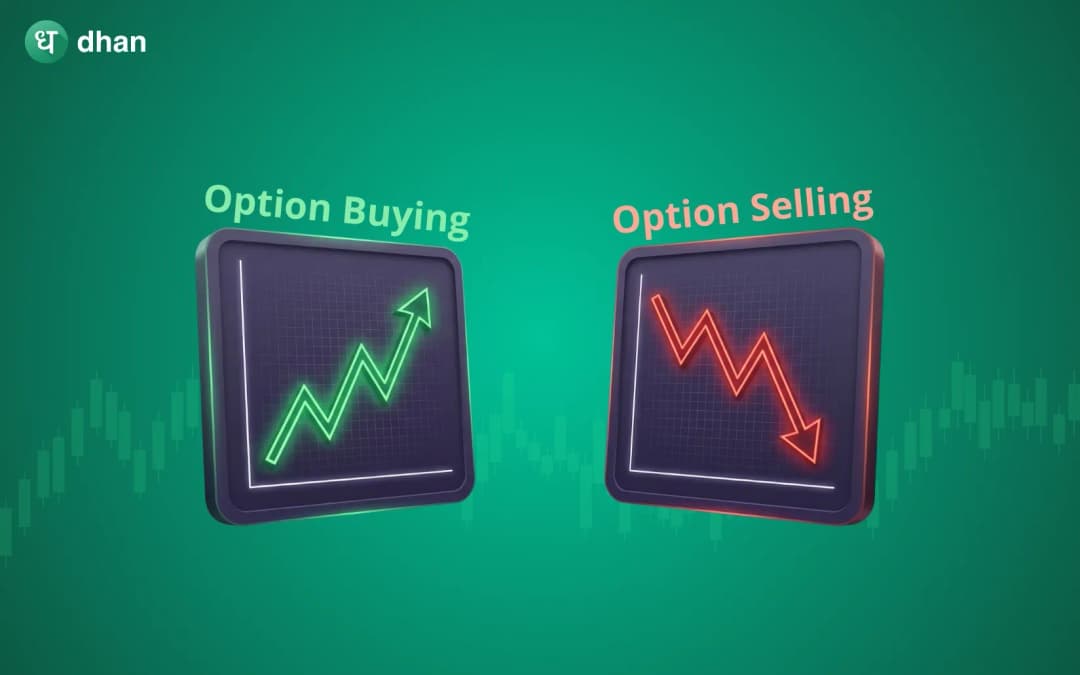


The option buying and selling can be confusing as one tries to understand the market behaviour.
Both strategies are effective, but they are applicable to very distinct trading styles. Buying provides you with less risk and the opportunity to capitalise on strong moves, whereas selling rewards you for patience and consistent action in the prices.
The dilemma lies in which side is aligned with your mindset, capital, and comfort with risk.
In this article, we will explore both option buying vs option selling and assist you in knowing which one suits you the most.
What is Option buying?
Option buying involves paying a premium to purchase the right to buy (call) or sell (put) an underlying asset at a pre-specified strike price before a pre-specified expiry date.
When buying an option, you only risk the premium that you have paid when buying the option, whereas your upside can be very large if the market swings in your favour.
Timing, direction, and volatility are important in option buying.
What is Option Selling?
Options selling is the act of accepting to buy or sell the underlying asset of an option at a fixed price and a specific time, often under a premium collected in advance.
You are expecting the market to remain stable or move in the direction that you are estimating. In that case, the option expires, and you have a premium left.
However, once the underlying asset drastically swings against your favour, then your losses can accumulate quickly since you have to fulfil the contract.
Key differences between Option Buying and Option Selling
When considering option buying vs option selling, here is a clear comparison of how they differ across key trading parameters.
When option buying works best
Option buying usually works well when you expect the underlying asset to make a strong move in one direction within the lifetime of the option. Example:
- If there is an important announcement of big earnings for a stock or index, or some other event of great economic importance, and you feel that the price will jump.
- The more dramatic the move you expect, the more buying an option can pay off.
It also helps if the implied volatility, the market's expectation of how much the asset will move, is relatively low when you buy. If volatility is low, the premium paid is cheaper. Then, if a big move happens, your upside is larger.
Finally, buying options makes sense when you have limited capital and want a defined maximum loss. Since when you buy an option, you can only lose the premium paid, this can be appealing if you want to strictly control risk.
When option selling works best
When you expect the underlying to remain in a range rather than make any sort of big move, this is where option selling tends to shine. In other words, if you think the market will be more sideways than sharply trending, selling options can give you a smoother path to profit.
Here are some conditions that favour option-selling:
- You collect a larger premium when implied volatility is high. That gives you more margin for error.
- You benefit more from time decay when the time to expiry is shorter. Every day that passes eats away at the option's value, helping a seller.
- When you are working with a large margin of safety. Examples would include selling out-of-the-money options or using spread strategies to limit risk. Selling with defined risk simply means you do not have unlimited loss.
In other words, if you believe the market will be stable or mildly directional, and you have enough capital and risk controls in place, option selling can be a more consistent income strategy than trading based on big moves.
Which one should you choose?
Choosing between option buying and option selling comes down to three simple questions: What is your risk appetite, capital size, and level of experience?
Option buying is suitable for those who are just beginning or who like to keep things simple. You risk only the premium paid because that limits the downside, and you have a clear directional view.
If you have more capital, more experience, and you can handle adjustments, option selling can be more profitable in steady markets. But you must accept bigger risks and tighter control.
Your choice should always match your own comfort level. Do you sleep well when markets move sharply? If not, go with buying. Do you like managing live trades and watching IV decay? Then you might try selling.
Now, if you need a platform that supports both types of strategies with strong analytics, you might want to check out Dhan. For example,
- Dhan gives you a zero-AMC demat account, a full option chain with Greeks, and advanced tools to analyse contracts.
- If you are leaning towards option selling and looking for margin or experienced risk management, Dhan offers features like pledge margin, advanced chain, and strategy builders.
- If one is starting with option buying and wants to limit the risk, the same platform allows one to pay only the premium and monitor positions with ease.
Summary: match the strategy to your personality, match the platform to your needs, and with time, you will know which one works for you.
Conclusion
Knowing how you think about risk, capital, and market movement makes choosing between buying and selling options much easier. Both methods can work, but each best suits a different mindset. Start with what feels comfortable, learn how price and time behave, and slowly build your style. With practice, your choice becomes clear.
Frequently Asked Questions (FAQs)
1. Can I lose more money when I sell options than when I buy them?
Yes. When buying an option, your maximum loss is the premium you paid. However, when you sell or write options, this can result in a much larger potential loss, because you carry an obligation that may go far beyond the premium you have received.
2. Is option buying better for beginners than option selling?
Generally, yes, buying options often requires less capital, and your risk is clearly defined, whereas selling options may involve a larger margin, advanced risk control, and a deeper understanding of market behaviour.
3. When does option selling make more sense than buying?
Option selling tends to work better when you expect little movement in the asset, when volatility is high, and time decay works in your favour. In those conditions, you collect premiums rather than chasing large market moves.
4. What matters more for option buyers: direction or timing?
Timing and volatility are of great importance for buyers. Even if one picks the right direction, lack of movement or low volatility can wipe out value due to time decay. You need a strong move in a defined time period.
5. How does my trading capital and risk profile impact my decision to buy or sell options?
If you have limited capital and a high risk appetite, then option buying may suit you. If you have higher capital, can tolerate the potential large losses, and aim for steady premium income, then selling might fit, but only with sound risk controls.