Best Options Hedging Strategies






Trading in the stock market or commodity trade can be exciting, but doing so carries a lot of risk. Imagine owning a stock and seeing the market take a sudden drop, and the value of your position drops significantly. This is where options hedging strategies come into play.
These options hedge strategies provide you with a safety net and help you reduce potential losses while keeping your capital intact. In this guide, we will help you understand what hedging is, how it works, and how you can use hedging strategies in options effectively.
What is Options Hedging?
One of the ways to protect your capital against unfavourable changes in price movements is through options hedging. An option is a type of financial contract that grants a holder the right, but not an obligation, to buy or sell an asset at a specified price upon expiration or at any time before the expiry date. Options allow you to limit your losses if the market moves against your position, just like insurance.
How does Option Hedging Work?
Hedging strategies in options involve calculating the right number and type of options contracts needed to cover your existing investment. One key measure here is the hedge ratio, which helps you understand how much of your position is protected by options.
Hedge Ratio = ρ × (σS/σF)
Where:
- ρ is the correlation between the asset and the option
- σS is the standard deviation of changes in the asset price
- σF is the standard deviation of changes in the option price.
This ratio tells how many options contracts you'll need to hedge a certain number of shares.
For instance, if you have a portfolio worth ₹10 lakh in a stock and the hedge ratio indicates you need to buy 100 put options, each covering 100 shares, you would purchase options accordingly to protect your investment from a serious downturn.
Options Hedging Strategies you can use
There are many practical hedging strategies in options that you can use to reduce risk. Let’s discuss some popular ones:
1. Protective Put Strategy
The Protective Put (also known as a Married Put) is one of the simplest and most popular hedging strategies.
It is utilised by traders who already possess a stock and want to hedge against a decrease in its price.
How it works:
- The trader owns the stock (long position).
- They purchase a put on the same stock.
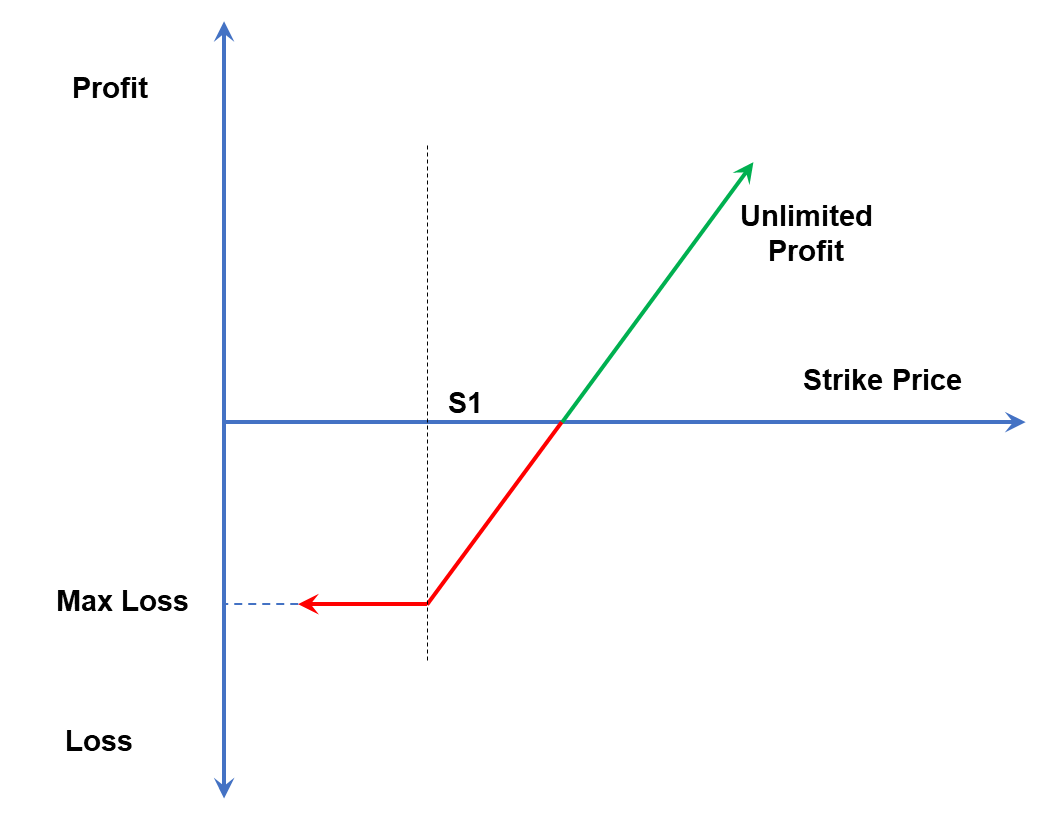
If the price of the stock declines, the put option will increase in value, offsetting your loss on the stock.
2. Covered Call Strategy
The covered call strategy is used when a trader already owns a stock but thinks its price will stay fairly stable.
Here, the trader sells call options on the same stock to earn a premium.
How it works:
- The trader holds the stock.
- They sell call options against that stock.
- If the stock price remains below the strike price, then the call options will expire with no value. In this case, the trader keeps the premium earned from selling the calls.
- If the stock price increases above the strike price, the trader might be forced to sell the stock at the fixed price.
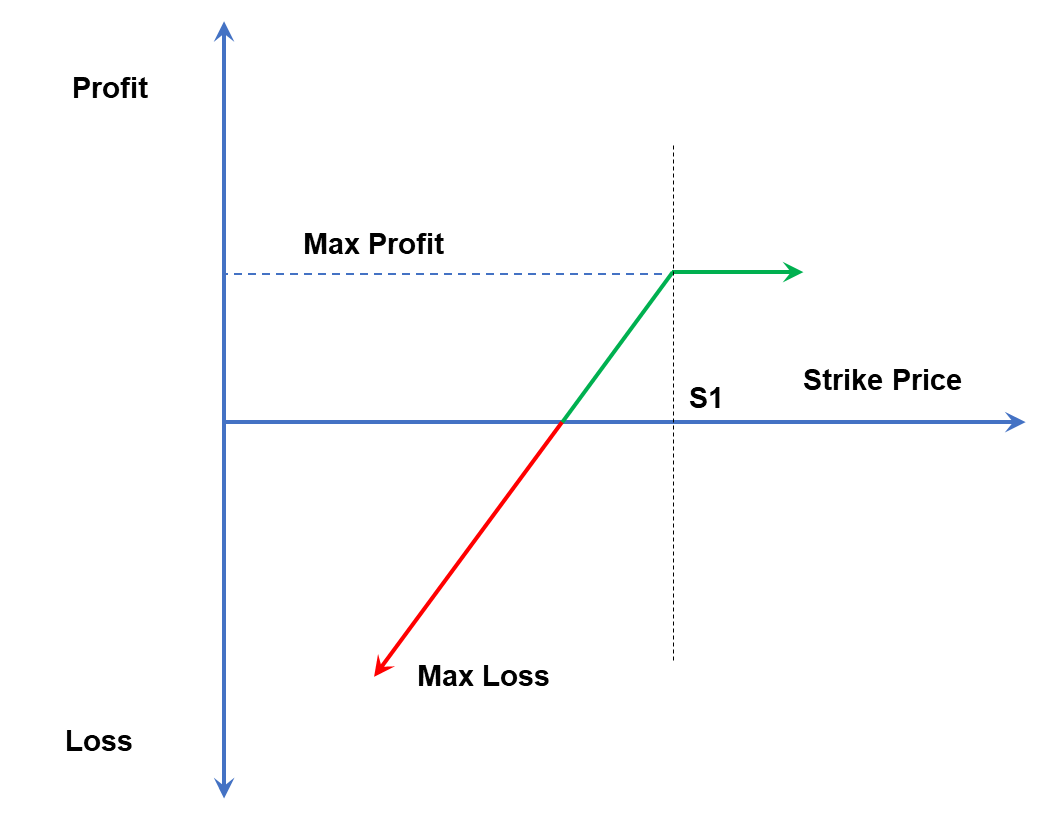
You earn a profit from the option premium, but you cannot make much profit.
3. Collar Strategy
A Collar Strategy contains both a protective put and a covered call. It puts in a "price range", limiting both the losses and the gains.
How it works:
- The trader is worried about a price decline, so they buy a put option for protection.
- At the same time, they write a call option so as to generate premium income that helps to offset the put's cost.
This strategy provides your investment with a "floor" (put value) and a "ceiling" (call value).
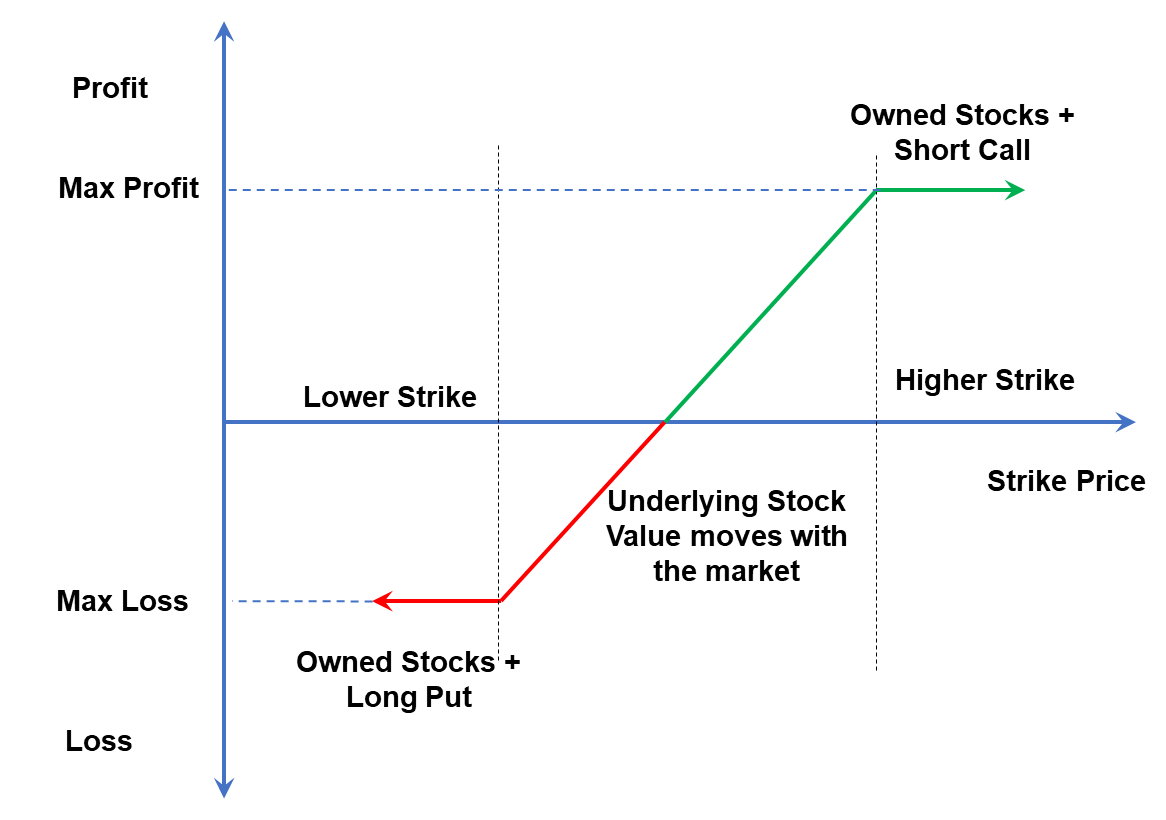
It is perfect for traders who prefer to earn a steady return with limited risk.
Benefits of Hedging with Options
Options hedging is beneficial because it helps you:
- Manage risk: It reduces the possibility of significant loss in a volatile market.
- Enhance profit: Some strategies, like covered calls, earn you additional income via premiums.
- Flexibility: Hedging can be tailored to your risk tolerance and market views.
Get access to an intuitive interface and instant options trading through Dhan. Tools provided on Dhan help you in calculating hedge ratios, monitoring positions, and swift execution of trades.
How to start hedging your portfolio?
- Assess your risk: Understand the 'size' of your portfolio and the market risk you will face.
- Choose an appropriate strategy: Select from protective put, covered call, or collar strategy that best suits one's market view and goals.
- Use a reliable platform: It becomes simpler to buy and sell options with platforms like Dhan, which offer real-time data.
- Calculate your hedge: Enter or exit a position using indicators and formulas.
- Monitor and adjust: Continue to follow the market and change your hedge accordingly.
In a Nutshell
Options hedging is a tool that can work for you while being invested in the market. You can protect your portfolio using strategies such as protective puts, covered calls, and collars. Remember, though hedging cannot save you from all risks, it can certainly help you decrease your losses and sleep better during market volatility.
FAQ's on Options Hedging Strategies
1. Can I use option hedging for commodities and currencies, too?
Yes. Options hedging isn't limited to equities. It is extensively used in commodities, like gold, crude oil, and currencies, such as USD/INR, to protect the market participants from price movements.
2. What are the risks of hedging with options?
While options help reduce risk, they also carry certain drawbacks like premium costs, time decay, incomplete hedge, and liquidity risk. Hence, hedging must be strategic and not emotional, used when potential loss outweighs the premium cost.
3. Does hedging eliminate all trading risk?
No - hedging reduces the risk, but never gets rid of it entirely. Hedging reduces losses and volatility, but it cannot assure gains. Options can reduce downside losses but also carry premium costs and have limited duration. The purpose of hedging is to reduce risk, not to eliminate the risk.
4. What is the difference between a Protective Put and a Covered Call?
A protective put protects against downside risk because traders have the right to sell their position at a predetermined price if it falls. A covered call, on the other hand, involves the selling of call options on stocks they currently own to generate income in the form of option premiums, but it limits the potential upside.
5. Can I use options to hedge my entire portfolio?
Yes, you can hedge your entire portfolio using options, but it requires careful calculation. Many investors hedge diversified portfolios with index options, like Nifty options or Bank Nifty options. For example, if your portfolio represents the Nifty 50, buying Nifty put options protects your portfolio from overall market declines. However, this is strictly for experienced investors and traders.