



RHO in Option Trading






Key takeaways
- Rho indicates the potential price change of an option when interest rates shift, assuming everything else remains unchanged.
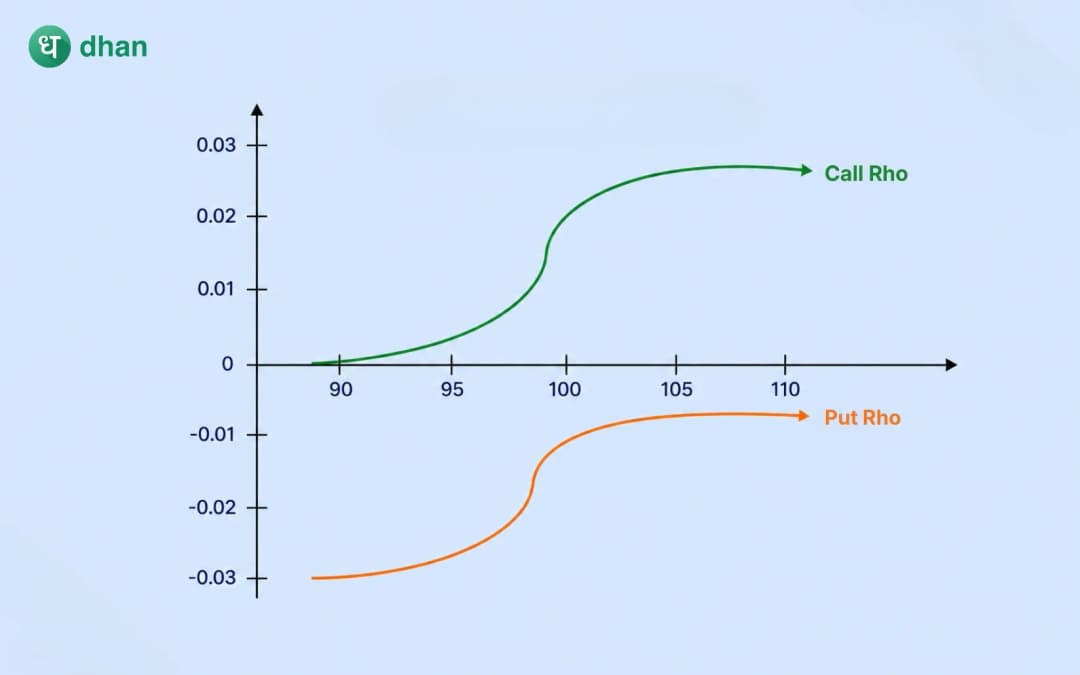
- Changes in interest rates generally impact call options and put options differently. Rho is typically positive for call options and negative for put options.
- Rho tends to matter more for longer-dated options because there is more time for changes in interest rates to affect the option's value.
When traders look at option prices, they often focus on the underlying asset, implied volatility and time remaining until expiry. Interest rates may seem less important, especially for short-term trades. However, they are one of the inputs that can influence the theoretical value of an option. This is where rho comes in.
Rho is one of the option Greeks used to measure how sensitive an options price is to changes in interest rates. In simple terms, it tells traders how much the theoretical price of an option may change when the risk-free interest rate changes by one percentage point, assuming other variables remain unchanged.
For example, if an option has a rho of 0.20, a 1 percentage-point increase in the relevant interest rate would theoretically increase the options price by about ₹0.20, all else being equal. The actual market price can behave differently because several factors affect an option at the same time.
What is RHO in options?
Rho is an option Greek that measures an options reactivity to changes in interest rates.
It is usually expressed as the change in an option's price for a 1 percentage-point change in the interest rate.
The basic interpretation is:
Rho (ρ ) = Change in Option priceChange in interest rate
Suppose a call option has a rho of 0.35. If the relevant interest rate increases by 1 percentage point, the option's theoretical value may increase by approximately ₹0.35, assuming everything else remains unchanged.
If the interest rate falls by 1 percentage point, the theoretical value may decrease by approximately ₹0.35.
For a put option, rho is generally negative. A put with a rho of -0.25 could theoretically lose around ₹0.25 in value if the interest rate rises by 1 percentage point, all else remaining equal.
Why do interest rates affect option prices?
To understand rho, it helps to see why interest rates are part of option pricing in the first place.
An option gives the buyer the right, but not the obligation, to sell or buy an underlying asset at a predefined strike price. The value of that future transaction is influenced by the cost of money over time.
When interest rates change, the present value of future cash flows changes as well. This can affect the theoretical value of an option.
The relationship is usually more noticeable in options with longer expiries because the interest-rate effect has more time to accumulate.
For example, consider two otherwise similar options:
- Option A expires in 10 days.
- Option B expires in 12 months.
A change in interest rates generally has less time to influence Option A. Option B has a much longer period over which the interest-rate assumption can affect its theoretical value.
How does RHO work for call options?
For a standard call option, rho is generally positive.
This means that, all else being equal, an increase in interest rates tends to increase the theoretical value of a call option.
For example, consider a call option has a current price of ₹100, and Rho is 0.40.
If the interest-rate change is +1 percentage point, then the theoretical effect of the rate change would be approximately:
0.40 × 1 = ₹0.40
So the option's theoretical value may increase by around ₹0.40.
If rates instead decrease by 1 percentage point, the theoretical effect would be approximately a ₹0.40 reduction.
The actual market price can move by a different amount because the underlying price, implied volatility and time to expiry may also change.
How does RHO work for put options?
For a standard put option, rho is generally negative.
This means that, all else equal, higher interest rates tend to reduce the theoretical value of a put option.
Suppose a put has a rho of -0.30. If the relevant interest rate rises by 1 percentage point, its theoretical price could decrease by approximately ₹0.30.
If the interest rate falls by 1 percentage point, the theoretical effect would be an increase of approximately ₹0.30.
This opposite relationship between calls and puts is an important feature of rho. The magnitude of rho is not the same for every option. It depends on factors such as the option's strike, underlying price, time to expiry and interest-rate environment.
RHO and time to expiry
Time to expiry is one of the most important factors when considering rho.
An option with very little time remaining generally has less exposure to changes in interest rates. There is simply less time for the financing effect to influence its theoretical value.
Longer-dated options can have greater rho exposure.
For example, a trader comparing a weekly option with a one-year option should not expect interest-rate changes to have the same impact on both contracts. Even if the contracts are based on the same underlying asset, their rho values can be materially different.
RHO vs other option Greeks
Rho is only one part of the option-pricing picture. Traders commonly study it alongside delta, gamma, theta and vega.
Delta measures how much an option's price is expected to change for a ₹1 change in the underlying asset, subject to the model's assumptions.
Gamma measures how quickly delta changes when the underlying price changes.
Theta measures the sensitivity of an option's value to the passage of time.
Vega measures sensitivity to changes in implied volatility.
Rho measures sensitivity to changes in interest rates.
These Greeks should not be viewed independently. An option's market price can be affected by several variables simultaneously.
How to calculate the impact of RHO
You can understand the impact of Rho with the following example:
Estimated option-price change = Rho × Change in interest rate
Suppose:
Rho = 0.50
Interest rate rises by 2 percentage points
The estimated impact is:
0.50 × 2 = ₹1.00
The option's theoretical value could increase by approximately ₹1 for a call with that rho.
For a put with rho of -0.40:
-0.40 × 2 = -₹0.80
The theoretical value could decrease by approximately ₹0.80.
When does RHO matter more?
Rho tends to become more relevant in the following situations.
Long-dated options
Options with substantial time remaining can have greater exposure to interest-rate changes. Traders holding these contracts for longer periods may therefore pay more attention to rho.
Significant interest-rate changes
A small change in rates may have a limited effect on many short-term options. A larger rate movement can make rho more noticeable, particularly for longer-dated contracts.
Interest-rate-sensitive markets
When monetary policy is a major driver of market expectations, traders may pay closer attention to how rate assumptions affect option valuations.
Comparing options with different expiries
Rho can help explain why two options with otherwise similar characteristics may respond differently to changes in interest rates when their expiries are substantially different.
How traders can use RHO
Rho is most useful as a risk and sensitivity measure rather than as a standalone trading signal.
A trader holding long-dated options can use rho to understand how a change in interest rates could affect the theoretical value of the position. This can be particularly useful when comparing contracts with different expiries.
For example, if two call options have similar deltas and vegas but substantially different expiries, their rho exposure may help explain part of the difference in their theoretical price sensitivity.
Rho can also be considered when evaluating option strategies that involve longer-dated contracts. Instead of asking only whether the underlying asset is expected to rise or fall, traders can also examine how changes in interest rates may influence the position.
Conclusion
Rho helps traders understand an often-overlooked part of option pricing: the effect of interest rates.
Calls generally have positive rho, meaning their theoretical values tend to increase when interest rates rise, while puts generally have negative rho. The effect is usually more relevant for options with longer time to expiry.
However, rho should not be used as an isolated trading signal. Option prices are influenced by several variables, including the underlying asset price, time to expiry and implied volatility.
FAQs
What does RHO mean in option trading?
Rho measures how sensitive an option's theoretical price is to a change in interest rates.
Is RHO positive or negative?
Rho is generally positive for call options and negative for put options. The exact value depends on the option's characteristics and the pricing model being used.
Does RHO change over time?
Yes. An option's rho can change as the underlying price, strike relationship, time to expiry and other pricing variables change.
Is RHO the same for all options?
No. Rho varies between options. Strike price, underlying price, time to expiry and other factors can influence its value.
How is RHO different from theta?
Rho measures sensitivity to interest-rate changes, while theta measures the effect of the passage of time on an option's theoretical value. They describe two different sources of option-price sensitivity.