Understanding Bull Put Spread Option Strategy






This is why beginners and retail traders prefer defined risk strategies, like the bull put spread strategy. This strategy comes with limited risk, which benefits from mild bullish or neutral views on the underlying asset. In this article, we will explore the bull put spread option strategy, its working principle, and its advantages and disadvantages. We will also see when you should use this strategy.
What is a Bull Put Spread?
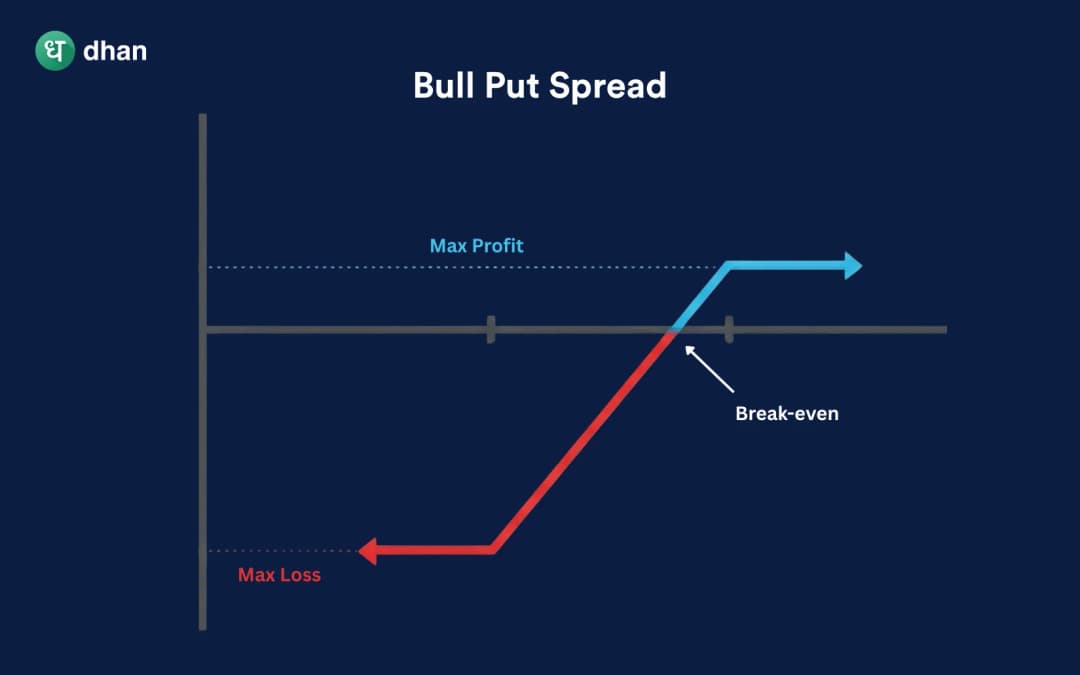
A bull put spread option strategy involves two put options with the same expiration date but with different strike prices. One put option is sold while the other is bought. The strategy results in net credit, which means you will receive an upfront premium when you execute the strategy.
The strategy involves the following steps:
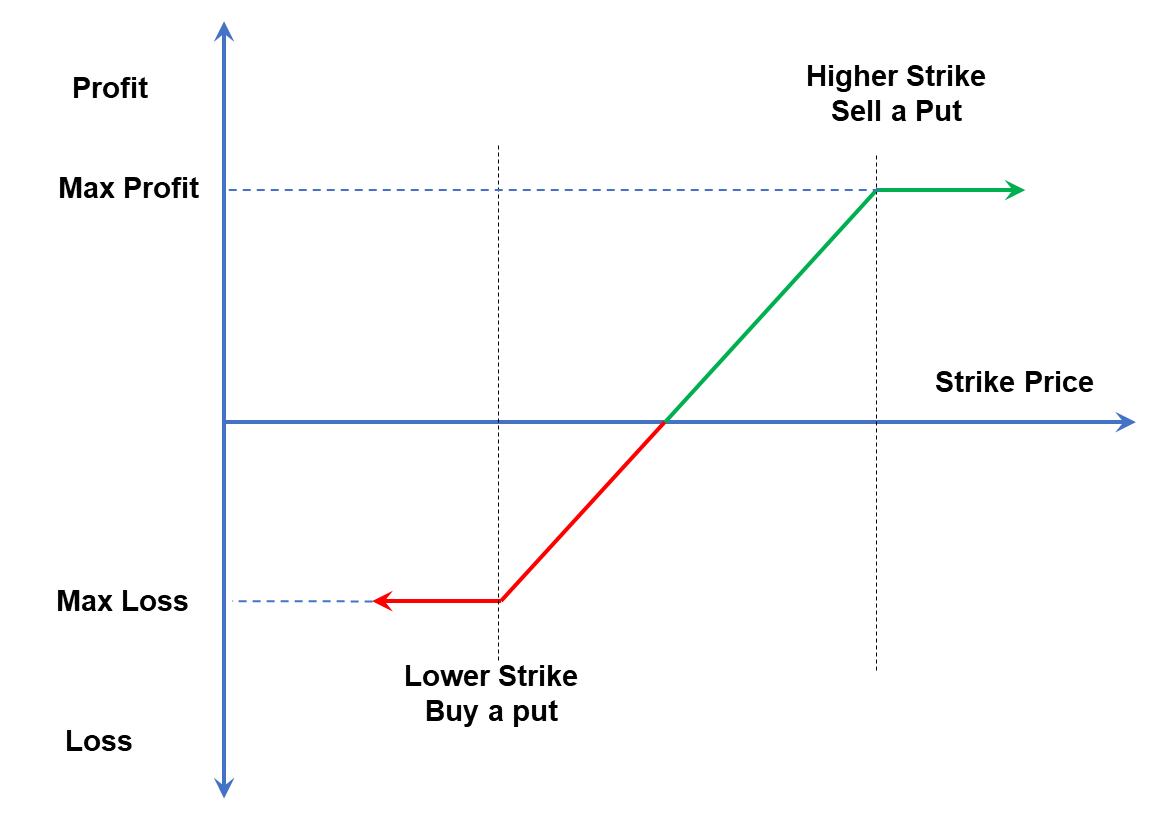
- Sell a put option at a higher strike price (short put).
- Buy a put option at a lower strike price (long put) but with the same expiration date.
- The difference between the two premiums is your net credit and potential maximum profit.
This strategy is considered bullish to neutral, meaning it profits when the underlying asset stays above the option’s strike or doesn’t drop significantly.
How the Bull Put Spread Works
The bull put spread option strategy uses put option contracts with the same expiry date. When you sell a put option with a higher strike price, you will receive a net premium, which will be higher than the premium you pay for buying the put option with a lower strike price. A net premium should be collected as a result of the combined position. Your maximum possible profit is represented by this premium.
Here, the long put position acts as a hedge against sharp downward market movements. Let's understand this with an example.
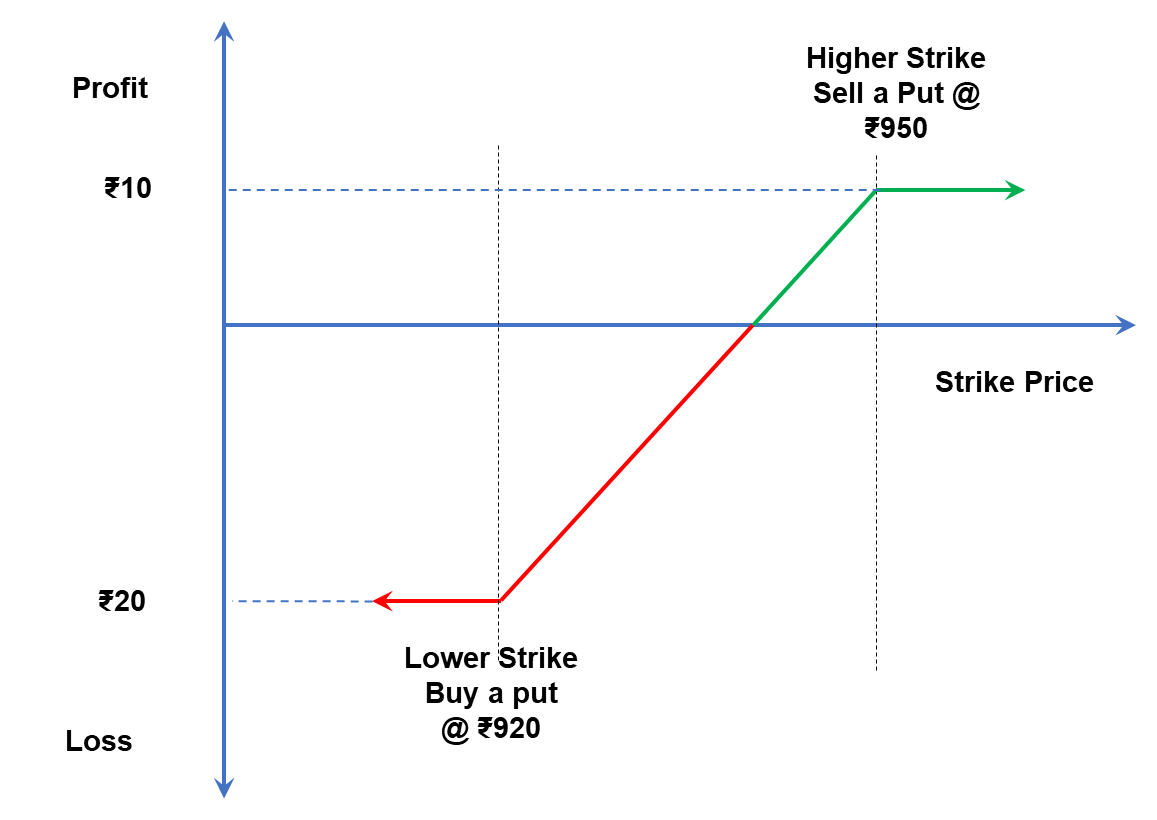
Suppose a stock is trading at ₹1,000, and you believe the stock will remain above ₹950 till expiration. We will apply a bull put spread strategy and see the results for different conditions.
- You sell a put option at a strike price of ₹950 and receive ₹15 as premium.
- Now, you buy a put option at a strike price of ₹920 by paying a premium of ₹5.
Here you will get an upfront net premium of ₹10. Now we will see how the strategy plays out for different conditions.
If the stock stays above ₹950 till expiry
Both the put options expire worthless, and you keep the ₹10 per share as your profit. This is the maximum profit you can have.
If the stock falls to ₹940
The short put loses its value. You will face a loss of ₹10 per share. This will offset the premium you received earlier, and your net profit and loss will be zero. The strike price of ₹940 will be your break-even price.
If the stock falls below ₹920
This will be your maximum loss condition. Your maximum loss is limited to the difference between strikes minus the credit.
Maximum loss = (950-920)-10=₹20
Now you can understand how this strategy limits your loss.
When to use a Bull Put Spread
The bull put spread strategy should be used under specific market conditions. Some common conditions in which you can use this strategy are described below:
- If you have a bullish view or you believe that the underlying asset will not fall below a certain value, then a bull put spread will allow you to make profits by limiting risk.
- The bull put spread strategy also works effectively under range-bound market conditions. Here, time decay works in favour of the seller.
- When volatility increases, you can collect more premium by selling the options. If the volatility decreases or stays unchanged, you will make a profit.
Advantages of Bull Put Spreads
A bull put spread option strategy has several advantages, which make it attractive.
- You can calculate the maximum loss and maximum profit before starting the trade. Also, you can limit and adjust the loss by choosing the right long put.
- Time decay works in your favour. As time passes, options lose value.
- Due to the hedge provided by the long put, brokers typically require less margin compared to selling an unprotected put.
- You don’t need a strong up move to make money; staying above a certain strike through option expiry is sufficient.
Disadvantages of a Bull Put Spread
Some of the disadvantages of the bull put spread are listed below:
- You will have a limited profit, even if the underlying asset surges higher.
- While risk is limited, a significant decline below the lower strike can result in maximum loss.
- Changes in implied volatility also affect the positions. A sudden spike or drop in volatility changes the pricing.
- Thinly traded options can have wider bid-ask spreads, making it harder to enter or exit positions at favourable prices.
How to manage and adjust the trade
After entering the trade, if you manage it actively, it will enhance your results.
- If you achieve 70-80% of the potential profit before expiry, you can close the positions and book the profit early.
- If the price moves against you, rolling the positions to lower strikes or later expiries can reduce the risk.
- If the short put becomes too risky close to expiration, it may be wise to exit early rather than wait for assignment.
With the use of sophisticated option chains and strategy builder tools, traders can effectively execute and manage Bull Put Spread strategies on sophisticated trading platforms such as Dhan.
Conclusion
With the bull put spread strategy, traders can profit from steady premiums with little risk. Positive time decay and low downside risk are among its advantages. It performs best in markets that are neutral to somewhat bullish.
The strategy needs a careful strike selection, awareness of the market conditions, and active trade management for good results. For traders who want controlled exposure and a strategic way to benefit from time decay and mild upward price movement, the Bull Put Spread is a powerful and practical tool in the options toolkit.
FAQs
What is the maximum loss in a Bull Put Spread?
The maximal loss in this strategy is limited to the difference between the two strike prices minus the net credit received. You will have a maximum loss if the underlying asset falls below the lower strike price.
When should I use a Bull Put Spread?
This strategy works best in a moderately bullish or sideways market, where you expect the price to stay above a certain support level.
Can I exit a Bull Put Spread before expiry?
Yes. Traders usually close their positions if they capture 70-80% of the maximum profit. Also, you can exit the positions if the market conditions change.
Can Beginners use the Bull Put Spread strategy?
It is more beginner-friendly than the naked option selling, as it has limited risk. However, understanding strike selection and risk management is essential.
What is the maximum profit in a Bull Put Spread?
The maximal profit is the net premium received when initiating the trade. This occurs if the underlying asset stays above the upper strike price at expiry and both options expire worthless.