Here's how compounding works in Stocks








As an investor, you may prioritise finding the ‘best stock’ or try to time your investment perfectly. However, it’s the compounding effect that builds wealth over time.
Compounding is the effect through which your investments can grow exponentially over several years. When applied to stock investments, compounding emerges as one of the most powerful tools to grow your finances.
In this blog, we have comprehensively explained how compounding works in stocks and how investors can maximise its potential while building their portfolio.
What is the power of compounding in stocks?
The power of compounding is the process by which the returns earned on an investment are reinvested to generate additional returns. Over time, you earn returns not only on your original investment, but also on your accumulated gains.
While you continue to stay invested in stocks, compounding helps your returns generate further returns over time. Over time, wealth built through stock investments grows through the effect of compounding. Investors often capitalise on the power of compounding as they move toward their financial goals, such as:
- Creating their retirement corpus
- Funding their children’s education
- Achieving financial independence
To understand the concept of compounding, let’s understand the difference between simple and compound interest.
- With simple interest, only your principal stock investment earns returns
- Compounding helps to earn returns on both your principal and previously earned returns
The strength of compounding depends on three key elements:
- The principal amount
- The rate of return
- Your time horizon
Time is the most powerful factor among these. The longer your money stays invested, the more cycles of compounding it goes through. The growth may appear slow in the initial years. However, the growth curve accelerates significantly over time.
A simple way to visualise compounding is a snowball rolling downhill. At first, it grows slowly. However, as it gathers more snow, it shows a rapid increase in size. This acceleration defines the true power of compounding.
How compounding works in stocks
The disciplined nature of regular investing in stocks naturally makes them suitable for compounding.
Regular investment in stocks
When you invest in a stock, you contribute a fixed amount at regular intervals. Usually, investors buy a certain number of shares or contribute a specific amount on a monthly basis. This helps in maintaining financial discipline, eliminating the need to time the market. You continue to invest consistently, instead of waiting for the “right” moment.
Reinvestment of returns
The returns on your stock investment can be reinvested to buy additional stocks. This implies that your gains from dividends or price appreciation remain invested. In future cycles, these gains generate further returns. This reinvestment maximises the impact of compounding in stock investments.
Role of market cycles
Markets move in cycles. They tend to rise and fall over time.
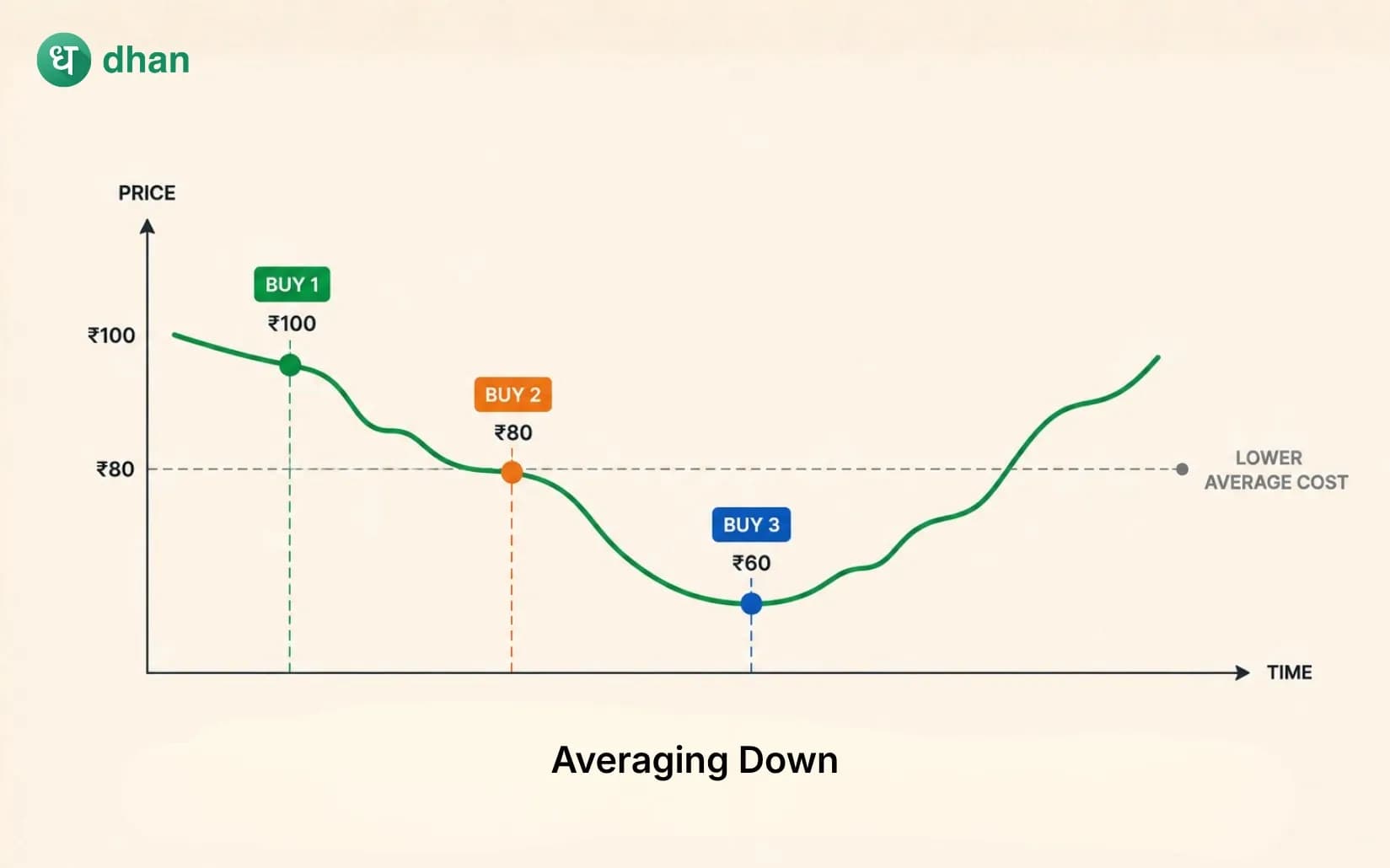
When markets fall, you accumulate more shares at lower prices. When markets rise, the value of these accumulated shares increases. This disciplined process of accumulation enhances the effect of compounding over time.
Why time is the biggest driver of compounding
While understanding the power of compounding, investors must know the value of time. Let’s analyse two situations that will explain the value of time in compounding.
There are two investors.
- Investor A starts investing in stocks at 25
- Investor B starts investing in stocks at 35
Considering that both invest the same monthly amount and get the same returns, investor A will accumulate more wealth till retirement as the investment horizon is longer. The extra 10 years make room for additional compounding cycles.
The most interesting aspect about compounding is that the majority of the growth takes place in the later years. The first decade is necessary to build the foundation. Often, the real acceleration takes place in the second decade.
Therefore, investors delaying their contributions eventually lose out on the number of compounding cycles. That’s why you must start early, even if the amount is small. This approach can be more powerful than investing larger amounts later.
Long-term investment illustration
Let’s consider another scenario. An investor starts a monthly SIP in a stock and continues for:
- 10 years
- 20 years
- 30 years
In the initial 10 years, the growth remains steady but moderate. By 20 years, the corpus grows significantly larger. This growth does not come just from additional investments, but from the compounding effect of the returns.
The growth curve accelerates sharply by the end of the third decade. A large portion of the final corpus may come from accumulated returns, not the capital invested.
This implies that the longer you stay invested, the more compounding works in your favour. With short-term investments, you may not experience this exponential growth fully. Ultimately, patience and long-term commitment get rewarded by compounding.
Key benefits of compounding in stock
Compounding turns time into a powerful ally to grow your wealth. Investors can benefit in several ways from the power of compounding.
Steady wealth creation
Compounding helps to accumulate wealth in a gradual and structured manner. There’s no pressure to buy too many shares at a time.
Accessibility
Investors can start an SIP in a stock with a small amount. This makes it suitable for salaried individuals.
Goal Achievement
With compounding in stocks, your long-term goals like retirement planning, buying a home, or funding the education of your kids become more achievable.
Reduced emotional investing
Regular investing, including stock SIPs, helps you stay disciplined. This significantly reduces emotional reactions even when the market turns volatile.
Potential to beat inflation
Over long periods, equities have the potential to generate returns that outpace inflation.
Factors that strengthen compounding
Here’s how investors can maximise the power of compounding.
Start investing early
Your money gets more time to grow in the market when you start your contributions early.
Stay invested
Over extended periods, your investments may go through several market downturns. However, avoid exiting the market during these periods. Compounding needs continuity, and the market eventually recovers over the years.
Increase investment amount over time
Consider increasing your investment amount each year or periodically. These additional contributions help in accelerating your wealth creation.
Avoid frequent selling
Maintain continuity as you invest in stocks. When you interrupt your investments, it breaks the cycle of compounding.
Select quality stocks
Choose fundamentally strong stocks that are likely to perform consistently over time. This will help you achieve more stable benefits of compounding.
Common mistakes that break compounding
Many investors unknowingly weaken compounding, which deprives them of better returns in the future. Try to avoid these common mistakes that may break the compounding cycle.
Stopping investments during market corrections
When markets correct, the chances of accumulating shares at lower prices are the highest. In case you stop investing, fearing volatility, it reduces your long-term gains.
Selling too early
Sometimes, investors sell their stocks too early. Compounding doesn’t play out fully in short periods of investment.
Frequent buying and selling of stocks
You may be constantly chasing high-performance stocks. However, frequently buying and selling stocks disrupts long-term growth.
Trying to time the market
Investors often wait for months, trying to time the market. However, this results in missed opportunities and breaks their investment cycles.
Who Should Focus on Compounding in Stocks?
Long-term investors can benefit the most from the power of compounding through stocks. The compounding effect benefits:
- Young investors who are starting their careers
- Salaried individuals building disciplined savings habits
- Those planning for long-term goals
- Investors building a retirement corpus
- Investors with moderate risk appetite but looking for methodical growth
Conclusion
The power of compounding is one of the most defining strategies of wealth creation. When you combine the effect of compounding with disciplined long-term stock investing, regular contributions can help you create substantial wealth over time.
While compounding does not require timing the market, it does require time in the market. If you are planning your long-term financial goals, try to begin early, so that you can stay invested for a longer period to capitalise on the effect of compounding.
FAQs
What is compounding in stocks?
Compounding in stocks refers to the potential to earn returns on both your original investment and previously earned returns.
How long should I invest so that I can benefit from compounding?
Ideally, you must stay invested for 10 years or more to benefit from compounding. The impact becomes more visible over a longer time horizon.
Is compounding guaranteed in stocks?
In equity markets, the returns are linked to the market and not guaranteed. However, when you stay invested for a long term, you stand a better chance to benefit from compounding.
Does stopping investments affect compounding?
Yes. When you interrupt your investments, it reduces the number of compounding cycles. This may lower your long-term gains.
Should I increase my investment amount over time?
Try to increase your investment amount as your income grows every year. This approach can help you significantly accelerate your wealth creation.