10 things to consider before buying US Stocks


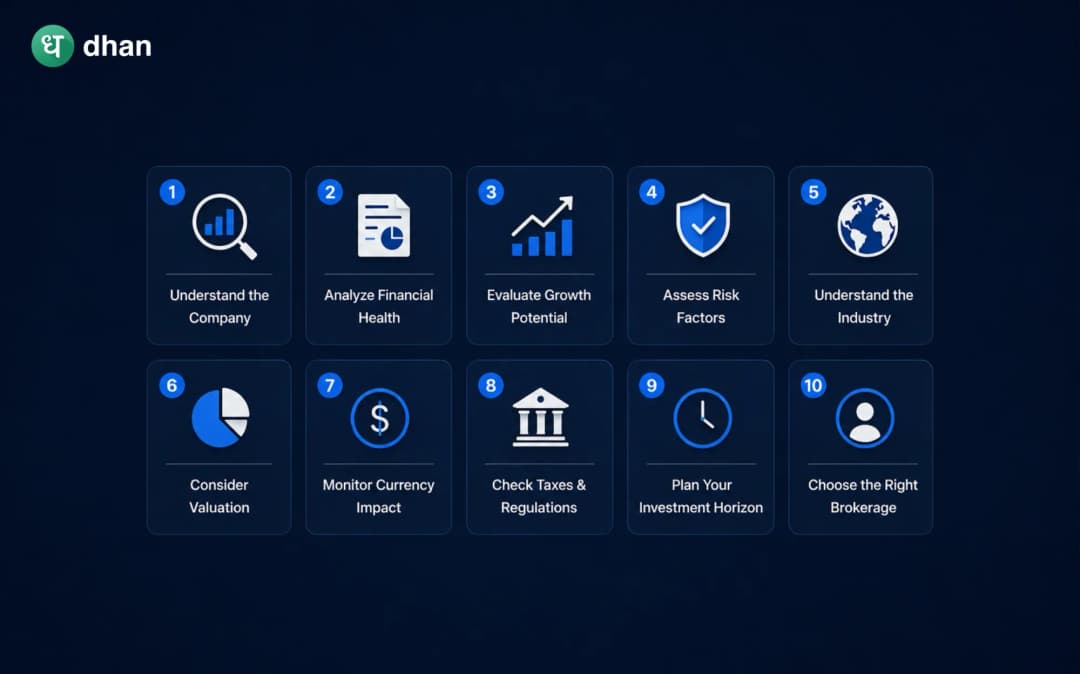



Buying US stocks from India has never been more accessible. But accessibility does not mean simplicity. Skipping these steps costs more than just money.
Let's examine the ten most important things every Indian investor must know before buying US stocks.
Understand the Liberalisation Remittance Scheme (LRS) framework first
The LRS is the legal backbone of all overseas investments made by Indian residents. LRS allows you to contribute up to a maximum of $250,000 into a financial year for investment purposes. It applies per person per year for all foreign transactions, whether education, travel, investments, or everything in between. Exceeding this limit without RBI approval is a Foreign Exchange Management Act (FEMA) violation. Invest in the amount you'll use in a year.
Take into account the Forex trading exchange rate
International funds are sent at the prevailing rate of exchange to be converted into USD. A lower exchange rate for the rupee results in fewer dollars for the same number of INR. On the flip side, if your stocks appreciate by gaining value in the US, and your rupee appreciates, then that increase in stocks will still drag down your return in your native currency. Currency risk runs in both directions and should be considered along with the other potential returns you expect before deploying funds.
Apply Tax Collected at Source (TCS) to remittances
Under the current rules, the TCS of 20% is applicable on LRS transactions exceeding ₹7 lakh per financial year. This is not the last payment tax. It is deducted in advance and is a part of your total income tax liability when you file your ITR. It does, however, temporarily affect investment capital. Plan your remittance amounts across the financial year to manage TCS cash flow efficiently.
Take your time in selecting your appropriate broker
Not all Indian brokers have direct equity share trading in the USA. A SEBI-registered broker with tie up with a US custodian or registered foreign networks is required. Check if fractional share trading is available, the quality of customer service, order types offered, and the fee structure. Your broker choices have a direct result on your executing good quality and overall investing experience.
Recognise the difference between direct and indirect routes
With direct investing, qualified brokers invest in US stocks via the LRS route. Indirect investing refers to investing in India through mutual funds or ETFs that focus on the US market, including Nasdaq 100 ETFs and fund-of-funds structures.
The indirect approach requires no LRS paperwork, no foreign asset declaration, and involves simpler taxation. For investors starting out, the indirect route offers a practical and low-friction entry point into US markets.
Know the principle of taxation of US stocks in India
This is the area in which most investors lack preparation. Income earned on US stocks with a short term of 24 months is taxed according to your applicable income tax slab. While gains on holdings above 24 months attract 12.5% long-term capital gains tax. Dividends paid by US companies are subject to a 25% withholding tax at source.
The India-US Double Taxation Avoidance Agreement (DTAA) allows you to avail of this tax withheld in India without ending up paying the same tax in both countries. Store dividend statements and stockbroker tax records as expenses.
Abide by foreign asset disclosure standards
Schedule FA of the ITR of all Indian residents who have held foreign assets as investment have to be disclosed. These include accounts held at US banks, foreign brokerage firms, and shares in foreign mutual funds.
The Non Disclosure carries stringent consequences under FEMA and the Black Money and Imposition of Tax Act, 2015, which includes prosecution as well as fines up to three times the value of such assets. This is, of course, essential regardless of the amount of investment.
Watch out for estate and inheritance complications
US-listed assets held directly by Indian residents are subject to the US estate tax for non-resident aliens. The exemption threshold for non-residents is only $60,000, far lower than the $12 million threshold for US citizens. Assets above this limit held at death can attract US estate tax at rates up to 40%. This is a significant and often overlooked risk for larger portfolios. Consult a cross-border tax advisor before building substantial direct US stock positions.
Track corporate actions and time zone differences
US markets operate on Eastern Time, which means trading hours fall between 7:00 PM and 1:30 AM IST. Earnings announcements, dividend declarations, stock splits, and mergers happen outside Indian market hours. Staying on top of corporate actions requires active monitoring across time zones. Missing a key announcement can mean entering or exiting at a significantly different price than anticipated.
Start with index exposure before picking individual stocks
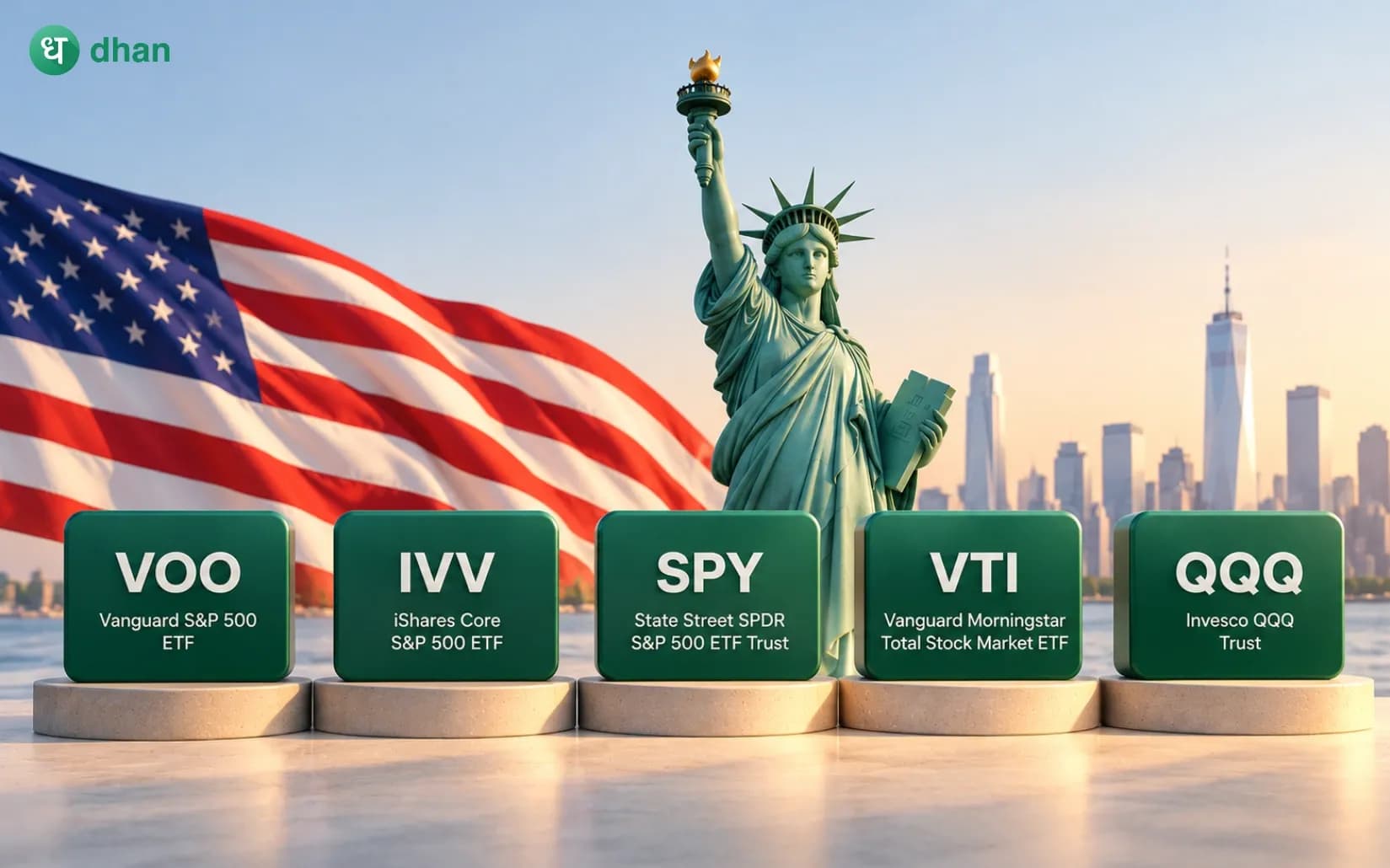
Individual US stock picking requires understanding quarterly earnings cycles, SEC filings, analyst coverage, and sector-specific dynamics that differ significantly from Indian markets. For most retail investors, starting with a Nasdaq 100 ETF or a US-focused mutual fund builds meaningful exposure without the research burden of stock selection. Once you understand how US markets behave across cycles, individual stock picking becomes a more informed decision.
Do your homework, then make your move
You now have the regulatory framework, tax clarity, and compliance checklist to move forward confidently. Explore US-focused mutual funds and Nasdaq ETFs, or open a foreign brokerage account under the LRS route if direct ownership suits your goals.
Either way, taking that first step is what separates investors who benefit from global compounding from those who remain entirely dependent on domestic market cycles.