How to Invest in US Stocks from India?





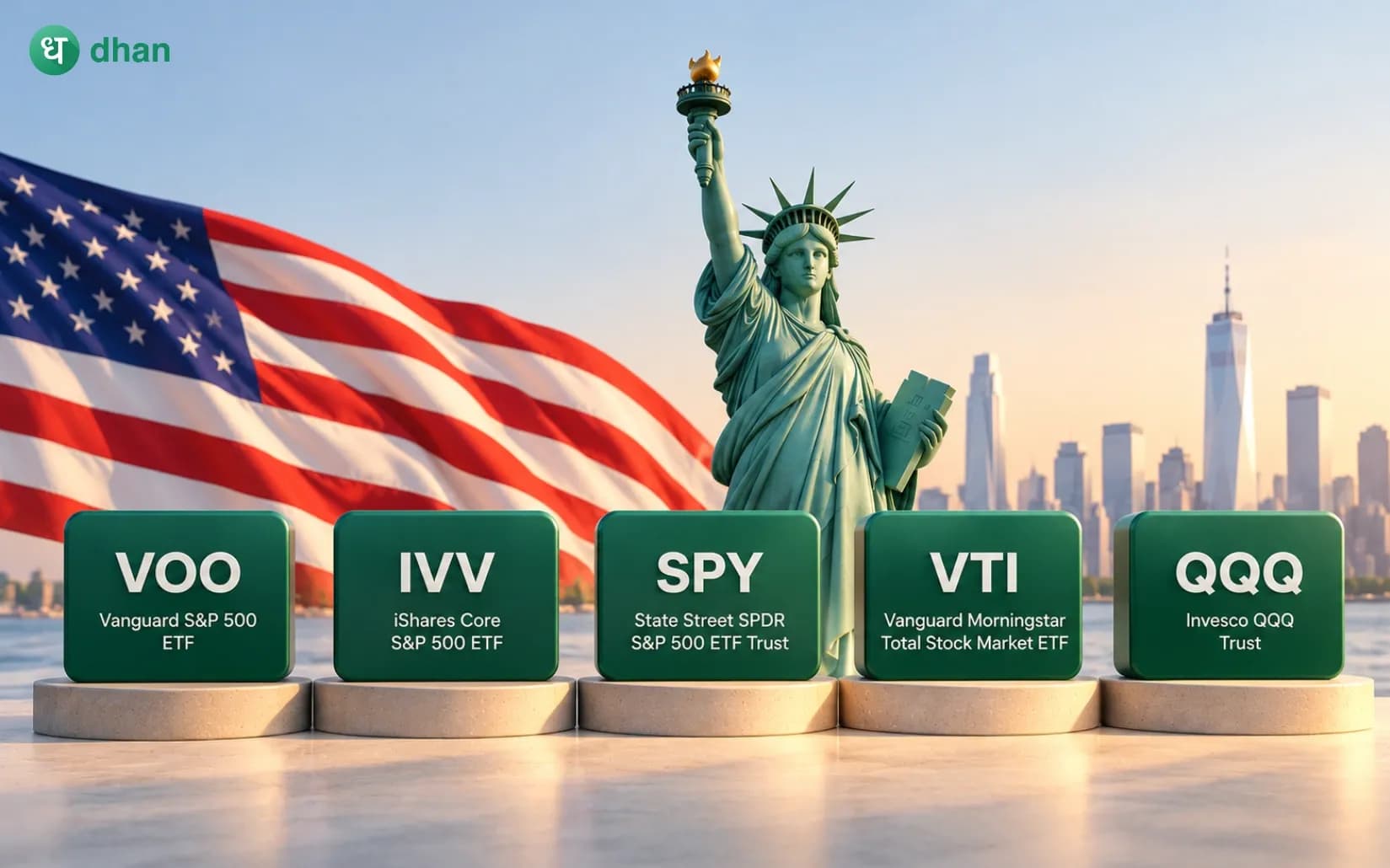

Apple, Google, Tesla, Amazon. These are not just brand names. They are wealth-creation machines that millions of Indians now want in their portfolios. Indian residents can legally invest in US markets through a regulated framework. Let's explore exactly how this works, what it costs, and what to watch before you start.
Why invest in US stocks?
The US stock market provides you with the option to invest in companies that are not available in Indian markets. Technology giants, global consumer brands, semiconductor leaders, and biotech innovators are all listed on the NYSE and NASDAQ.
Your portfolio expands according to the demand of the world and not just your country. There's also the benefit of currency diversification. When the Rupee depreciates, you benefit from that extra return in INR terms, if your investments in the USA are holding or going up. The diversification of exposure to the US markets also helps to diversify the growth runway for long-term wealth builders.
The role of the RBI's Liberalised Remittance Scheme (LRS)
Before exploring how to invest in US stocks from India, understanding the legal structure is essential. The Reserve Bank of India permits resident individuals to remit up to USD 250,000 per financial year under the LRS.
This remittance can be used for purchasing foreign securities, including US stocks and ETFs. All investments made through LRS are legal, fully compliant, and reportable in your income tax filings.
Key points to know about LRS:
- The annual limit is USD 250,000 per individual, per financial year
- Minors can also invest under LRS with parental guidance and proper documentation
- Tax Collected at Source (TCS) at 20% applies to remittances above Rs 7 lakh per year under current regulations
- All foreign income must be declared in your ITR under the Foreign Assets schedule
How LRS works:
- Open an account on a SEBI and RBI-registered international investing platform.
- Initiate a remittance request from your Indian bank account.
- The bank carries out the transfer in accordance with the framework of the LRS transfer.
- The funds are deposited into your foreign brokerage account within two to five working days.
- Use those funds to purchase U.S stocks or U.S ETFs.
3 main routes to invest in US stocks
Indian residents have three main ways to access US equities, depending on their levels of investment experience and engagement. The decision of which path to take is based on comfort level, tax filing complexity, and the quantity of funds you are willing to invest.
Investing via Indian Brokers
There are a handful of Indian brokers who allow you to invest in US markets from India. These brokers make it easy for you to buy and sell stock while simultaneously ensuring that payments, dividends, and payouts are seamless. All you have to do is complete a KYC process to open a US stock investment account from India.
Direct investment through a US brokerage account
In this route, it involves getting a brokerage account with the broker organisation and acquiring U.S.-listings straight.
The process typically involves submitting KYC documents such as your PAN card, Aadhaar, proof of address, and bank details. After approval, you move the money over the LRS, and the funds arrive in your foreign brokerage account in a matter of a few business days.
Then, you will be able to purchase and sell the US stocks directly from the NYSE and Nasdaq. The advantage of this method is that you have complete control over the individual shares and also, in many instances, control over the fractional share price, because at least some stocks in the United States have high share prices.
Indirect Investment Through US index funds and ETFs in India
While index-based investing is a simpler option, it may not be ideal for investors who want to get a hands-on understanding of the value of the investments in the US stock market. There are a number of Asset Management Companies (AMCs) in India that provide international mutual funds and Fund of Funds (FoFs).
These invest directly in US equity indices like the S&P 500 and Nasdaq 100, or specific US-focused funds. These funds are denominated in Indian currency, so no LRS remittance is needed. The minimum investment required to embark on SIP is relatively low, making it the most convenient way for novice or budding investors to make their first steps in the volatility of the foreign markets.
Most important expenses to consider prior to investing
Knowing your costs upfront helps you calculate real returns, not just market returns.
Expense ratio
This is an annual fee that is deducted from the value of your investment and applies to mutual funds and ETFs.
Remittance charges
Bank wire transfer fees and forex conversion expenses are paid by direct route investors every time they transfer funds outside India through LRS.
Brokerage commissions
Foreign brokerages can impose per trade charges, or platform charges, which differ considerably from one brokerage to another.
Currency risk
If the movement of local currency towards U.S. dollars is going against you in your investment path, it will impact all of your investment paths.
Exit load
Most US-focused mutual funds in India charge an exit load if you redeem within one year of investment.
STT and brokerage
In the case of the Nasdaq ETFs, they fall under Securities Transaction Tax, and the brokerage fees apply to each transaction in and out of the ETFs on Indian exchanges.
Annual account keeping charges
Foreign brokerage platforms charge a fixed annual fee irrespective of their trading activity.
Inactivity fees
Some foreign brokers charge you an inactivity fee if you don't trade for a long time in your brokerage account.
Start investing in the US markets today
The opportunity to own a piece of the world's largest companies is real and accessible. Indian investors now have a clear legal framework, multiple platform options, and a growing support ecosystem.
Start with a small amount, understand the tax implications fully, and build your international portfolio gradually over time. The earlier you start, the longer your dollars get to compound across market cycles.