Commodity vs Forex Trading


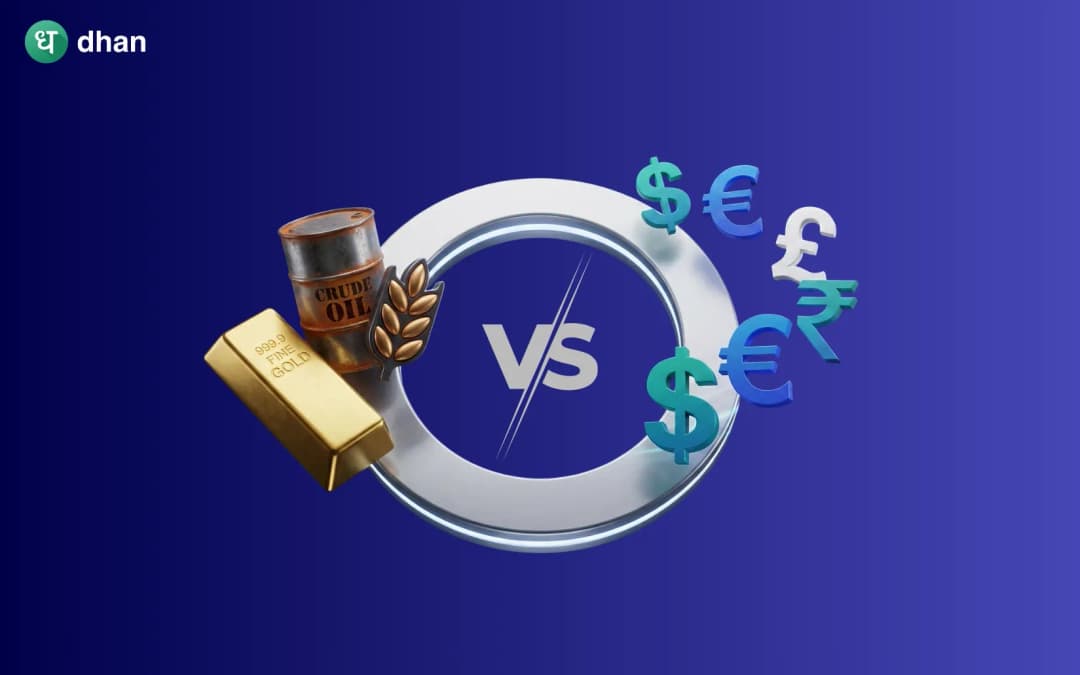


With the digital revolution, more Indian traders are looking beyond stocks to discover the profitable domains of commodity and forex trading. Although both markets provide strong prospects, they also pose different challenges and risk profiles.
These differences are important to understand for traders in order to select the trading style that suits them best, according to their interests, risk appetite, and market knowledge. Here, in this blog, we will discuss commodity vs forex trading, their drivers, risks, leverages, and who should consider investing in them.
What is commodity trading?
Commodity trading refers to the purchase and sale of contracts of raw materials such as gold, crude oil, silver, natural gas, agricultural commodities, and base metals using Demat Account. These are standardised contracts on commodity exchanges such as the Multi-Commodity Exchange (MCX) in India or the Chicago Mercantile Exchange (CME) overseas.
There are two major types of commodities traded:
- Hard Commodities: These are natural resources that are extracted or mined, such as gold, crude oil, copper, coal, and natural gas. Hard commodities have relatively stable supply chains and are susceptible to geopolitics, demand from industry, and extraction policies.
- Soft Commodities: Soft commodities are agricultural or livestock products, such as wheat, coffee, sugar, cocoa, cotton, etc. Soft commodities tend to be more volatile because they are more affected by weather, seasonality, and changes in crop output.
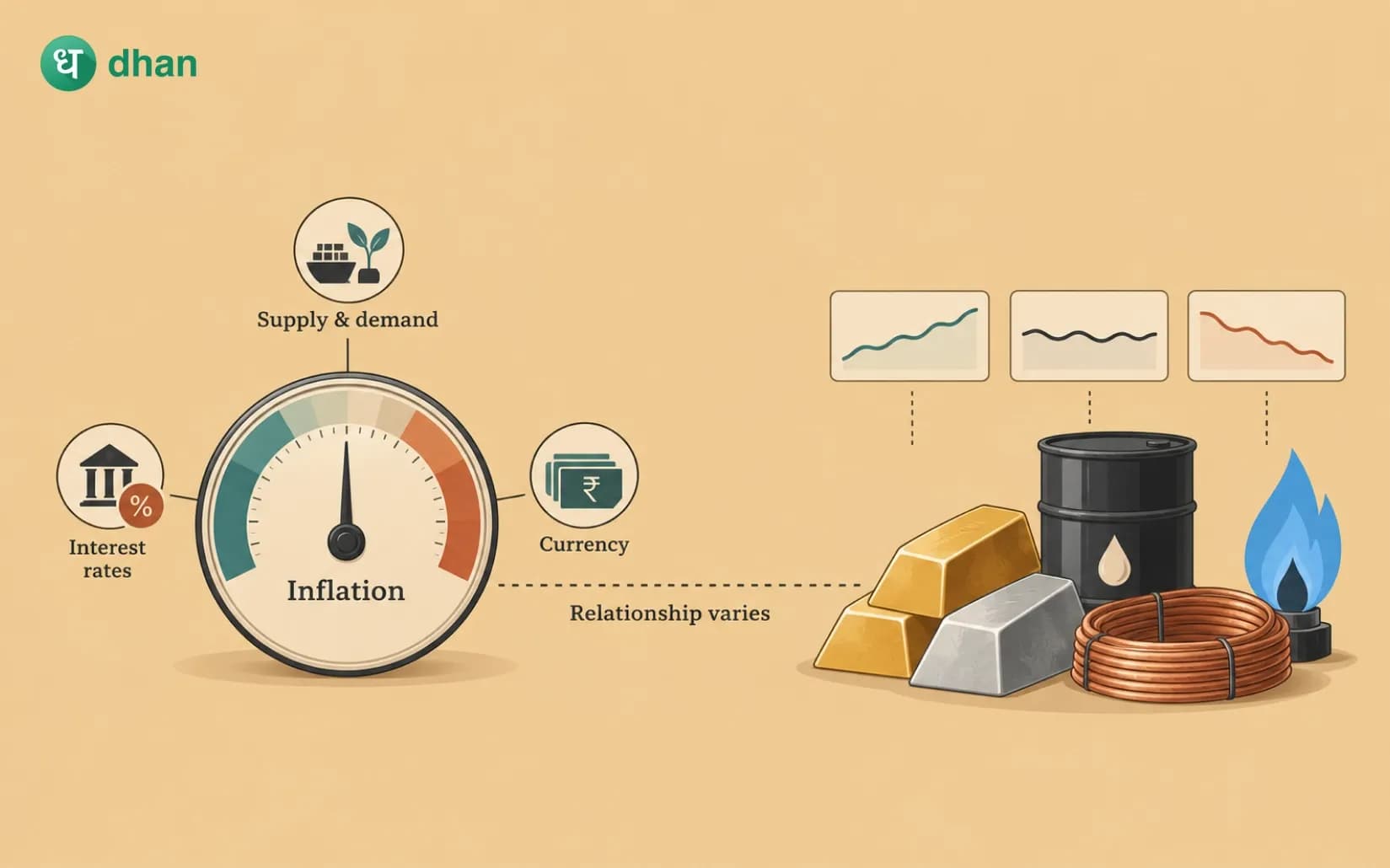
The price of commodities is influenced by demand and supply, geopolitical tensions, weather conditions, and broad macroeconomic trends. For example, any disruption in the supply of crude oil because of war or unfavourable monsoon rain affecting the production of crops can cause abrupt price movements in the corresponding commodity futures.
In India, the MCX market trading sessions are as follows:
- Pre-open Session: 8:45 AM - 8:59 AM (Order placement and cancellation only)
- Normal Session: 9:00 AM-11:30 PM IST: All commodity contracts available.
Traders can use Dhan's platform to embark on their commodity trading journey. Dhan offers trading in commodities such as copper, crude oil, gold, natural gas, nickel, silver, and zinc with real-time price quotes, margin calculators, and seamless order execution.
Drivers of the commodity market
A few of the major drivers of the commodity market are:
- Geopolitical Events: Geopolitical tensions or sanctions can cause supply disruptions, especially in energy markets.
- Supply and Demand: Global oil or metals demand compared to production output dictates the direction of the price.
- Seasonality and Weather: Weather conditions and harvest states control agricultural commodities.
- Currency Movements: U.S. dollar-denominated commodities move inversely with dollar appreciation.
- Economic Growth: Industrial expansion raises demand for base metals and energy products.
What is forex trading?
Forex trading is the process of exchanging one currency for another. The RBI gives Indian traders permission to trade only in Indian currency (Indian Rupee) based currency pairs on Indian exchanges. The pairs include:
- USD/INR (US Dollar against Indian Rupee)
- EUR/INR (Euro vs. Indian Rupee)
- British Pound vs. Indian Rupee (GBP/INR)
- JPY/INR (Japanese Yen and Indian Rupee)
In contrast with commodity markets, the forex trading market trades 24 hours a day, five days a week, in major financial centres from London and Tokyo to New York. The forex prices are influenced by macroeconomic data, central bank actions, interest rate differentials, inflation numbers, and political events.
Forex traders tend to speculate on the strength of currency, trade balance shifts, and monetary policies that affect the exchange value of currency.
Drivers of the forex market
Some of the major drivers of the forex market are:
- Interest Rate Differentials: Currency appreciation is triggered by higher interest rates that attract foreign capital.
- Central Bank Policy: RBI, Federal Reserve, or ECB policy changes can lead to currency volatility.
- Trade Balance: Those economies that consistently have trade surpluses have stronger currencies.
- Political Stability: Stable currencies and economies perform better in unstable global conditions.
- Inflation Data: Low inflation levels are more conducive to currency strength with tight monetary policy.
Key differences between commodity and forex trading
For a better understanding of commodity vs forex trading, it is essential for investors to understand the major differences between the two. Some of the major differences between the two are mentioned below:
Selecting Between Commodity and Forex Trading
The choice between the two markets relies on the trader.
Commodity trading could be appropriate for a trader if:
- They have a deep understanding of global supply-demand trends and sector-specific fundamentals.
- They prefer short- to medium-term trades linked to tangible assets.
- They want exposure to inflation-protected assets (like gold).
Forex trading may suit traders if:
- They have the time to monitor macroeconomic data and central bank signals.
- They prefer high liquidity and 24/7 trading flexibility.
- They are comfortable managing leverage and currency correlations.
Research, discipline, and managing risks are important in both markets.
Conclusion
Forex and commodity trading offer attractive opportunities for traders to diversify and actively participate in global markets. While both markets provide leverage advantages, liquidity, and exposure to the global market, their drivers are very different.
Forex trading is suitable for traders who specialise in macroeconomic data and international currency dynamics. Commodity trading, on the other hand, will attract those interested in physical assets and international supply and demand dynamics.
Ultimately, the decision is made by traders based on their trading temperament, knowledge depth, and risk management ability. Whether they are inclined towards commodity cycles or currency markets, an understanding of the underlying fundamentals is the first step towards building a successful trading plan. Investors can use the Dhan platforms to start their trading journey.
FAQ's About Commodities and Forex markets
1. Are commodities and forex markets open 24/7?
The Forex market is available 24/7, 5 days a week, so they are more easily accessible. The commodity market is not open 24/7; it has set working hours for trading.
2. Is forex trading permitted in India?
Forex trading in India is controlled by RBI and SEBI, and is at present limited to currency pairs involving the Indian Rupee (INR) - such as USD/INR, EUR/INR, GBP/INR, JPY/INR.
3. Can I trade commodities and forex with the same broker?
Yes, most brokers and trading platforms offer entry into both markets. Just ensure that the broker is SEBI-regulated (for the Indian exchanges), and look at margin requirements, trading commissions, and leverage policy before choosing to avoid any surprise at the end.
4. Can I hedge my stock portfolio using commodities or forex?
Yes, forex and commodity trading (like gold) are widely utilised by market participants to hedge against the risk of their equity portfolio. Commodities can be utilised as a natural hedge against inflation, and hedging in forex is utilised against unfavourable currency movements in international portfolios or businesses. Commodities and forex trading are not for beginners. They are best suited for experienced traders who have a deep understanding of Indian and international financial markets.
5. How are gains from commodity or forex trading taxed in India?
Profits or losses from trading in commodities and currencies are usually treated as business income in Indian tax law. They shall be reported under 'Income from Business or Profession' and taxes must be paid based on their relevant slab rates.