What are Contra Funds?




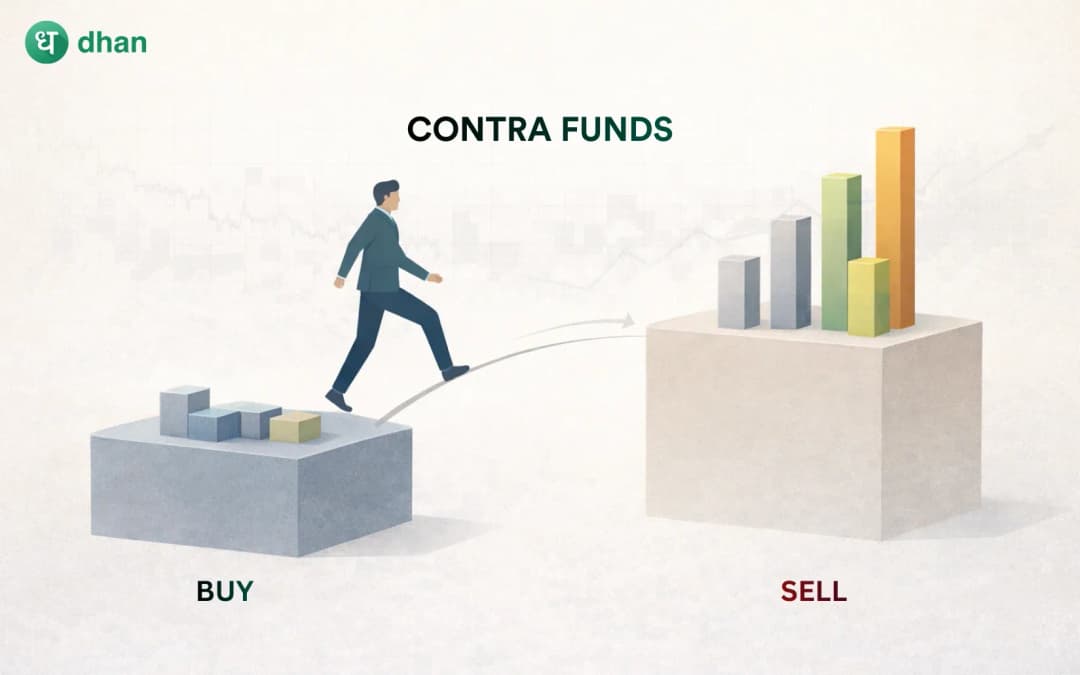




Investors many times seek methods to multiply their wealth within equity markets, but most of their approaches aim to acquire stocks or funds that are already doing well or follow market conditions. Nevertheless, there is also another strategy available when investors go against the herd.
It involves investing in stocks or funds that are currently out of favour, but have promising long-term prospects. That is where contra funds are involved. This article describes what contra funds are, how they operate, their advantages, and who they may suit the best.
Understanding contra investing
Contrarian investing involves investing in assets or views that go against the mainstream market sentiment. Rather than purchasing popular or high-performing stocks, contrarian investors find value in places that other investors may be ignoring or selling on a short-term basis.
Contra funds apply this philosophy to the mutual fund investment by investing capital in undervalued or temporarily unpopular stocks, hoping that their actual worth will become realised over time. This strategy entails patience and a long-term outlook.
What are contra funds and how do they work?
A contra fund is a form of equity mutual fund which invests mostly in stocks or sectors that are either underperforming or not in favour within the market, depending on a contrarian investment policy. These funds are geared towards purchasing undervalued assets at a discount and retaining them, hoping that they will perform eventually and yield better returns later.
As per the regulation, contra funds are required to invest at least 65% of their total assets in equity and equity-related instruments according to market standards. Contra funds, unlike traditional growth or trend-following funds, invest in stocks with solid fundamentals, but which are temporarily under-performing, because of market pessimism or sector difficulties.
Key characteristics of contra funds
Now you should know what contra funds exactly are. Contra funds are characterised by a number of unique features that distinguish them from other equity mutual funds:
- Stock identification: The fund managers make an analysis of stocks that are underpriced because of temporary problems like poor profits, depression in the industry or negative sentiment.
- Contrarian purchase: The fund buys these neglected stocks rather than going with the popular trend. These stocks are bought at low prices as the fund expects these stocks to recover.
- Long-term horizon: The holdings are retained over a number of years, which is around 3 to 5 years or even more. This gives time to the market to realise the underlying value.
- Active management: The adjustments in the portfolio are undertaken with regard to the continuing research, economic indicators, and the performance of the company.
- Higher risk exposure: These funds may be risky because they invest in stocks that are out of favour.
Benefits of investing in contrarian funds
Contra funds offer several potential advantages for investors willing to adopt a long-term contrarian approach:
- Opportunity to buy low: By investing in undervalued stocks, investors may benefit when markets eventually price these assets fairly.
- Potential for higher returns: If the recovery plays out as anticipated, contra funds can outperform traditional equity funds over time.
- Diversification: Adding contra funds can help diversify an equity portfolio by incorporating a different investment philosophy.
- Professional management: Fund managers use detailed research and market insights to select potential turnaround stocks.
- Long-term wealth creation: With patience, these funds aim to capitalise on market inefficiencies and deliver value.
How are contra funds different from value funds?
Despite the fact both contra and value funds target stocks that might be underestimated, they are different in philosophy and approach:
- Investment approach: Contra funds put money in stocks or industries that are currently under-performing because of sentiment-related or cycle-related reasons, whereas value funds place money on stocks that are trading at a price below intrinsic value, irrespective of sentiment.
- Risk profile: Contra funds have the tendency to be more risky, being contrarian in nature, whereas value funds may be a little safer.
- Time horizon: Both require a long-term perspective, but contrarian funds generally require even longer patience for trend reversal.
Risks and limitations of contra funds
Although contra funds can offer attractive opportunities, they also come with certain risks:
- Extended underperformance: Stocks may stay out of favour longer than expected, leading to delayed returns.
- Higher volatility: These funds can be more volatile than mainstream equity funds due to their contrarian positioning.
- Reliance on fund manager skill: Performance depends heavily on the manager’s ability to identify undervalued opportunities.
- Not for short-term goals: Investors with short horizons may not see meaningful gains.
Who should consider investing in contra funds?
Contra funds are best suited for:
- Long-term investors with a horizon of at least 3–5 years or more.
- Those with higher risk tolerance willing to endure volatility for potential long-term gains.
- Diversified portfolios where a contrarian strategy can complement traditional equity holdings.
- Investors with conviction and patience, as short-term underperformance is common.
This strategy may not be ideal for conservative investors or those seeking stable income or short-term gains.
Conclusion
Contra funds are a special type of equity mutual fund involving making investments against the crowd by investing in out-of-favour yet fundamentally promising investments. These funds will cash in on market corrections and inefficiencies by purchasing undervalued stocks and retaining them with a long-term perspective.
Although they provide the possibility of high returns and diversification, they are also associated with increased risk and need patience. Before deciding to invest, it is important to know what contra funds are and align them with your financial objectives and your risk-taking ability.
FAQs
What are contra funds?
Contra funds are equity mutual funds that follow a contrarian investment strategy, buying undervalued or out-of-favour stocks with potential for long-term recovery.
Are contra funds risky?
Yes. Due to their contrarian positioning and focus on undervalued assets, contra funds tend to be more volatile than traditional equity funds.
Can beginners invest in contra funds?
Beginners can invest, but they must understand that these funds require a long-term view and tolerance for short-term fluctuations.
How long should one stay invested in contra funds?
A minimum horizon of 3–5 years or more is typically recommended to allow recovery and value recognition.
Should I invest in contra funds in 2026?
There is no time limit to invest in contra funds. Based on your preferences and your risk appetite, you can consider these funds. However, you need to have a long-term investment horizon.