What are Multi-Cap Funds?




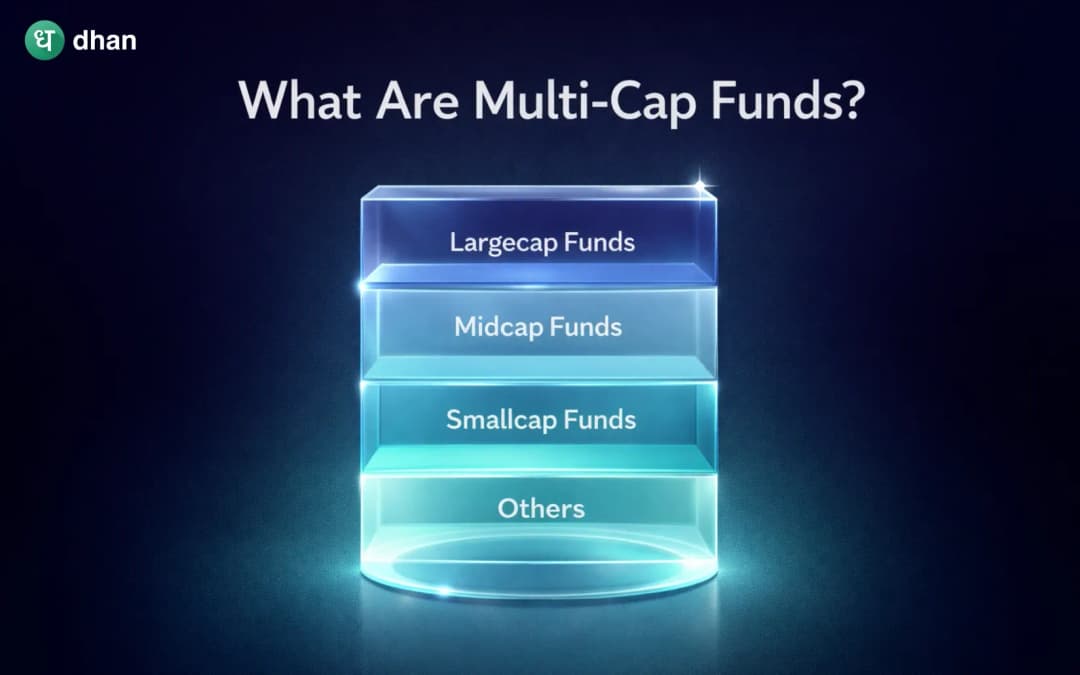




When it comes to investing in equities, it’s easy to land in a common dilemma - where to invest. While you find large caps safe, the growth trajectory tends to be slow. On the other hand, the volatility of mid and small-cap funds makes them risky. What’s harder is to time the right market phase for each category, particularly if you’re investing for the long term.
In this context, you must understand why multicap mutual funds are relevant to your portfolio. As the name suggests, these funds invest in companies of different sizes. This helps you to gain exposure to large, mid, and small-cap stocks without actively monitoring individual allocations.
Multi-cap funds are suitable for investors who want a diversified exposure to equities but don’t want to adjust their portfolios constantly. In this blog, we have discussed how these funds work, so that you can decide whether you should include a multicap fund in your long-term investment strategy.
Multi-cap funds explained
Now, let’s understand what multi-cap funds are. These are equity mutual funds that invest across companies with different market capitalizations. Therefore, you get access to the large-cap, mid-cap, and small-cap sectors through a single investment.
As per the guidelines prescribed by SEBI, multicap funds need to allocate at least 25% of their assets to each of the three categories. This helps the fund portfolio diversify, regardless of the market conditions. The fund manager can adjust the remaining portion of the assets based on their strategy.
The key objective of a multicap fund is to ensure balance. Large cap stocks provide stability, while you gain the growth potential from mid-cap stocks. Small-cap stocks further strengthen aggressive growth over the longer horizon.
When a fund combines all three, you can smooth out volatility and participate in the overall growth of the market. As an investor, you need not manage multiple mutual funds. A single fund helps you develop a diversified equity portfolio.
Multi-cap funds vs other equity fund categories
If you want to clearly understand what multi-cap funds are, you must know how these funds differ from other types of schemes.
Multi-cap funds vs large cap funds
Large-cap funds invest in established companies. They already have stable earnings. Therefore, they tend to be less volatile, but they also have a limited growth potential. On the contrary, multi-cap funds combine large caps with mid and small-cap companies. This allows investors to make the most of higher growth opportunities while maintaining a stable portfolio.
Multi-cap funds vs. flexi-cap funds
Fund managers managing flexi-cap schemes enjoy complete freedom to allocate the investment across different caps without any minimum limit. However, multi-cap funds must allocate a specific minimum percentage to each segment. As a result, they are more structured than flexi-cap funds. On the other hand, the discretion of the fund manager largely determines the outcome of flexi-cap funds.
Multi-cap funds vs mid & small-cap funds
The focus of mid and small-cap funds is to achieve higher growth. However, these funds tend to be more volatile. Multi-cap funds balance this risk, as they also invest in large caps. This reduces sharp swings during market downturns.
Therefore, each category serves a specific need for investors. Multi-cap funds appeal to investors with their balanced diversification.
Why investors choose multi-cap funds
Now that you know what multi-cap funds are, let’s understand why investors choose these schemes.
Diversification across market segments
Investors choose multi-cap funds primarily for diversification. With these funds, you can reduce the risk of being overexposed to a single market segment.
Easy to manage
The simplicity of multicap funds makes them popular among investors. You need not manage separate funds for large, mid, and small-cap investments. Instead, you get equity exposure to all these stocks through one scheme.
Participation across market cycles
Multi-cap funds encourage you to stay invested across different market cycles. One particular segment may underperform at any point in time. However, other segments continue to support your returns. This reduces the urge to switch funds frequently.
Performance of multi-cap funds across market cycles
Investors trying to understand what they must also be aware of how these funds behave during different phases of the market.
Bull markets
Allocations in the mid and small cap segments often fetch higher returns during bull markets as growth-oriented stocks perform well. While large-cap funds offer stability, they may lag slightly in sharp rallies.
Bear markets
During downturns, large-cap stocks in a multicap portfolio help in cushioning the risk. These companies have established business models. Compared to smaller companies, they are more resilient to volatility.
Long periods
Multicap funds help to deliver consistent returns over long periods. They smooth the highs and lows over time. Multicap funds may not be able to outperform category-specific funds in short bursts. However, they tend to be more balanced in their performance across full market cycles. As a result, they are suitable for investors prioritizing stability in the long term.
Key factors to evaluate before investing in Multi-cap funds
It’s important to assess certain factors before you invest in multicap funds.
The strategy and track record of the fund manager matter. Consider how consistently the fund has maintained its allocation across different market caps and managed volatility over time.
Your long-term returns are influenced by the expense ratio. Investors can retain more of their gains when these costs are lower.
Consider examining the portfolio turnover to understand how frequently fund managers change stocks. If you notice excessive churn, it may reduce efficiency and increase risk.
Most importantly, try to understand the risk profile of the fund. Since multi-cap funds are equity-oriented, you may witness volatility in the short term. Therefore, it’s important to align with your risk tolerance.
Who should invest in Multi-cap funds?
A wide range of investors can choose multicap funds.
If you are new to equity investing, you may use multicap funds as a starting point to diversify your portfolio. Long-term investors with a moderate risk appetite may find them suitable to create wealth.
Multi-cap funds also work well for investors looking for equity growth, but don’t want to manage multiple funds actively. However, those with a low risk tolerance or short horizons for investment should be cautious about fluctuations in the equity markets.
If you are willing to stay invested through the ups and downs of the market over the long term, multi-cap funds are for you.
Common risks of investing in Multi-cap funds
Although multicap funds offer diversification, they carry the risk of equity markets.
- Since your portfolio is exposed to mid and small-cap funds, market downturns can make it volatile. If some segments underperform, you may notice a lag in short-term performance.
- The decisions of the fund manager determine the overall returns. Poor stock selection or timing can affect your outcomes.
- The behaviour of investors is another risk. During volatility, panic selling can prevent you from achieving the long-term benefits.
As you explore what multi-cap funds are, consider these risks before investing.
To wrap up
With multi-cap funds, you get a balanced approach to investing in the equity market. These funds combine large, mid, and small-cap stocks in a single portfolio. As a result, investors reduce their dependency on a single market segment. These funds help you maintain consistency and diversify your portfolio over time. So, if you are seeking balance and a disciplined exposure to equity, multicap funds can be a strong component of your portfolio.
FAQs on Multi-cap fund
Are multi-cap funds suitable for beginners?
Yes. Investors enjoy a diversified exposure to equities through multicap funds. This makes them suitable for beginners looking for a balanced approach.
How are multi-cap funds different from flexi-cap funds?
Multi-cap funds need to follow strict rules for allocation. Flexi-cap funds, on the other hand, enjoy complete freedom across different market caps.
Do multi-cap funds perform well in bear markets?
In bear markets, multi-cap funds tend to perform relatively better compared to mid or small-cap funds since they are also exposed to large-cap stocks.
How long should one stay invested in a multi-cap fund?
Consider a long-term investment horizon of at least five years when you invest in a multi-cap fund.
Can multi-cap funds replace separate large and mid-cap funds?
Yes. Many investors choose a single multi-cap fund instead of monitoring different mutual fund investments across large and mid-cap segments.