FII & DII Trends in July 2026








Key takeaways:
- FII selling pressure eased significantly in July 2026, with net outflows dropping to ₹5,778.99 crore from ₹49,028.63 crore in June, indicating a more cautious approach by foreign investors.
- Strong buying by domestic institutional investors continued to support the market, as DIIs recorded a net inflow of ₹35,099.25 crore, offsetting much of the foreign selling.
- Expectations of possible US Fed rate cuts, a stable rupee, and the start of the Q1 FY27 earnings season improved investor sentiment and encouraged FIIs to adopt a more selective investment strategy.
- Consistent SIP inflows into mutual funds kept domestic liquidity strong, allowing DIIs to continue investing, particularly during periods of market volatility.
- Going forward, corporate earnings, global interest rate decisions, crude oil prices, currency movements & geopolitical developments are expected to remain the key drivers of institutional investment flows.
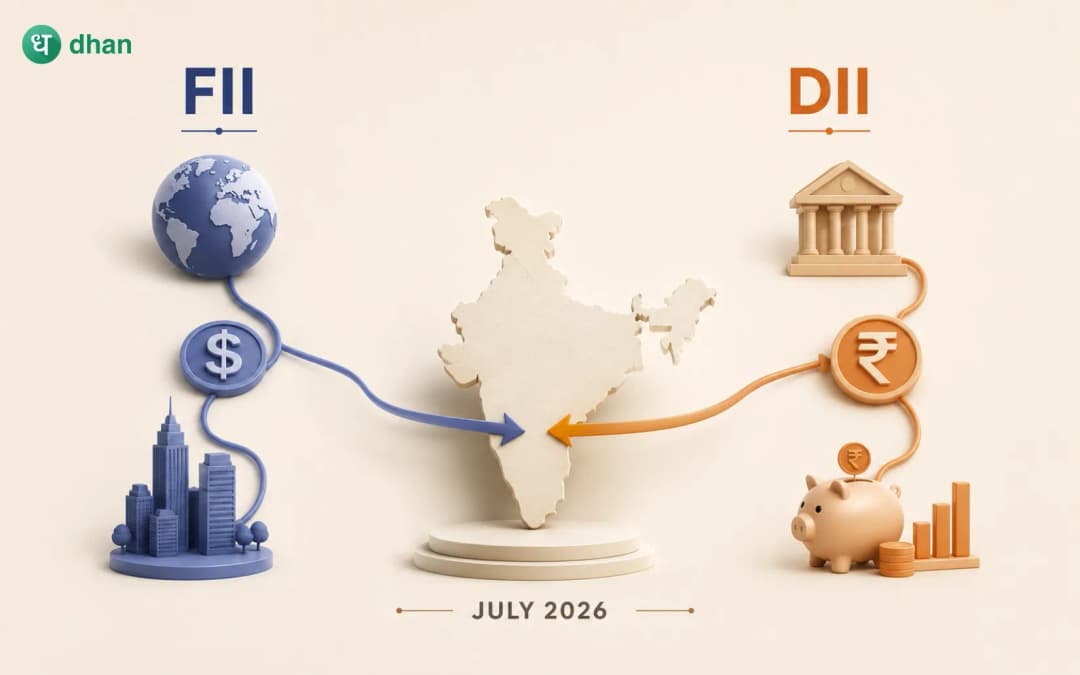
July 2026 brought some relief to Indian stock markets as selling pressure from Foreign Institutional Investors reduced compared to the previous months. FIIs continued to remain net sellers, but the outflow was the lowest in recent months.
At the same time, DIIs continued their buying trend and helped absorb foreign selling. Strong domestic participation supported the market in the time of global uncertainty.
Let's take a closer look at FII and DII activity in July 2026 and understand the factors that influenced institutional flows during the month.
FII & DII activity in July 2026
July marked the 13th consecutive month of net selling by FIIs in the cash segment. However, the intensity of selling reduced compared to June 2026.
In July, FIIs purchased shares worth ₹3,28,765.81 Cr and sold shares worth ₹3,34,544.80 Cr. This resulted in a net outflow of ₹5,778.99 Cr from Indian equities.
FII outflow declined compared to June 2026, when foreign investors sold equities worth ₹49,028.63 Cr on a net basis.
Domestic investors continued to remain strong buyers during the month. DIIs purchased shares worth ₹4,07,189.34 Cr and sold shares worth ₹3,72,090.09 Cr, resulting in a net inflow of ₹35,099.25 Cr.
Here is the data on FII and DII inflows and outflows for July 2026.
Data source: NSE
Why did FII selling ease in July 2026?
As we saw in the FII data, foreign investors continued selling in July, but the selling pressure reduced sharply compared to previous months. A combination of global factors and improving market conditions influenced investor decisions.
- One of the reasons was changing expectations around global interest rates. Investors continued tracking the US Federal Reserve's policy outlook, but expectations of possible rate cuts provided some support to emerging markets.
- The beginning of Q1 FY27 also played an important role. Foreign investors turned their focus towards corporate earnings, revenue growth and margin performance before taking further investment decisions.
- Currency stability was another factor. Indian Rupee remained relatively stable against the US Dollar during July, reducing concerns around currency-related losses for foreign investors.
- Foreign investors also became more selective in their approach. Instead of broad-based selling, some investors focused on specific stocks and sectors based on valuations and growth opportunities.
Why did DII buying continue in July 2026?
Domestic Institutional Investors continued their buying trend in July and remained an important support for Indian markets. Consistent domestic flows helped balance the selling pressure from foreign investors.
- One of the major reasons behind DII buying was the continuous inflow of money into mutual funds through SIPs. Regular monthly investments provided fund managers with liquidity to invest during periods of market volatility.
- Domestic institutions also remained positive about India's longterm economic outlook. Expectations of stable corporate earnings, strong domestic demand and improving capital expenditure supported investor confidence.
- Domestic fund managers actively built positions in core domestic cyclicals, particularly private sector banks, power and infrastructure. Expecting strong earnings recovery from government spending and domestic credit expansion, local desks used market dips to lock in long-term valuations before foreign funds return.
Final words
July 2026 showed a clear improvement in institutional investment trends. FIIs remained net sellers for the 13th straight month. However, their outflow dropped sharply from ₹49,028.63 crore in June to ₹5,778.99 crore in July.
DIIs continued to support the Indian stock market with steady buying. Strong domestic participation helped absorb much of the foreign selling pressure.
Looking ahead, investors will closely track Q1 FY27 earnings, global interest rate decisions, crude oil prices, currency movements, and geopolitical events. These factors are likely to shape FII and DII investment trends in the coming months.