Wheel Strategy Options







Key takeaways
- The wheel strategy is an options trading approach that merges selling cash-secured puts and covered calls to potentially generate premium income while trading a stock or ETF.
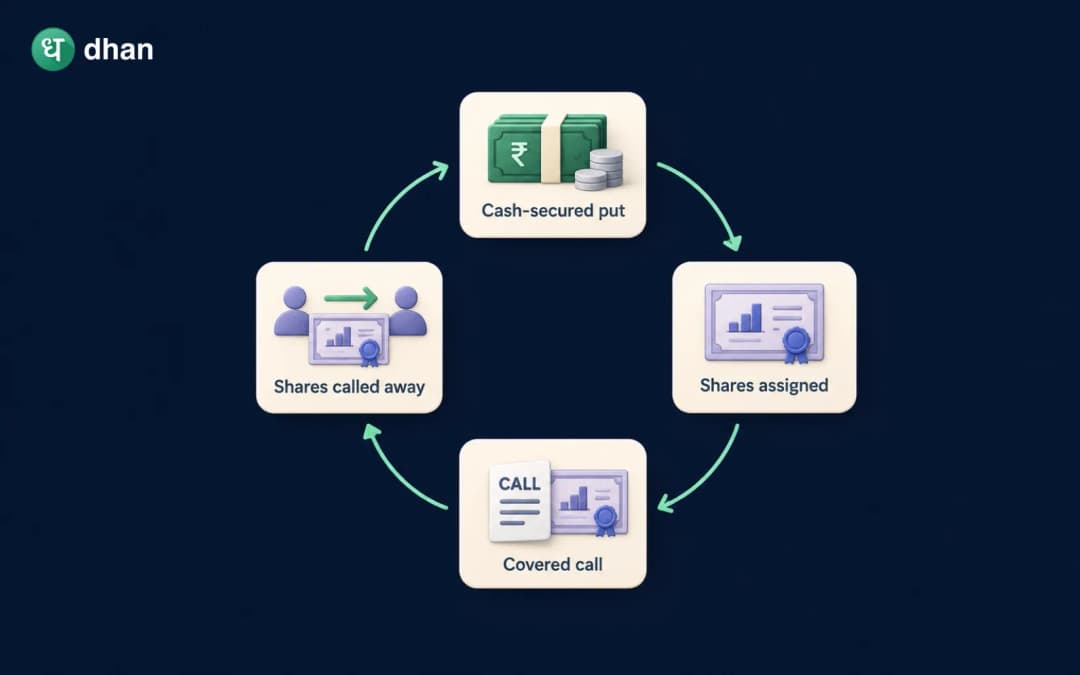
- The strategy follows a cycle: sell a put, buy or receive shares if assigned, sell covered calls against those shares, and repeat if the shares are called away.
- The wheel strategy works best when a trader is comfortable owning the underlying stock. Premium income does not eliminate the risk of a significant fall in its market price.
Options traders usually look for ways to collect premiums without constantly predicting whether a stock will move up or down. The wheel strategy offers one approach. In this strategy, a trader follows a structured cycle that combines two option-selling strategies: cash-secured puts and covered calls.
A trader sells a put on a stock they are willing to own. If the option is exercised and the trader is assigned shares, they then sell covered calls against those shares. If the shares are called away, the trader can return to selling puts and begin the cycle.
However, the wheel strategy does not guarantee a profit. Suppose a trader sells a put and the stock falls sharply. It forces the trader to hold the stock, or the stock can fall sharply after a trader sells a put, leaving them holding shares worth much less than the purchase price. Similarly, covered calls limit the potential gain if the stock rises above the call's strike price.
What is the wheel strategy in options?
The wheel strategy is an options trading method in which a trader repeatedly sells cash-secured puts and covered calls on the same underlying stock or ETF.
A cash-secured put involves selling a put option while keeping enough cash available to buy the shares at the strike price if assigned. A covered call involves owning the shares and selling a call option against them.
The strategy is called the wheel because the trader can move through a repeating cycle:
- Sell a cash-secured put
- Buy shares if assigned
- Sell a covered call against the shares
- If the shares are called away, return to selling cash-secured puts
The cycle may continue as long as the trader wants exposure to the underlying asset and the available option contracts suit their objectives.
How does the wheel strategy work?
The wheel strategy works in four stages, which are described below:
Sell a cash-secured put
The trader selects a stock they are willing to purchase and sells a put option at a chosen strike price. The premium is credited to the trader's account, but the trader takes on the obligation to buy the shares at the strike price if assigned.
To understand the strategy better, consider a stock which is trading at ₹500. A trader sells a put with a strike price of ₹480 and receives a premium of ₹12 per share. If the contract represents 100 shares, the premium received is ₹1,200 before charges.
If the stock stays above ₹480 until expiration, the put may expire worthless, and the trader can keep the premium. If the stock falls below ₹480 and assignment occurs, the trader may have to buy the shares at ₹480 each. Hence, the trader must keep the funds ready to buy the stocks. In this case, the funds required are ₹48000.
Take ownership of the shares
If the put is assigned, the trader purchases the shares at the strike price. The premium received reduces the effective purchase cost, although it does not change the actual strike price paid.
In the example, the trader pays ₹48,000 for 100 shares and has already received ₹1,200 in premium. The effective cost is ₹46,800, or ₹468 per share, before transaction costs and taxes.
Sell a covered call
Once the trader owns the shares, they can sell a call option against them. The call strike should reflect the price at which the trader would be comfortable selling the shares.
Suppose the trader owns 100 shares purchased at ₹480 each and sells a covered call with a strike price of ₹520, receiving ₹8 per share. The premium collected is ₹800 before costs.
If the stock is below ₹520 at expiry, the call may expire worthless, and the trader keeps the shares and the premium. They may sell another covered call if the position still fits their plan.
If the stock rises above ₹520 and the call is exercised, the trader may have to sell the 100 shares at ₹520 each. The trader receives the agreed sale price but gives up any additional upside above that strike.
Restart the cycle
If the shares are called away, the trader no longer owns them. Traders can then resume selling cash-secured puts at a strike price where purchasing the stock again remains desirable.
If the shares are not called away, the trader can continue selling covered calls while holding them. Hence, the wheel strategy does not have a fixed duration; it depends on option expirations, assignment, market movements, and the trader's decisions.
Advantages of the wheel strategy
The wheel strategy offers the following advantages:
- The trader can collect premiums from selling puts before acquiring shares and from selling covered calls after assignment.
- The wheel strategy follows clear steps for entering a position, managing ownership, and restarting the cycle. This can help traders avoid making every decision based on short-term market movements.
- When selling a cash-secured put, the trader chooses the strike at which they are willing to buy the shares. The premium reduces the effective cost, although a sharp price decline can still create a substantial loss.
- Covered calls can generate premium income when the trader already owns the underlying stock. In exchange, the trader accepts the obligation to sell those shares at the call strike if assigned.
Disadvantages of the wheel strategy
Along with the advantages, the Wheel Strategy has the following limitations:
- A put seller may have to buy shares after their market price has fallen significantly. The premium received offers only limited protection and may be much smaller than the decline in the stock.
- If the stock rallies sharply above the call strike, the trader may have to sell the shares at that lower price. Although the position closes with positive gains, it does not compensate for all the gains missed above the strike.
- Cash must be available to secure puts, and shares may remain in the account for an extended period. This can limit the trader's ability to use that capital for other opportunities.
- Brokerage, exchange fees, taxes, bid-ask spreads, and assignment-related considerations can affect results. Frequent trading may reduce net returns, while poorly chosen strikes can leave the trader with an unwanted position.
When should traders consider the wheel strategy?
The wheel strategy may suit traders who are comfortable owning a particular stock, have sufficient capital, and understand the obligations attached to selling options. A trader should be willing to hold the stock even if its price falls below the put strike and should choose covered-call strikes with a realistic view of the price at which they would sell.
It is less suitable for someone who wants to avoid owning shares, needs immediate access to all their capital, or expects premium collection to produce steady profits regardless of market conditions.
Before entering a trade, traders should consider the stock's fundamentals, volatility, liquidity, upcoming corporate events, option pricing, and the total capital required. They should also understand the applicable contract specifications and assignment rules.
Conclusion
The wheel strategy is a repeating options trading cycle that uses cash secured puts and covered calls. A trader sells puts with a view to acquiring shares at a price they prefer. They subsequently collect call premiums while holding those shares. If the shares are called away and do not get assigned, he sells puts again.
Its main attraction is the opportunity to collect premiums at different stages while following a structured process. The trade-off is that the trader takes on meaningful downside risk from owning shares and gives up some upside when covered calls are exercised.
FAQs
Is the wheel strategy profitable?
The profitability of the Wheel Strategy depends on price movement, premium, strike selection, costs, assignment and other factors. An abrupt decline in the underlying stock may diminish the premiums collected over several trades.
How much money is needed for the wheel strategy?
The capital requirement depends on the underlying stock price, the number of shares covered by each contract, and the option contract specifications. For a cash-secured put, a trader generally needs enough cash to purchase the shares at the strike price. For a covered call, they need the required shares.
What happens if a cash-secured put expires worthless?
The trader generally keeps the premium, and no shares are purchased through assignment.
What happens if a covered call expires in the money?
The trader may be assigned and required to sell the underlying shares at the call strike price. Assignment depends on the contract and applicable exercise rules.
Is the wheel strategy suitable for beginners?
Usually, this strategy is not recommended for beginners. They can examine and comprehend put and call options, assignment, contract sizes, margins, or cash purposes before starting. Using paper trading or taking on small, well-thought-out positions can help you get used to it before deploying real money.