After Market Order




Key takeaways
- After market orders (AMO) help you plan trades outside market hours.
- The prices can change when the market opens, so execution is never fully predictable.
- Seasoned traders use AMO for planning and research-oriented approaches.
Do your trading decisions come to a stop once the market closes in the afternoon? In many situations, you might have a trade idea building up in your mind outside the market hours.
Often, you’ll notice company earnings, global market movements, economic announcements, and major news events being announced after regular market hours. In these circumstances, traders find after-market orders useful. These orders can help you prepare in advance instead of waiting for the markets to open.
In this blog, we have discussed what after-market orders are and how they work. Read on to learn how they can help you plan trades better and work on important developments.
What is an After Market Order?
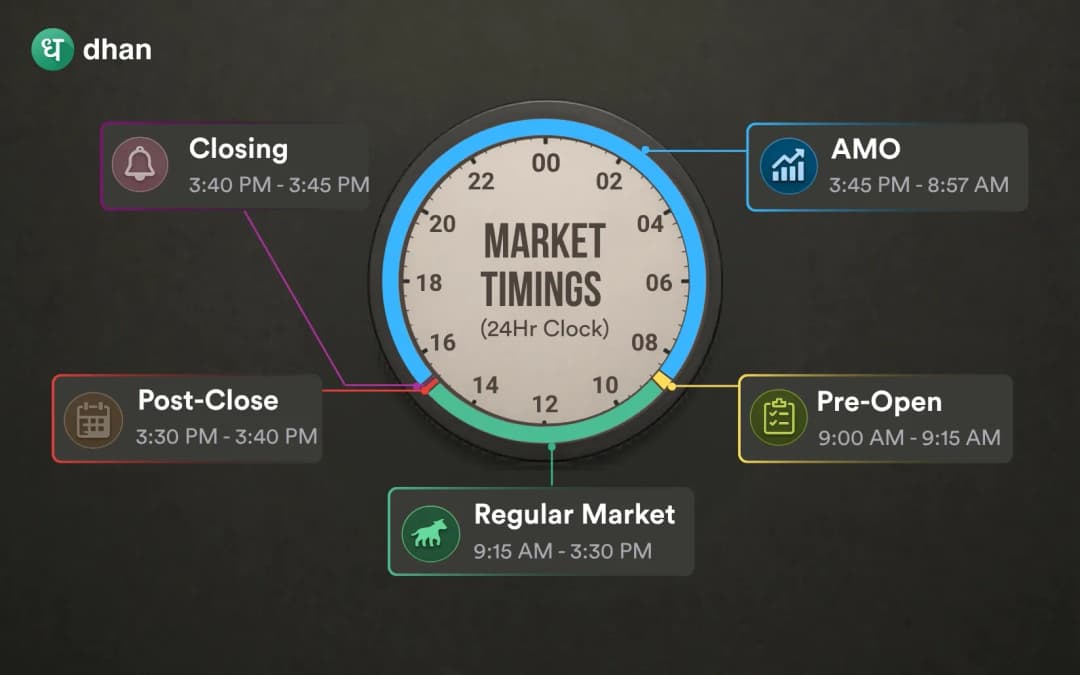
An after market order, or AMO, is a type of order that you can place after regular trading hours in the market. These orders remain queued up and are processed when the market opens during the next trading session.
AMOs were introduced to bring flexibility to traders and investors. Busy investors may not always be available during live market hours. With AMOs, you do not have to rush to place your trades when the markets are open. You can comfortably analyse charts and review news after the market closes and place your order to be executed when the market opens.
Retail traders particularly find AMOs popular. If you actively follow announcements for earnings, global market trends, or overnight developments, this type of order can come in handy.
Usually, AMOs are available across stocks, derivatives, commodities, and other trading segments.
How does an After Market Order work?
In this section, we have detailed how an after-market order works.
Placing the order after market hours
When the regular trading session comes to an end, you can still log into your trading platform and place AMOs. Although they are accepted by the broker, they are not sent for execution immediately in the live market. The orders remain in the system, and they are forwarded to the exchange before the beginning of the next market session.
This feature comes in handy for people with busy schedules or professionals who may not have time to trade actively during market hours. They can prepare for trades comfortably in the evening.
Traders using AMOs can also react to developments that take place after the market closes, like quarterly results or major policy announcements.
Execution during market opening
Once the market reopens in the next trading session, the after-market order is executed. However, some factors like price availability, liquidity, and market movement determine the actual execution.
If the trader places a market AMO, the order gets executed at the best available market price once trading begins. This improves the probability of execution, but you may notice some price differences if the price of the stock opens slightly higher or lower than expected.
On the contrary, a limit AMO executes only when the price of a stock reaches a specified level in the market. This helps you with better control over pricing, but does not guarantee execution.
The market opening periods are often volatile as many overnight orders enter the system at the same time. Sometimes, this creates price gaps between the previous closing price and the opening price.
Modification and cancellation features
With most brokers, you will have the facility to modify or cancel your AMOs before they get executed in the market. As a result, you gain flexibility, particularly when market conditions are significantly changed due to overnight news. You can avoid unnecessary risks and adjust your strategies based on the updated information.
Why traders use After Market Order?
Here are a few reasons that explain why traders and investors use after-market orders.
Reacting to news and earnings
Many important events that move the market break after regular trading hours. Global developments can influence the market sentiment overnight. With AMOs, you can react early without waiting for the next trading session to begin. This is particularly useful during early evening sessions, when stock prices can move sharply based on financial performance and the commentary of the management.
Active traders benefit from positioning themselves before the market opens. This creates better opportunities and helps them prepare for the trade better.
Convenience and time flexibility
One of the prime advantages of AMOs is its convenience. At times, you may not be able to track the market during trading hours actively. Particularly, working professionals, business owners, students, and long-term investors analyse the market at their own pace after it closes. Through AMOs, they can place trades and do not have to depend on the availability of the live market.
As a result of this flexibility, you can prevent yourself from making rushed decisions. Emotions and volatility can sometimes influence your judgement.
Better planning and decision-making
Traders benefit from a more organised approach to trading through AMOs. Usually, investors place these orders after reviewing charts, analysing news, or building their strategies. The process, therefore, becomes more research-oriented. This significantly reduces impulsive behavior while trading, thereby improving discipline over time.
Traders must not chase sudden moves in the market based on emotions. You must have a planned entry and exit strategy in place. With better planning comes consistent decision-making, particularly for swing traders and positional traders.
Types of orders you can place through AMO
AMOs can be of three types, and each should be used depending on the situation.
Market AMOs
When the new trading session opens, a market AMO executes at the best available price. Usually, these orders have a higher chance of execution as they prioritise the speed of execution over precision.
However, as a trader, you must understand that the final price at which the trade executes may differ from your expectation when the market remains volatile.
Limit AMOs
When you place a limit AMO, it executes only at the specified price, or even at a better level. Therefore, you can maintain more control over prices. Limit AMOs prevent you from entering a trade at unfavourable prices.
However, the benefit comes with a trade-off. If the market price fails to reach the limit you selected, the trade may not be executed. When market conditions are volatile and price gaps are likely, traders prefer limit AMOs.
Stop loss and advanced AMOs
With some brokers, you also get the option to place a stop-loss AMO, along with other advanced types of orders. These features help you build effective risk management strategies before the beginning of the next trading session. You might find protective orders useful when you hold overnight positions or plan your trades around important events.
Advantages of After Market Order
Flexibility, speed, and improved trade preparation are some of the advantages AMOs offer.
Flexibility for different types of investors
AMOs prove useful for a wide range of participants in the market. Working professionals can place orders after office hours. Active traders, on the other hand, can prepare their strategies outside the pressure of the live market.
Long-term investors also benefit from AMOs. They can build their positions gradually, and there’s no need to monitor the intraday market movement constantly.
Faster reaction to overnight events
Often, Indian markets are influenced by global events before the next session begins. For instance, strong opening trends can be created by:
- Rallies in the international markets
- Geopolitical developments
- Movements in commodity prices
- Sudden earnings
Through AMOs, traders can respond fast to these developments. You can position yourself before regular trading activity gains momentum. This improves your preparedness and helps you capitalise on market opportunities.
Improved trade preparation
One of the underrated advantages of AMOs is their ability to trade with more composure. While trading, you are not under the immediate pressure of the market. So, you can take your time to analyse positions carefully.
This paves your path for research-oriented trading without allowing your emotions to take over a trade. Better preparation improves your confidence and risk management over time.
Risks and limitations of After Market Order
While AMOs offer several advantages, you must also be aware of the risks they come with.
Price volatility when the market opens
Due to news events, global market sentiment, or institutional activity, stock prices may change significantly overnight. This may influence the final execution price sharply.
Liquidity and execution challenges
There is no guarantee that your trade will always be executed. When you place a limit AMO, it may remain pending if the market price does not reach the level you specify.
Dependence on broker and exchange rules
The timing windows and features of AMOs can differ from one broker to another. Some may also allow you to place AMOs late in the night. Others may have earlier cut-off timings. Also, the AMO feature may not be functional in all types of orders or trading segments. That’s why it’s advisable to check the specific policy of your brokers.
To Conclude
Modern investors enjoy both the flexibility and the access to the market through after market orders. With this feature, you can prepare your position calmly and strategise your positions based on overnight developments.
With proper planning and realistic expectations, AMOs can be a valuable tool for both traders and long-term investors. With a research-oriented approach, you’ll be better poised to participate in the market.
FAQs
When can I place an after-market order for trading?
You can place an after-market order after regular market hours. Your trade will get executed during the next trading session when the market opens.
Can I cancel or modify an after-market order?
Yes, most brokers would allow you to modify or cancel your AMOs before they are executed in the live market.
Are AMOs available for all stocks and segments?
The availability of the AMO option depends on your broker and the exchange. This feature is often available across segments like equities, derivatives, and commodities.
What is the difference between AMO and regular orders?
You can place a regular order during live market hours. AMOs are placed after the market hours, and they are executed in the next trading session.
Is it risky for beginners to use after-market orders?
AMOs involve risks like price gaps and volatility when the market opens. Beginners should use them carefully and understand market conditions before placing their trades.