GTT Order





If you’ve ever missed buying a stock at your preferred price or failed to sell at the right moment, a GTT (Good Till Triggered) order can make things much easier. It allows you to automate your trades by setting a price condition in advance so you don’t have to constantly watch the market.
In this guide, you’ll learn what a GTT order is, how it works, its benefits, and when to use it.
What is a GTT order?
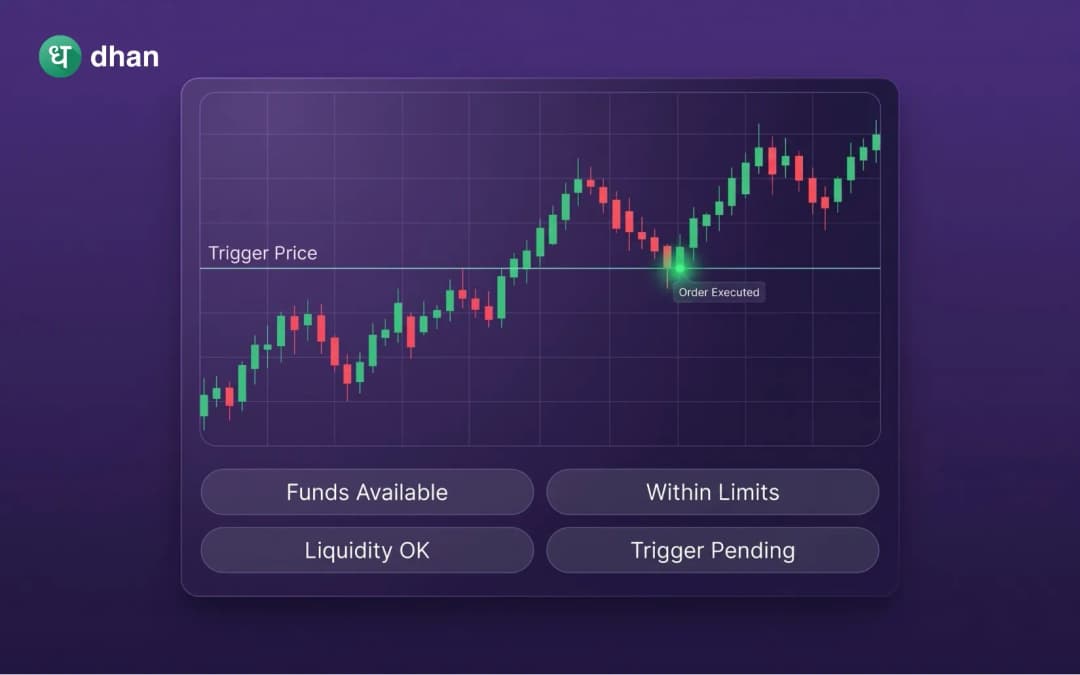
A GTT order is an order where you set a price at which you want to buy or sell a stock. A buy order is triggered for you once the price reaches.
GTT orders stay active until you cancel them or the trigger condition is met, while regular orders automatically expire at the end of the trading session.
It helps you implement your trading strategy without constantly glancing at your charts.
How does a GTT order work?
Here’s a simple breakdown:
- Choose a stock you would like to buy or sell.
- You set up a trigger price.
- The tracking of the stock price is continuous.
- Your order gets executed when the trigger price gets hit.
- An order that will get executed as a market order or a limit order.
For example, if a stock is trading at Rs 800 and you want to buy it only when it drops to Rs 750, you can set a GTT order at Rs 750.
Types of GTT orders
GTT orders can come in two types: for entry/exit and managing risk after entering a trade, respectively.
1. Single Trigger GTT Order
The most basic version, which enables you to enter a new position or exit an existing position at a predetermined price level.
- Purchase according to an entry plan at a lower price.
- Sell at a higher price so you may book profits.
- Ideal for one-way, direct decisions.
2. OCO (One Cancels Other) GTT Order
This approach allows you to safeguard your investment against the asset's directional movement after initiating a trade.
- Determine a target price to secure your profit.
- Set a stop-loss to minimise potential losses.
- If a condition is met, then cancel the other condition.
This allows for the trade to be managed even if you are away from the market in a disciplined execution style.
Key benefits of GTT orders
GTT orders are not just about convenience; they help you execute trades with clarity and consistency.
- Automation and Convenience: You can set a trigger price and leave market movement to itself. You need not monitor any more.
- Long-term validity: GTT orders are long-lasting as compared to other orders that become invalid by the end of the day.
- Effective risk management: By using OCO setups, you can set your stop-loss and profit target simultaneously for effective risk management.
- Reduced emotional trading: As the decisions are made before, that stops fear, greed and impulsive reaction.
- No extra charges: GTT orders typically do not involve any additional fees that one has to bear, as normal brokerage is only charged on execution.
- Works well in volatile markets: No sudden price change will be missed, with your pre-established levels executing on time.
Difference between GTT order vs regular order
GTT orders and regular orders serve very different purposes, and understanding this difference can directly impact how you plan your trades.
When should you use a GTT order?
GTT orders are helpful in many situations:
- When you have a clear target price
- When you cannot monitor the market regularly
- When you want to automate your trades
- When managing long-term investments
For example, if you believe a stock will correct before rising again, you can place a GTT buy order at a lower level and wait patiently.
Final thoughts
GTT orders are an easy but effective method of automating your trades. They assist you to remain disciplined, minimising the necessity to control you all the time, and make your plan more uniform.
No matter your experience level and whether you are beginning or experienced in the market, a wise use of GTT orders can enhance your overall investing strategy.
FAQs
1. What does GTT stand for?
GTT stands for Good Till Triggered, meaning the order remains active until the trigger condition is met.
2. Is a GTT order valid forever?
No, it will be based on the platform. Some permit long periods of validity, others have limits.
3. Can I modify a GTT order?
Yes, you can modify or cancel it anytime before it is triggered.
4. Is execution guaranteed in a GTT order?
No, it only places the order when triggered. Execution depends on market conditions.
5. What is the difference between GTT and stop-loss orders?
A stop-loss order is usually valid for a day, while a GTT order stays active until triggered or cancelled.