What are the benefits and risks to a borrower in SLBM?




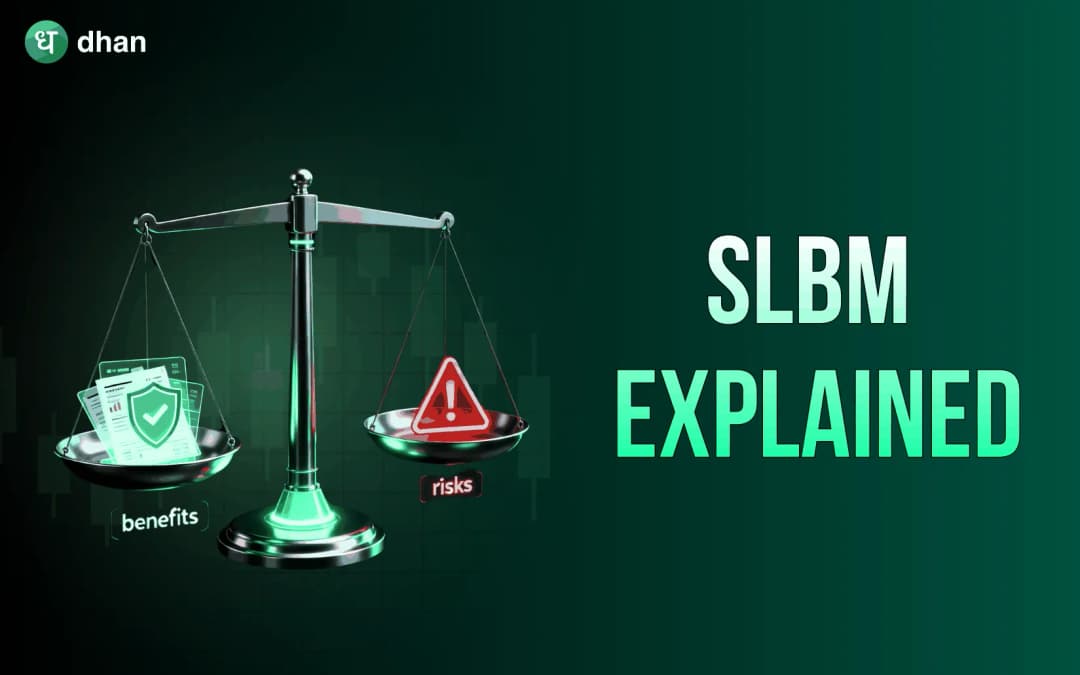



The Stocks Lending and Borrowing Mechanism, or SLBM, is a system where investors or traders can borrow shares for a set period.
Borrowers use SLBM for trading strategies like short selling, arbitrage, or to meet delivery obligations in derivatives markets. Instead of buying shares outright, they go through the borrowing route and must return the same number of shares later.
Since SLBM can be extremely valuable for a borrower, they must pay a lending fee to the lender and provide collateral for security. This creates flexibility, allowing more active participation in the stock market without large capital blockages.
Benefits of SLBM for borrowers
Fulfilling a trading strategy isn’t the only benefit of SLBM for a borrower. There are many others, which we will discuss now.
1. Cost savings
One big advantage of SLBM is cost efficiency. Borrowers avoid having to put up the full price of shares upfront.
Instead, they pay a lending fee based on market demand, which is often much lower than the cost of buying shares outright.
This opens the door for traders to enter positions with less capital, especially helpful for short-term trades or those needing quick access to securities.
Reduced capital lock-up improves liquidity for traders and can enhance returns by lowering overall costs.
2. Helps with hedging
SLBM supports hedging strategies, allowing investors to manage risk without selling assets they own.
For instance, if an investor fears a decline in stock price, they can borrow the same shares to short sell, balancing potential losses.
This borrowing adds a layer of risk management, making portfolios more defensive in volatile markets.
As a flexible tool, SLBM broadens the investor’s ability to adjust market exposure without exiting long-term holdings.
3. Supports short selling
This is perhaps the most obvious and lucrative benefit of SLBM. Short selling relies heavily on SLBM because it allows traders to sell shares they don’t own but have borrowed.
Borrowers sell these shares immediately, hoping to buy them back later at a lower price, profiting from the price drop.
SLBM facilitates this by providing easy access to borrow shares and thus supports liquidity and price discovery in markets.
Without a proper borrowing system, short selling would be limited and less efficient, reducing trading opportunities.
Risks for Borrowers
As with any other market-related instrument or mechanism. Borrowing shares via SLBM comes with risks. These risks are as follows.
1. Market risk
If the price of the borrowed shares rises instead of falling, the borrower loses money buying shares back at a higher cost.
Even small price movements can eat into profits, especially in leveraged short-sell positions.
This makes timing and market direction critical for using SLBM wisely, leaving little room for error in volatile stocks.
2. Quantity payback
Borrowers must return the exact quantity of shares before the contract expires, or face penalties and forced costly buybacks.
Any mismatch or delay can trigger settlement failures and regulatory scrutiny.
Traders need to closely monitor expiry dates, including their own positions, to avoid operational and financial hiccups.
3. Fees
Lending fees add to trading costs and can be high, especially for scarce or in-demand stocks.
These rates fluctuate based on market supply and demand, eating into overall returns.
Borrowers must account for these variable costs upfront to avoid unpleasant surprises in their final P&L.
4. Collateral requirements
SLBM is a collateral-based mechanism. This means that as the borrower, you must put up 100% or more as collateral.
Collateral requirements have the potential to lock in funds or securities, affecting liquidity.
Lastly, borrowers may be forced to return shares early if the lender recalls them, disrupting strategies.
Managing Risks
Borrowers need vigilance to manage these risks. Monitoring market trends and corporate events helps avoid surprises.
Maintaining sufficient collateral and negotiating fair contract terms reduces operational risk.
Using protective measures like stop-loss orders and diversifying trades can help limit losses.
Awareness of lending fees and contract conditions allows borrowers to plan efficiently and keep costs manageable.
Additional operational considerations
SLBM contracts are standardized through clearinghouses that guarantee settlement and enforce collateral safety.
These clearinghouses handle corporate actions and dividends, ensuring borrowers and lenders get their fair shares and obligations.
Borrowers must be familiar with contract tenures, conditions for early recalls, and margin rules.
Timely communication with brokers and clearinghouses is essential to avoid defaults or penalty charges.
Conclusion
Stocks Lending and Borrowing Mechanism offers borrowers flexibility, capital efficiency, and powerful tools for hedging and short selling.
It enables sophisticated trading strategies while allowing market participants to manage risks prudently.
However, borrowers must carefully navigate market volatility, fees, collateral needs, and contract terms to avoid costly pitfalls.
A thorough understanding of SLBM benefits and risks will empower traders and investors to use this mechanism effectively in today’s dynamic securities markets.
If you are still confused, you can read this: