Delta Neutral Trading Strategy




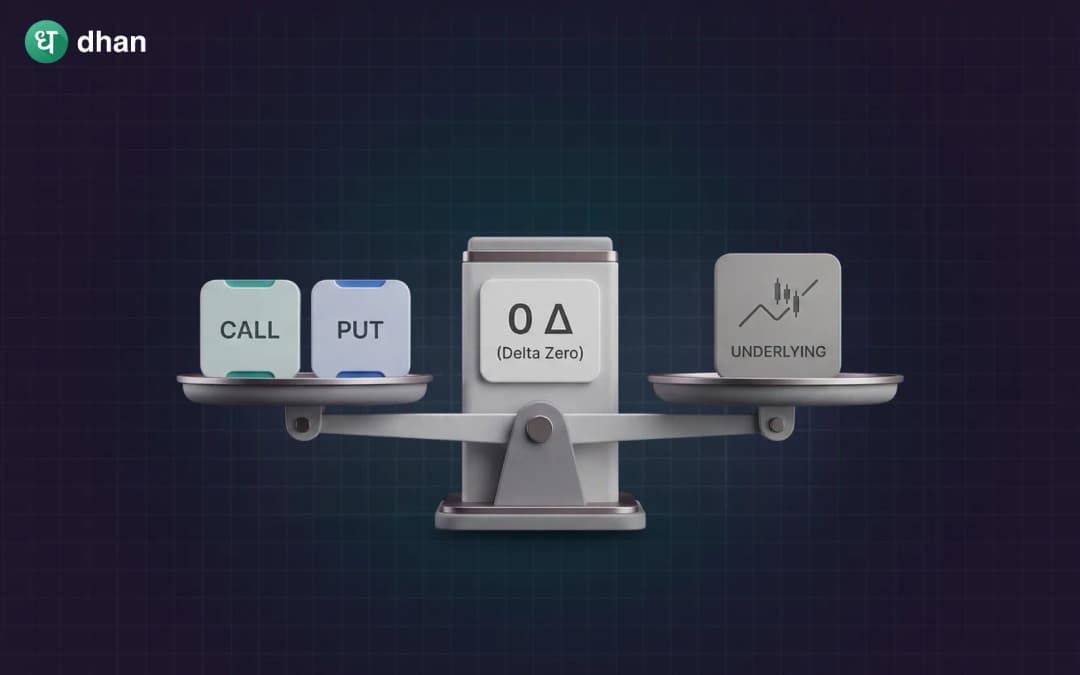




Most of the strategies used in options trading revolve around the direction of the market: will it move up, or will it move down? What if traders could create a strategy that doesn't require them to be right about the direction?
This is where the delta-neutral trading strategy comes into play. It allows traders to create positions that are not significantly affected by small directional market moves; instead, the delta-neutral traders focus on capitalising on profits resulting from volatility, time decay, or mispricing.
In this blog, we break down what delta is, how delta-neutral positioning works, the most common delta-neutral strategy, and when it works best.
What Delta Neutral really means
Delta measures how much an option's price is expected to move when the underlying asset's price changes.
When a trader builds a delta neutral position, they are combining options and/or the underlying instrument in such a way that the total delta sums up to about zero. A position is structured in such a way that small moves in the price of the underlying will not strongly affect its value.
In that way, the trader does not need to predict which way the market will go and can focus on other factors, such as time decay or volatility.
How traders build a Delta Neutral position
Option traders create a delta neutral setup by combining options and stock in such a way that price movement risk is cancelled out. Every option has a delta value. It is a number that indicates an option's price movement when the stock moves one point in any direction.
For example, a call option with a delta of 0.6 would act like owning 60 shares. If the trader owns this call, he is exposed to upward price moves.
They can short 60 shares of the stock to take a neutral position. Now, the positive delta from the option and the negative delta from the stock cancel each other out, and the total delta now becomes close to zero.
Another way is by combining both puts and calls. A call has a positive delta, while a put has a negative one. If you buy a call and a put with comparable deltas, the effect balances out.
Traders often adjust the quantities, for example, holding 2 call options and short 120 shares to get a better match. Market conditions can change these numbers, so traders need to monitor and adjust their positions periodically.
The goal is to make the position stable. Price movement should not hurt the setup. On the contrary, they try to profit from time decay or changes in volatility.
Popular Delta Neutral Strategies
There are many ways to build a delta neutral setup. Here are a few common delta neutral strategies ones used by traders:
1. Long Straddle
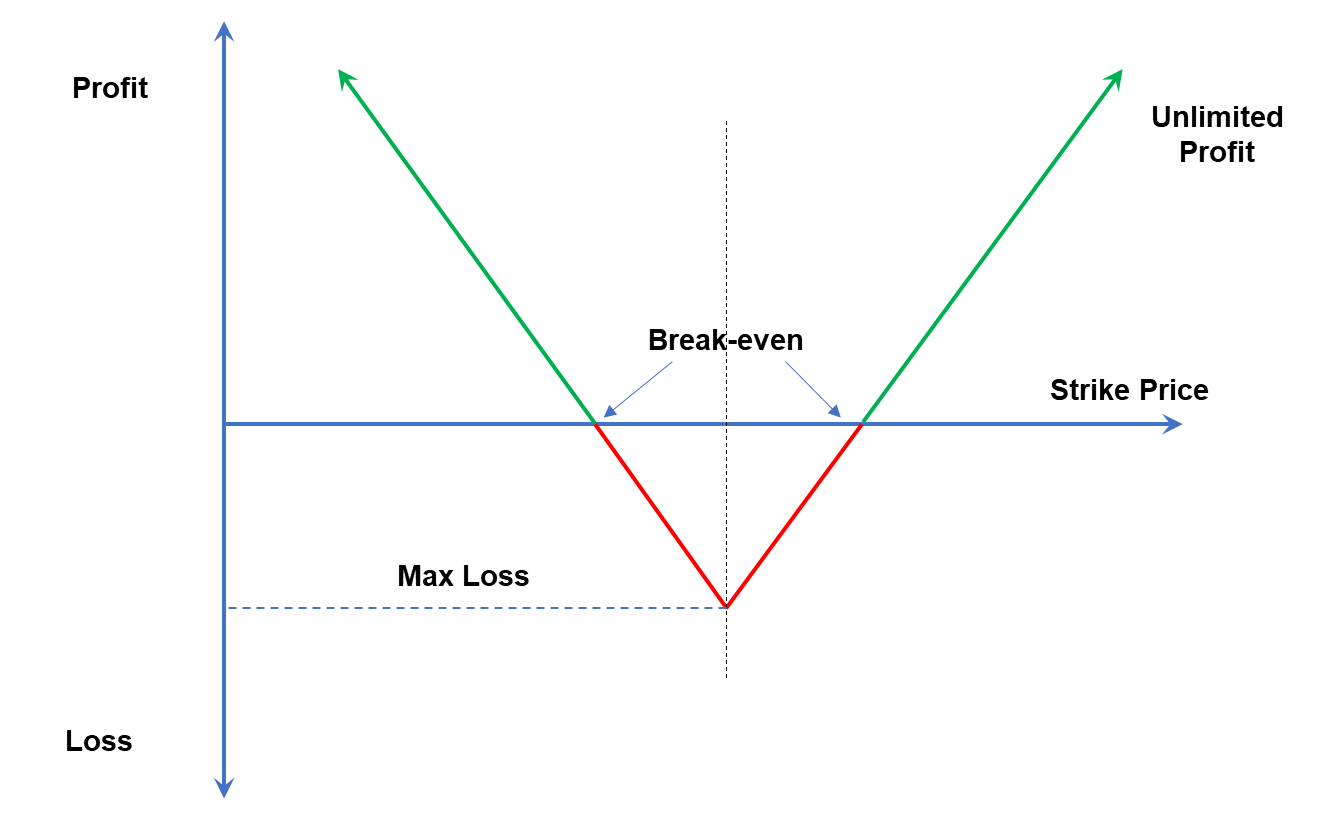
A long straddle is built by buying a call and a put at the same strike and expiry, which keeps your starting delta close to zero.
This setup gives you a simple way to benefit from strong movement in any direction because one side gains as the other loses. Traders choose it when they expect big swings or a rise in volatility but do not want to guess the direction.
The main cost is the total premium, so the move needs to be strong enough to cover what you paid.
2. Calendar Spread (with Delta Neutral Adjustment)
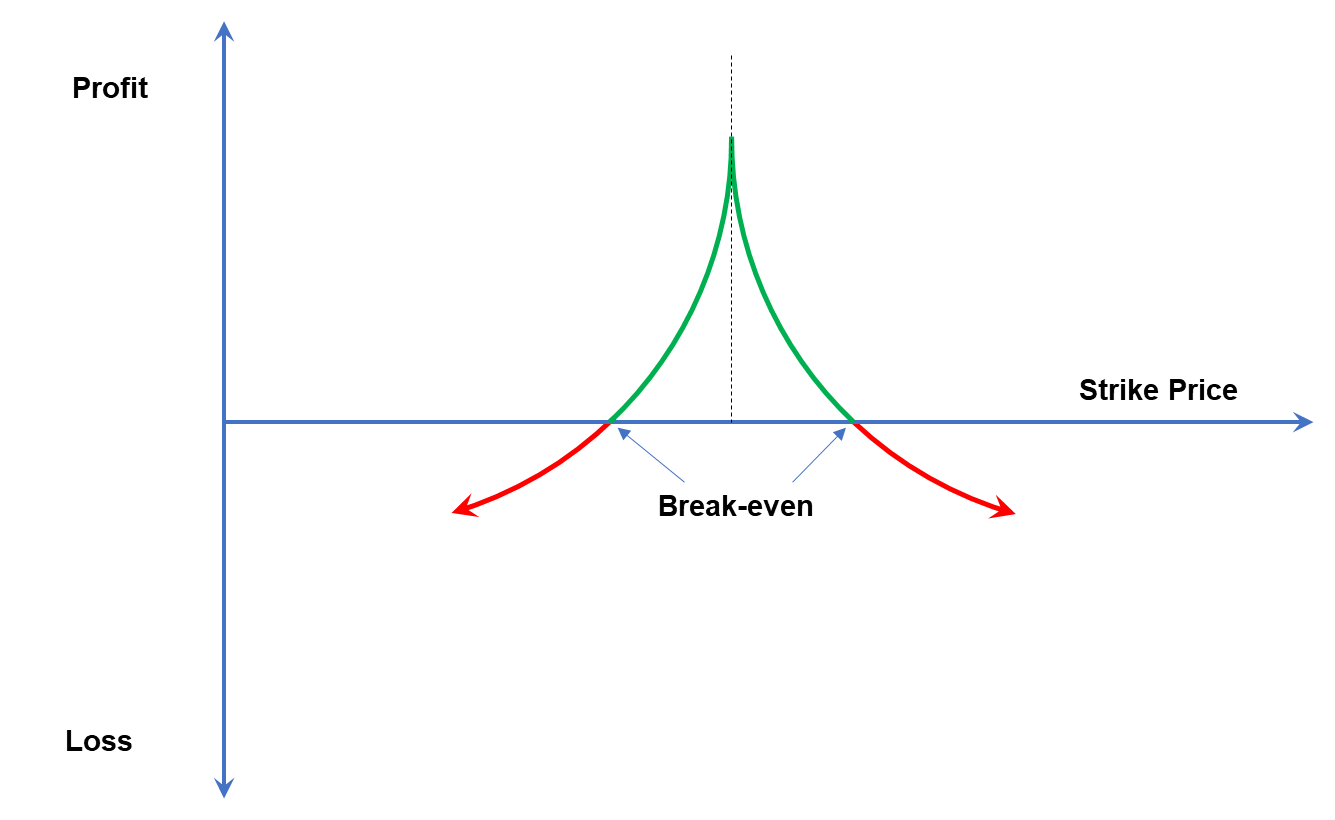
A calendar spread becomes delta neutral when you match the short term and long term options in a way that keeps the overall delta close to zero.
You sell the near month option and buy the same strike in a later month, then check how both deltas combine. The short term option loses value faster, which can work in your favor, while the long term option holds value for more time.
This setup is useful when you expect the price to stay calm and you want to benefit mainly from time decay without taking a strong directional view.
3. Short Strangle (Delta-Hedged)
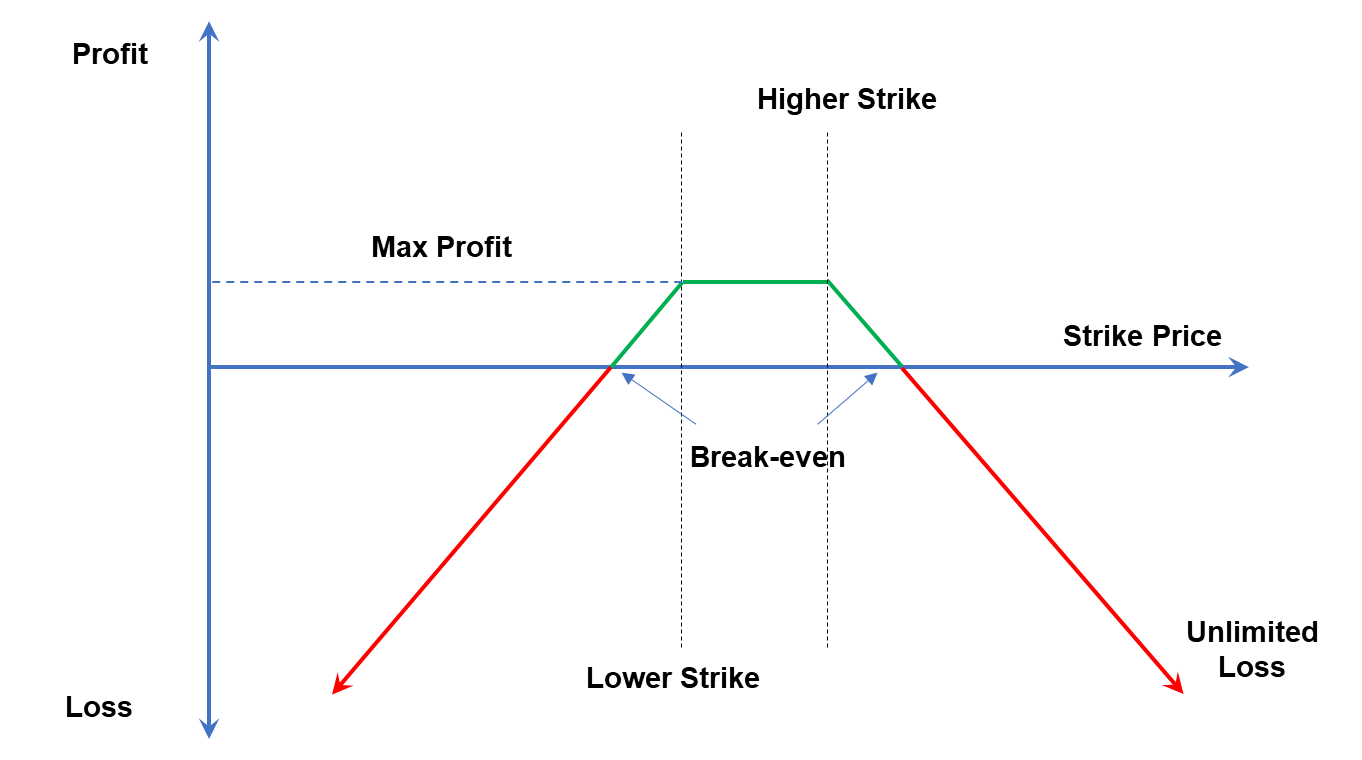
This strategy starts with selling an out of the money call and an out of the money put, and then using the underlying or another option to cancel out the net delta so the position stays balanced.
You earn when the market trades within a quiet range because the premiums slowly lose value each day. Traders like this setup when they expect sideways movement but still want control over sudden swings.
The key is simple attention to position size, quick adjustments and steady tracking of changes in delta.
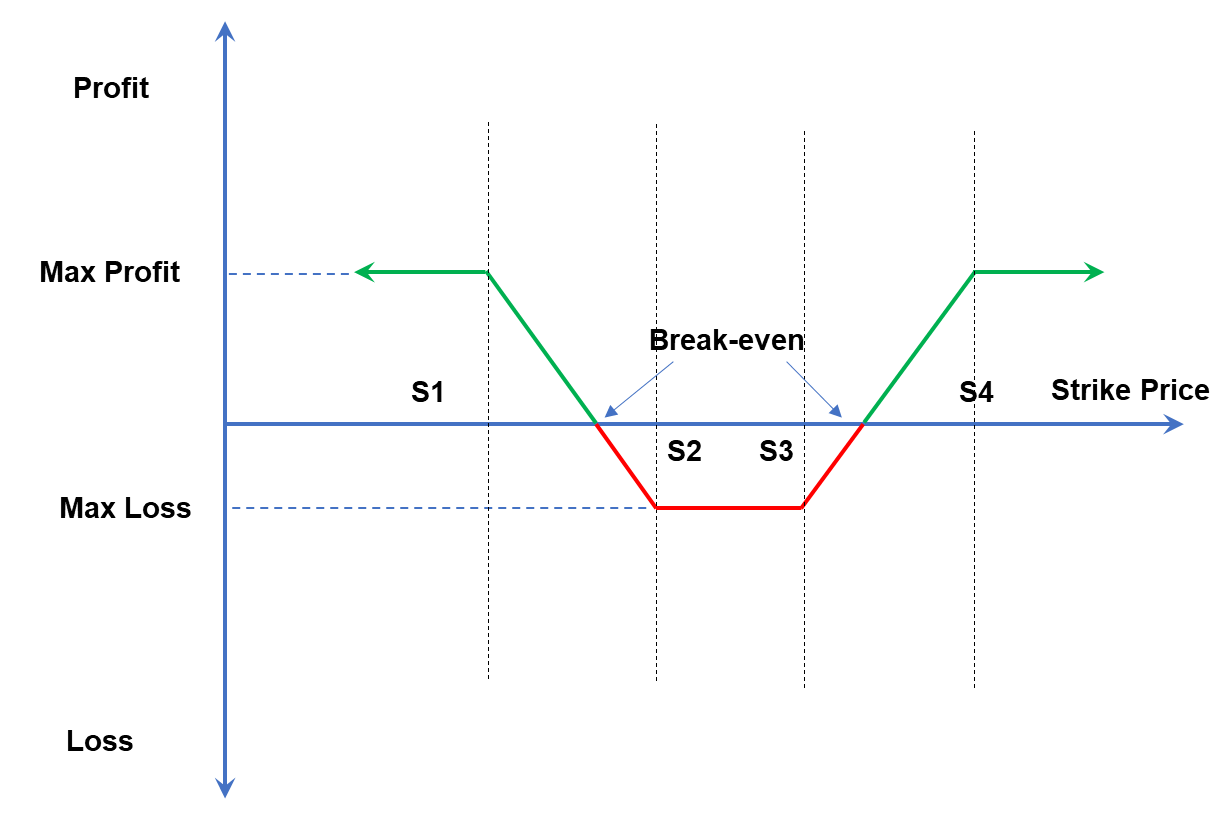
4. Reverse Iron Condor (Delta Neutral Setup)
A reverse iron condor works by setting up two small spreads on both sides so the position starts with very little directional bias.
You buy an out-of-the-money call and an out of the money put, then sell the nearer strikes to reduce cost. This creates a neutral base because the call side and put side balance each other.
The goal is simple: you want a sharp move or a jump in volatility so the wings expand in value. If the market stays quiet, the spreads lose value over time, so you must use this strategy only when you expect movement.
When Delta Neutral works best
A delta neutral strategy works best when the market is devoid of a clear directional bias. In other words, if you do not expect the underlying to strongly move upward or downward, being delta neutral keeps you safe from getting hurt due to unwanted price swings. You instead focus on other factors like volatility falling or time passing, which might move your profit line.
Here are key conditions where such a strategy shines:
- Low directional expectation: If you expect the asset to remain in a range or slowly drift, keeping your net delta near zero means you’re not betting heavily on price direction.
- High implied volatility: Rich option premiums allow you to profit from time decay while holding a balanced position.
- Stable underlying trend: When there is a stable underlying trend, if the market is choppy but not trending strongly one way, it's much easier to maintain a neutral delta rather than fight a strong up- or down-move.
- Ability to monitor and adjust: Because delta neutrality is not a "set and forget" approach, you will need tools to rebalance when Greeks change. This is when the selection of a good platform matters.
In this case, Dhan may be useful to Indian traders who transact through F&O. Dhan provides you with options chains, real-time Greeks, payoff graphs, and margin tools, all of which allow you to establish and maintain delta neutral setups in a more efficient manner.
A delta neutral structure can allow you to reap the benefit of being slightly leveraged to the direction of the trade, without being fully exposed.
As you believe that the market will not change strongly, but that conditions such as volatility or time decay would favour your side.
Conclusion
A delta neutral strategy allows you to trade in a less emotional state since price fluctuations have less impact on your positions. It reminds you of time decay and volatility rather than directional. Begin with a small scale, monitor the shift of the position with the adjustments, and feel assured as you become familiar with the rhythm of the strategy.
FAQs on Delta Neutral Trading Strategy
1. What is a delta-neutral position in options trading?
It is a structure in which the aggregate delta of your portfolio is very close to zero, i.e., the profits or losses from small fluctuations in the underlying asset are mostly cancelled out.
2. Why not just use a directional trade instead of a delta-neutral strategy?
Since they desire to minimise exposure to the direction of movement of the underlying asset, they rather emphasise other factors like implied volatility or time decay.
3. Does a delta-neutral position eliminate all risks?
No. Although directional risk is reduced, you are still exposed to risks of large price changes, changing volatility (vega), time decay (theta), and exposure to gamma.
4. How often must a trader rebalance to maintain delta neutrality?
Traders rebalance delta neutrality every time the net delta moves from zero to keep it neutral. Traders usually define certain rebalancing triggers or tolerance bands on when the portfolio's delta shifts beyond ±0.10 from neutral. Market volatility, gamma exposure, liquidity, and transaction costs are some of the factors that influence the rebalancing frequency.
5. Is it possible to make profits with delta-neutral strategies when the underlying asset is not moving?
Yes. Since the emphasis is not placed on price changes but rather variables such as time decay (theta) and volatility changes (vega), you can make a profit even in a flat market, but it should be organised appropriately.