What is Algo Trading?


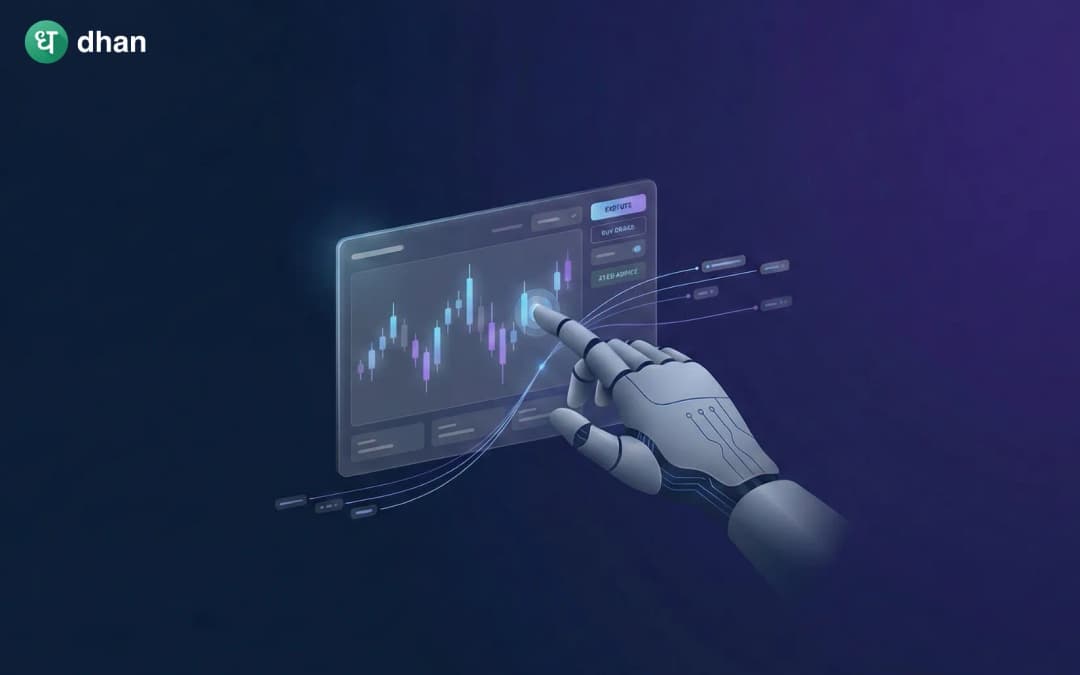



Algo trading, or algorithmic trading, has revolutionised the Indian financial markets by introducing automated trading strategies carried out by algorithms or computer programs on the basis of predefined rules. This approach focuses on exploiting market opportunities by executing trades at a speed and frequency that human traders cannot execute. The emergence of algorithmic trading is closely connected to technological progress in computing and connectivity.
Algorithmic trading was initially only used by large institutional investors and hedge funds. With the increasing digital boom and infrastructure, its availability has expanded, enabling more traders to harness its strength. In this blog, we will explore the key details of algo trading.
What is Algo Trading?
Algorithmic trading, or Algo trading, is described as the process of utilising computer algorithms and technology in executing trades in accordance with specific algorithms and requirements. The algorithm employed within algorithmic trading is the one that evaluates and identifies trading opportunities and carries them out at a rapid pace that cannot be performed by a human trader.
Unlike conventional trade executions that entail human decision-making, algo trades entail the removal of any human element of emotion and opinion from the decision-making process.
How does Algo Trading work?
At its core, algo trading operates on a simple principle of automated trade execution based on specific criteria using an algo trading platform. Traders enter their strategies into a computer program that subsequently scans the market data to find opportunities that match their predefined rules. When a match is identified, the algorithm automatically places trade orders without human intervention. This entire process is completed within fractions of a second, providing a significant edge to traders in this fast-moving market.
The execution process of algo trading is a multi-step process. First, real-time market data is fed into the algorithm, including price feeds, order books, and news, etc. Second, it uses its programmed logic to determine potential trades on the basis of this data. Third, if the specified conditions are met, it creates and transmits an order to an exchange. Lastly, it oversees the execution of the order and manages the position based on its predefined rules, which may involve stop-loss or profit booking conditions. This smooth workflow facilitates an edge over manual trading on Dhan.
Key features of Algo Trading
The success and execution of algorithmic trading rely on several elements. Some of them are:
Market data feeds
Algorithms require reliable, real-time access to market data to react promptly to market changes. This consists of historical data, current prices, volume and other financial information.
Trading strategy
This is the core of an algo trading system. Strategies are a predetermined plan that guides the system on when to sell or buy. For example, buying 200 shares of a particular stock when its share price is above the 200-day moving average.
Execution system
This is the software and hardware infrastructure that links the algorithm to the trading exchange. It supports order placement, order management, and trade execution with low latency and high reliability.
Backtesting platform
It is essential to test an algorithm on historical data before applying it to live markets to check its efficiency and avoid losses in live markets. Backtesting platforms simulate how the algorithm would have performed in past market conditions.
Risk management system
Even the most robust algo trading strategies carry risks. An effective algo trading system includes risk management protocols to limit potential losses. These might include daily loss limits, maximum position sizes, or automatic stop-loss orders.
Check our Algo Trading series on YouTube
Click on the link to watch the complete series!
Popular Algo Trading Strategies
The flexibility of algorithmic trading allows for the implementation of a wide array of strategies, all aimed at taking advantage of various market conditions and inefficiencies. Some popular algo trading strategies are:
Arbitrage
An arbitrage strategy involves leveraging the discrepancies in the price of an identical asset in different markets or exchanges. These discrepancies can be rapidly detected by an algorithm and can be used to buy and sell simultaneously to earn the price difference, often in milliseconds.
Market making
Market makers inject liquidity into the market by simultaneously making both buy and sell orders of an asset. These bids and offers can be efficiently handled by algorithms that profit from the bid-ask spread while ensuring their inventory remains balanced.
Trend following
This strategy involves algorithms identifying and following market trends. For example, an algorithm may buy a stock when its price is steadily increasing and sell when it begins to fall. These strategies are often based on indicators such as moving averages or momentum oscillators.
Mean reversion
It is a strategy that is based on the assumption that the prices of assets will eventually revert to their historical average. Algorithms detect when the price of a stock deviates significantly from its mean and take positions anticipating that the stock will revert to its average.
Volume-weighted average price (VWAP)
Volume weighted average price strategy segments a large order and then releases a dynamically determined smaller chunk of the order to the market on the basis of the specific stock volume history. The objective of this strategy is to carry out an order at or around the volume-weighted average price.
Time-weighted average price (TWAP)
This strategy segments a large order and releases small amounts of this order to the market at evenly spaced timeslots between a start time and an end time to execute approximately an equal number of shares close to an equal average price between the start and end times. The objective of this strategy is to minimise market impact.
Here are some of the popular Algo Strategies that you must check!
Benefits and drawbacks of Algo Trading
Algo trading offers several benefits that have enhanced its popularity. Speed and efficiency are the main advantages. The algorithms are capable of executing trades far quicker than a human trader can, seizing opportunities in a short period of time. They also eliminate the emotional biases in trade decisions, and the trade decisions are influenced by data and predetermined rules. Additionally, algorithms can monitor multiple markets and assets at the same time, unlike human traders.
Nevertheless, some drawbacks of algo trading also exist. A significant concern is the risk of system failures or flash crashes, where a bug or unintended interaction between several algorithms, particularly during low liquidity, can add to swift and sharp market action.
The excessive reliance on algorithms may also lead to a lack of human control, which complicates the reaction to the unprecedented events in the market. The algo algorithms are expensive to create and run and require expert technical knowledge and funds.
To Conclude
Algorithmic trading has changed the Indian financial markets radically, as it is no longer a technological trend but an indispensable element of contemporary trading. Algo trading offers a significant competitive edge in the aspects of capturing market opportunities through automation of execution, removal of emotional biases, and providing unparalleled speed and efficiency. Despite the undeniable merits, it also introduces complexities and risks.
The current evolution of algo trading and the use of AI and machine learning will introduce even more sophisticated and reactive approaches in the future. As the interconnectedness of financial markets and the dependence on data increase, it is critical to comprehend what is meant by algorithmic trading to participants of the financial market.
FAQs
What is the main difference between traditional and algo trading?
The primary divergence is in the way of execution; in algorithmic trading, computer programs automatically trade by following the set rules, whereas traditional trading is performed by human traders, who manually issue orders. Algo trading is quicker, more effective, and it is capable of working with high volumes of information without emotion.
Do I need to be a programmer to engage in algo trading?
You do not have to be a programmer to write and run your own algorithmic strategies. There are numerous new platforms and tools today that offer no-code or low-code solutions, which make algo trading accessible to non-programmers.
What are the common risks associated with algo trading?
Examples of common risks are system failure, coding errors, unexpected market events that the algorithms are not coded to handle, and flash crashes due to high-speed, automatic selling or buying. Moreover, poor performance in real markets can also be caused by over-optimisation of strategies backtested.
What is the purpose of AI and machine learning in algorithmic trading?
AI and machine learning introduce novel features to the field of algo trading, enabling algorithms to learn based on market data, respond to various environments, and create more intelligent predictive models. This allows adaptation of strategies dynamically and allows the identification of complex patterns that could not be identified by traditional rule-based algorithms.
What is the distinction between high-frequency trading and algo trading?
High-frequency trading (HFT) is a subset of algorithmic trading with very high speeds, high volumes of orders, and short holding times, commonly in seconds or even milliseconds.