How to trade Gold in Commodity derivatives market in India?




Gold has held a special place in Indian culture and finance for centuries, serving as both a symbol of wealth and a hedge against uncertainty.
Today, there's a modern way to capitalise on the movements in gold prices without possessing physical coins or bars.
Derivatives markets offer you a wide range of opportunities through futures and options for engaging in gold trading, often with lower capital and transparent rules, offering strategy and flexibility.
In this article, we will walk you through the key steps of gold commodity trading.
Contract specifications for gold derivatives
For trading in gold, traders must be aware of the delivery settlement (if physical delivery is possible) and expiry dates, usually the 5th day of the expiring month or the last calendar day, depending on the variant.
Because these specifications fix exactly how much gold is being traded, how prices will move, and what margin is required, understanding them is crucial before entering any trade.
The main exchange for trading gold futures in India is the Multi-Commodity Exchange of India Ltd. (MCX), and it offers various variants of gold contracts so as to enable traders to choose sizes that suit them.
For example, there is a "Gold" contract covering 1 kg, the "Gold Mini" for 100 grams, the "Gold Guinea" for 8 grams, and even a "Gold Petal" of 1 gram.
Contracts are quoted in fixed units, for example, 10 grams for the 1 kg contract, and have a tick size-the minimum price movement- of ₹ 1 per quoted unit.
How to initiate a trade: Step-by-step
Trading gold in the commodity derivatives market is quite straightforward once you understand the basic steps. Here’s a simple guide to help you begin with gold commodity trading:
1. Set up your account
To set up your account for commodity derivatives trading in India, you first need to open a commodity trading account with a broker registered with the Securities and Exchange Board of India (SEBI).
During this process, you will provide identity proof (such as Aadhaar or PAN) and address proof, complete a KYC verification and link your bank account. Once the account is approved and the commodity segment is activated, you will be able to place futures or options trades through the broker interface.
With everything in place, you move from planning to executing trades in the commodity market with full access to the exchange contracts.
Dhan offers a free account opening and zero annual maintenance charges for individuals. Additionally, Dhan also provides:
- Full access to commodity trading, including futures and options, with a dedicated dashboard.
- Advanced trading tools such as real‑time charting, option chains and one‑tap execution from charts.
- Transparent brokerage and platform charges with no hidden costs.
These features make Dhan a strong choice to handle the account setup step before you move into trading gold or other commodities.
2. Choose the right contract
When you pick the right contract for gold commodity trading, you are essentially choosing the variant of the gold contract that matches your capital, risk tolerance and trading timeframe.
On the Multi Commodity Exchange of India (MCX), you will find several gold-contract types such as Gold 1 kg (Big Gold), Gold Mini (100 g), Gold Guinea (8 g), Gold Petal (1 g), and, more recently, Gold Ten (10 g).
Here is a table summarising key parameters of these variants so you can compare them side-by-side:
* Margins vary constantly, so always check with your broker before trading.
In practical terms, this means: if you have substantial capital and are comfortable with larger exposure, you might pick the 1 kg contract. If you are newer to gold derivatives or want to trade with less capital exposure, then Mini, Guinea or Petal variants make sense.
Also, you should check liquidity for the contract (bigger sizes usually have better volume) and the expiry date of the contract you pick, so you won’t get stuck near delivery.
3. Deposit margin and check leverage
Before you place a trade in gold futures, you must deposit the required margin and understand the leverage you’re about to use.
Margin is the amount of money you must keep with your broker to open and maintain a contract in the commodity derivatives market. For example, on a gold contract, you might need to put up only around a certain % of the total contract value as margin.
If you do so, then you are trading on leverage because your actual exposure is much larger than the margin you put in. That means even a small move in the gold price will have a larger effect on your profit or loss.
4. Place your order
Once you have your account ready and the required margin in place, placing an order is quite straightforward.
If you are trading via broker Dhan.co, open the commodity segment, select the gold contract you wish to trade (for example, the nearest expiry lot), then choose whether you are buying (expecting price to rise) or selling (expecting price to fall).
You will enter:
- the lot size you wish to trade,
- the contract month and expiry,
- and your order type (for instance, market or limit).
With Dhan, you can use the “Flash Trade” feature or trade directly from charts for swift execution when the markets move. But always make sure all details are correct before hitting “submit”.
When you place an order, remember to monitor it closely and be prepared to exit once your target price or your stop-loss level has been reached.
5. Monitor the position and exit at the right time
Once a position has been entered, the movement of the price must be closely monitored along with a well-defined exit plan.
Keep a close eye on any key triggers that include whether your profit target has been reached, or perhaps your set loss limit has been hit, and immediately place the opposite trade to close the position.
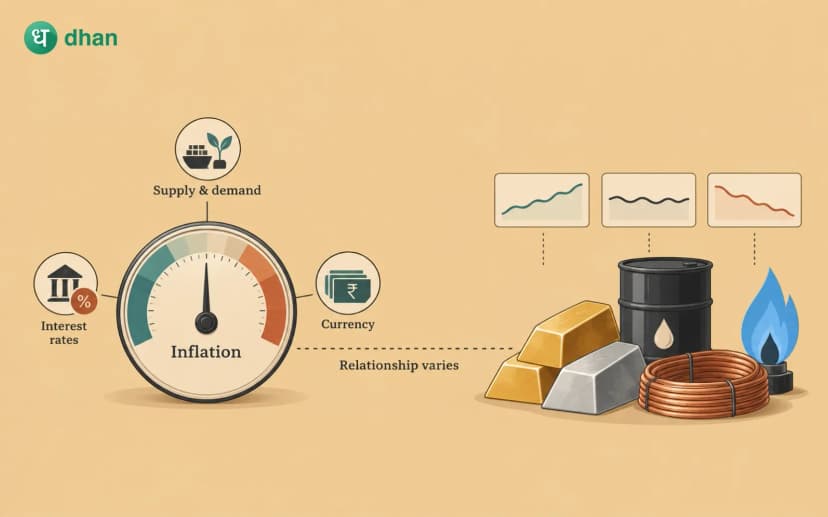
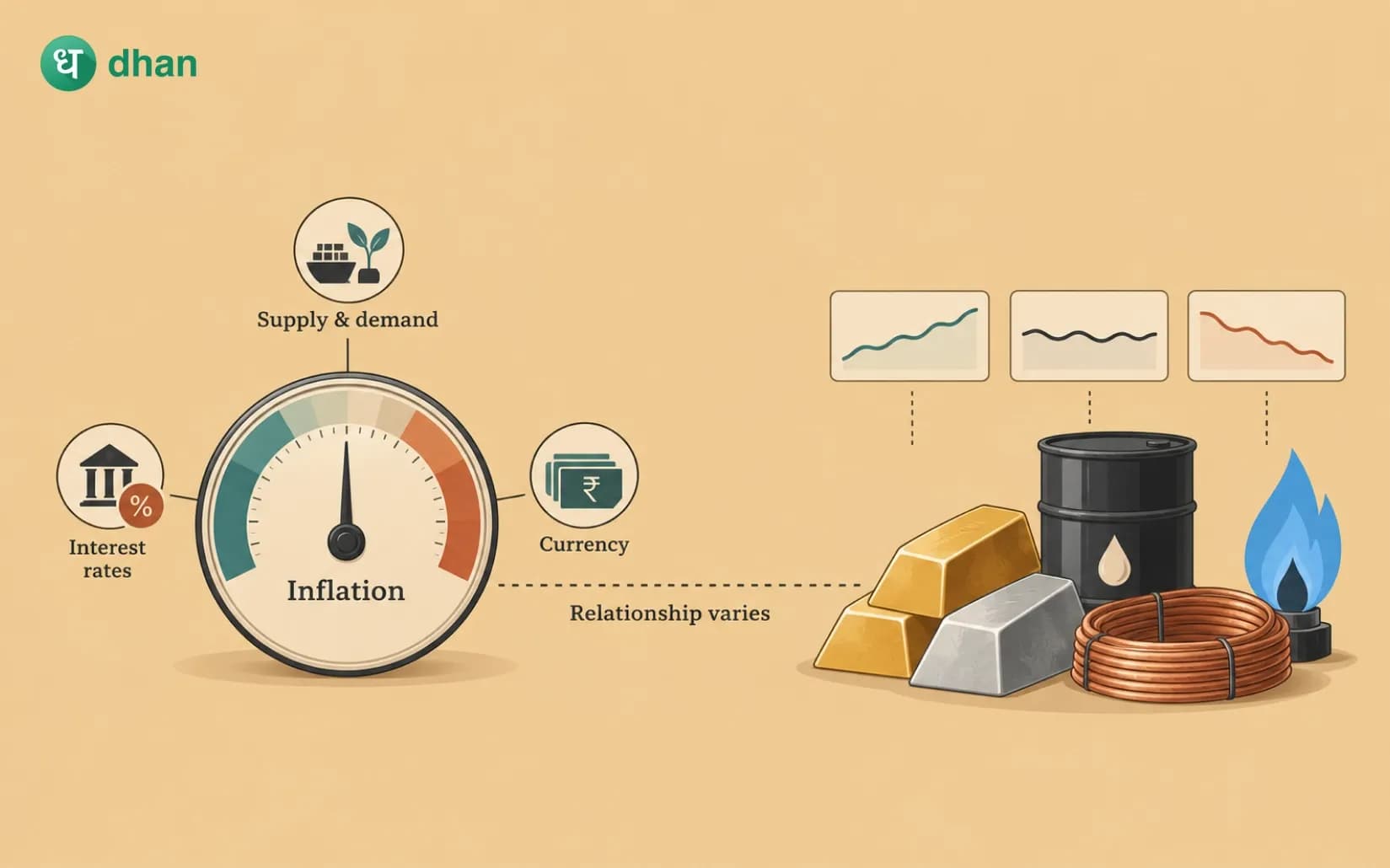
Also, be aware of news events, such as shifts in global inflation, currency fluctuations, or central bank decisions that can abruptly change the price of gold and make you reconsider your stop-loss or target.
6. Keep track of expiry and avoid unwanted delivery
It is very important to monitor the expiry of a gold future or options contract. This is because failure to close out your position before the last trading day may bind you to take or make physical delivery.
For example, contracts for gold futures in India generally expire around the 5th day of the expiry month.
If you are trading to just make profits from price movements of a contract, then you should plan to close out or roll over the contract before delivery obligations kick in.
Keep track of the expiration date so you do not end up with unwanted commitments that may not lead to your trading objective.
To sum up
For effectively trading in gold in India, one has to set clear entry and exit rules, implement risk controls, and take cues from the global outlook along with domestic contract details. This approach brings in much-needed discipline and clarity to exploit the opportunities in the commodity derivatives market.
Frequently asked questions (FAQs)
1. What happens if I hold a gold futures contract until expiry?
If you carry a gold futures contract to expiry, you will be required to perform physical delivery or cash settlement as per the underlying rules of the contract. On the MCX, the standard 1 kg gold futures often involve physical delivery.
2. Can gold options be treated in India, and how is the premium treated?
Yes, you can trade gold options where you pay a premium for the right but not the obligation to buy or sell a futures contract. The premium is your maximum loss if the market does not move in your favour, unlike futures, where losses can be larger.
3. How much margin do I need to start trading gold futures?
The margin requirements are dependent upon lot size, volatility, and exchange rules. For instance, the margin for a 1 kg gold contract may have a higher margin compared to smaller "mini" or "petal" contracts.
4. What are the major price drivers I should watch when trading gold derivatives?
Major factors are global gold price, US dollar-rupee exchange rate, inflation-interest rate trends, demand for jewellery, both domestic and international, and geopolitical events. These influence gold's price moves, which derivatives reflect.
5. How does the tax treatment differ between derivatives such as gold futures versus holding physical gold or gold ETFs?
Profits from gold futures and options are considered business income and are taxed accordingly. Physical gold or gold ETFs are treated as capital assets with short-term or long-term capital gains according to the holding period.