What is MCX and How it Works: India's Largest Commodity Exchange




Key takeaways
- MCX is the largest commodity derivatives exchange in India.
- MCX offers market participants the opportunity to participate in commodity price movements without necessarily taking physical delivery.
- It is supervised and regulated by SEBI.
- The MCX operates in two sessions: morning (9 am – 5 pm) and evening (5 pm – 11:30/11:55 pm).
Commodity trading has been part of the Indian economic landscape for decades. Whether it is farmers hedging their crops against adverse price movements or jewellers wanting to protect themselves from volatile gold price swings, commodities play a significant role in India’s financial markets. With increased participation in commodity trading, there was a need for a transparent and regulated exchange where commodity prices could be efficiently discovered and traded.
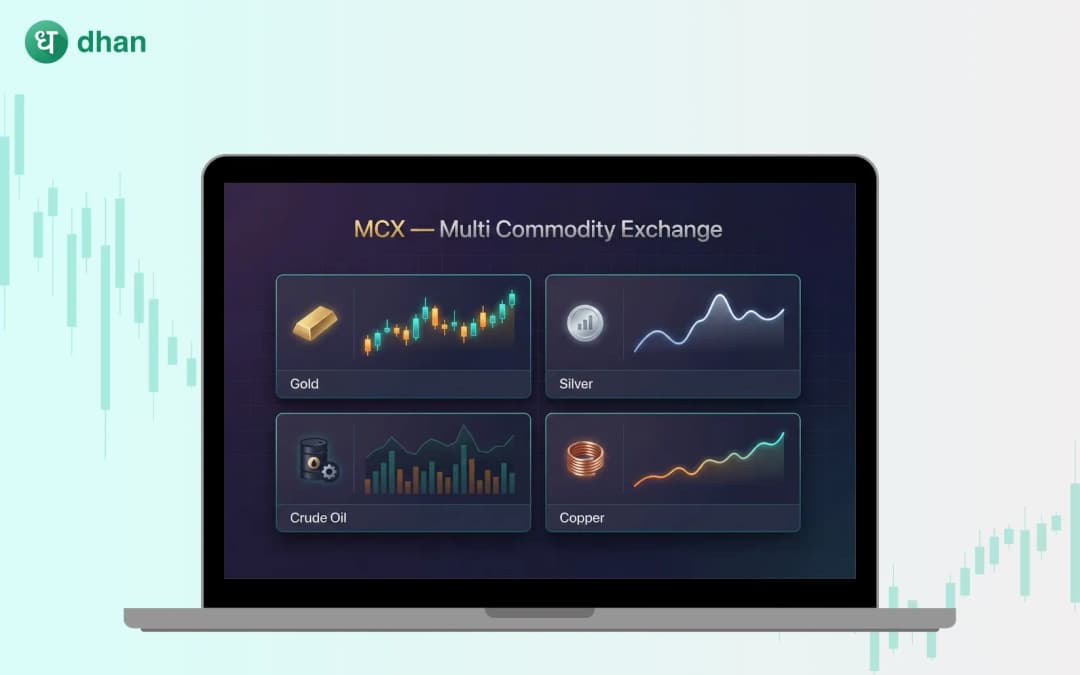
To meet this need, the Multi-Commodity Exchange of India (MCX) was established in 2003, and today it is the largest commodity derivatives exchange in India, providing a platform for trading in gold, silver, crude oil, natural gas, copper, and various agricultural commodities.
In this blog, we will explore what MCX is, how it operates, which commodities are traded on MCX, its history, who regulates MCX, trading hours, and how to get started with commodity trading on MCX.
MCX full form & meaning
MCX stands for Multi-Commodity Exchange of India Limited. MCX is a commodity derivative exchange and allows trading of F&O contracts of various commodities. It was established in 2003 and is headquartered in Mumbai. MCX allows market participants to electronically trade commodities on a regulated platform.
Unlike the National Stock Exchange (NSE) and Bombay Stock Exchange (BSE), which deal in the trading of shares of various companies, MCX allows participants to trade industrial and precious metals, agricultural and energy commodities.
What does MCX do?
MCX is a SEBI-regulated marketplace where commodity derivative contracts are traded by buyers and sellers for hedging risks, speculating on price movements, and finding fair prices of commodities. Here are some of the key functions of MCX:
Fair price discovery
The commodity prices on MCX are updated in real-time and are determined through an interaction between the buyers and sellers. This provides transparency in commodity price discovery, and these commodity prices on MCX are accepted as benchmark prices for those commodities across the nation.
Risk management
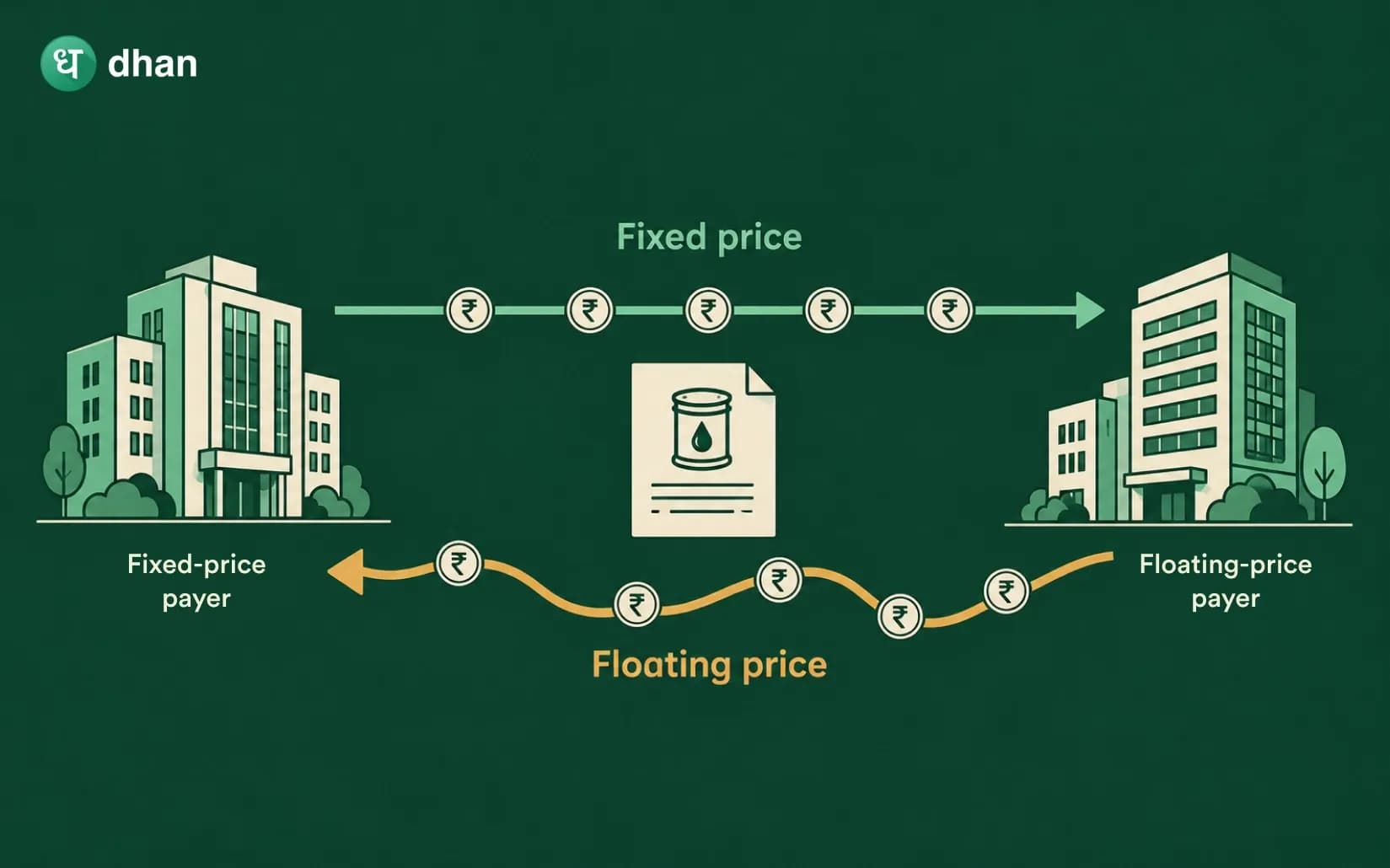
Commodity prices are highly volatile. Thus, traders use futures contracts of these commodities to hedge against adverse price movements and offset their underlying business exposure. It is like taking insurance coverage for their businesses against sudden price fluctuations.
Liquidity and access
On MCX, to participate in commodity trading, it only requires paying a small margin initially, while the rest of the amount can be paid if the trader keeps their positions open for physical delivery of the commodity after the expiry. However, most traders square off their position before the expiry date.
Additionally, with increased access to Indian financial markets, liquidity in commodity markets has risen significantly, making it easier for traders to enter and exit these contracts.
Market transparency & real-time data
All trades executed on MCX are facilitated electronically with real-time prices. Besides this, the commodity trading on MCX is regulated by SEBI. This brings transparency to the whole process, from real-time commodity prices to trade execution. This transparency helps to reduce information asymmetry and boost market efficiency.
History of MCX - How it was established in 2003
In 2003, Indian commodity markets witnessed a significant transformation as the government sought to modernise and adopt an electronic trading system to promote efficiency and transparency in commodity trading nationwide. It was at this point that MCX was established and commenced its operations in 2003.
MCX timeline: Evolution of the exchange
Key milestones in the growth trajectory of MCX are as follows:
- 2003: MCX was established, and its operations began in the same year.
- 2004: It introduced Bullion and metals futures trading.
- 2012: Listed on Indian stock exchanges through its Initial Public Offering (IPO).
- 2015: Came under the regulatory umbrella of SEBI.
- 2017: Launched commodity option trading segment, beginning with Gold options.
- 2019: Launched iCOMDEX indices, which provided real-time indices.
- 2023: Updated its trading and clearing system with an all-new cutting-edge infrastructure engineered by TCS.
- 2025: Introduced Electricity futures and MCXBULLDEX Option.
How does MCX work?
MCX operates as an electronic exchange where various commodity derivatives contracts are bought and sold. Here is the simplified flow of the entire process:
- A participant opens a trading account with a SEBI-registered broker, who offers commodity trading on MCX.
- The participant can then use that broker's platform to trade commodities on MCX.
- The exchange's matching engine matches buy and sell orders at an agreed price, and MCX Clearing Corporation Limited (MCXCCL) acts as the central counterparty for all trades.
- The majority of traders on MCX closed their positions before the expiry date, meaning they neither took nor gave physical delivery of the commodity.
- Most commodity traders buy and sell derivative contracts without taking physical delivery. They aim to profit from fluctuations in commodity prices.
- For those who want physical delivery, the exchange has defined delivery mechanisms for eligible contracts.
What commodities can you trade on MCX?
MCX offers trading in various commodities like:
- Bullion: Gold and Silver. These are available in various lot sizes (such as Gold Mini or Silver Micro) to cater to traders with varying risk appetites.
- Base metals: Industrial raw materials like Copper, Zinc, Lead, Nickel, Aluminium, and more.
- Energy: Crude Oil and Natural Gas, etc.
- Agriculture: It offers trading in agricultural commodities such as Cotton, Cardamom, Crude Palm Oil, Mentha Oil, and more.
MCX trading hours
In India, MCX operates from Monday to Friday. However, its trading hours are much longer than the BSE or NSE. It operates in two sessions:
- Morning session: 9:00 AM to 5:00 PM
- Evening session: 5:00 PM to 11:30 PM (extending to 11:55 PM during daylight saving months)
Regular agricultural commodities trade only during the morning session, closing at 5:00 PM. While internationally linked agri-commodities trade until 9:00 PM. In contrast, the Non-agricultural commodities trade in both morning and evening sessions.
MCX vs NCDEX
There is a lot of confusion among traders between the two major commodity exchanges in India. Let's take a quick overview of the differences between them:
Who regulates MCX?
MCX is regulated by the Securities and Exchange Board of India (SEBI). Earlier till 2015, commodity exchanges were regulated by the Forward Markets Commission (FMC). In September 2015, the FMC was merged with SEBI, bringing commodity derivatives under SEBI's regulatory umbrella alongside equity and currency derivatives.
This consolidation enhanced market participants' protection and surveillance, and paved the way for increased participation in commodity markets.
MCX Indices - What is iCOMDEX
Just as equity traders track the Nifty or Sensex to gauge broad market sentiment, commodity traders on MCX can track the iCOMDEX. It is a suite of tradable commodity indices that tracks the real-time performance and returns of a basket of commodity futures contracts in the Indian market, like:
- iCOMDEX Composite Index: It tracks a broad mix of all commodity segments.
- iCOMDEX Bullion (BULLDEX): It tracks gold and silver.
- iCOMDEX Base Metals (METLDEX): It tracks industrial metals.
- iCOMDEX Energy (ENRGDEX): It tracks crude oil and natural gas.
How to start trading on MCX
To begin their commodity trading journey on MCX, traders can follow the steps mentioned below:
- Choose a broker: Traders need to select an SEBI-registered stockbroker, such as Dhan, which provides commodity trading on MCX.
- Activate the commodity segment: Traders must open a demat and trading account and activate derivatives trading on their account.
- Submit income proof: Traders must submit their bank statement or the latest ITR, in accordance with SEBI's mandate to submit income proof for derivative trading.
- Add funds: Traders need to deposit funds into their trading account to begin their trading journey.
- Execute trades: Traders can buy and sell F&O contracts in line with their trading strategy.
To wrap up
MCX has played a transformative role in reshaping India’s commodity trading landscape by introducing transparency, efficiency, liquidity and a regulated exchange platform for trading various commodities, right from metals to energy. By allowing exposure to commodities without the need for taking physical ownership and facilitating hedging, MCX provides a gateway for market participants to participate in the commodities markets.
While commodity trading offers lucrative opportunities due to its potential to hedge risks and provide exposure to commodity price movements, it also involves certain risks due to leverage and price volatility.
Market participants who thoroughly understand market dynamics and follow strict risk management principles can find MCX to be an attractive option for participating in India’s commodity markets.
FAQs
Can beginners trade commodities on MCX?
MCX offers commodity trading to all traders with a valid trading account and a completed KYC, whether beginners or experienced. It also offers smaller contract sizes, such as gold mini and silver micro, for beginner traders, as they often begin their commodity trading journey with smaller contracts to gain experience and learn risk management practices before taking the big plunge.
How is the MCX different from the NSE?
The difference between the two stock exchanges lies in the assets they trade. NSE facilitates trading in equities and bonds, whereas MCX enables trading in commodities such as gold, silver, and crude oil.
On MCX, do traders have to take physical delivery of gold contracts?
The majority of retail traders on MCX do not take physical delivery of gold. Most of them square off their positions before the expiry date to avoid taking physical delivery. On expiry, gold contracts are compulsorily physically settled on MCX. Most retail traders trade gold contracts only to benefit from its price fluctuations without owning it physically.
What are the key risks associated with trading on MCX?
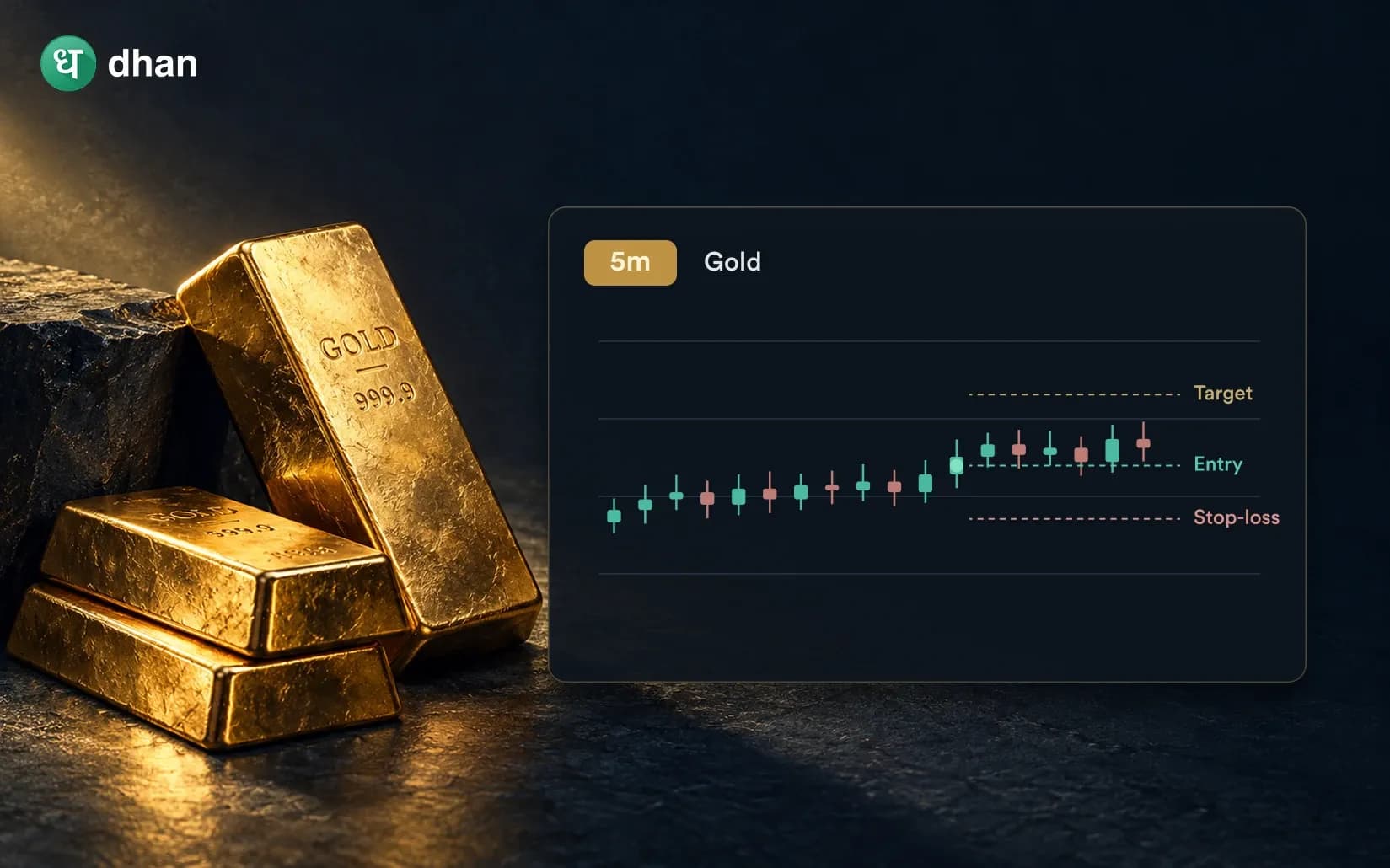
The primary risks in commodity trading are the high commodity price volatility driven by unpredictable events like global geopolitical tensions, weather, currency fluctuations, and leverage. Traders trade commodities contracts on MCX by only paying a small margin up front, and if a trader does not have a strict stop-loss, then their entire capital can be wiped out if the trade moves in the opposite direction.
How much money is needed to begin commodity trading on MCX?
There is no fixed minimum capital required to begin commodity trading. The amount of money needed to begin commodity trading on MCX depends on the specific commodity the traders are trading, as each commodity has different margin requirements for its contracts.