Tips on managing risks in commodity trading in India





The commodity trading market in India has evolved into a dynamic and well-organised space. The exchanges such as MCX and NCDEX provide futures and options contracts trading in various segments like metals, energy, and agricultural commodities. However, with opportunities comes risk, and for most traders, the challenge is not identifying the right commodity but surviving the wrong trade.
For an experienced trader or a beginner looking to participate in commodity trading, risk management is not a choice. In this blog, we will explore some actionable, practical tips for managing risks in commodity trading.
Risks involved in commodity trading
Commodity trading in India involves several risks, which each trader must understand before entering the commodity market. The most prominent being price volatility risk as the prices of commodities can swing dramatically within the same session due to the global supply and demand dynamics, geopolitical events or macroeconomic data releases.
This volatility is directly magnified by leverage and margin. Adding to this is the liquidity risk, as not all MCX contracts trade with equal depth and in thin markets, it can be difficult to quickly exit a position, which results in poor fills and larger-than-expected losses.
Beyond market-driven risks, commodities traders in India are prone to structural risks that are unpredictable. Currency risk impacts the dollar-denominated commodities such as gold, silver, crude oil, copper, etc.
Regulatory and policy risk also exists for commodity trading in India, where the government can enforce export bans, revise import duties, change stock holding limits for agricultural commodities or revise MSP structures without any notice and create sudden, sharp commodity price fluctuation. Last but not least is the concentration risk, where allocating all trading capital to a single commodity exposes traders to higher portfolio risks.
How to manage risks in commodity trading?
To mitigate the above-mentioned risks in commodity trading, traders can follow the below-mentioned risk management practices:
Position sizing
The golden rule of commodity trading is simple: it involves never putting all the capital into a single trade. Position sizing is the discipline of determining how much of total capital traders can allocate to any one trade.
Many traders follow the 2% rule, in which traders never risk more than 2% of their total trading capital on a single position. For example, if a trader's trading capital is Rs. 5 lakhs, they should not risk more than Rs. 10,000 per trade on a single position.
Thus, before entering, use a position size calculator to determine the position size and stop loss level and then work backwards to see how many lots a trader should be trading.
Hedge the commodity exposure
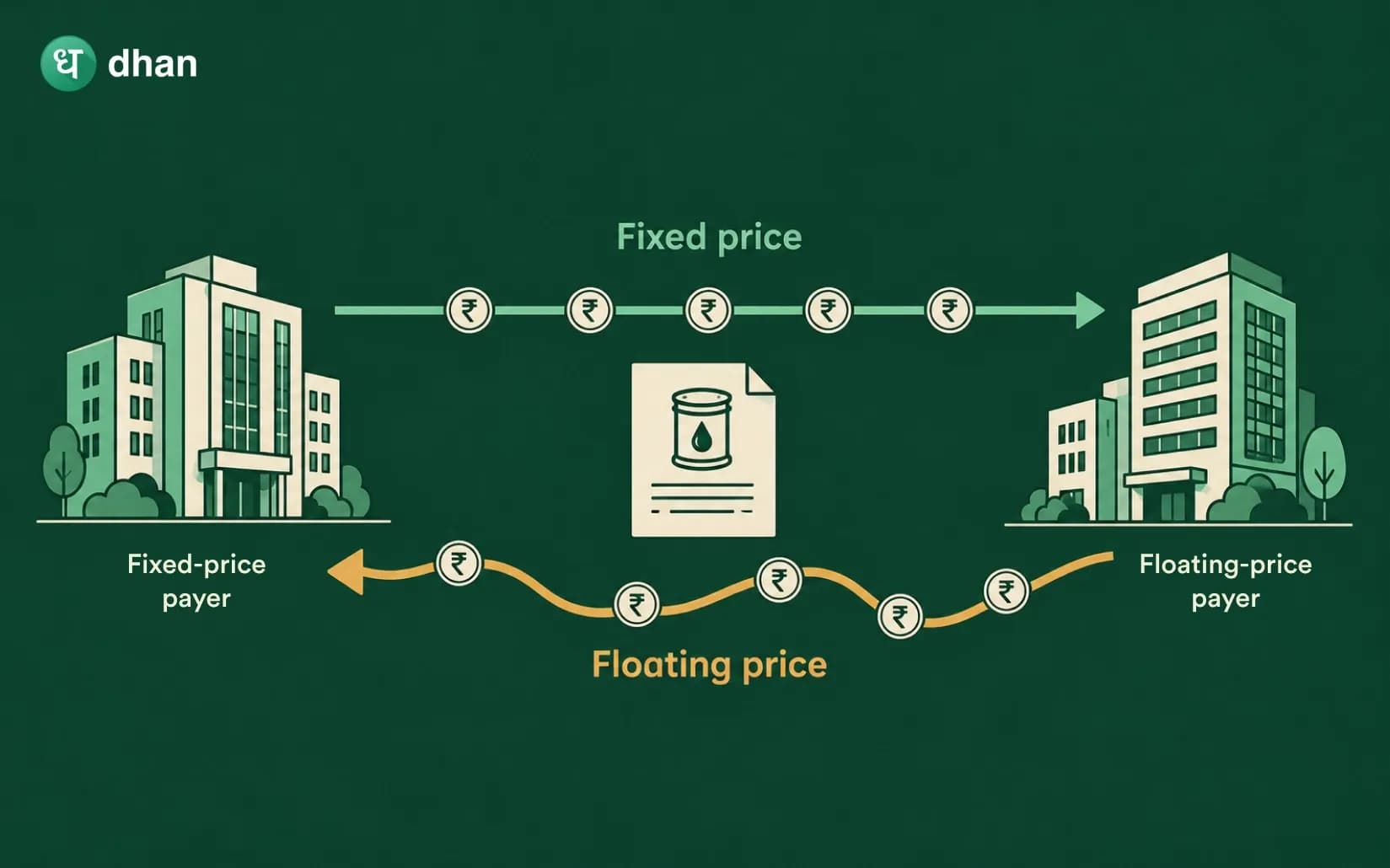
Hedging is one of the most powerful and underutilised risk management tools in Indian commodity markets. It is especially valuable to farmers, agri-businesses, jewellers, oil refiners, and importers/exporters who are subject to real commodity price movements within their core businesses. Here's how hedging works in practice:
- A soyabean farmer in Madhya Pradesh who is expecting to harvest 100 tonnes of soybeans can sell Soyabean futures on NCDEX to lock in today's prices against a fall in market prices at harvest time.
- A gold jeweller with a large inventory in Jaipur can hedge with Gold futures contracts on MCX to protect against a price fall that can erode the value of their stock.
- An aviation company concerned about an increase in Crude Oil prices can purchase Crude Oil futures on MCX to counter the effect of increased fuel costs.
Understand and respect margin requirements
Margins in commodity trading are a two-edged sword. They allow traders to trade a large position with a relatively small capital outlay, but also amplify losses. The different types of margins include:
- Initial Margin: The margin amount needed to enter a futures contract. MCX calculates this on the basis of Value at Risk (VaR).
- Mark-to-Market (MTM) Margin: Settled daily. If a trader's position turns against them, they will receive a margin call and are required to add more funds to their account.
- Exposure margin: Extra margin charged by exchanges to cover tail risks.
A sound risk management practice is never to trade at full margin utilisation. Keeping at least some amount of capital as a cash buffer to ensure meeting margin calls in market downturns, to avoid being forced to square off the position at the lowest prices.
Maintain a trading journal and review past trades
Risk management is not just about using tools and strategies; it is as much about discipline and continuous learning. One of the best ways to develop trading discipline is to maintain a trading journal. Record each trade, the thought process behind each trade, entry and exit points, stop loss levels, and the final result. At the end of every week, analyse this journal to find out areas where you are going wrong and find answers to questions like:
- Are you holding on to losing trades too long?
- Are you closing profitable trades too early?
- Are you trading at the most volatile times of the day without adequate preparation?
Self-awareness is the first step to making improvements in trading strategy.
Monitor global cues and macro factors
The prices of Indian commodities do not operate in a vacuum. They are influenced by global trends, exchange rate fluctuations, and broader economic policies. Some significant factors to look out for include:
- USD/INR exchange rate: The decrease in the rupee causes the price of dollar-denominated commodities such as Gold, etc., to rise in India.
- US Federal Reserve policies: Changes in interest rates have an impact on the price of gold and energy commodities worldwide.
- Monsoon season: The monsoon season plays an important role in agricultural commodities. A poor monsoon can cause sudden spikes in pulses, oilseeds and spices.
- Government Policies: Government policies regarding export bans, import taxes, and stock holding for agricultural commodities frequently cause sudden fluctuations in prices of commodities.
Diversify across commodities
Don't put all the capital in one single commodity. Different commodities are affected in different ways, based on macroeconomics, seasonal cycles and world demand-supply dynamics. For example:
- Gold and Silver tend to perform well in a period of geopolitical uncertainty as well as INR depreciation.
- Crude Oil prices are sensitive to the decisions of the OPEC+ and inventory data.
- Agricultural commodities, i.e. Soyabean, Chana, Cotton, are affected by domestic monsoon patterns, MSP (Minimum Support Price) policies and export/import restrictions.
By diversifying trades with respect to the metals, energy and agri-commodities, the risk of one event wiping out the entire portfolio can be significantly reduced. Even within agriculture, the diversification of crops between kharif and rabi seasons can balance seasonal volatilities.
Always use stop-loss orders
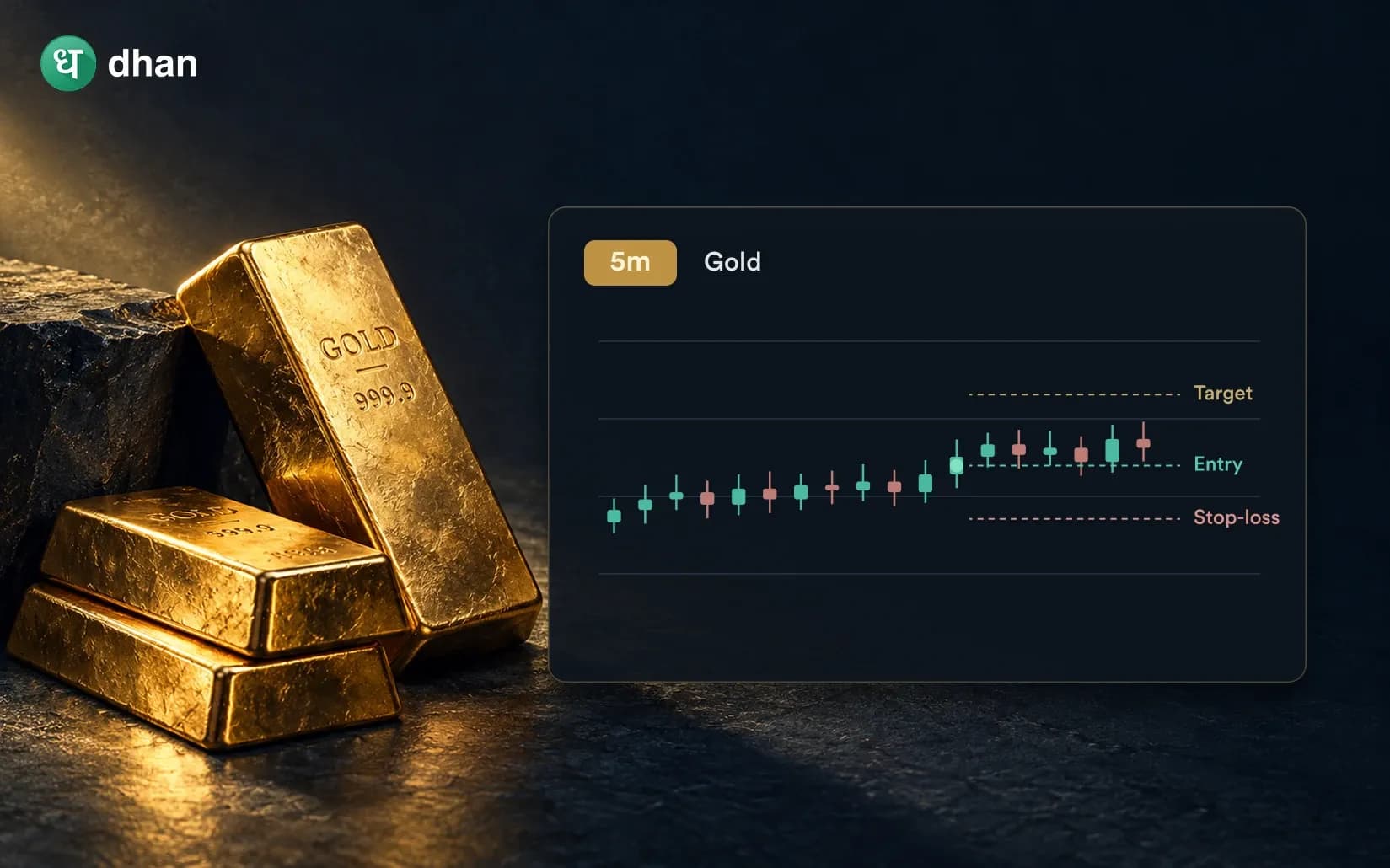
A stop-loss is a type of insurance for a trader in the field of commodity trading. It automatically exits the position if the price moves against and beyond a predefined level, which helps limit further losses. There are different types of stop-loss orders that a trader can use:
- Fixed stop-loss: When a stop loss is placed at a specific price point, i.e. if the price reaches this point, the stop loss gets automatically activated, and the trader automatically exits the position.
- Trailing stop-loss: This stop loss moves with the price; hence, it locks in profits as the trade moves up.
- ATR-based stop loss: It uses the Average True Range (ATR) indicator to set stop loss based on the actual volatility of the commodity and not on fixed price levels.
In the case of highly volatile commodities such as crude oil or natural gas, which are highly sensitive to
global news, OPEC+ decisions, monsoon cycles, etc., often require wide stop losses. The key is to incorporate this volatility into the position size, rather than not using the stop-loss.
To wrap up
Managing risks in commodity trading is not an option, but it is important for longevity and financial success. By adopting disciplined trading strategies like stop-loss orders, position sizing and diversification, hedging, maintaining a trading journal, disciplined leverage and awareness of global market and other macro factors, traders in India can overcome the risks associated with commodity trading and increase their chances of consistent performance.
Remember, risk management isn't about the prevention of risk, it's about understanding, controlling and accepting risk in a way that doesn't remove traders from the game, but places them in a better position to capitalise on the next opportunity.
FAQs
1. If a trader has a dispute with their commodity broker, what should they do?
If traders have a dispute, such as unauthorised trades, delayed payouts or incorrect settlements, they should first raise this issue with their broker, in writing. If they remain unresolved, they can approach the Investor Grievance Redressal Mechanism (IGRM) of the concerned exchange (MCX, NCDEX). SEBI has also launched the facility for the SCORES(SEBI Complaints Redress System) portal on their website to facilitate online complaints registration for dispute resolution.
2. Is commodity trading regulated in India, and who regulates it?
Yes, the commodity trading in India is regulated under the Commodity Derivatives Market Regulation Department (CDMRD) of the Securities and Exchange Board of India (SEBI). The market exists under a three-tiered regulatory setup, including the central government, SEBI and the exchanges (MCX, NCDEX).
3. What is the difference between hedging and speculation in commodity trading?
Hedging refers to the use of futures or options contracts to hedge against existing price risks in business or physical assets (such as a farmer hedging to lock in prices for agricultural commodities or a jeweller hedging in gold prices for his inventory). Speculation is an attempt to profit from price movements without any real exposure. Hedging is frequently less risky, whereas speculation is more risky and demands active management.
4. How do margin calls work in commodity futures trading?
For commodity futures trading, the trader's position is marked to market (MTM) at the end of each trading day. If the position turns against them and the margin balance drops below the maintenance margin, then traders will receive a margin call from their broker asking them to add more funds. If the traders fail to add funds, then the broker has the right to force liquidation of the positions to answer the margin call.
5. What is the safest way for a beginner to start commodity trading in India?
Beginner traders should start by developing a thorough understanding of the specific commodity they want to trade. After this, they must start with small positions and use strict stop losses. They should not use complete margin utilisation for trading. Beginner traders can also use paper trading, which is practising in real-time market-like conditions without using real money for a few months before making direct bets in the real-time market.