Difference between MCX and NCDEX





Key takeaways:
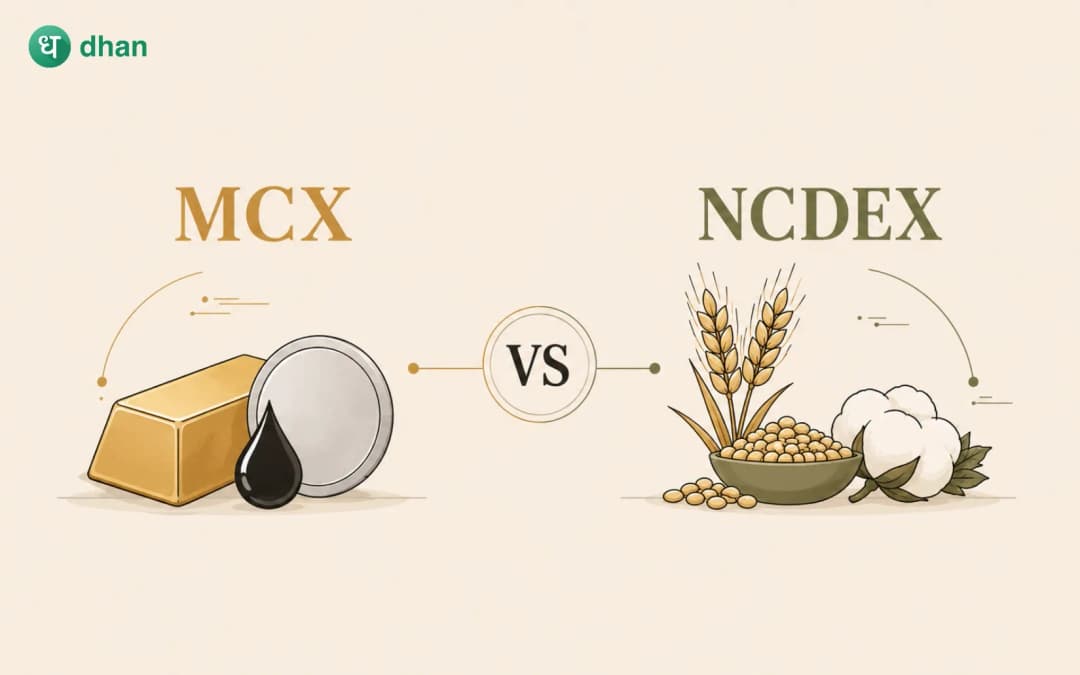
- MCX and NCDEX are commodity exchanges in India. MCX focuses on commodities like bullion, energy and metals, while NCDEX lists agricultural commodities.
- On each exchange, commodity prices respond to different global, domestic and commodity-specific factors.
- Consider your commodity, goal of trading and risk tolerance as you choose between MCX and NCDEX.
Commodity traders in India often check prices of gold, silver, and crude oil, but the commodity market involves much more. It also covers agricultural products that are closely related to the farming and consumption cycles of the country.
In this context, you’ll come across two names - MCX and NCDEX. Both are commodity exchanges in India, but they serve different segments of the market. As a trader, it’s important to understand where they differ, so that you get a better understanding of the contracts, factors driving prices, and trading opportunities available on each platform.
What is MCX?
The MCX (Multi Commodity Exchange of India) is one of the major commodity derivatives exchanges of India. It provides a platform for trading futures and options across several commodity segments.
MCX has a strong presence in bullion, energy and industrial metals. Some of the commodities commonly associated with the exchange are gold, silver, natural gas, crude oil, copper, aluminium, and zinc.
Traders who follow commodities influenced by international markets particularly find this exchange relevant. For instance, gold and crude prices in India are influenced by global prices, interest rate movements, and geopolitical developments. Movements in the US dollar can also influence domestic prices. Active commodity traders looking for exposure to markets that quickly respond to global developments find the MCX particularly interesting.
What is NCDEX?
The NCDEX (National Commodity & Derivatives Exchange) is another major commodity derivatives exchange in India. This exchange is primarily related to agricultural products.
Historically, NCDEX contracts have covered commodities like soybean, mustard seed, guar seed, coriander and jeera. The agricultural economy of India is closely connected to these markets, which makes domestic factors particularly important for price movements.
The prices of agricultural commodities can be influenced by several factors like weather conditions, crop production, government policies, exports, imports and domestic consumption.
Key differences between MCX vs NCDEX at a glance
Tradersmust understand the key differences between MCX and NCDEX when they invest in commodities. The table below summarises what they are and how they differ.
How trading works on MCX & NCDEX
Standardised commodity derivatives contracts are used to facilitate trading on both exchanges. As a trader, you do not have to purchase a physical commodity. Instead, you can take positions in futures or options contracts where the value is linked to the underlying commodity.
A derivative contract (future/option) is an agreement based on a particular commodity, quantity and expiry. Traders need to take positions based on their expectations of where the commodity price may move.
For instance, if a trader expects gold prices to rise, they may take a long position in a gold futures contract. If you expect prices to decline, you may take a short position.
One crucial aspect to note is that commodity futures involve leverage. Instead of paying the full value of the underlying commodity upfront, traders generally need to deposit margin. This may increase capital efficiency, but it can also magnify your losses when prices move in the opposite direction.
Traders must also consider that each contract has its own lot size, expiry, margin requirements and settlement specifications. As these details vary significantly between commodities, traders must understand the specific contract they are considering.
MCX vs NCDEX: Which commodities are more suitable for different traders?
The right choice of commodity market depends on the relevance of each commodity to traders. Let’s understand how different commodity traders choose the exchange.
Traders interested in gold and silver
For traders interested in bullion contracts like gold and silver, MCX is more relevant. Factors like global prices, interest rate expectations, activities of central banks, and currency movements influence these commodities. Therefore, a bullion trader must follow international developments along with domestic market conditions.
Traders interested in crude oil and natural gas
Through MCX, you also gain exposure to energy commodities like crude oil and natural gas. These markets can experience sharp movements in price due to disruptions in supply and geopolitical events. Changes in global demand and production decisions can also change market expectations quickly. Before taking a position, traders must comprehensively understand the international energy markets.
Traders interested in agricultural commodities
When you look at agricultural commodities, NCDEX becomes more relevant. The way prices of soybean, mustard seed, guar seed, coriander or jeera behave is different from those influencing gold or crude oil. Some of the important considerations include weather conditions, crop production, harvest cycles, domestic consumption and government policy.
Factors that influence Prices on MCX and NCDEX
Several factors influence the prices of commodities trading on MCX and NCDEX. The specific factors depend on the underlying commodity.
Global factors
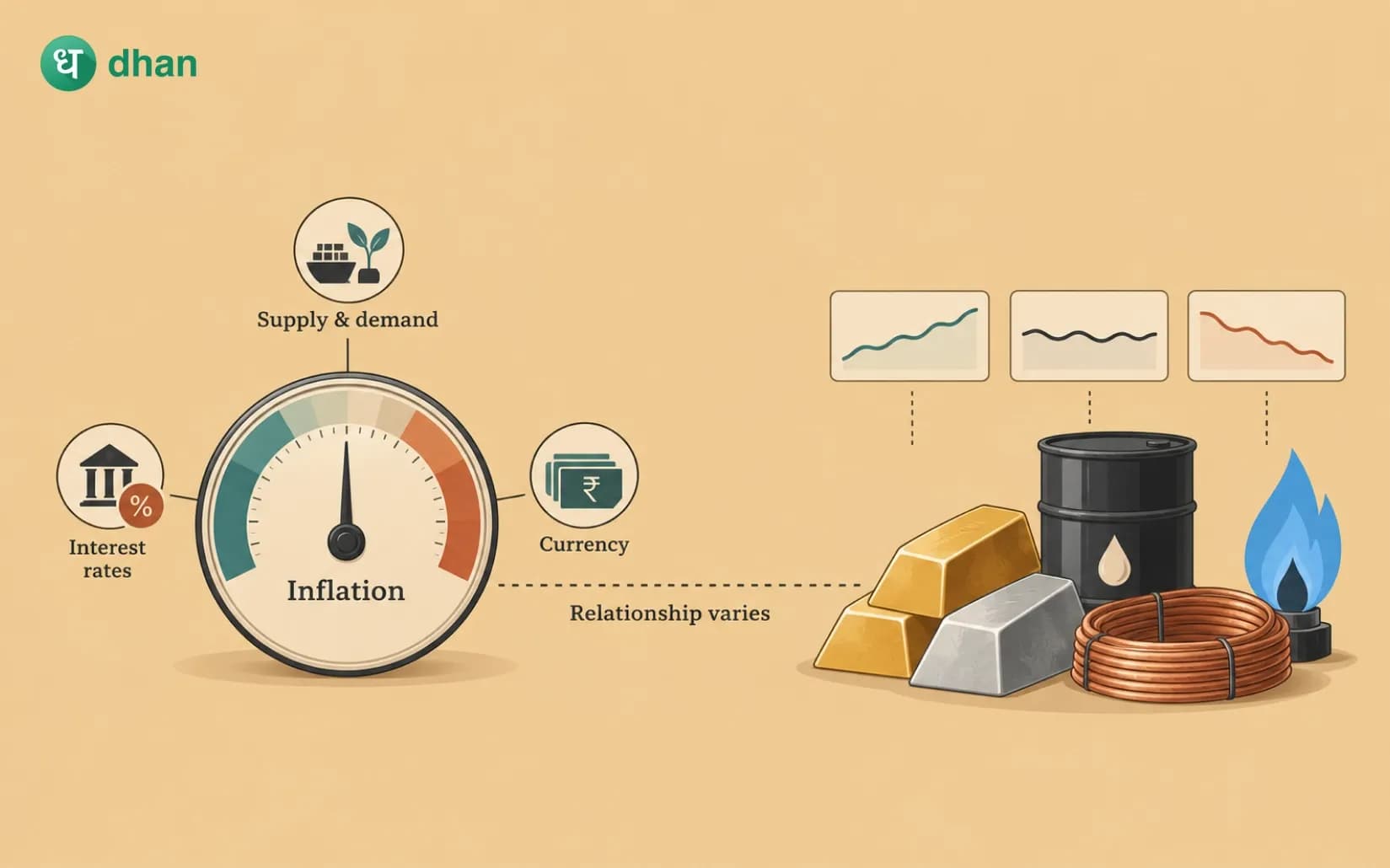
Currency movements, global commodity prices, interest rates, geopolitical developments and disruptions in international supply have a significant impact on commodities. This impact is particularly visible on commodities like gold, silver, crude oil and industrial metals.
For instance, a sudden geopolitical event can affect expectations related to the supply of crude oil. Likewise, when the expectations of investors around global interest rates change, the prices of precious metals are influenced.
Domestic factors
Prices of Indian commodities are also influenced by domestic conditions. The movement of the rupee against the US dollar is important for internationally priced commodities. Other factors affecting prices are import and export policies, domestic consumption, inventory levels, and regulations of the government. At times, these domestic factors cause prices of Indian commodities to behave in a different way from their international counterparts.
Commodity-specific factors
Certain factors are related to specific commodities. For agricultural commodities, crucial aspects to consider include weather, crop output and harvest arrivals. Industrial demand and mine supply may matter significantly for metals. Again, energy commodities are largely influenced by production, inventories and global consumption. It is important to understand these differences as no single formula can analyse every commodity.
MCX vs NCDEX for hedging
Now, let’s understand how MCX and NCDEX can be used for hedging. Businesses can use them to manage price risk.
Think about a jewellery business that expects to purchase gold in the future. Procurement costs may increase if gold prices rise sharply. With a suitable derivatives position, it can reduce the impact of such price movements.
Likewise, an industrial business dependent on metals could use commodity derivatives to manage the risk of rising input costs.
For agricultural businesses, the problem is different. The uncertainty over the future price of crops may be a concern for farmers, processors, traders and exporters. Relevant NCDEX contracts can provide a mechanism to manage a part of that risk.
The effectiveness of a hedge depends on how closely the derivative contract tracks the underlying exposure. That’s why it’s crucial to select the appropriate commodity contract.
Advantages of trading through commodity exchanges
Traders experience several advantages when they use commodity exchanges like MCX and NCDEX.
Transparent prices
Several market participants come together on exchange-traded contracts. This helps in establishing prices through organised buying and selling activity. Traders get a transparent reference point, which is more practical than simply relying on fragmented transactions in a physical market.
Standardised contracts
Important aspects like contract specifications, lot sizes and expiry dates are standardised on commodity exchanges. As a result, participants can understand what exactly they are trading.
Liquidity and access to market
Commodity exchanges like MCX and NCDEX bring together traders, businesses and other market participants. Contracts with healthy trading activity offer greater ease to enter and exit positions. However, substantial differences in liquidity can be noticed between commodities and contract months.
Opportunities for hedging
With derivatives, businesses get tools through which they can manage exposure to changing prices of commodities. Participants whose revenues or costs are directly linked to commodity prices can find this particularly valuable.
Risks to consider when trading on MCX and NCDEX
Now that you are aware of the advantages of commodity trading, it’s worth taking a look at the risks to consider when you trade on MCX and NCDEX.
Volatility
Commodity prices can be volatile, which can result in rapid gains or losses. In response to global events, some MCX contracts may move sharply. Again, sudden moves in agricultural commodities may be triggered by weather or policy developments.
Margin requirements
A trader may decide not to pay the entire value of the contract upfront and use margins. However, adverse price movements can lead to additional margin requirements.
Expiry-related risks
Traders must also consider expiry-related risks. Futures contracts have specific expiry dates. Therefore, you cannot treat a position simply like a long-term holding in a conventional investment.
Liquidity
At times, liquidity also varies between contracts. A particular commodity may have active trading in one expiry, but show consistently lower activity in another.
How to choose between MCX and NCDEX
MCX and NCDEX are not competing exchanges, and they cannot substitute each other. Their strengths are largely complementary.
If you are interested in gold, silver, crude oil, natural gas or industrial metals, you may explore MCX. However, NCDEX will be the more relevant choice if you are interested in agricultural commodities like soybean, mustard seed, guar seed, coriander or jeera.
While choosing between MCX and NCDEX, consider your objective first. If you’re looking for short-term opportunities, consider crucial aspects like liquidity, volatility and events that can move the market. Again, a business looking to hedge may prioritise how closely a particular futures contract matches its actual commodity exposure.
Conclusion
MCX and NCDEX have different positions in the commodity derivatives market in India. While MCX is associated with bullion, energy and industrial metals, NCDEX is deeply connected with agricultural commodities.
Neither of these exchanges is better than the other. As a trader, consider what you want to trade and why you want to trade it. Also evaluate how well you understand the factors influencing its price.
If you’re just entering commodity markets, it’s crucial to understand that the exchange is only the starting point. The larger priority is to understand the commodity itself, key factors driving prices there, contract structure, and the risks involved.
FAQs
Can I trade on both MCX and NCDEX through the same trading account?
Yes, you can trade both MCX and NCDEX through the same trading account, but it depends on the broker and the commodity trading segment enabled on your account. First, check whether the commodity derivatives trading feature has been activated for your account.
Do MCX and NCDEX contracts have the same expiry and settlement rules?
No, the individual commodity contract determines the expiry dates, contract specifications, settlement mechanisms and other terms. Therefore, two contracts listed on different exchanges can have different specifications, although both are commodity derivatives.
Can commodity prices on MCX and NCDEX move independently?
Yes. The commodities that are traded on the two exchanges are exposed to different fundamentals. That’s why they move independently. For example, a strong monsoon may influence an agricultural commodity on NCDEX, but it wouldn’t have a comparable impact on gold or crude oil traded on MCX.
Are commodity futures suitable for long-term investors?
No. Futures are structured as derivatives, which come with specific expiry dates. These are different from traditional long-term investments.
What should a beginner check before selecting a commodity futures contract?
As a beginner, you must understand the underlying commodity and contract size. Other aspects to consider are expiry, margin requirements, liquidity, and major factors influencing the price of the commodity. Before taking your position, it’s also vital to understand how leverage can magnify both gains and losses.