What is Nifty ETF?




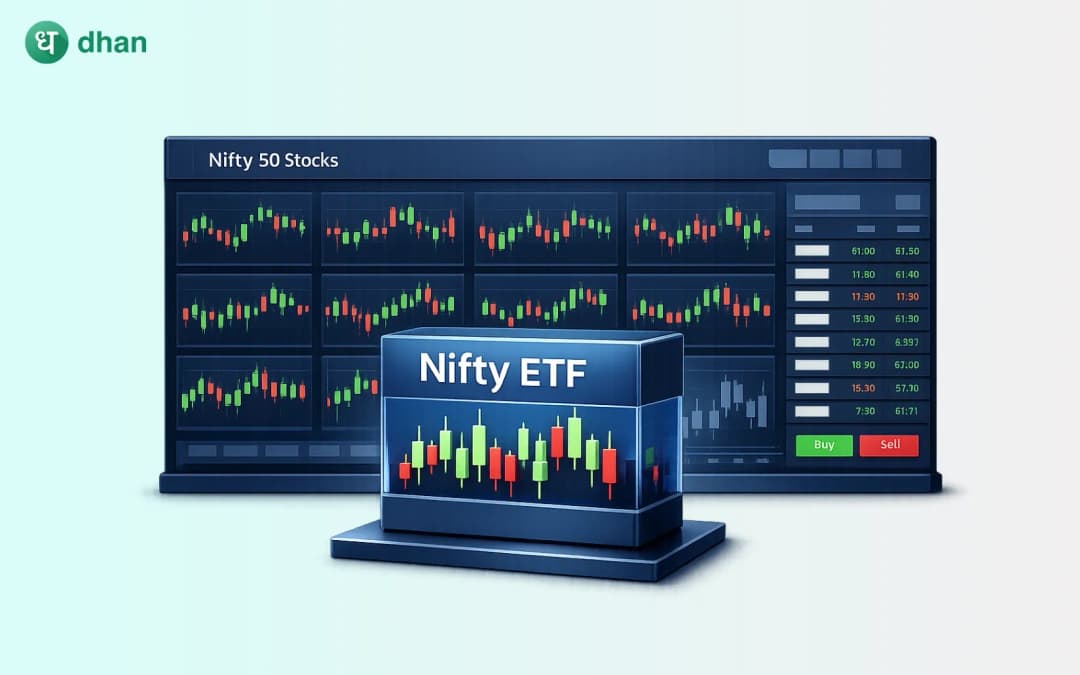


A Nifty ETF can be one such option for them. Nifty ETF enables investing in Indian blue-chip companies through one portfolio. In this article, we will introduce what is Nifty ETF, how Nifty ETF works, types of Nifty ETF, advantage/disadvantage, and who it is suitable for.
Nifty ETF Explained
A Nifty ETF is an Exchange Traded Fund that tracks a particular Nifty index. For many people looking to grasp the idea of what is Nifty ETF - it can be a means to invest in the 50 largest (via Nifty 50 ETF) and financially sound companies listed on the National Stock Exchange using one single instrument.
These companies represent various sectors like the banking sector, technology sector, energy sector, pharmaceuticals sector, and consumer goods sector.
Instead of investing in one company, investing in the Nifty ETF enables you to invest in multiple companies through a single fund. This helps spread your capital across multiple businesses, reducing dependence on the performance of any one company.
In other words, if the Nifty index moves up or down, the Nifty ETF usually moves along with it.
How Does a Nifty ETF Work?
A Nifty ETF functions by tracking the Nifty Index on the NSE. This implies that the fund will invest in the same stocks and to the same extent as the index.
If the weight of a company in the Nifty is greater, the capital allocated by the ETF will also be greater. If the index goes up, the value of the ETF will go up. If the index drops, the value of the ETF will fall.
Contrary to conventional mutual funds, Nifty ETFs are listed on the stock exchange. You can trade them just like stocks during the hours when the markets are open at their market prices.
Types of Nifty ETFs
There are various types of Nifty ETFs offered, catering to slightly different requirements:
Nifty 50 ETFs
They are the most frequent ETFs in Nifty. They represent the normal Nifty 50 index. They are suitable for long-term investors seeking broad market exposure.
Nifty Next 50 ETFs
These are the next 50 companies following the Nifty 50. They have growth potential, but may be riskier and even more volatile.
Nifty Sector-Based ETFs
These ETFs are based on sectors of the Nifty universe, such as banking or IT. They are designed for investors who require specific sector exposure.
Nifty Equal Weight ETFs
In ETFs, equal emphasis is placed on all companies without giving priority to size. The risk of relying on large companies is minimised this way.
Benefits of Investing in a Nifty ETF
A Nifty ETF provides several benefits for investors seeking simple, low-cost access to the equity market without actively managing their investment.
Diversification across leading companies
A Nifty ETF helps to diversify your investments over large and well-established companies, thereby minimising the risk of investing in a single business.
Low cost of investment
Since Nifty ETFs follow the passive management system, they tend to have lower expense ratios than other funds.
Simple and transparent structure
The fund follows a prominent index, making it easy to understand where your money is going.
Liquidity and flexibility
Nifty ETFs can be traded on the stock market. This makes it easy for people to get in and out of the market.
Suitable for long-term investing
They could be great for long-term investment plans like retirement or generating funds through market participation.
Risks of investing in a Nifty ETF
Even though Nifty ETFs are relatively stable investment options, they still entail risks because they are market-related instruments.
Market risk
The value of a Nifty ETF is linked to the stock market. If the stock market goes down, the value of the ETF might come down.
No guaranteed returns
As opposed to fixed-income investments, Nifty ETFS do not provide guaranteed returns.
Short-term volatility
The prices may fluctuate in the short run in accordance with the market conditions. This may affect the investors.
Tracking error
In certain instances, the ETF’s performance may differ slightly from the actual Nifty 50 Index performance in terms of costs and operational reasons.
Requires a demat account
One needs to open demat account and a trading account for investing, which might not be ideal for all.
Who Should Invest in a Nifty ETF?
A Nifty ETF is ideal for investors who are looking for a wide exposure in the stock market but do not want to invest in stocks individually.
It is a suitable option for long-term investors whose goals are retirement planning or the creation of wealth, benefiting from overall market growth over time. It is also for beginners who have just joined the investment world and would like to learn all about equity markets using a diverse fund.
Working professionals with plans for regular investments but unable to track market performance actively may be benefited with the help of Nifty ETFs too. However, those seeking assured returns and gains over a short period may find the option less helpful because the gains are market performance-based.
Conclusion
A Nifty ETF is an investment opportunity in the stock market that is simple, transparent, and reasonably priced. Investors get to participate in the growth of India's leading companies without actually having to select individual shares.
Nifty ETFs can be a very strong backbone in an investment portfolio for investors who have a long-term investment horizon and are willing to accept market fluctuations. Again, like any other investment, it's all about understanding your goals and time frame.
FAQs
1. What is a Nifty ETF?
A Nifty ETF is an investment that is based on the indexes on the NSE exchange, such as the Nifty 50 Index.
2. What is the difference between Nifty ETF and shares?
By purchasing shares, you are actually investing in one company. Buying a Nifty ETF means you are actually investing in all companies of that index simultaneously; therefore, the risk involved is low.
3. Who Should Invest in a Nifty ETF?
Nifty ETF is a suitable option for beginners or those who are interested in a portfolio with steady growth.
4. Is the Nifty ETF risky?
There is a market risk involved, and the portfolio is less risky than an individual stock investment since the money is diversified among many companies.
5. How can I invest in a Nifty ETF?
You can purchase a NIFTY ETF by using a demat account and a trading account.