What Is Margin Call in Intraday Trading







Key takeaways:
- A margin call is a demand from the broker to deposit more funds or collateral, or to reduce positions.
- A margin call occurs when the account equity falls below the minimum maintenance margin threshold.
- In the equity cash segment, brokers collect a 20% minimum upfront margin comprising Value at Risk (VaR) and Extreme Loss Margin (ELM).
- For intraday and carry-forward trades in the F&O segment, brokers collect SPAN and Extreme Loss Margin upfront before placing the trade.
- Clearing corporations check client margins at random points in the trading day, and a shortfall attracts a penalty on the broker of 0.5% to 1% of the shortfall, rising to 5% for each day it continues beyond the third day.
- RMS square-off levels differ from broker to broker, so a margin buffer, a stop-loss on every trade and smaller positions are the best ways to avoid a forced exit.
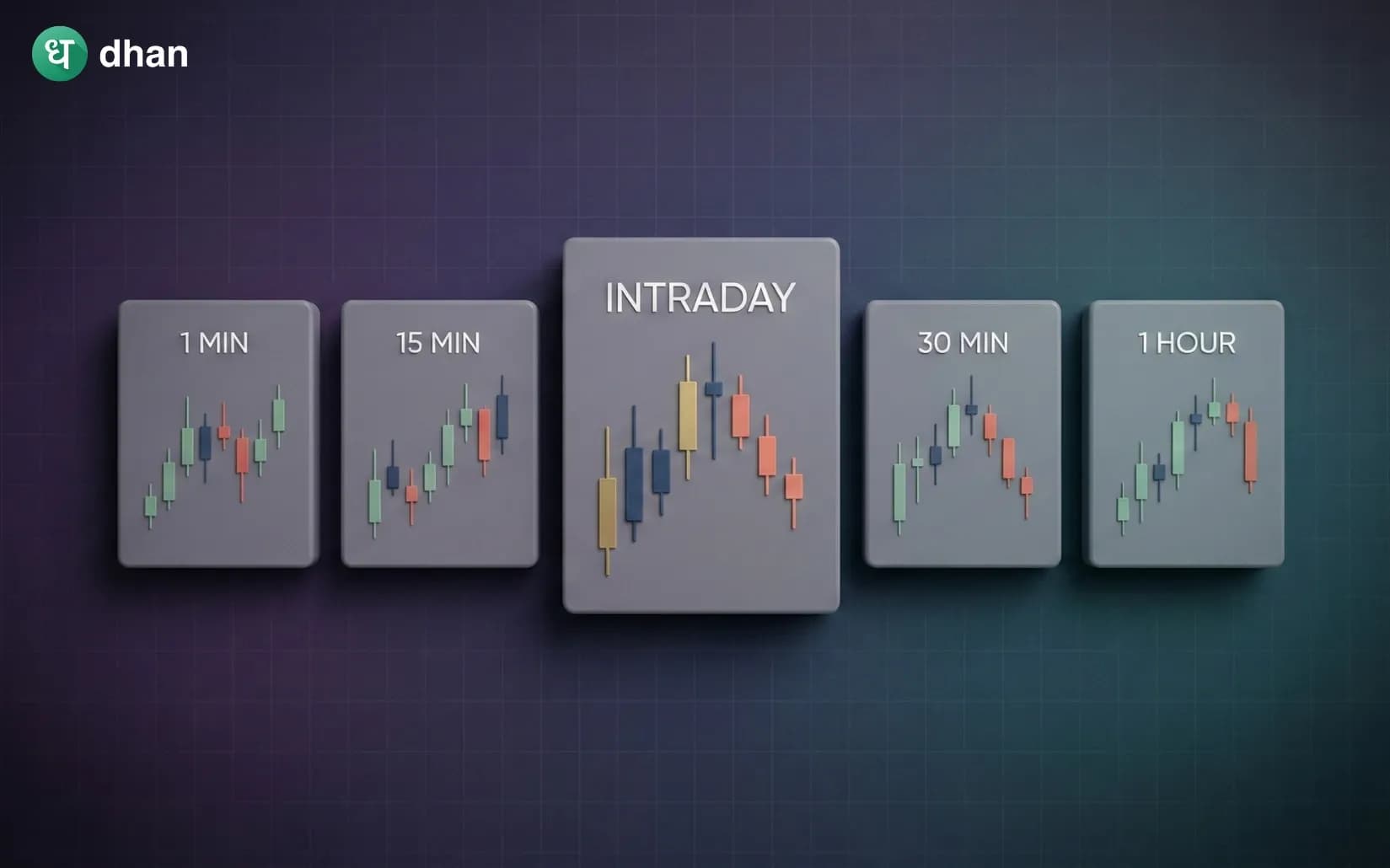
Intraday trading, which means buying and selling within the same session, attracts active traders because of margin leverage. Through the MIS (Margin Intraday Square-off) product, brokers allow positions larger than the trader’s account balance by blocking only a fraction of the trade value as margin. Leverage magnifies gains, but it also magnifies losses.
Brokers track the live mark-to-market (MTM) profit and loss of every open position against the funds in the trader’s account. When losses eat into that cushion, a margin call or an automatic square-off follows. In this blog, we will explore what a margin call in intraday trading is, what SEBI's upfront and peak margin rules are, what triggers a margin call, what happens if traders ignore it, and how to avoid it.
What is a margin call in trading?
To understand what is a margin call in trading, market participants first need to understand how a margin trade is structured. When traders place a leveraged intraday order, their broker blocks a specific amount of cash or approved collateral from their trading ledger. As long as their trade remains open, its real-time value fluctuates with every tick on the exchange, generating an unrealised Mark-to-Market (MTM) gain or loss.
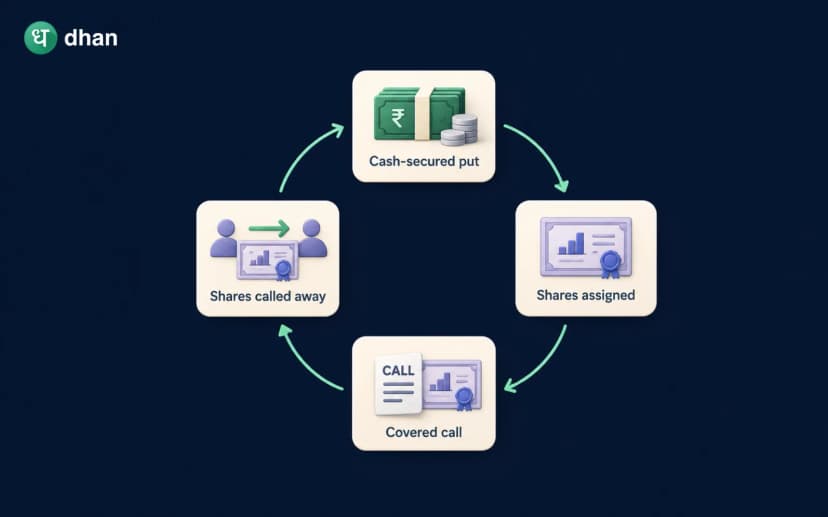
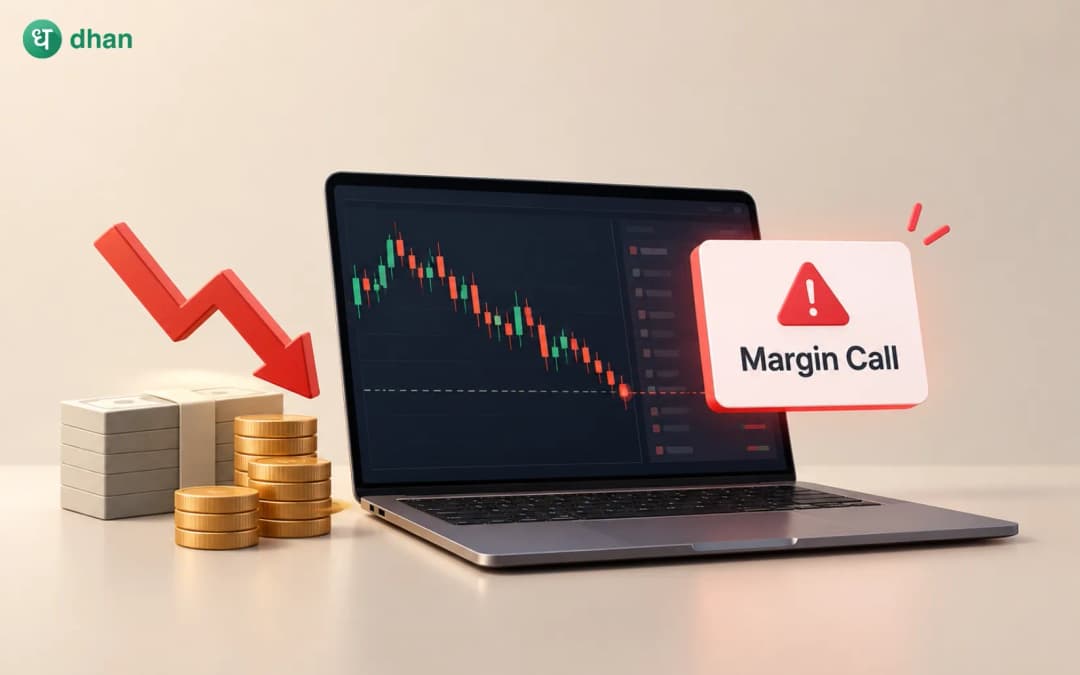
A margin call is an official alert or demand from the stockbroker notifying traders that their available account balance has dropped below the minimum required maintenance margin threshold needed to keep their leveraged positions open. When a margin call is triggered, traders have only two choices:
- Deposit additional funds immediately via instant payment modes (such as UPI or net banking) or pledge additional approved shares to replenish the margin deficit.
- Partially or fully close their open positions to reduce the total margin required by their account.
If traders fail to do so, the brokers can liquidate their positions.
How does margin work in intraday trading in India?
In India, intraday margin requirements are regulated by SEBI and enforced by clearing corporations. This is how the margin in the different segments is calculated:
- Equity cash intraday (VaR + ELM): Under SEBI guidelines, the broker collects the sum of VaR (Value at Risk) and ELM (Extreme Loss Margin) before executing the order (with a minimum of 20%).
- Futures and Options (SPAN + Extreme Loss Margin): For intraday and carry-forward trades in the F&O segment, brokers must collect SPAN (Standard Portfolio Analysis of Risk) margin plus Extreme Loss Margin upfront before placing the trade.
- SEBI's Peak Margin snapshot framework: Clearing corporations take at least four random snapshots of client margins during the day instead of checking margin availability only at the end of the trading day. The highest margin obligation recorded across those snapshots becomes the trader's peak margin requirement for the day.
What triggers a margin call in intraday trading?
Let’s explore the primary factors that trigger a margin call during an active trading session:
- MTM losses: Open positions are valued at live prices, so every rupee of unrealised loss reduces the remaining margin. At 5x leverage, even a small move uses up a large share of it.
- Margin revisions: Margin requirements are not fixed throughout the day. Clearing corporations recalculate SPAN and VaR parameters multiple times during market hours based on intraday volatility. If an unexpected event causes volatility to rise, the exchange may increase the required margin, and a trade close to breakeven may trigger a margin call.
- Falling collateral value: Many intraday traders pledge their existing holdings to obtain collateral margin. If a broad market sell-off causes the market value of their pledged portfolio to fall sharply during the session or if the clearing corporation increases the haircut percentage on a pledged stock, the available collateral margin reduces, triggering a margin call on the open positions.
- Hedge breaks: Combining multiple F&O (Futures and Options) legs reduces the overall portfolio risk, giving traders a lower SPAN and exposure margin requirement. When traders square off one leg (or a leg expires), the hedge is broken, and the margin increases, often leading to margin calls.
- Expiry-day rules: During the final days leading up to monthly expiry, exchanges levy additional physical delivery margins on In-the-Money (ITM) stock options and futures positions. A sharp price move during expiry week can push an option into the money or increase the delivery margin requirement, sharply raising margin obligations and potentially triggering a margin call.
What does a margin call look like in practice?
To see how a margin call in trading plays out mathematically during a live session, let's consider a trader who starts the day with ₹20,000 in their trading ledger and buys a stock included in the Nifty 50 index using the intraday (MIS) product type at 5x leverage on Dhan. So, the total position value (exposure) is 200 x ₹500 = ₹1,00,000.
The upfront 20% margin is ₹20,000, which is 100% of the trader's available capital, leaving ₹0 as the free cash buffer in their trading account.
Suppose negative news hits the market and the stock price begins declining. Here is how Dhan's Risk Management System (RMS) responds at each price level:
The Dhan's RMS comes into play when the stock falls 16% (at ₹420, the MTM loss is 80% of the ₹20,000 capital).
What happens if a margin call is ignored?
Ignoring a margin call can have the following consequences:
- Forced square-off: The broker's RMS can close positions automatically, often at an unfavourable price. For instance, Dhan's risk management policy squares off intraday positions when MTM crosses 80% and above, and it charges ₹20 plus GST per order as auto-square-off charges.
- Circuit limits: Under the same policy, positions in loss may be squared off once a stock reaches 90% of its circuit limit for the day, but only for higher-leverage (4x and 5x) and non-F&O stocks.
- Losses beyond the deposit: SEBI's Risk Disclosure Document states that losses may exceed the original margin, and that the trader remains liable for losses when the broker closes out positions.
- Exchange penalties: If an intraday SPAN revision, peak margin snapshot or carry-forward derivative position causes a margin shortfall that cannot be satisfied and is reported to the clearing corporation, the exchange charges a tiered monetary penalty on the broker:
How can traders avoid margin calls in intraday trading?
Here is how traders can monitor and prevent margin calls while conducting intraday trading:
- Maintain a 20% to 30% free cash buffer: Never deploy 100% of the trading ledger into a single leveraged trade. Keep 20% to 30% of the account balance as unutilised free cash to absorb intraday MTM fluctuations or sudden SPAN margin revisions without triggering a margin call.
- Set a stop-loss on every trade: The exit level should be decided before entering. Many traders limit the risk on a trade to 1-2% of total capital, as an early stop-loss costs less than an RMS exit at the worst price.
- Avoid holding positions until the final minutes: If a stock moves sharply against a trader's intraday position and approaches its daily price band, exit manually rather than waiting for the RMS to liquidate the position in a thinning order book.
- Track live margin utilisation before adding lots: Use the real-time margin calculator and live portfolio margin tracker to check both the current margin utilised and the peak margin status before scaling into additional trades across equity, F&O, or commodity segments.
- Exit before the cut-off: Continuous trading in F&O-eligible stocks now ends at 3:15 PM, and brokers square off intraday positions earlier, often around 3:10 PM for such stocks and 3:25 PM for others, and charge a fee, so traders should square off their positions before brokers' auto square-off kicks in.
The bottom line
A margin call in intraday trading occurs when the margin available in a trading account falls below the minimum threshold level required to support open leveraged positions. It is commonly triggered by mark-to-market losses, rising volatility, a fall in pledged collateral value or a broken hedge.
If a trader does not meet a margin call, the broker’s risk management system may square off part or all of the position, often at an unfavourable price.
The best way to avoid a margin call is disciplined risk management. Additionally, a margin call should be treated as a signal to reduce risk immediately, not as a notification to ignore. Keep an eye on trading costs as well, which you can check on Dhan pricing, since charges also reduce the money available in your account.
FAQs
What is a margin call in intraday trading?
A margin call is a notification from a broker that the maintenance margin in a trading account has fallen below the minimum threshold required to maintain an open leveraged position. The broker requires the traders to add more funds or collateral or to reduce positions; otherwise, their positions will be squared off.
Can a broker square off my position without my permission?
Yes. Under the standard broker-client agreement and risk disclosure document signed at account opening as per the regulatory framework of NSE and BSE, a broker has the right to square off a client's open position if the available margin falls below the required level and the client fails to top up within the stipulated window.
At what loss percentage does a broker square off an intraday position in India?
Most SEBI-registered brokers in India enforce an automated Risk Management System (RMS) threshold where intraday and carry-forward derivative positions are squared off once unrealised Mark-to-Market (MTM) losses reach 70% to 80% of the total available margin.
Can pledged shares be used as margin for intraday trades?
Yes. As per the margin pledge framework by SEBI, traders can pledge approved shares, ETFs, and mutual funds from their Demat account to get a collateral margin (after application of the exchange-prescribed haircut) for conducting intraday trades.
How can I resolve a margin call?
A margin call can be resolved by adding funds, pledging more shares or squaring off part of the position. Acting early lets the trader choose which position to close; otherwise, the RMS decides.