Physical Gold vs Digital Gold vs Gold Futures


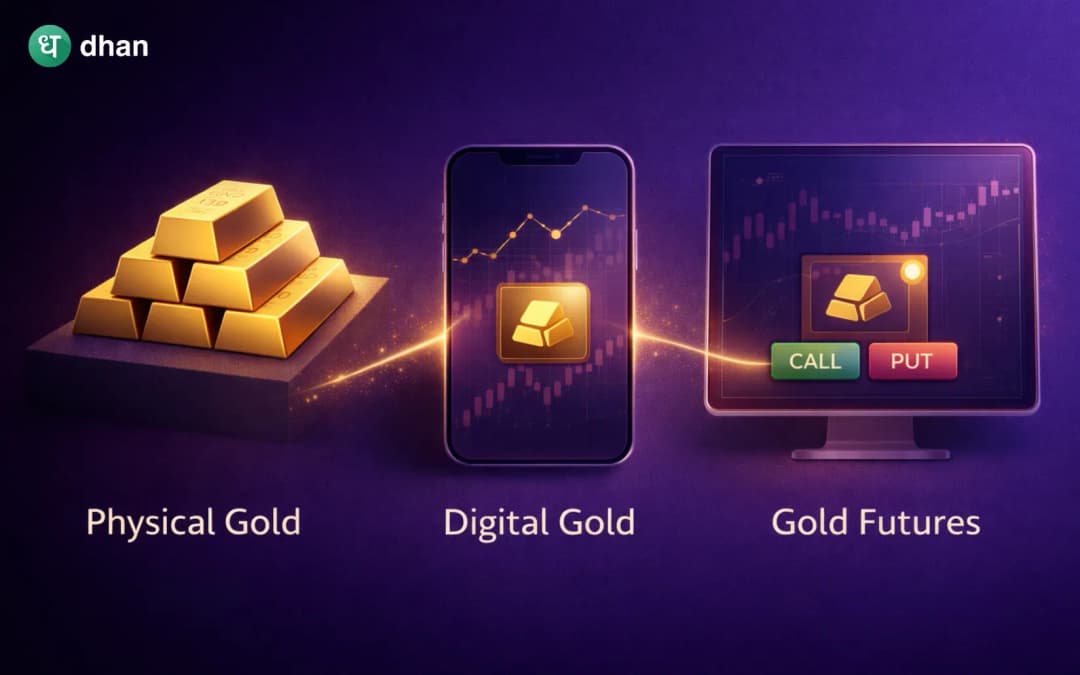



Gold has an everlasting relationship with India. In 2026, however, the Indian gold holding methods have increased many times over, and not just in jewellery. Investors can now buy physical gold from a jeweller, use ₹10 to purchase digital gold through a payment app, or even engage in a Gold Futures contract, without even owning a single gram of the metal.
Through each of these investment instruments, investors can gain exposure to the same asset, but the costs, risks, liquidity, and ideal use cases are completely different. Here, we will explore the difference between the different investment instruments of gold, like physical gold, digital gold, and gold futures.
What is physical gold?
The most common application of physical gold is making jewellery from it, which is commonly produced in 22 karat (91.67 purity), along with coins and bars produced in 24 karat (99.9 purity). The Bureau of Indian Standards (BIS) operates India's mandatory hallmarking system that certifies the purity of physical gold, ensuring that gold items are genuine.
Physical gold offers investors complete, direct ownership and no counterparty risk. However, it comes with a certain additional cost, which reduces the total investment worth. These add-on charges on the gold spot price often include making charges between 5 to 25% of the gold value, 3% GST on gold value, 5% GST on making charges, Hallmark charges, etc.
Storage costs for lockers in banks also constitute an ongoing additional cost. Furthermore, when investors resell these physical gold items, they only receive money for the gold weight, which results in a substantial loss.
What is digital gold?
Digital gold is an online investment instrument that allows investors to invest in 24-karat (999 purity) gold in fractional amounts, beginning with even a minimum investment of ₹100. The physical gold backing the investor's investment is stored in insured, audited vaults by the platform's custodian. However, if you are looking for a regulated alternative that combines the convenience of digital gold with exchange-backed settlement and zero counterparty risk, Gold Vault allows you to buy physical gold and silver at live MCX prices fully settled through SEBI-regulated infrastructure.
Investors are provided with a digital record of their gold possession, and the flexibility to sell their investment any time at current market prices, and may even request the physical delivery of coins or bars, subject to minimum weight conditions and delivery charges.
Digital gold attracts a 3% GST on purchase, but there are no making charges, which makes it more affordable than physical gold. However, there is a critical regulatory void in digital gold investments, as digital gold is not regulated by SEBI or RBI. Thus, in India, there is no existing investor protection framework over digital gold platforms, unlike the gold ETFs, gold mutual funds, or the sovereign gold bonds.
What are gold futures?
The Gold Futures are standardised derivative contracts that are traded on the Multi-Commodity Exchange of India (MCX), and are regulated by SEBI. Gold futures contracts enable traders to buy or sell a specified amount of gold at a specified price on a given future date without owning physical gold during the contract term.
On MCX, gold contracts are available in several specifications to meet the trader's capital requirements. The standard gold contract on MCX is 1 kilogram; Gold Mini is 100 grams, Gold Ten is 10 grams, Gold Guinea is 8grams, and Gold Petal is 1gram.
Trading gold contracts on MCX only requires a small initial margin of the contract value and provides significant leverage. On the expiry, the positions, which are not squared off, entail being physically settled by taking actual gold delivery by paying the remaining amount at MCX-approved vaults.
Physical Gold vs Digital Gold vs Gold Futures
Here is a quick snapshot of Physical Gold vs Digital Gold vs Gold Futures to develop a better understanding of their differences in market participants:
The bottom line
Physical gold is irreplaceable for its cultural, emotional, and collateral value; its buying includes several additional charges. However, digital gold has democratised access to gold investments, but it lacks the regulatory oversight that serious investors need for their gold investments as core portfolio allocations. Gold Futures offer maximum efficiency and liquidity but require active risk management and understanding of F&O and the gold market.
To the majority of long-term Indian investors with the goal of wealth accumulation, investments in gold ETFs, gold mutual funds, and sovereign gold bonds issued by the RBI offer a more efficient and secure investment instrument than all three options we discussed here.