What’s the best way to store gold for the long term?





Buying gold is one part, but storing it safely can be another part. Many people don’t even think about safe storage. Gold is valuable, compact and easy to hide, but this makes it a prime target for theft. Whether you own jewellery, coins, or bars, improper storage can expose you to unnecessary risk.
Nowadays, investors are becoming more aware that owning gold is only half the job; protecting it is equally important. Storage of gold also comes at a cost. Some of them are direct costs, while some are indirect costs. The real question is not just where to store gold, but how to balance safety, accessibility, and cost over the long term. We will try to find the answers to these questions through this article.
Why proper gold storage matters
Gold is a precious metal, and it is limited in quantity on Earth. Also, unlike stocks or digital investments, it exists physically. This makes you personally responsible for its safety. Although gold is highly valued and small in size, which makes it easy to store and hide, it is also very easy to lose or steal.
The risk increases when you plan to store the gold for the long term. Theft, accidental loss, and even damage can become real concerns if storage is not handled properly. Also, for Indians, accessibility matters a lot. You should be able to access your gold when needed without unnecessary hassle.
Common ways to store gold
There are multiple ways to store gold, and each comes with its own trade-offs.
Storing gold at home
Storing gold at home is the most popular method, which provides you with full access to your assets anytime and without any hassle. There are no recurring costs, which makes it appealing for many families. Homes are more vulnerable to theft than institutional storage, which increases the risk drastically. You can give only limited security, even with lockers and safes. Also, most home insurance policies either do not cover gold or provide very limited coverage. This means any loss may not be fully compensated.
Bank lockers
People usually think that bank lockers are the safest place to keep gold. Banks have secure buildings, cameras, and limited access, which makes it less likely that someone will steal from them. But you must understand that banks do not take full responsibility for the contents of your locker. Banks take limited liability in case of theft or damage, as per RBI guidelines.
You need to pay annual fees for bank lockers, and access is also restricted to banking hours. You may not get immediate access during emergencies.
Private vault storage
Private vaults are a new option that combines high security and other additional features like insurance. These facilities are designed specifically for storing valuables and include insurance coverage as part of the service.
Gold Instruments
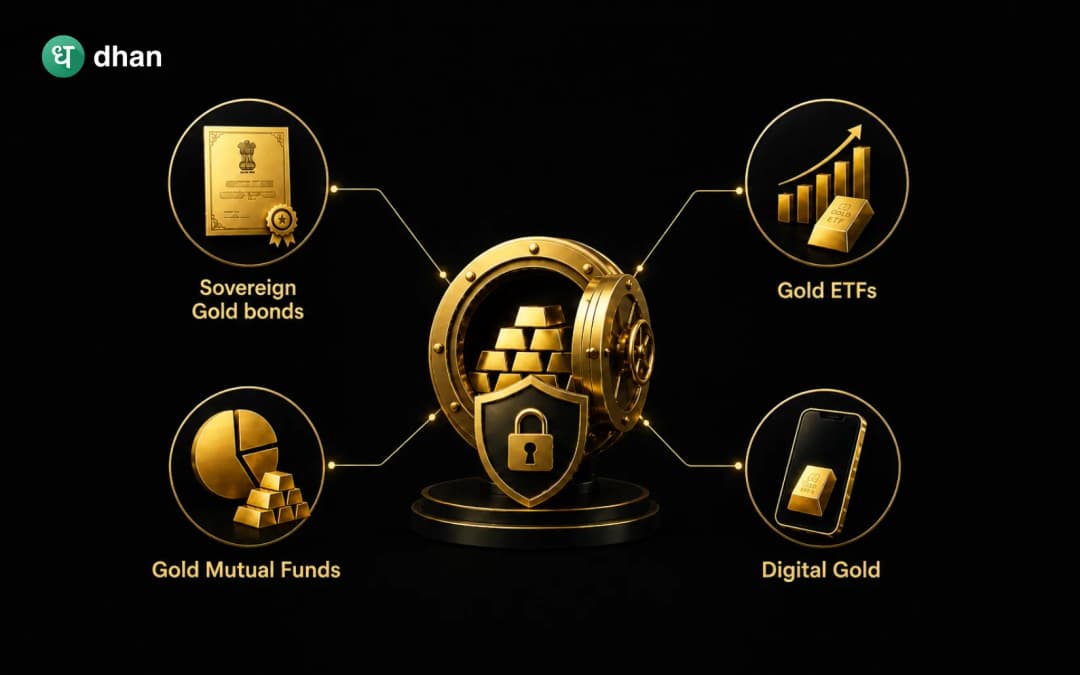
As the above methods are traditional and require security and careful handling, Gold instruments can be a better option for large investments. Digital gold involves Gold ETFs, Gold mutual funds, Sovereign Gold bonds and buying digital gold through trusted platforms. These instruments have gained popularity in recent years due to increased awareness.
When selling physical gold, there are a number of deductions that apply, such as making charges and GST, while gold instruments may charge a fixed amount, but compared with physical gold, it is much lower.
Storing gold safely for the long term
When people think about storing gold, they usually focus only on physical forms like jewellery or coins. But long-term safety is not just about where you keep gold—it’s also about how you structure your gold holdings. For this, you need to combine the physical gold with financial gold instruments.
Gold instruments like Gold ETFs, sovereign Gold Bonds and digital gold are alternatives to the physical gold. They allow you to own gold without worrying about storage, security, or insurance.
Gold ETFs and gold mutual funds
You can invest in gold through the stock market with gold ETFs or Mutual funds. Your gold investment is kept in a demat account. This eliminates the need for physical storage. Also, you can buy or sell these quickly for any emergency. As compared to physical gold, the deductions are negligible.
Sovereign gold bonds
Another option for gold investment is Sovereign Gold Bonds. RBI issues these bonds. These not only track gold prices but also provide fixed interest income, making them efficient for long-term holding. These are also held digitally.
Digital gold
In addition to the above, you can buy it digitally, where your gold is stored in insured gold vaults. Conversion of this gold into physical gold can be done if required at minimal charges. The digital gold offers convenience, but it’s important to choose trusted platforms.
The safe gold storage is not just about locks and vaults it’s about making sure your wealth is protected in every possible way.
Conclusion
Buying gold is just as important as keeping it safe. The right method depends on your needs and the value of your holdings.
Storage at home is convenient, but it also has a higher risk. Bank lockers keep things safe, but you can't get to them easily. Using gold instruments like Gold ETFs, Sovereign gold bonds, etc., can protect your gold more effectively. A balanced approach combining different storage methods works best for long-term gold ownership.