


Choose Mutual Funds for Long-Term Goals




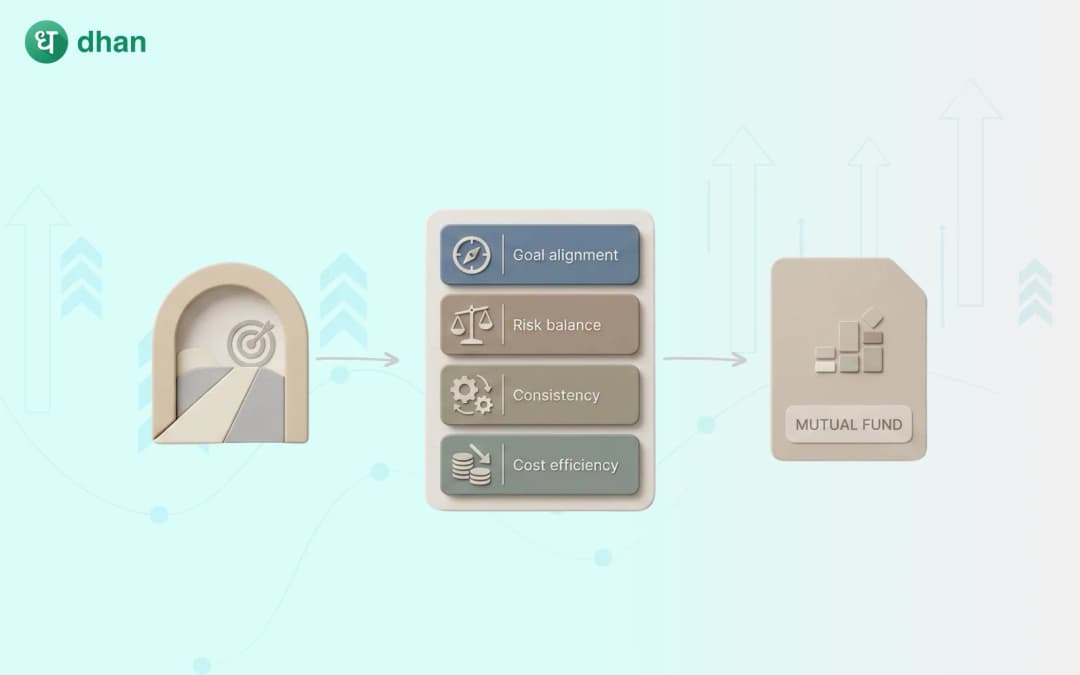




When it comes to long-term planning, like your retirement corpus, buying a home, or funding your kid’s higher education, you wouldn’t start investing in an SIP based on a friend’s advice or choose some random funds, right? These are serious financial decisions and require careful planning through the right investment vehicles. If you’re planning to grow wealth steadily, mutual funds are one of the most effective tools, provided you invest in the right funds.
In this comprehensive guide, we have explained how you can strategically choose mutual funds. This long-term mindset will help you build a portfolio based on your future goals.
Decide your long-term goals
Remember, market trends shouldn’t decide which funds you invest in. Long-term investment works on goal-based planning. Here’s how to choose mutual funds based on specific goals in your life.
Retirement planning
Retirement planning is a long-term goal. It involves building a corpus that would support your lifestyle once you stop earning.
Children’s education
With educational costs rising, you need to plan for the expenses of your children’s education.
Buying a home
You might be planning to buy a home after accumulating wealth for several years.
Wealth creation
Investors want to grow their money over 10, 15, or 20 years. The purpose remains flexible so that they can accommodate changing lifestyle expenses.
For each of these goals, the time horizon and urgency vary. Ultimately, these factors directly influence the choice of your investment. Once you map your goals, you need to match each of them to the right category of fund.
Understanding your risk profile
When you decide how to choose mutual funds, first understand your risk profile. This involves determining the volatility you can comfortably handle when markets tumble.
The three broad categories involve:
Conservative
Conservative investors prefer stability over returns and wouldn’t like to take too much risk.
Moderate
Moderate investors prefer balancing growth and safety. They are comfortable with a certain degree of fluctuation.
Aggressive
Aggressive investors are those who are comfortable with sharp fluctuations for higher long-term returns.
The risk profile of investors depends on different factors, like:
- Age
- Income
- Stability of income
- Family responsibilities
- Investing experience
Investors also need to distinguish between their risk tolerance and risk capacity. It’s your risk profile that ultimately determines how to use mutual funds. Accordingly, your portfolio will be equity-heavy, hybrid, or debt-oriented.
Asset allocation - The blueprint of a strong portfolio
Asset allocation is the process through which you divide your assets across different instruments like equity, debt, and other instruments.
- Equity investments lead to long-term growth
- Debt funds make your portfolio stable and manage volatility
- Hybrid funds involve elements from both equity and debt to balance your portfolio
When you plan to stay invested for longer horizons, equity funds are a feasible option. However, when your goals are near, investing in debt funds would be a logical decision.
While deciding how to choose mutual funds, prioritise your asset allocation and not stock selection. As your lifestyle changes, you need to adjust your asset allocation, too. Therefore, it’s necessary to review it annually to maintain balance.
For instance, if you have invested heavily in equity, you may decide to gradually shift to hybrid or debt funds as you approach your goal. With a well-structured allocation, you can reduce your risk and improve stability, regardless of market cycles.
Equity mutual funds - best options for long-term growth
If you’re seeking long-term growth from mutual funds, equity gives you a strategic allocation across different market caps would be a practical approach.
Large-cap funds
Large-cap mutual funds invest in the biggest and most stable companies in India, usually the market leaders with strong financials. They offer consistent growth over time with limited volatility compared to mid and small-cap funds. If you’re a conservative investor seeking equity exposure over the longer horizon without excessive risk, large-cap funds can help you build a resilient portfolio.
Mid- & small-cap funds
While mid-cap funds offer a balanced mix of aggression and stability, small-cap mutual funds are ideal for investors with high risk tolerance. These two fund categories are suitable for you when you have an investment horizon of over 7-10 years. Since market fluctuations are frequent across these two categories, consider mid and small caps only when you have an adequate appetite for risk tolerance. These segments go through cycles, with sharp rallies followed by equally sharp corrections.
Flexi-cap funds
With flexi-cap funds, you enjoy the freedom to invest in large, mid, and small-cap mutual funds. The fund manager reserves the freedom to adjust the proportion of allocation across the different market caps depending on the market conditions. This seamlessly balances risk and growth.
Debt mutual funds offering stability for long-term investors
Even when you stay invested for the long term, debt funds play a crucial stabilising role in your portfolio. These funds go a long way in preserving your capital when markets turn volatile. Here’s how to choose mutual funds if you’re conservative with your approach to investment.
Short-duration funds
Short-duration debt funds are known for their lower volatility. These funds are ideal for parking your money for 1-3 years.
Corporate bond funds
High-quality corporate bonds offer a good balance of return and safety.
Gilt funds
These are government securities that carry no credit risk. However, they are sensitive to changes in interest rates.
Dynamic bond funds
Flexible bond funds are suitable for investors who are comfortable with shifting interest rates.
For any of these debt fund categories, investors must understand the risks. Bond prices move inversely to interest rates. Investors must also consider credit risk, as some debt funds invest in lower-rated securities for higher returns.
Remember, debt funds must complement your exposure to equities, not replace it. Choose the category depending on your investment horizon and risk tolerance.
Hybrid Mutual Funds for Balanced Investing
Those with a balanced approach to investment often fund hybrid mutual funds, the most suitable category.
Around 65% to 80% of your funds are invested in equities, while the rest is allocated to debt. New investors often find hybrid mutual funds suitable, as the debt exposure cushions volatility that may arise from equities. Aggressive hybrid funds, on the other hand, offer smoother returns compared to pure equity while still providing long-term growth.
Balanced advantage funds
Balanced advantage funds adjust equity and debt based on market trends or valuation models. Investing in balanced advantage funds helps in reducing volatility. Investors can protect their capital during uncertain phases. If you prioritise stability but don’t want to miss out on long-term returns, balanced advantage funds can be a part of your portfolio.
Multi-asset funds
With multi-asset funds, your investments are spread across equity, debt, gold, REITs, and commodities. This reduces your dependency on a single asset class and helps you diversify your portfolio without manual rebalancing.
Key metrics every long-term investor should check
Now that you know how to choose mutual funds depending on your goals, make sure to check these key metrics for the funds you shortlisted.
Consistency of returns
Look for the returns of the fund over 5-10 years. Most investors make a common mistake – evaluating only the short-term performance of the mutual fund over 1-3 years. However, a good fund performs steadily across different market cycles. So, it’s advisable to avoid funds that top the charts one year and crash the next. Strong fund management finds its reflection in consistency.
Expense ratio
Look for mutual funds with low expense ratios. The lower the cost, the more you can save and let your wealth compound over time. Compare regular and direct plans before setting up your SIP, you can also use SIP calculator to determine your monthly invesstments according to your goals. Usually, direct plans have a lower expense ratio compared to regular ones, which means higher returns. A small difference in cost can impact your long-term wealth significantly.
Track record of the fund manager
The experience, strategy, and consistency of the fund manager matter when it comes to evaluating the growth trajectory of a fund. Look for stability, as frequent changes in fund management may affect their performance. Also, check out mutual funds managed by professionals with long-term track records.
Quality and diversification of your portfolio
Examine the holdings, sector allocation, and concentration levels of the fund. In case a portfolio is heavily concentrated on one particular theme it may be risky. On the contrary, too many holdings can dilute your returns. With the right balance, you can protect your portfolio from shocks while the growth potential remains strong.
Risk metrics
When you understand your risk metrics, gauging volatility becomes easier.
- Standard deviation measures price swings
- Higher Sharpe implies better risk-adjusted returns
- Beta indicates the sensitivity to market movements
- Max drawdown shows the worst historical fall
These indicators help investors identify whether a fund matches their comfort level.
Summing it up!
If you’re not sure how to choose mutual funds to build your portfolio, follow the structured approach we presented to you in this blog. Firstly, identify your goals. Then, factor in your risk profile and expectations to build the blueprint for your asset allocations. Evaluate the best mutual funds with highest AUM carefully and invest with consistency. With discipline, mutual funds become effective vehicles for wealth creation over the long term.
FAQs
How many mutual funds should a long-term investor ideally hold?
Most long-term investors hold 3-5 funds across different categories, and sometimes more. Make sure to have adequate diversification in your portfolio.
Is SIP always better than a lump sum for long-term goals?
SIPs work better for salaried investors and volatile markets. However, when markets are reasonably valued, lump-sum investments work well.
Should I stop SIPs during market downturns?
No. Downturns provide you with the ideal opportunity to buy more units of mutual funds at lower prices. This increases the potential for long-term returns.
Can I switch from regular to direct plans later?
Yes. You can switch anytime, but it may trigger exit loads or taxation depending on the type of fund you’re investing in.
Do ratings on mutual fund apps matter?
Yes. Ratings on mutual funds offer quick insights. However, they should not be your only criterion. Make sure to review the funds for their long-term performance, risk metrics, and portfolio allocation.