How to do Bank Nifty Options Trading?






Bank Nifty options are often among the most popular F&O instruments, with their sharp movement and high volumes. While it may seem difficult, trading Bank Nifty becomes easier when you start breaking it down into simple ideas. In this article, we'll take you through every step for Bank Nifty option trading.
What are Bank Nifty options?
In simple terms, Bank Nifty options are the contracts that give you the right but not the obligation to buy (call) or sell (put) the Bank Nifty index at a specified strike price on or before a set expiry date. You pay a premium to enter the option.
If you bought a call option, then you'd profit if the index moves above your strike. Likewise, if you buy a put, you stand to gain if the index falls below the strike price.
These options derive their value from the extent of the movement of the Bank Nifty index, the time remaining to expiry, and the volatility of the banking sector.
These contracts allow traders to participate in the banking sector's movements without owning all the stocks in the index.
Why Bank Nifty options are popular
The Nifty Bank options draw interest for several simple reasons:
- Frequent Price Movement: Banks are sensitive to interest rates, policy changes, credit growth and other macro factors. This makes the Bank Nifty more reactive than broad indices. Traders see the potential for sizable moves.
- High Liquidity: The index tracks major banking stocks that trade heavily. This means buying or selling Bank Nifty options is generally smoother, with smaller gaps between bid and ask prices.
- Clear Sector Focus: Instead of tracking a whole economy, Bank Nifty focuses on banking stocks. If a trader has a view on how banks will perform (for example, they expect credit growth or fear defaults), then choosing Bank Nifty options allows a direct trade on that sector.
Together, these features make Bank Nifty options an attractive choice for traders looking for a mix of volume, volatility and flexibility.
How to start trading Bank Nifty options
Before you place your first trade, it’s important to set up the right foundation. Here’s a simple, step-by-step path to start trading Bank Nifty Options the right way:
1. Choose the right trading account and broker
The first and foremost thing to do when beginning options trading on the Bank Nifty is to open a trading account and choose an appropriate broker.
Choose a broker through whom access to F&O is smooth, whose margin rules are very transparent, order execution is easy, and who offers reliable support. For instance, if you choose Dhan as your broker, you can open a free demat account with zero AMC, and options trading would have a flat charge of ₹20 per executed order in all segments.
Dhan also has a dedicated app, along with a web platform meant for F&O trades called options trading app, that lets you analyse the option chain, check Greeks, and place orders swiftly.
All this will mean that you can focus on your Bank Nifty options strategy rather than worry about whether your broker meets the basic qualifications.
2. Learn to read the option chain for Bank Nifty
Learning to read the Bank Nifty option chain is about understanding how each piece of information guides your trade, and it becomes much easier once you know what to look for.
You start by checking the strike prices in the centre of the chain, then compare the Call side and Put side to see how traders are positioning.
Premiums show what buyers are paying and give you an idea of current demand, while open interest hints at where money is building up.
To keep it simple, focus on a few key markers:
- Premium of the strike you want to trade
- Open interest on both Call and Put sides
- Implied volatility and how active the contract is
- Time left before expiry
These together give you a better sense of market sentiment, and you can select a strike that fits your view.
3. Decide your trade parameters before placing an order
Before you place a trade in Nifty options, the following trade parameters should be clearly decided upon so that your decisions remain disciplined and without any guesswork. Make sure you set:
- Entry point: the particular level at which you will enter the position.
- Target: the profit level you will accept and exit once reached.
- Stop-loss: the maximum loss you are willing to take.
- Position size: how many lots or how much capital you risk in this trade.
By predefining these four parameters, you turn your trade into a plan instead of reacting emotionally in the heat of the market.
4. Place the trade on your platform
If you are using Dhan as your trading platform, placing a trade for a Bank Nifty option is simple.
- Just log in and go to the option chain for Bank Nifty
- Choose the specific call or put contract you have selected, stating the strike price and expiry
- Enter the quantity. For example, one lot and place the order using either "buy" or "sell."
Make sure the order type is set to either limit or market, confirm the premium and margin, and click “Execute” or “Place Order.”
Once executed, your position will appear in the orders or trade-book tab, and you should monitor it till your target or stop-loss is hit.
Beginner-friendly Bank Nifty strategies
You should select strategies that balance potential reward and manageable risk when you're just starting with Bank Nifty option trading. Here are two strategies to help you:
Range-bound or neutral strategy (for smaller moves)
You can place a neutral strategy that will work in the sideways market if you expect the Bank Nifty to move very little and remain in a pre-defined range.
You may sell an out-of-the-money call and an out-of-the-money put while buying hedges farther out to limit your loss if the index jumps.
This allows you to gain a premium if Bank Nifty stays between your short strikes, yet be protected against a big move in either direction.
Bull Call Spread
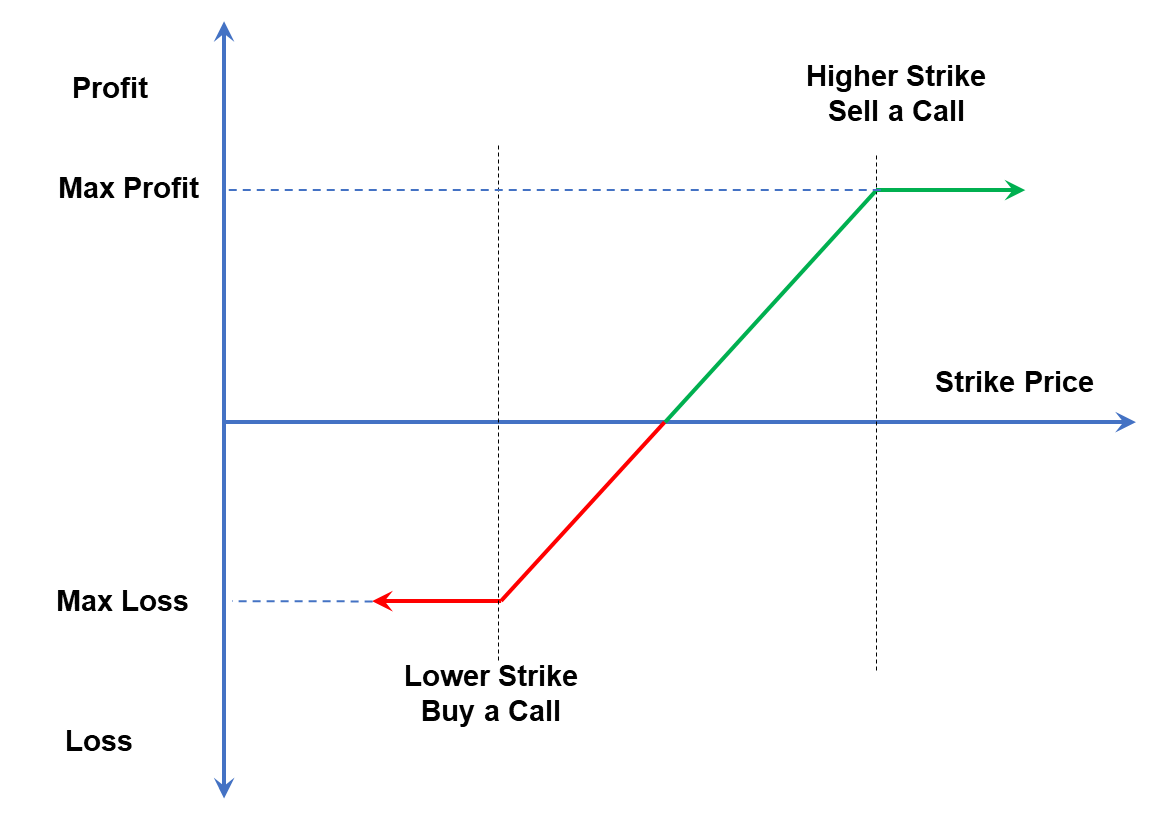
A bull call spread is a simple, two-leg options strategy that you use when you believe the price will rise moderately. You are buying a call option at a lower strike and selling another call at a higher strike, both for the same expiry and underlying.
Selling the higher strike call reduces your upfront cost versus buying a call outright.
The most you can lose is the net premium paid, and your maximum profit is the difference between the strikes minus that cost.
To wrap up
Bank Nifty option trading may initially appear fast, complex, and intimidating. However, once you understand its structure, movement and the basic strategies involved, it becomes an exciting trading strategy.
The aim of beginners should not be big wins; rather, it should be to build a strong foundation by learning how premiums work, interpreting the option chain, and being able to define risk before executing any trade.
If you have the right broker, a disciplined plan, and simple strategies such as buying calls/puts or spreads, then you can trade Bank Nifty with clarity instead of confusion.
FAQs on Bank Nifty Options trading
1. What is the minimum capital that I should allocate when beginning to trade Bank Nifty options?
As a beginner, invest only that amount which you can afford to lose. Start with a small amount and gradually build up.
2. How do I choose the right strike price when buying Bank Nifty options?
Consider the current index level, volatility, and your market outlook. Beginners often choose strikes that are at-the-money or slightly out-of-the-money so the premium is reasonable yet the trade has meaningful potential.
3. Which factors affect the premium of a Bank Nifty option contract?
Option premium depends on the underlying index level, time remaining till expiry, implied volatility, interest rates, and demand/supply of contracts in the market.
4. Where can I trade Bank Nifty contracts?
You can trade Nifty Bank on the NSE. However, for that you need to open a brokerage account.
5. What is a safe way for beginners to manage risk when trading Bank Nifty options?
Utilise small position sizes, define entry and exit levels, apply stop-losses, and avoid having high-risk directional bets without having a hedge or plan. In option trading, discipline always beats hope.