Option expiry strategies explained for traders






Option expiry is one of the most important days for traders in the stock market. Prices move quickly, premiums drop fast, and emotions run high. Many traders either make good profits or face unexpected losses on this day.
Understanding how to trade wisely during expiry can make a big difference in your results. In fact, you don’t need to use complex tools or take big risks; you just need simple strategies that work.
In this article, we’ll break down those expiry strategies in a way that’s easy to follow.
What happens on the option expiry day?
On expiry day, the contract of a traded option reaches its final moment: it either holds some real value or becomes worthless.
Essentially, what happens is that at market close, the underlying asset’s price is compared with the option’s strike price.
If the option is “in‑the‑money” (meaning exercising it gives you value), it will often be exercised or settled. If it is “out‑of‑the‑money” (no benefit in exercising), it simply expires worthless, and you lose the premium you paid.
Meanwhile, the “time value” part of the option’s premium disappears as the contract comes closer to expiry, which is why option prices tend to fall faster when the expiration date is near.
With that clear, let’s move on to explore the key strategies traders use on expiry day.
Key strategies traders use on expiry day
Now that you understand what expiry day is, let’s look at the strategies traders commonly use to take advantage of this high-action day. These are practical, easy-to-follow methods that many retail and professional traders rely on.
1. Intraday option selling
Intraday Option Selling is a simple option expiry strategy where traders sell options during the trading day, hoping to benefit from time decay.
On expiry day, the value of options drops very fast, especially when the market is not moving much.
For example, suppose Nifty is at 19,800. A trader might sell the 19,850 Call and the 19,750 Put. If Nifty stays between these two levels till the end of the day, both options lose value and expire worthless. The trader keeps the premium received as profit.
The payoff chart below shows how the profit or loss changes with Nifty’s movement on expiry.
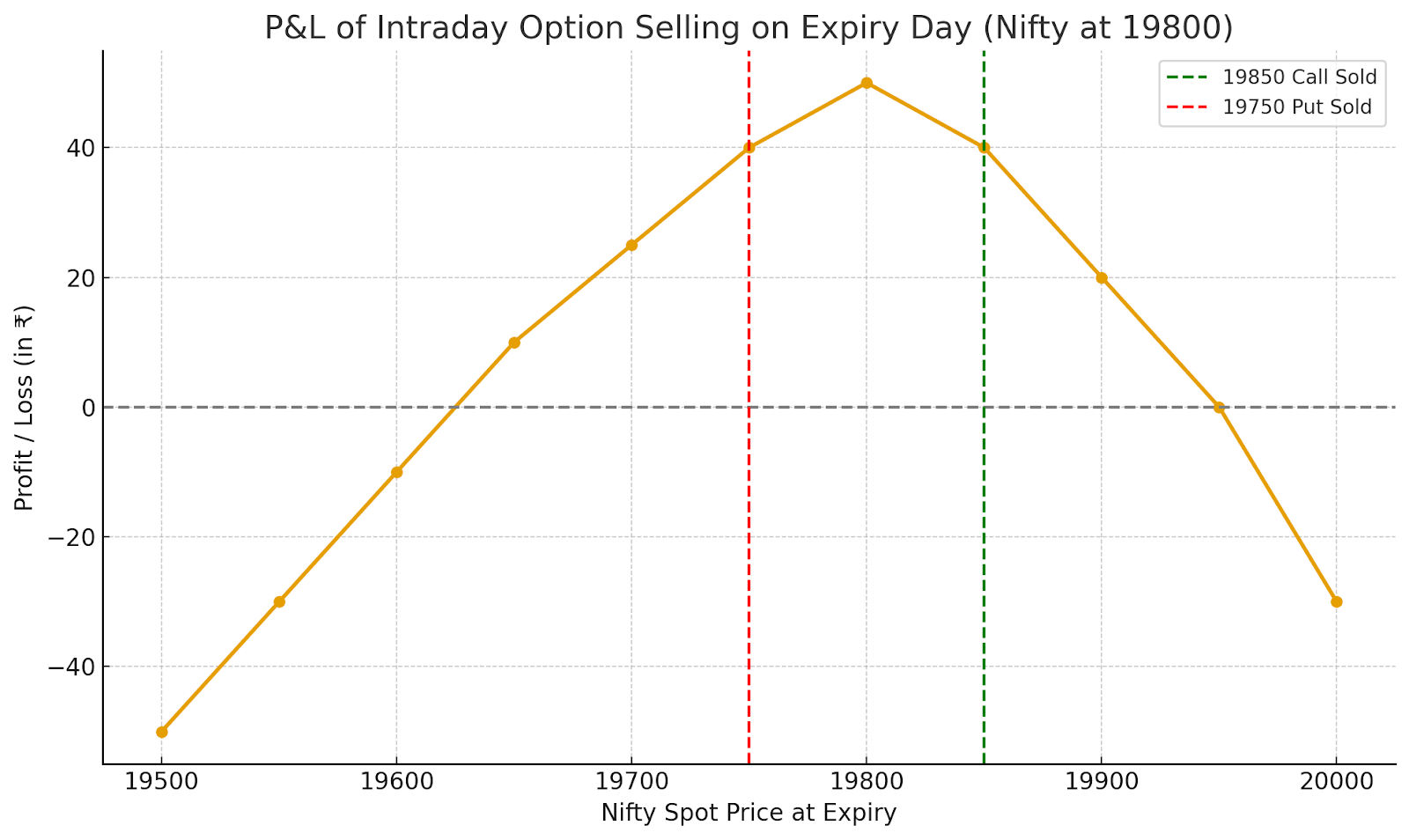
This option expiry strategy works best in a sideways or calm market. But it needs proper risk control, as a sudden move can lead to quick losses.
2. Straddle selling at key levels
When using the “straddle selling” strategy, you sell (write) both a call and a put option at the same strike price and with the same expiration date, because you believe the underlying stock or index will stay close to that strike and not move much.
For example, suppose the index is trading around 15,000 and you notice a strong support/resistance zone at 15,000. You could sell the 15,000-strike call and the 15,000-strike put that expire today (expiry day).
If by the end of the day the index remains near 15,000, both options lose value and expire worthless, so you keep the premium you collected.
The graph below clearly shows how your profit stays highest near 15,000 and starts falling as the market moves away from that level.
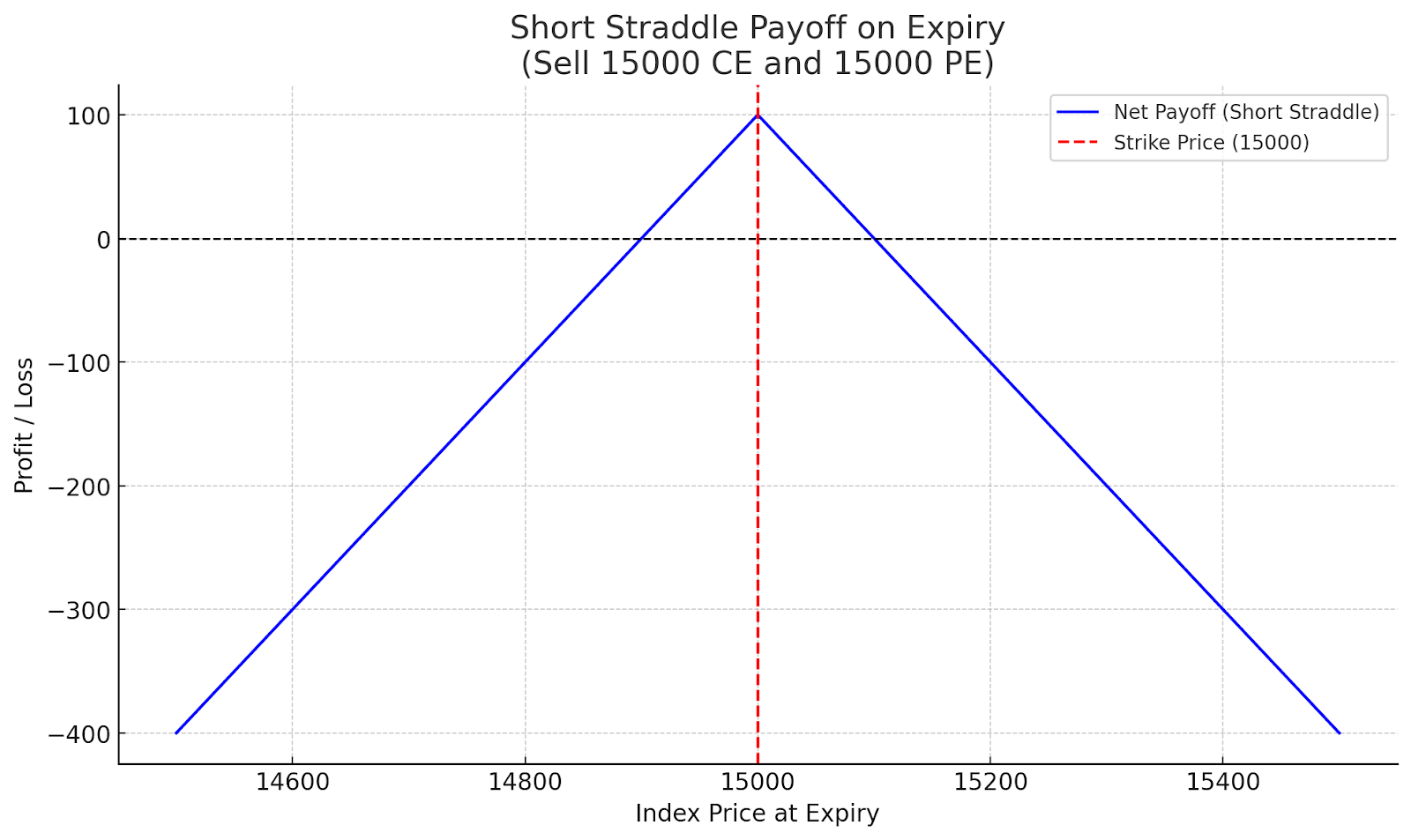
As you can see, the maximum profit of ₹100 comes when the index closes exactly at 15,000. If the market goes above or below this point, losses begin to increase. Your break-even levels are around 14,900 and 15,100.
Beyond that, the more the market moves, the bigger the loss. This is the risk of a short straddle when the market becomes volatile.
3. Buying cheap out-of-the-money options (zero to hero)
This strategy is used when a trader wants to take a small risk for a chance at a big reward. On expiry day, some options that are far away from the current price become very cheap because they have very little time left. Traders buy these low-cost options hoping for a sharp market move that will turn them profitable.
For example, if Nifty is at 19,800 and a 20,000 Call option is trading at just ₹2, a trader might buy it in bulk.
The graph below shows how the option’s value can shoot up if Nifty moves sharply in that direction.
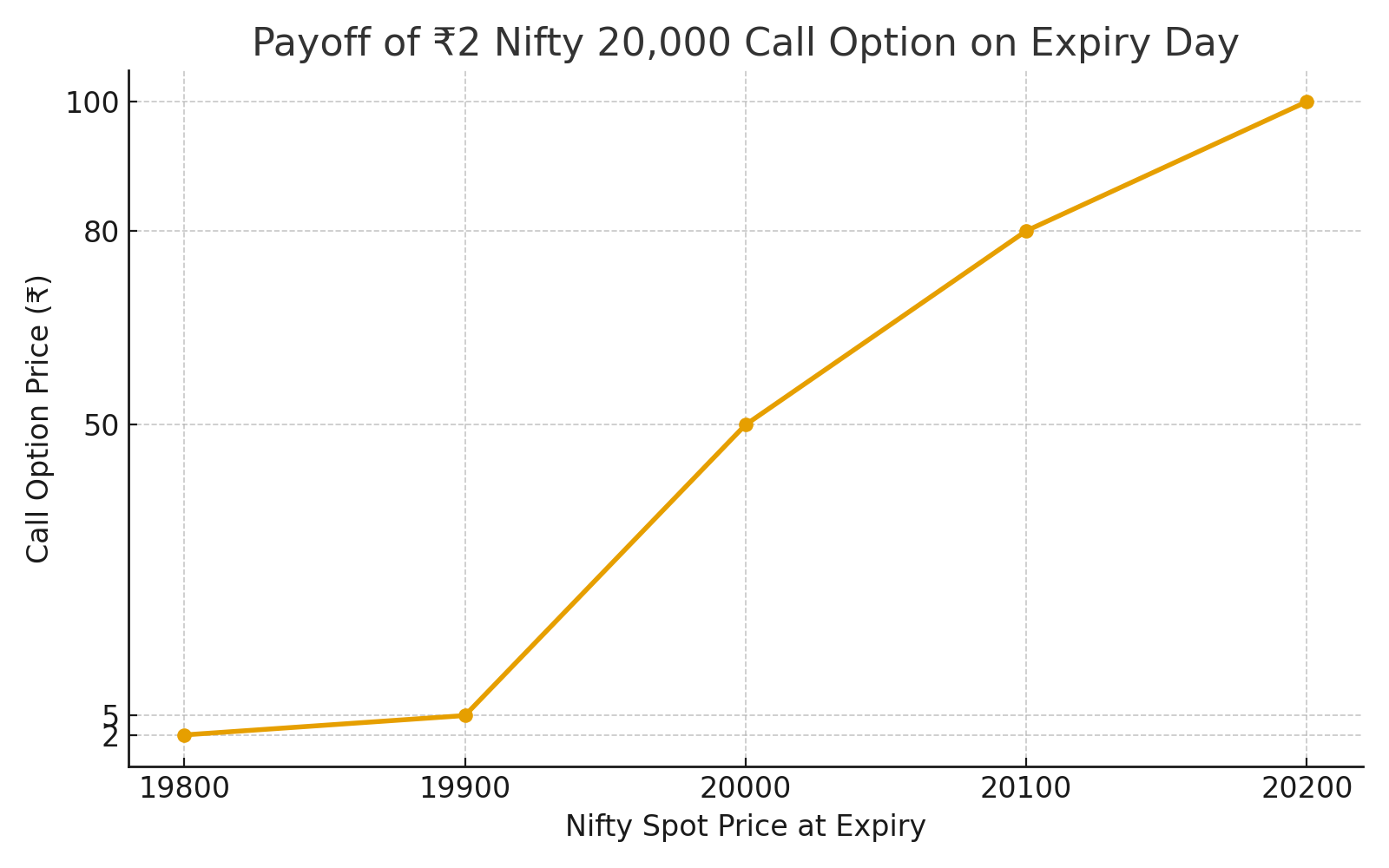
As you can see in the graph, when Nifty moves from 19,800 to 20,000 or higher, the ₹2 option quickly gains value, jumping to ₹50 or more. This is where small risk turns into big profit.
4. Scalping near-the-money options
Scalping near-the-money options means buying and selling options that are very close to the current market price, usually for small but quick profits.
On expiry day, these options move fast even with small changes in the index or stock. For example, suppose Nifty is at 19,800 and a trader buys the 19,800 call option at ₹24. If Nifty rises slightly and the option jumps to ₹30, the trader quickly exits and books a profit.
The chart below shows how a small move in Nifty can quickly push the option price higher during such scalping trades.
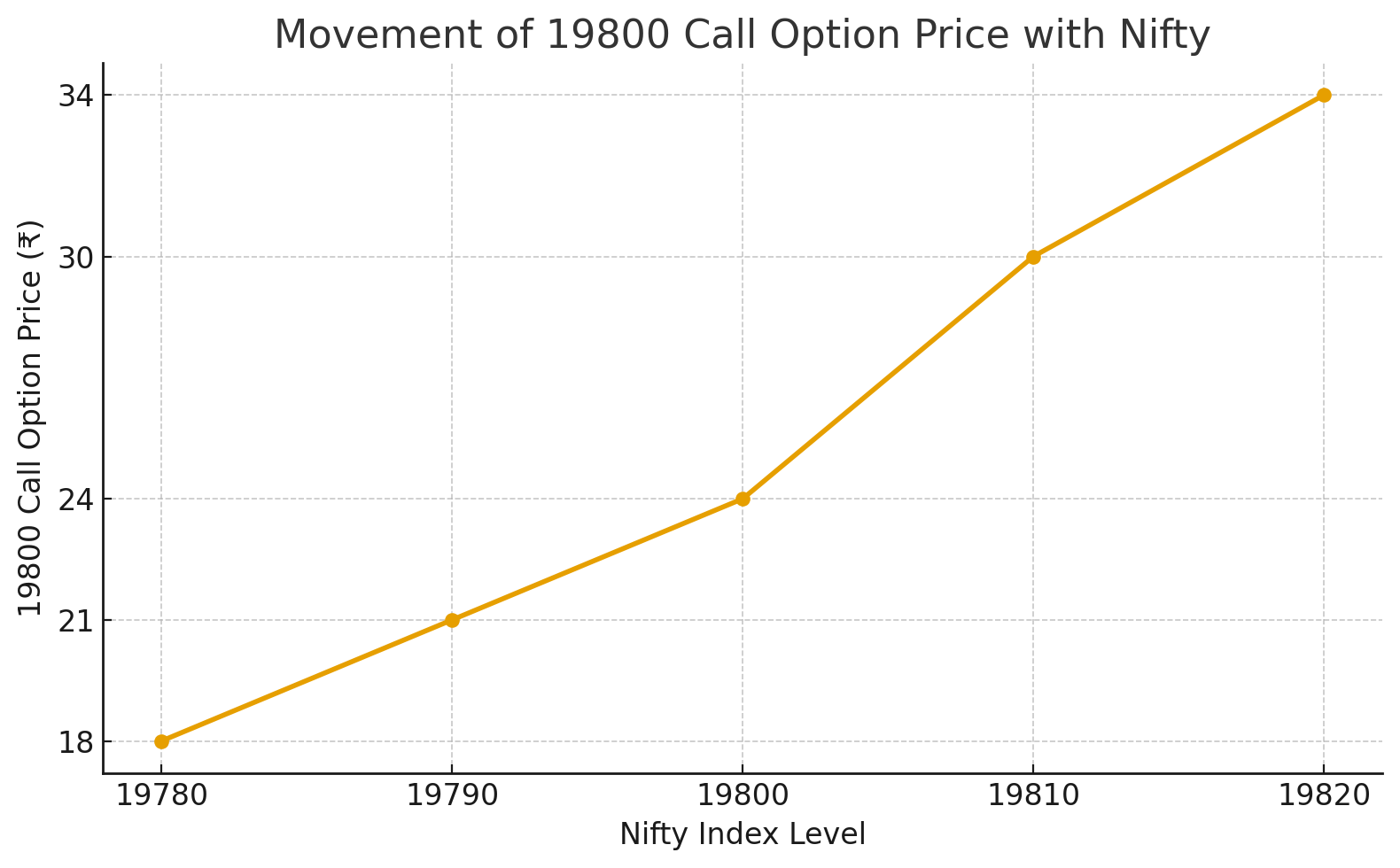
As Nifty moved from 19,780 to 19,820, the price of the 19,800 Call Option rose from ₹18 to ₹34. This shows how near-the-money options react sharply even to small index changes, which is why scalpers target them on expiry day for fast trades.
5. Iron fly strategy for expiry
The Iron Fly strategy is a simple expiry day setup used when traders expect the market to stay in a small range. To do this, you sell one call and one put at the same strike price, usually the one closest to the current market level.
At the same time, you buy one call above and one put below that strike to protect yourself from big losses. For example, if Nifty is at 19,500, you can sell a 19,500 call and a 19,500 put, then buy a 19,600 call and a 19,400 put.
This setup creates a payoff curve like the one below, which clearly shows how profits stay highest when Nifty closes near 19,500.
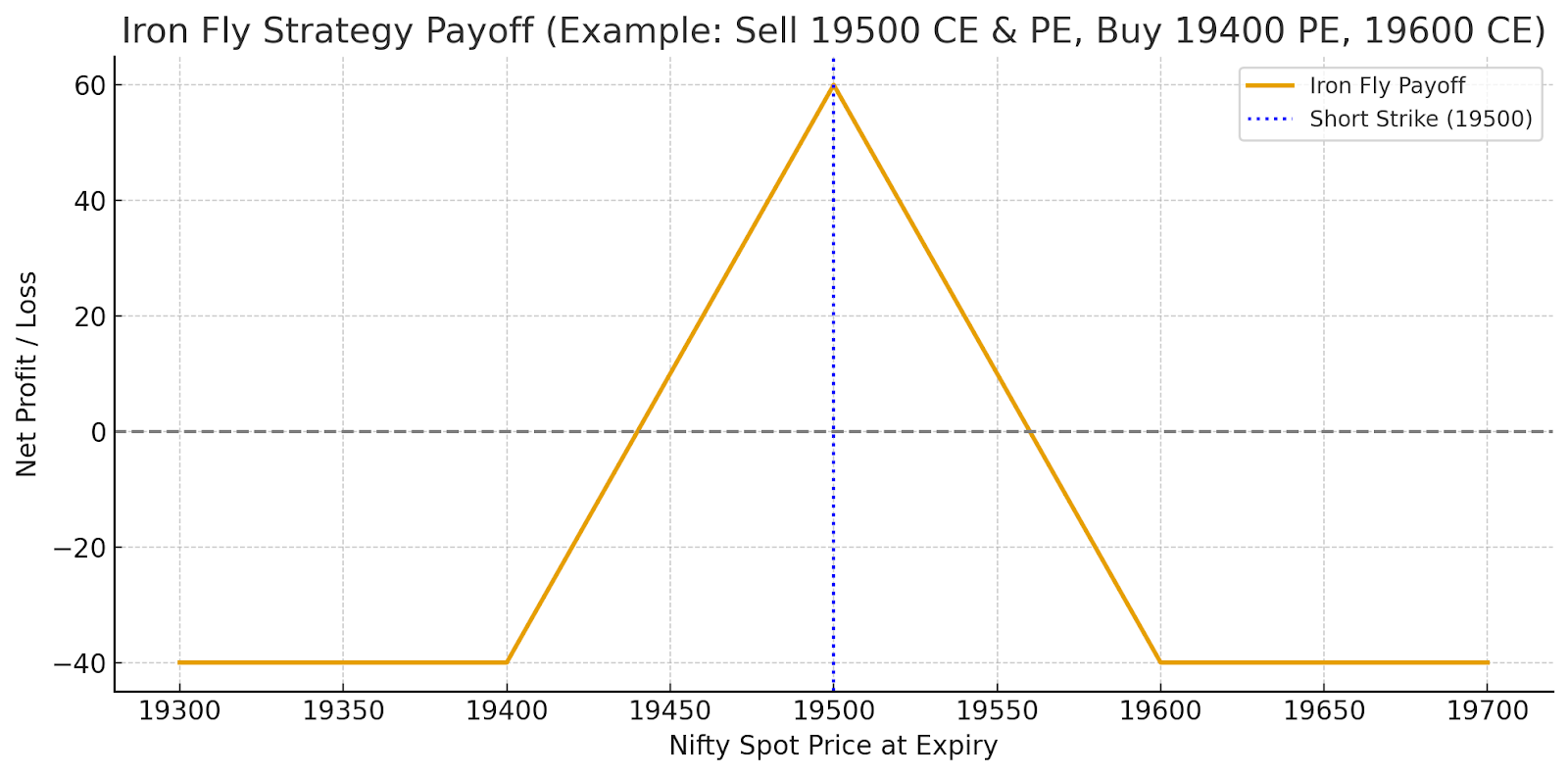
As shown in the graph, the maximum profit occurs when Nifty ends exactly at 19500. If it moves too far up or down, the losses begin to increase, but remain limited because of the bought options at 19400 and 19600.
This makes it a balanced strategy with both capped risk and capped reward, ideal for traders expecting a calm expiry session.
To wrap up
Option expiry day can be full of opportunities, but only if you stay calm and follow a clear plan. Use strategies that match your risk level. Never chase trades blindly. Always protect your capital. With a little practice and patience, expiry days can become profitable and less stressful. Dhan also offers many ready-made option trading strategies to make this task easier for you.
Frequently asked questions (FAQs)
1. What is the safest expiry day strategy for beginners?
The safest is intraday option selling on high premium strikes with a strict stop loss. Focus on non-directional trades like straddles or strangles only if you're comfortable with price movement.
2. What happens if I don’t square off my position on expiry?
If your option is in-the-money, it gets settled automatically, and you may gain or lose depending on the price. If it is out-of-the-money, it becomes worthless.
3. How can I avoid losses due to sudden expiry day moves?
Keep a strict stop loss. Avoid overtrading. Use smaller lot sizes. Always check news, global cues, and open interest data before entering any trade.
4. Can traders make money from options on expiry without predicting direction?
Yes. Non-directional strategies like an iron condor or a short straddle aim to profit from time decay. You just need the price to stay in a range, not move wildly.