Brokerage Account Explained







Entering the stock market for the first time can be intimidating, but it’s also the first big step towards financial independence and wealth creation. Along with a demat account, a brokerage account is the gateway to this journey.
Let’s explore various aspects of brokerage accounts for Indian investors and traders in this blog.
What is a Brokerage Account?
A brokerage account is an investment account opened with a SEBI-registered stockbroker. It lets investors and traders buy, sell, and hold securities electronically. To trade in the stock market, you need a brokerage account.
Key Features:
- Invest across stocks, mutual funds, bonds, commodities, ETFs, and IPOs.
- Digital statements, tax reports, and portfolio tracking.
- No limit to how much an investor can invest.
- Investors retain full ownership of their funds and assets.
Types of Brokerage Accounts
Now that you know what is a brokerage account, let’s understand its types. Different investors have different needs, and brokers offer a variety of brokerage accounts to investors. Some of those are:
- Full-Service Brokerage Account: Traditional brokers offer this account, which offers end-to-end services like research, portfolio management, and investment advice. Although it has higher fees and minimum balance requirements, it is perfect for investors looking for expert advice.
- Discount Brokerage Account: This account type enables self-directed investing with low commissions through online platforms. Investors have access to basic tools and execution services. It is cost-effective and popular among DIY investors.
- Robo-Advisory Account: This digital account type uses algorithms to create and manage portfolios as per risk profile and goals. It’s low-cost and requires minimal investment knowledge, but personalised advice is limited since recommendations are automated.
- Zero Brokerage Account: A zero brokerage account lets investors trade without paying traditional brokerage fees, especially for segments like equity delivery or mutual funds.
Common Brokerage Account fees
While opening a brokerage account is easy, investors often overlook the fee structure, which can eat into returns over time. Here are the most common ones:
For equity delivery trades, Dhan charges no brokerage. This means investors pay no commission when they buy stocks and hold them.
For intraday and F&O trades, the brokerage fee is Rs. 20 per executed order or 0.03% of the trade value, whichever amount is less. Dhan also has no account opening or AMC for retail and HUF accounts, which means there is no ongoing maintenance fee for Demat or trading accounts.
Regular transaction charges, which include exchange fees, SEBI/turnover fees, stamp duty, and GST, are still applied according to regulations. If investors use their Margin Trading Facility (MTF), there are extra costs. These include interest rates starting from about 12.49% per year, charges for pledging and unpledging, and DP charges.
Different types of orders
When using a brokerage account, investors can place several types of orders:
Delivery Order: Used to hold shares beyond the current trading day. Stocks bought through delivery orders are transferred to an investor’s demat account and can be retained for days, months, or years as part of a long-term portfolio.
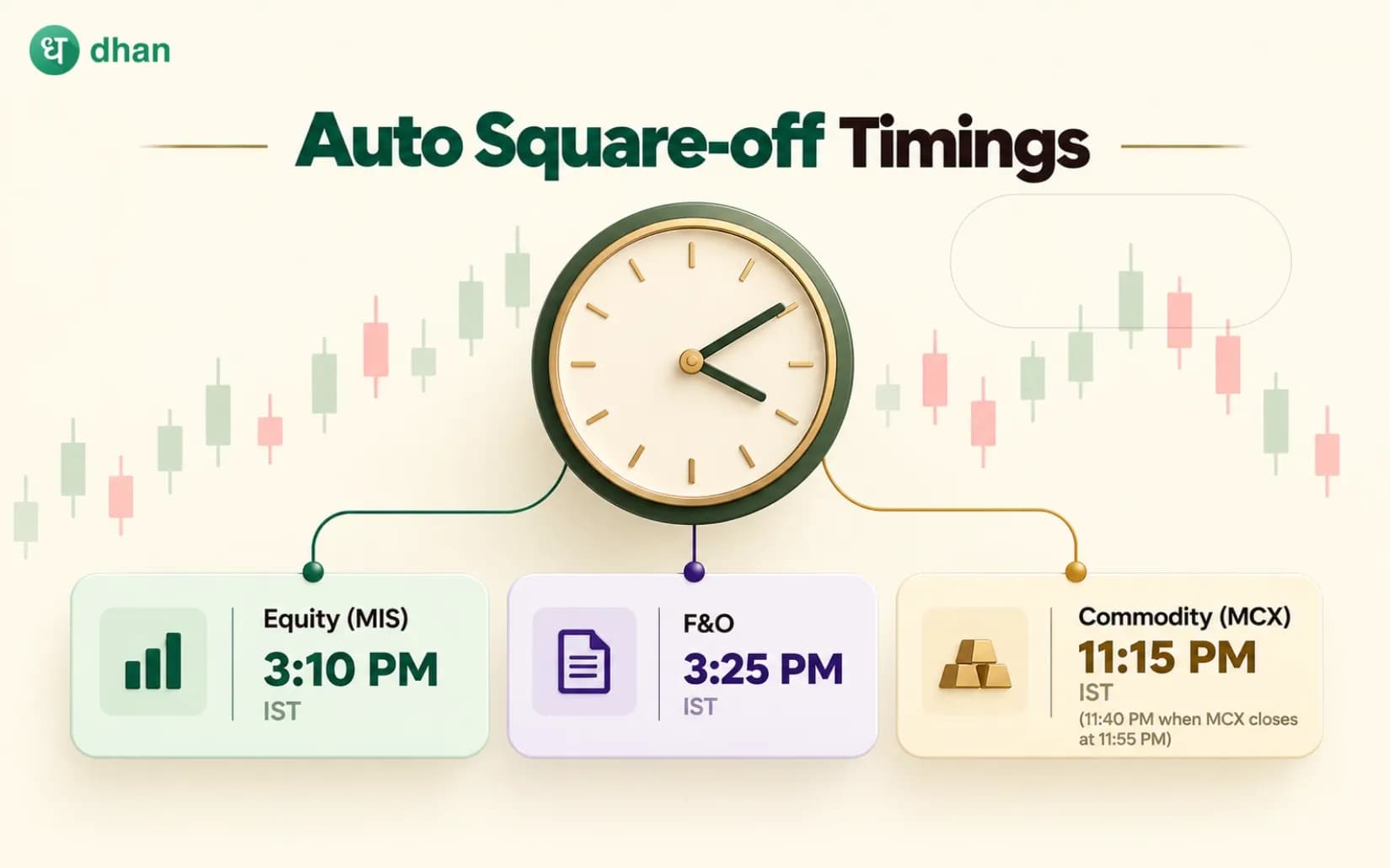
Intraday Order: Used to buy and sell stocks within the same trading day. All positions are squared off before the market closes.
After Market Order (AMO): Allows investors to schedule buy/sell instructions after market hours, to be executed the next day.
Stop-Loss Order: Automatically sells holdings if the price drops below a set point, protecting against downside risk.
Limit Order: Only executes at the price an investor chooses or better.
Market Order: Executes instantly at the current market price.
How to choose the best broker?
Consider these factors to select the right broker who meets your investment needs:
- Regulation: Ensure SEBI registration and membership with stock exchanges.
- Commissions & Fees: Low commission and fees as compared to peers.
- Ease of Use: User-friendly platforms with seamless app and web interfaces.
- Range of Investments: Access to stocks, ETFs, mutual funds, F&Os, IPOs, etc.
- Research Tools: Offer screeners, analytics, and real-time data.
- Customer Support: Reliable, prompt, and available in your preferred channels.
- Add-ons: Margin trading, SIP in stocks, API access for advanced users.
In India, new-age brokers like Dhan offer a blend of low-cost trading, advanced tools, and an easy-to-use app, making it a popular choice for first-time investors.
Steps to open a brokerage account on the Dhan App
Opening an account on Dhan is a quick, paperless process. Here’s how to do it step-by-step:
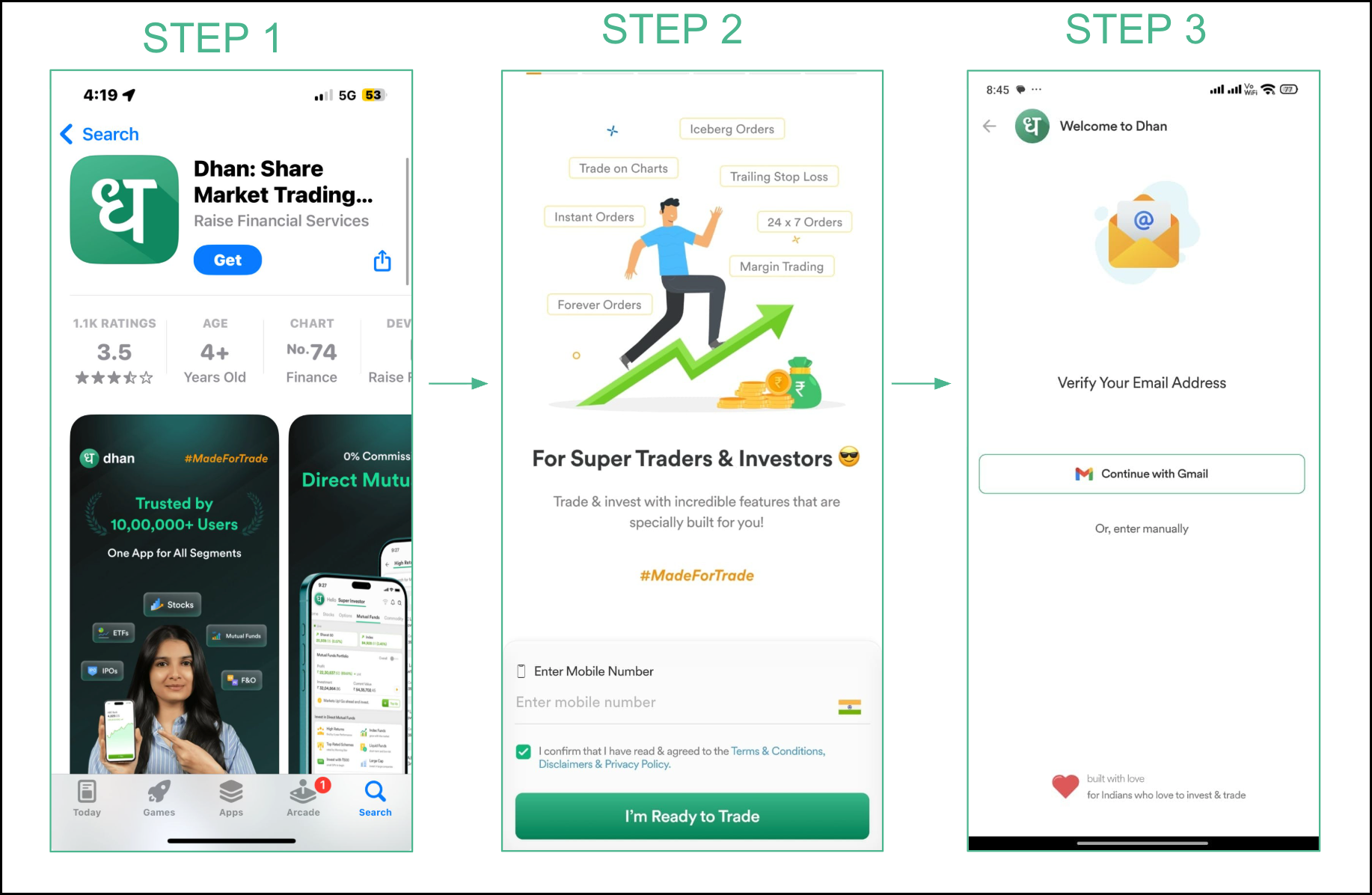
- Download the Dhan App: Available for Android and iOS.
- Sign Up: Enter your mobile number and verify via OTP.
- Enter Email: Verify your email address with OTP.
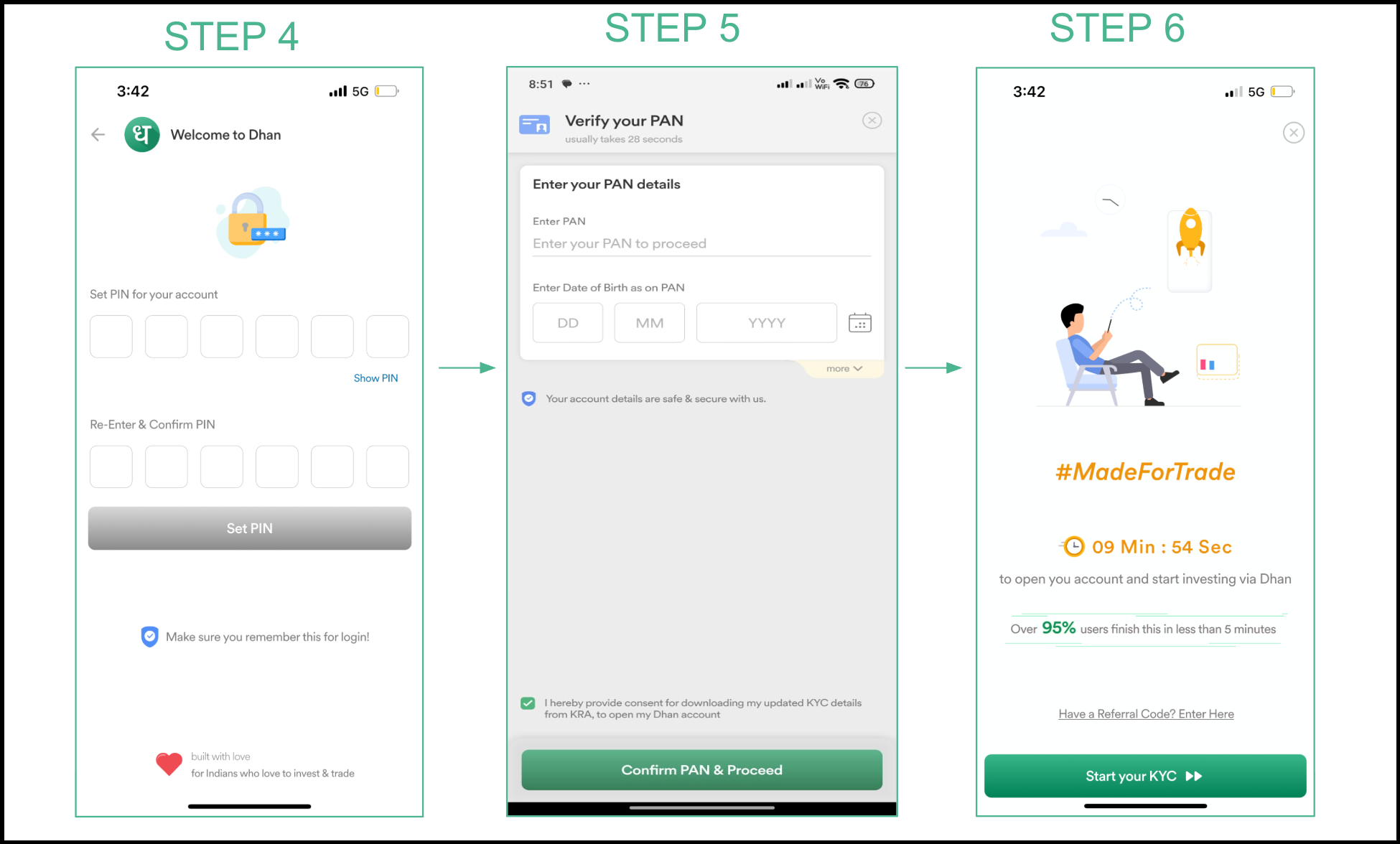
- Set Security PIN: Create a six-digit login PIN.
- PAN Verification: Upload or scan your PAN card for identity check.
- Personal Details: Fill out personal info (gender, occupation), upload a selfie for KYC.
- Signature: E-sign using touch, or upload a photo of your signature.
- Income & Declaration: Enter your annual income and required declarations.
- Bank Details: Link your bank account.
- Documents/Proof (for F&O): If trading futures/options, upload relevant income proof.
- Aadhaar E-sign: Consent and complete KYC using Aadhaar OTP verification.
- Set Password: Secure your account with a password.
- Account Ready: Your Dhan brokerage account is ready to use.
Documents Required: PAN Card, Aadhaar (linked to phone for OTP), a bank account, and a signature photo. Income proof is needed only for F&O activation.
Summing it up
Opening a brokerage account is an essential first step for an investor looking to invest in India’s booming financial markets. It also gives them access to tools and insights that help them grow their wealth.
With Dhan, investors not only get low-cost trading but also advanced features and a smooth app experience to manage their investments confidently.