What is BTST in Trading: How does it work?







Key takeaways
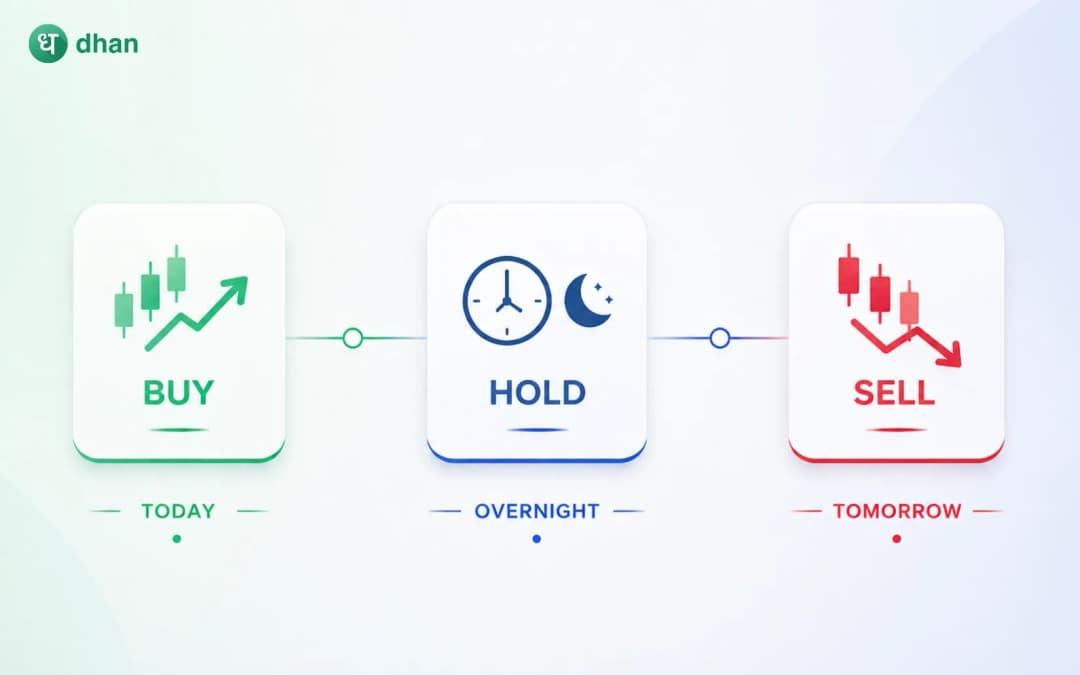
- BTST stands for Buy Today, Sell Tomorrow. In this type of trading style, the trader buys shares during one trading session and sells them on the next trading session, without waiting for the shares to be credited to the demat account.
- BTST is different from intraday trading because the position is carried beyond the day of purchase. It is also different from a regular delivery trade because the trader may sell the shares before the original purchase has settled.
- BTST can be useful when a trader expects a stock to move higher on the next trading session, but it comes with overnight price risk, possible settlement issues and broker-specific conditions.
Suppose you buy shares today because you expect the stock to rise after an important announcement or a strong closing session. By the end of the day, the stock still looks promising, but you do not want to hold it for several weeks.
This is where BTST can come into the picture.
BTST, or Buy Today, Sell Tomorrow, refers to buying shares on one trading day and selling them on the next trading day. The key point is that the sale can happen before the shares purchased on the first day have been credited to your demat account.
For example, assume you buy 100 shares of a company on Monday. If the stock rises on Tuesday, you may sell those 100 shares on Tuesday even though Monday's purchase has not yet completed the settlement process.
BTST therefore sits between conventional delivery investing and short-term trading. You carry the position overnight, but you do not necessarily intend to hold the shares for an extended period.
What is BTST trading?
BTST in trading is a short-term trading method where a trader:
- Buys shares today.
- Holds the position overnight.
- Sells the shares on the next trading day.
- Exits the position before taking a longer-term delivery position.
The term tomorrow refers to the next trading session and not necessarily the next calendar day. For example, if you buy shares on Friday, the next trading session will usually be Monday, depending on market holidays.
The important distinction is that the trader sells the shares before the original purchase has completed settlement.
SEBI has described BTST trades as transactions where an investor buys shares on T and sells them on T+1, before the shares from the purchase have been delivered to the investor's demat account.
This happens as the buy and sell transactions happen through the market’s clearing and settlement process and not the purchased shares being credited to the investor’s demat account first.
How does BTST Work?
The easiest way to understand BTST is through a simple example.
Assume you identify a stock trading at ₹500 and expect it to rise the following session.
You buy:
- Quantity: 100 shares
- Purchase price: ₹500
- Total purchase value: ₹50,000
The market closes, and you continue holding the position overnight.
The next day, suppose the stock opens at ₹515. You decide to sell all 100 shares at ₹515.
Your gross trading difference would be:
₹515 − ₹500 = ₹15 per share
For 100 shares:
₹15 × 100 = ₹1,500
This is the gross profit before brokerage, taxes, exchange charges and other applicable costs.
The shares purchased on the first day do not need to have already been credited to your demat account for this BTST exit to take place. The settlement process handles the corresponding obligations.
BTST vs Intraday Trading
BTST and intraday trading are both short-term approaches, but they work differently.
In an intraday trade, the position is opened and closed during the same trading session. The trader does not normally carry the position overnight.
With BTST, the position remains open after the market closes and is sold during the next trading session.
BTST vs delivery trading
BTST is also different from a conventional delivery trade.
In a delivery trade, an investor buys shares and normally intends to take ownership of them after settlement and hold them in the demat account.
In a BTST trade, the trader intends to exit quickly, usually on the next trading session, before the purchase has completed settlement.
Under the current NSE equity-market framework, regular rolling settlement is on a T+1 basis. NSE explains that intervening holidays, including weekends and exchange holidays, are excluded when determining the settlement day.
Why do traders use BTST?
BTST is generally considered when a trader has a short-term bullish view but does not want to close the position before the trading session ends.
For example, a trader may notice that a stock has closed near a key resistance level after strong buying activity. Instead of exiting before the close, the trader may hold it overnight, expecting a move on the next session.
Another situation could involve an event scheduled after market hours. If the trader expects the event to influence the stock positively, they may consider carrying a position overnight.
When can BTST make sense?
BTST is most relevant when the expected price movement is likely to occur over a very short time frame.
A trader may consider it when:
- The stock shows a strong closing setup: A stock that closes with sustained buying interest may attract attention for the next session. The trader still needs to account for the possibility of a gap in either direction.
- There is a short-term technical setup: Breakouts, support bounces or other technical signals may lead a trader to expect follow-through during the next session. Such setups are signals, not guarantees.
- An event may influence the next session: Earnings, corporate announcements or other developments can affect the opening price. Holding through such events increases uncertainty, so the position size and risk need careful consideration.
Advantages of BTST
The BTST trading style offers some advantages as follows:
- It allows traders to carry a bullish position beyond the trading session without committing to a long-term holding.
- It can capture an overnight gap in the expected direction. If a stock closes at ₹500 and opens substantially higher the next day, a BTST trader already holding the position can potentially benefit from that price difference.
- The holding period is short and clearly defined. Traders who follow a specific one-day setup can plan the trade around a defined entry and intended exit.
Disadvantages of BTST
Along with advantages, the BTST trading method has the following limitations:
- Overnight gaps can turn a profitable-looking setup into a loss before the trader gets a chance to exit.
- The shares have not yet completed the original settlement when the BTST sale is made. This makes settlement and broker processes particularly important, and traders should understand how their broker handles BTST positions.
- Not every stock is equally suitable for short-term exits. Poor liquidity or a wide bid-ask spread can make it harder to execute a sale close to the desired price.
- Transaction costs can reduce small gains. Brokerage, securities transaction tax, exchange charges, GST and other applicable costs need to be considered when calculating the actual result of a BTST trade.
What happens if the shares are not delivered?
BTST requires traders to understand the possibility of settlement-related complications.
SEBI's short-selling framework states that naked short selling is not permitted and investors are required to honour delivery obligations at settlement.
In a normal BTST situation, the trader has purchased the shares before selling them on the next trading day. However, if there is a shortage or failure in the original delivery, the situation can become more complicated.
NSE has procedures for handling security shortages and settlement obligations.
This is why traders should not assume that every BTST position will be processed identically under every circumstance. Broker policies, the particular security and settlement conditions can matter.
Conclusion
BTST, or Buy Today, Sell Tomorrow, is a short-term trading style in which a trader buys shares on one trading day and sells them during the next trading session, before the original purchase has completed settlement.
BTST allows traders to carry a position overnight when they expect a short-term move in the stock. But that overnight holding also creates the biggest risk. A stock can open substantially higher or lower than its previous closing price, leaving the trader with a gain or loss before the next session has properly unfolded.
FAQs
What does BTST mean in trading?
BTST (Buy Today, Sell Tomorrow) refers to a strategy where traders buy shares on one trading session and sell them on the next trading day. Through this method, the traders sell their holding before their purchase is settled.
Is BTST the same as intraday trading?
No. Intraday trades are bought and sold during the same trading session. BTST positions are carried forward and sold in the next trading session.
How is BTST different from delivery trading?
The investor usually wants to take delivery and hold the shares after settlement in a delivery trade. In BTST, the trader plans to sell the shares in the next trading session, before the original purchase has been settled.
Can I hold a BTST trade for several days?
The term BTST specifically refers to buying today and selling on the next trading session. If you continue holding the shares beyond that point, the position is no longer a BTST exit in the usual sense and should be treated according to the applicable delivery or trading arrangement.
Can BTST trades be profitable?
A BTST trade can result in a profit if the selling price is higher than the purchase price after considering applicable costs.