Differences between Commodity and Equity Markets




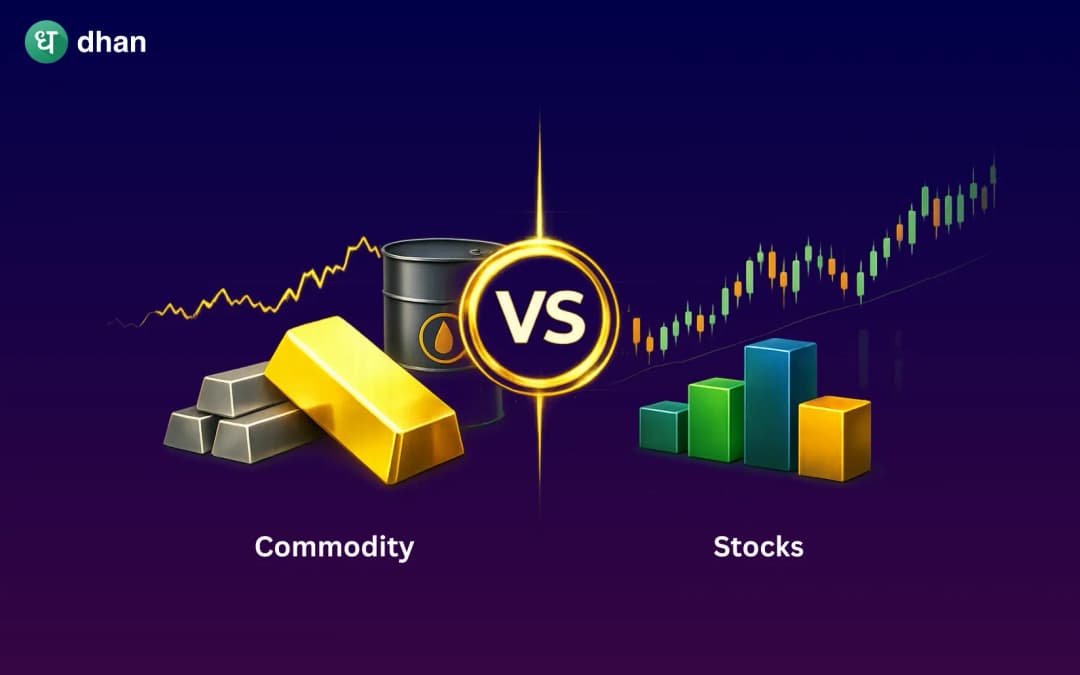


Even though both are attractive for traders and investors, they operate in very different ways and have different purposes. Many beginners treat the commodity market as the stock market, as both involve buying and selling on an organised exchange.
Both of these markets have different drivers, risks, and opportunities. If you want to enter these financial markets, having a clear understanding and familiarising yourself with the key differences between them will help you in the long run.
Before understanding the key differences between the commodity market Vs stock market, we will understand their meaning and how they operate.
Understanding the commodity market
The commodity market deals with the physical goods that are essential for the global population. These commodities include metals, energy products, and agricultural items. These commodities are categorised into two groups: soft commodities and hard commodities. Soft commodities include agricultural products and livestock like wheat, rice, soybeans, etc. Hard commodities include mined or extracted products like gold, oil, silver, etc.
In India, commodities are traded on the MCX and NCDEX exchanges. Retail participants generally trade commodities through derivatives like futures and options. It is a much simpler and trusted way to trade in commodities rather than handling physical goods themselves.
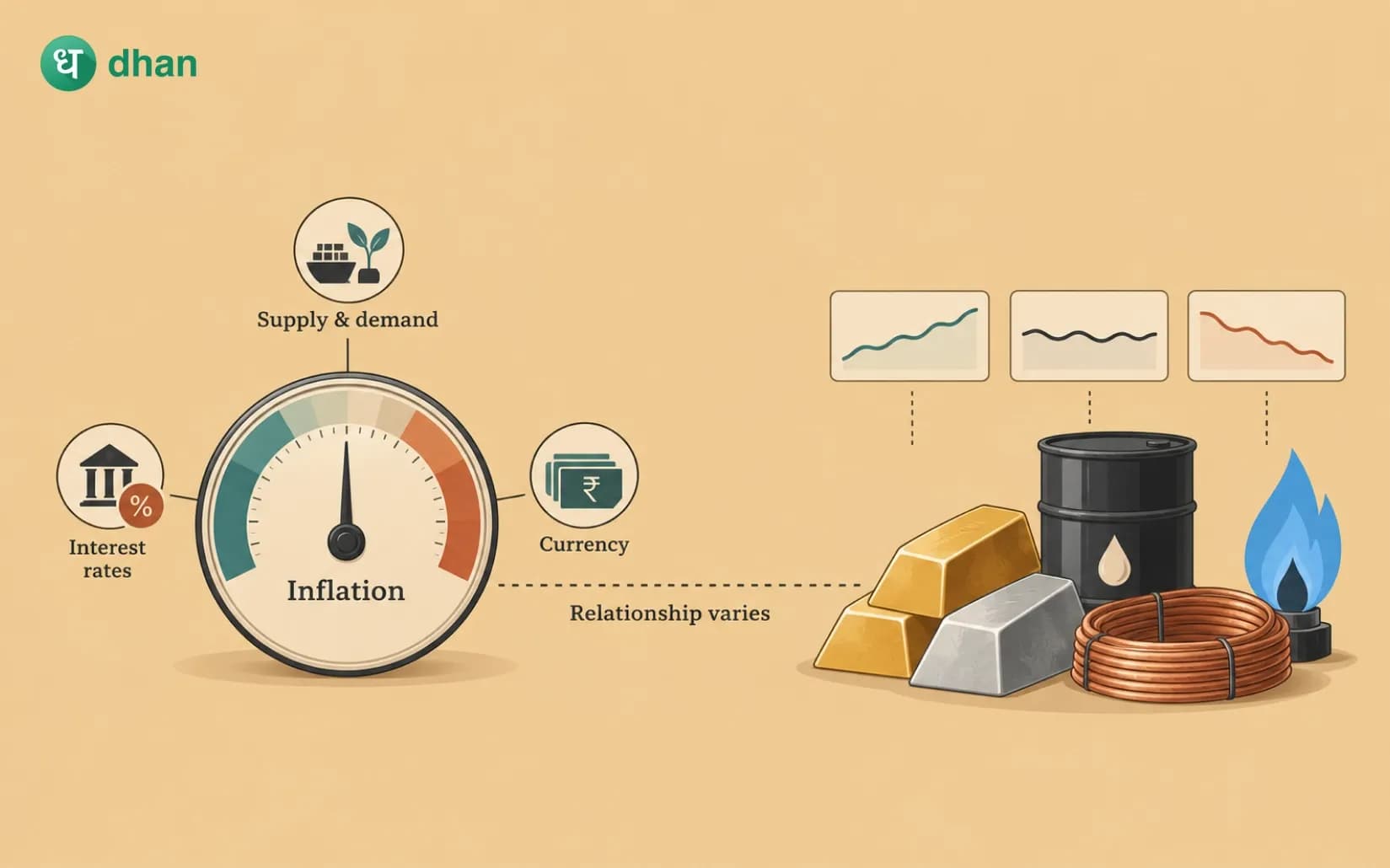
The prices of commodities are primarily driven by supply and demand in the local and global markets. Also, geopolitical events, weather, season, and natural calamities can affect commodity prices.
Understanding the Equity market
In the equity market, a company issues a fixed number of shares to the public, which can be bought and owned by retail investors, institutional investors, and foreign investors. When you buy a stock of any company, you are purchasing a small stake in that company. In the stock market, the value of a stock is driven by the performance of the company and the future market demand for its product or service.
The stocks are generally categorised based on their company size: Large cap, Mid cap, and Small cap. In India, SEBI has categorised the top 100 companies as large-cap, 101–250 as mid-cap, and 251 and below as small-cap.
The stock prices are influenced by many factors that are linked to the company and related sectors. Earnings growth, revenue, management decisions, competitive positioning, interest rates, and overall market sentiment all affect how a stock performs.
Commodity vs Equity Markets
With the table below, you will easily understand the commodity market vs equity market.
Capital requirement and accessibility
Commodities are generally traded with margin money. This allows traders to control larger positions with relatively low capital. Even though it makes commodities more accessible, it also increases risk. When purchasing stocks, this is not a mandatory norm, unless the buyer wishes to trade on leverage. For beginners, this configuration is more manageable.
Both markets are now easily available to retail participants through online trading platforms like Dhan. However, commodities generally demand a higher level of discipline due to leverage and volatility.
Commodity or Equity market: Which one should you choose?
Before choosing between the commodity market and the equity market, you should keep the following things in mind:
Risk
The commodity market carries higher risk compared to the stock market. Know your risk appetite before entering any market.
Time horizon
Stocks are generally preferred for long-term investment over commodities.
Capital availability
You should check the capital available before trading, as commodities offer margin trading but require strict risk control.
Final thoughts
The commodity market and the stock market both have their own purposes. Both of them have different kinds of traders and investors. Stocks are affected by company performance, future value, and sector reforms. While the commodity market reacts quickly to global supply and demand, natural disasters and global tension.
Although there is risk in both markets, the commodity market is thought to be riskier than stocks due to its potential for large price swings. Your goal, risk tolerance, and available capital should all be taken into consideration when selecting a market. Making more informed decisions will be aided by having a basic understanding of the stock and commodity markets.
FAQs
What is the main difference between the commodity market and the stock market?
Both the commodity market and the stock market have differing physical forms of dealing, which is quite evident from their description. So there is a fundamental difference in price drivers, risk, and investment strategy.
Is the commodity market riskier than the stock market?
The commodity market is considered riskier than the stock market, as price moves in the commodity market can be very sharp due to global disruptions and geopolitical tensions.
Do stocks offer more consistent returns than commodities?
Stocks have offered more reliable long-term returns in the past due to their association with business and economic growth. Commodity returns tend to be cyclical and dependent on global supply-demand conditions.
Can traders participate in both commodity and stock markets?
Yes. Many traders and investors diversify their portfolios by investing in both markets.
Which market is easier for beginners to understand?
The stock market is considered easier for beginners as it involves familiar business and can be very predictable compared to commodities.