Types of Commodity Trading


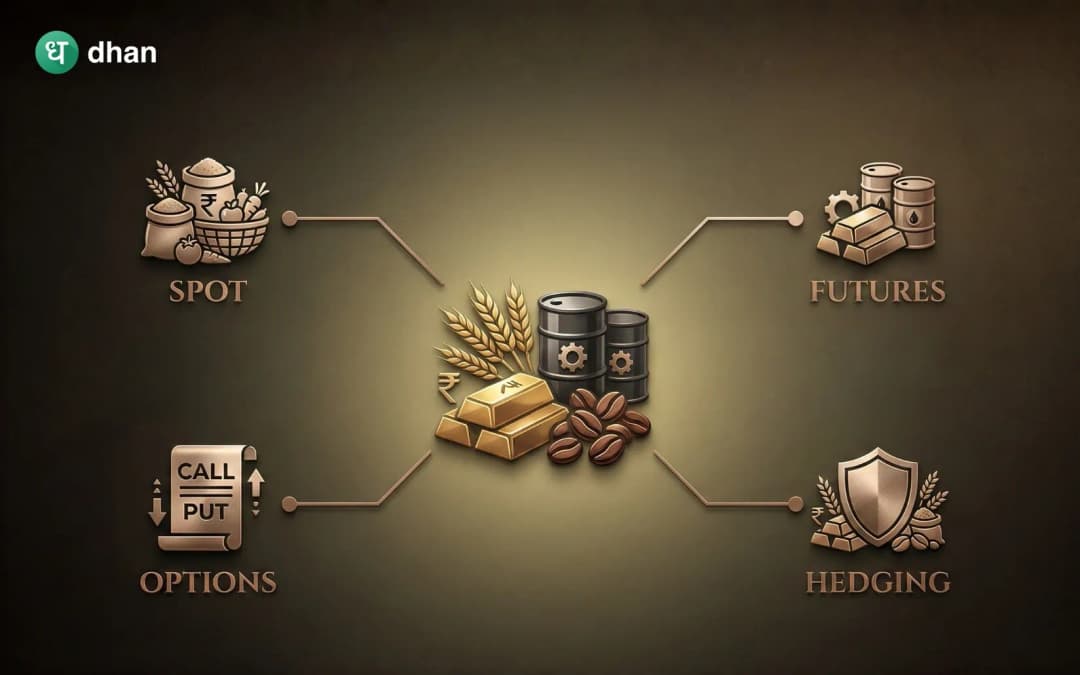


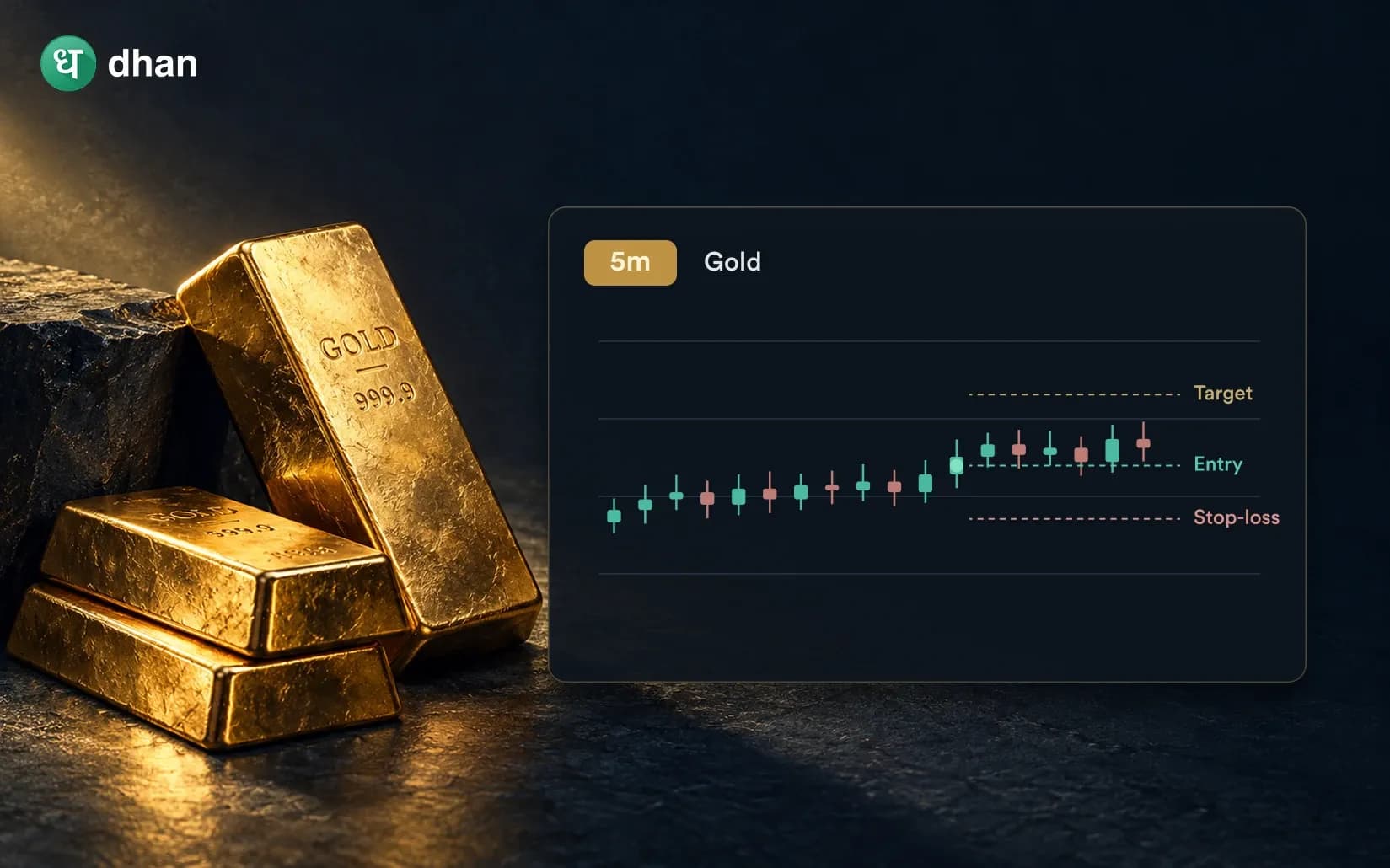
Commodity trading in India involves the buying and selling of raw materials, such as metals, energy, and agricultural commodities, through exchanges like MCX and NCDEX. It offers a wide range of investment options to traders. For this, traders can employ various types of strategies like futures, options, spot, hedging, and speculative.
Commodity trading in India has been regulated by SEBI since the merger of FMC in 2015. The commodity market provides traders with the opportunity to capitalise on the price movement, global trends, and supply and demand. In this blog, we will explore the different types of commodity trading available in India.
Types of commodity trading
There are various types of commodity trading strategies available in India on MCX and NCDEX. Some of the most popular ones include:
Spot trading
Spot trading occurs in physical markets where commodities are traded instantaneously at prevailing prices; also known as cash markets. Spot trading involves buyers immediately taking the delivery of goods, such as agricultural products, directly from mandis. Local demand and supply drive the price of such commodities.
However, in India, spot trading is most dominant in the unorganised sectors, where farmers sell their crop directly to the wholesalers. This bypasses the exchanges for quick settlements. It's the simplest form of trading. There is no contract in spot trading, and therefore, the transaction settles on the same day.
Futures trading
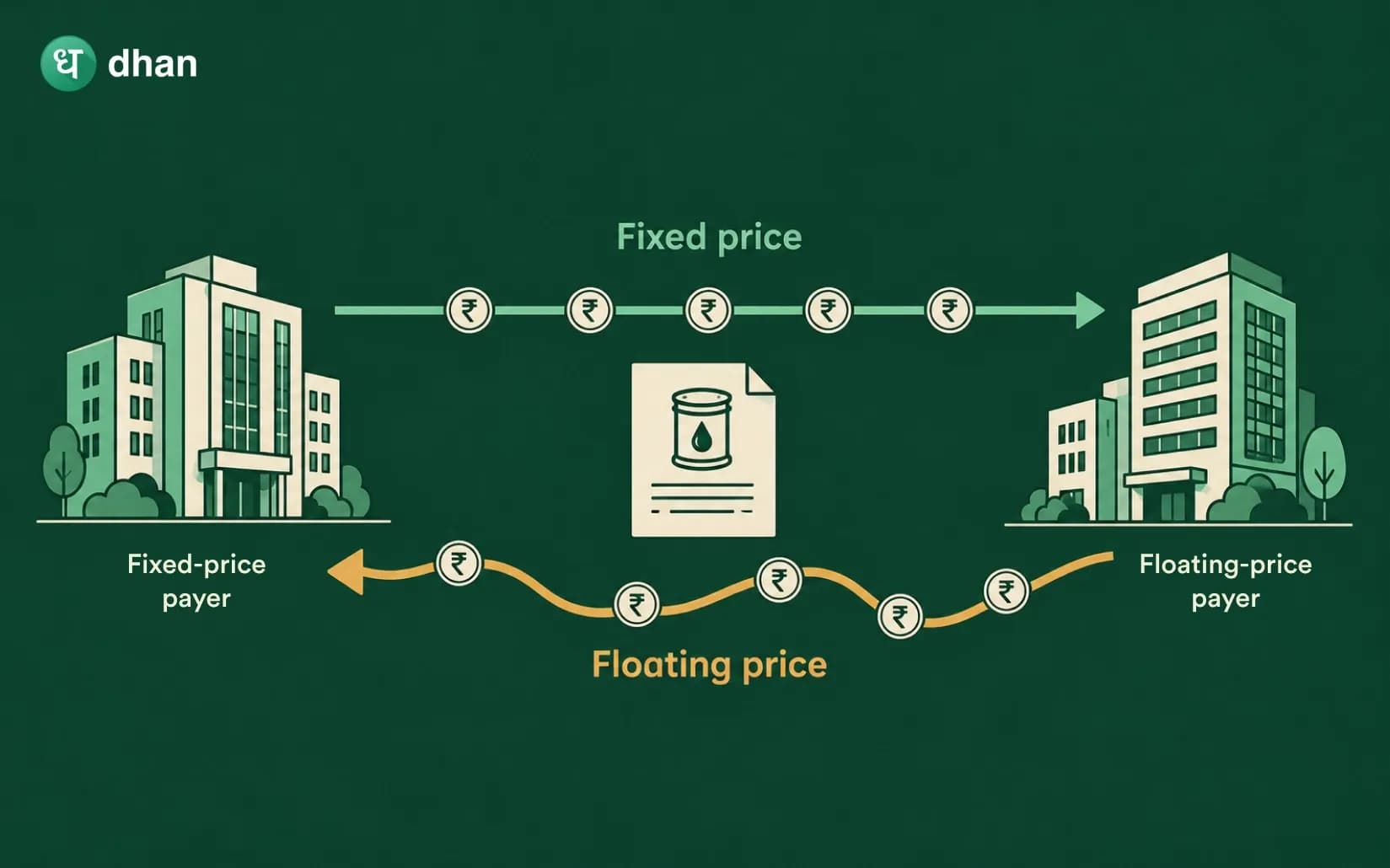
Futures trading dominates in the Indian commodity derivatives. It deals with standardised contracts to buy/sell assets like gold, crude oil, etc., at predetermined prices on future dates. These contracts are traded on organised exchanges, which act as a marketplace for these contracts, where traders hedge against risk or speculate on the price movement in different commodities.
Future trading involves a contract known as a futures contract, which is a legal agreement between both parties to buy or sell an asset at a set price on a future date. In order to facilitate convenient trading, such contracts are standardised in terms of quantity and quality of the asset.
Options trading
Options trading is the buying and selling of contracts that give the buyer the right, but not the obligation, to buy or sell an underlying asset at a predetermined price before a specific expiration date. These contracts are called "options," and they derive their value from an underlying asset. Options can be used by investors to speculate on price movements, hedge existing positions, or generate income.
It gives traders two options:
- Call option: It gives the buyer the right to buy the underlying asset at the strike price.
- Put option: It gives the buyer the right to sell the underlying asset at the strike price.
In options trading, the buyer pays the premium to purchase the right to buy or sell the asset. If the option is not profitable by the expiration date, they can let it expire worthless and only lose the initial premium paid. But it is not the other way around, because if the seller receives the premium, they are obligated to fulfil the contract's terms if the buyer decides to exercise it.
Hedging
Hedging trading is a risk management strategy that traders use to minimise potential losses from adverse price movements. They take a second trade that moves in the opposite direction of their primary investment and create an insurance policy to protect their investment. This way, if their main asset price falls, the gain in the hedge helps cover the loss.
But it often limits potential profits, too. A hedging commodity trading strategy is like wearing a seatbelt while driving, as it doesn't stop you from making a profit but reduces the impact of a sudden market drop. Traders commonly use derivatives like options (puts/calls) and futures, or simply take opposing positions to build a hedge in correlated assets.
Step-by-step guide to conduct commodity trading
The following is a step-by-step guide that traders can use to conduct commodity trading in India.
Step 1: Choose the broker
Select a SEBI-registered brokerage platform like Dhan, offering commodity trading.
Step 2: Open an account
For commodity trading, one needs to open a trading and demat account to conduct trades and hold securities digitally. Dhan provides a 2-in-1 demat and trading account.
Step 3: Complete KYC
Get your e-KYC done using PAN, Aadhaar, and bank proof to complete the authentication process.
Step 4: Add funds
After authentication completion and account activation, deposit initial funds using net banking or UPI to begin trading.
Step 5. Place a trade
Finally, place a trade that fits within your investment goals and research.
Step 6: Monitor & review
After the trade is settled, track the order and review it periodically, based on the trading strategy and prevailing market conditions.
Summing Up!
Commodity trading in India provides multiple avenues: spot trading for immediate trade, futures/ options trading for leverage, hedging trading for protection, and speculative trading for high returns across MCX/ NCDEX.
Beginners should prioritise trading education before entering commodity trading, because one needs a deep understanding of commodity markets to perform successful trades. With India's growth and rising economy, mastering these specialised strategies will unlock portfolio resilience and alpha returns in a trader's portfolio.
FAQs
What are the major commodity exchanges in India?
The major commodity exchanges in India are the Multi-Commodity Exchange (MCX), which deals mainly in metals, energy, and base metals, and the National Commodity and Derivatives Exchange (NCDEX), which leads in agricultural commodities such as spices, pulses, and wheat.
Is physical delivery mandatory in commodity futures?
No, not all commodity futures require physical delivery. Some are cash-settled; others (like physical goods such as oil, spices) have physical delivery, which means that you need to buy and sell the physical commodity unless you square off your position before expiry.
How much brokerage does Dhan charge for commodity trading?
Dhan levies a flat ₹20 per executed order for Commodity Futures and Options, or 0.03% of the trade value for Futures, whichever is lower. Along with these, Dhan charges other statutory charges like STT, Transaction Charges, SEBI Fees, and GST.
Can I access TradingView charts for commodities?
Yes, Dhan provides an integrated TradingView chart for commodities, enabling you to access charts and trade on the same platform. For this, you just need to connect your Dhan account to TradingView or use tv.dhan.co, and you'll get access to powerful charting tools for commodities.
What is the difference between Futures and Options in commodity trading?
Futures contracts legally obligate both the buyer and seller to transact an asset at a predetermined price and date. Options contracts, however, give the holder the right, but not the obligation, to buy or sell the underlying asset at a specified price on or before a particular date.