How to select stocks for intraday trading?




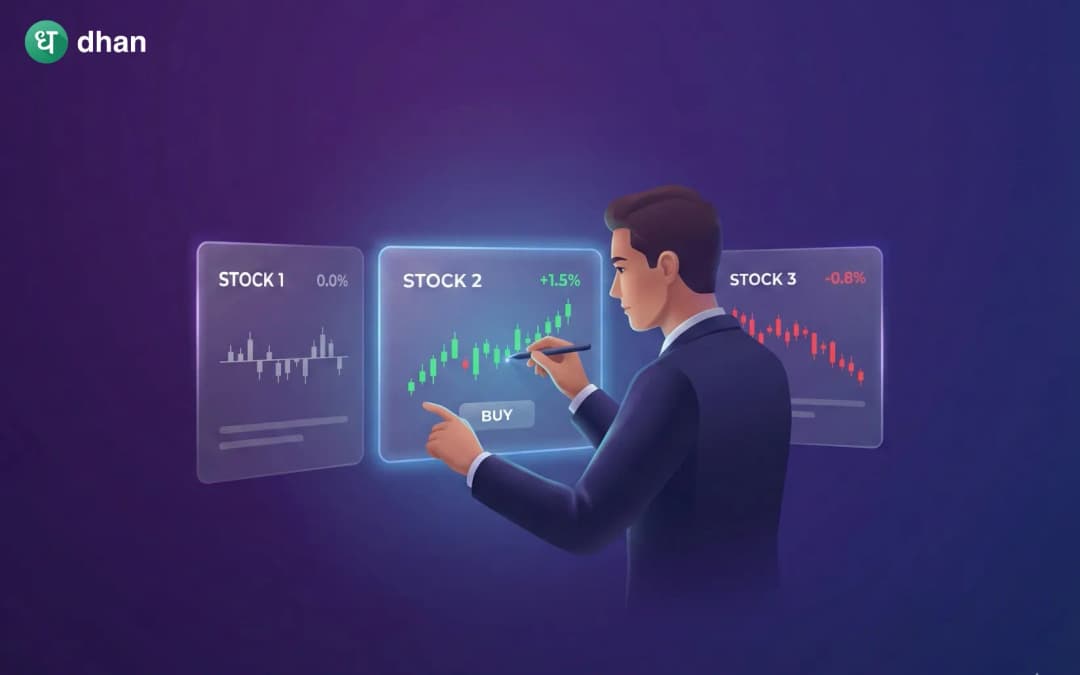




The principle of intraday trading is simple - buy low, and close the position before the day’s end. But anybody who has spent time trading will tell you all is not what it seems. While the premise is simple, the execution is anything but simple.
Intraday trading requires discipline, strict rules, and respect for key technical indicators. But even before we begin to apply these principles, choosing the right stock is critical. Losses in intraday trading rarely come from bad indicators or wrong stop losses. It usually comes from choosing the wrong stock for that day.
Here’s a framework to help you choose the right stock for intraday trading.
Liquidity is your best friend
Liquidity is a must. A highly liquid stock allows you to enter and exit instantly. This is vital since intraday trading hinges on quick movements, on both price action and your own entry and exit. With ample liquidity, you will get fair prices as well, and you will be able to execute stop losses as planned.
Illiquid stocks may move sharply, making them look attractive, but it’s harder to both get in and exit the trade. The simple rule to follow here is if you cannot exit in one click, do not enter.
What to look for
- High average daily volume
- Small difference between the bid and ask prices
- Large institutional investor (hedge funds, mutual funds, pension funds, etc) participation
Shares trading on the National Stock Exchange and the Bombay Stock Exchange in lakhs per day are generally considered liquid.
Scenario
Say, two stocks (A and B) are showing a breakout at 10:15 AM. Stock A trades 10 lakh shares daily, while Stock B trades 10,000 shares. You will find that Stock A allows a clean entry, with predictable price movement, and finally, a smooth exit, while Stock B might freeze or stall, delaying your exit. You may not get a buyer for your shares when you intend to sell. In Intraday trading, that is unacceptable.
Trade stocks already in play
Intraday traders aren’t creating any momentum of their own but are riding existing momentum instead. Every day, a small group of stocks attract disproportionate attention either due to earnings reports, sectoral development, or global news. These are the stocks to watch out for, and know that there are other investors too, looking at them. This is why the price is anticipated to move sharply.
What to look for
- Stocks in the news
- Earnings announcements
- Unusual volume spikes
- Stocks hitting a 52-week high or low
Scenario
Say a stock announces strong quarterly earnings after the market closes, or right before at 9 AM. It is reasonable to anticipate that the volume will spike upon market opening. And with that, price movement. Even if the price direction reverses later in the day, intraday traders will have multiple opportunities.
The fundamental idea here is that with no news, no crowd, and no urgency, do not engage.
Structured volatility
Volatility is the rate at which a stock’s price moves from its average. The general tendency to remember here is that high liquidity tends to lower volatility, and vice versa. Now you may think high volatility is perfect for intraday trading, but what you want is tradeable volatility and not random spikes.
What to look for
- Candles with clear bodies and small wicks, showing strong direction
- Predictable support and resistance level behaviour
- Pullbacks instead of vertical moves to allow easier entry
Scenario
Consider two stocks, X and Y. X moves 3% in five minutes, reverses fully, and then spikes again. Here, it’s difficult to predict when to enter. Now looking at Y, it moves 1.2% in 30 minutes, and then sees pullbacks. Here, it’s easier to enter during the pullback not only because of the price level but also because it is reacting predictably.
Intraday trading isn’t about that one big haul you make. It’s about making small, consistent, repeatable trades, which can only be done with a structure in place.
Respect for key reference levels
Professional traders do not trade randomly. Once the broader aspects are in place, experienced and successful traders look at key reference levels. These are used when a decision must be made.
What to look for
- Previous day high and low
- Opening range high and low
- Volume weighted average price
- Major support and resistance zones
The previous day’s high and lows create a “soft” resistance and support level. Meanwhile, historical highs and lows act as the “hard” support and resistance levels. The opening range shows traders the dominant behaviour of the stock at the start of the window. This generally sets the course for its movement for the rest of the day, and there’s VWAP. The key thing to know here is that if a stock is above VWAP, it is considered to be in an intraday uptrend and vice versa.
For this, you can use tools like the intraday screener from ScanX, which allows you to identify stocks at key levels based on their technicals as well as fundamentals and helps you with the intraday stock selection process.
Scenario
A stock opens above VWAP, pulls back gently, and holds VWAP with declining volume. This shows that buyers are keeping the price afloat. Similarly, if the price drops below VWAP with high volume, it indicates that sellers are dominating the market.
These reference levels set the context for trading sessions. Trying to buy when there’s selling pressure or trying to short-sell when buyers are in control is like trying to swim with your arms tied.
Trade alignment
Which brings us to the next point - trade alignment. You see, a stock rarely moves in isolation. It often moves in accordance with the sector it belongs to, or even the broader index. Global market sentiment also behaves like a tide that can raise all ships.
What to look for
- Is the sector index trending?
- Broader market movement
- Global factors affecting movement
Scenario
Say the banking index is weak and falling, but a banking stock is showing bullish tendencies. The trade may work due to reasons exclusive to the stock. But if the entire sector is rising, the stock rising has higher probabilities.
Intraday trading is about stacking probabilities in your favour and not making predictions.
Avoid overcrowded retail trades
Now remember that all these indicators and levels are accessible to anyone and everyone. Others are observing the same data that you are. Trading in those stocks often fails because early entrants book profits quickly, while late entrants are only adding to the liquidity. As a result, most people have the same setups, placing the same stop loss, making the stock vulnerable to a sharp price reversal.
What to look for
- Stocks trending on social media
- Identical chart patterns and setups
- Obvious breakout levels (susceptible to manipulation)
Scenario
A stock breaks resistance as everyone expected. Early entrants begin to profit-book while late entrants absorb the selling pressure. The price stalls. Now with no buyers left, the late entrants begin to panic and sell, causing a sharp drop in price. This is a common occurrence in overcrowded stocks.
Smart traders get in (and out) before the market does.
Match stock to trading style
Let’s be honest, not every stock suits every trader. Large-caps tend to move slowly and may not be ideal for impatient traders. Whereas a positional trader trading a fast mid-cap may panic during pullbacks. Your stock selection must fit your temperament.
Keep a shortlist
A trader watching too many stocks is likely to enter and exit trades late. It’s best to reduce your observed stocks to about 5-10. Look at liquidity, volume and news triggers, and the larger market sentiment to narrow your selection.
To conclude
Half the battle is already won if you select the right stock.
Professional traders treat stock selection as the first level of risk management. When you select the right stock, stop losses feel logical, and the trade itself is calm. Stack the probabilities in your favour, instead of predicting the market, and your results will be more consistent.
Use Dhan’s superfast platform to conduct intraday trades. Set stop losses easily with Super Order and use a variety of technical indicators to time your entry efficiently. Use the proprietary Power Trade Mode to manage your positions easily. Download the Dhan app and get started.
FAQs
How many stocks should a beginner trade in one day?
One or two stocks are enough for beginners. This keeps risk low and helps you understand price behaviour faster. Moreover, it’s easier to track and understand what is happening with fewer stocks.
Are large-cap stocks better than mid-cap stocks for intraday trading?
Large stocks offer better liquidity, low volatility, and easily defined price movement. That makes it ideal for beginners. However, for more adventurous traders, looking for more reward and are okay with higher risk, large-caps may not appeal to them, considering their measured price actions.
Should beginners trade at market opening?
The first 15-20 minutes can get quite unpredictable and volatile. Waiting helps identify clear trends. However, if you are certain that there will be a specific price action immediately after opening, only then enter the trade.
Is it okay to trade the same stock every day?
Trading the same stock every day gives you a better idea of stock movement and behaviour. This, in return, can improve confidence, sharpening your timings in the long run.
When should a trader skip a stock even if it looks tradeable?
When a certain stock dominates the headlines, it’s best to stay away, as it can get overcrowded, creating sharp, unexpected reversals. Another reason to skip is if the price is being driven by hype or speculation rather than its fundamentals.