How to start SIP in the Nasdaq 100?






Key takeaways:
- The Nasdaq 100 tracks the 100 largest non-financial companies on the US exchange, with nearly 50% concentration in seven mega-cap tech stocks, making it a high-growth, high-volatility index for Indian investors.
- Indian investors can access it through two routes: Indian mutual funds via SIPs starting at ₹100, or direct US investment under the LRS scheme up to USD 250,000 annually.
- Taxation follows foreign fund rules: slab rates for holdings under two years, and 12.5% long-term capital gains for holdings beyond two years, with each SIP instalment treated separately.
- Key risks include concentration in mega-caps, US interest rate sensitivity, SEBI overseas investment caps limiting fund availability, currency fluctuation, and elevated AI valuation concerns.
The Nasdaq 100 is an index of the 100 largest non-financial companies listed on the US-based exchange. Apple, Microsoft, NVIDIA, Alphabet and Amazon are all based there. It is now increasingly easy for Indian investors to invest in the Nasdaq 100 via a SIP option.
No need for a US brokerage account or lakhs of rupees to start. The fund route will let you invest in rupees, start with a small amount, and steadily gain exposure to global tech stocks.
Let's just take a look at how to do it.
What is meant by the Nasdaq 100, and why should an Indian consider investing in it?
The Nasdaq 100 is not a stock or fund but an index. It offers specific exposure to companies across the globe that are focused on corporate technology and growth. Awareness of these differences is crucial before beginning any SIP.
Index composition
The Nasdaq 100 index is made up of 100 of the biggest non-financial companies listed on the Nasdaq exchange.
Sector weight
The index is dominated by technology, consumer discretionary, and communication services.
Concentration risk
The top seven companies (Apple, Microsoft, NVIDIA, Alphabet, Amazon, Meta and Tesla) currently account for approximately 46% of the total value of the index as of early 2026.
Currency factor
Indian investors' returns are impacted by the USD/INR fluctuation. In the event of a depreciating rupee, the returns are usually multiplied in rupee terms.
Historical performance
India's mutual funds (in the Nasdaq 100 index) have enjoyed good performance, mainly outpacing most of the equity funds in the country.
By understanding the index, you may get a feel for the investments you will be making under your SIP and whether it meets your investment goals.
Two ways to run a SIP in the Nasdaq 100 from India
There are two ways for investors to gain access to the Nasdaq 100 market from India. Each comes at a different price, is easier to use, and has its own set of regulatory and convenience risks.
Route 1: Indian Mutual Funds (Fund of Funds or Index Funds)
This is by far the simplest approach. Naturally, there are several Indian AMCs that have funds tracking or following the Nasdaq 100. It requires no overseas account. You can invest in rupees, and SIPs are allowed with as little as ₹100.
Active funds in this category include:
- Motilal Oswal NASDAQ 100 FOF Fund Direct
- ICICI Prudential NASDAQ 100 Index Fund Direct
- Navi NASDAQ100 US Specific Equity Passive FoF
- Invesco India EQQQ NASDAQ-100 ETF FoF
- Axis NASDAQ 100 US Specific Equity Passive FoF
Caution: The total amount of investment in mutual funds by the industry in overseas funds is capped by SEBI at $7 billion. Several funds have already filled up the investment cap. Always verify the fund status when signing up for a new SIP from the AMC website or a fund aggregator site.
Route 2: Direct US Investment via LRS
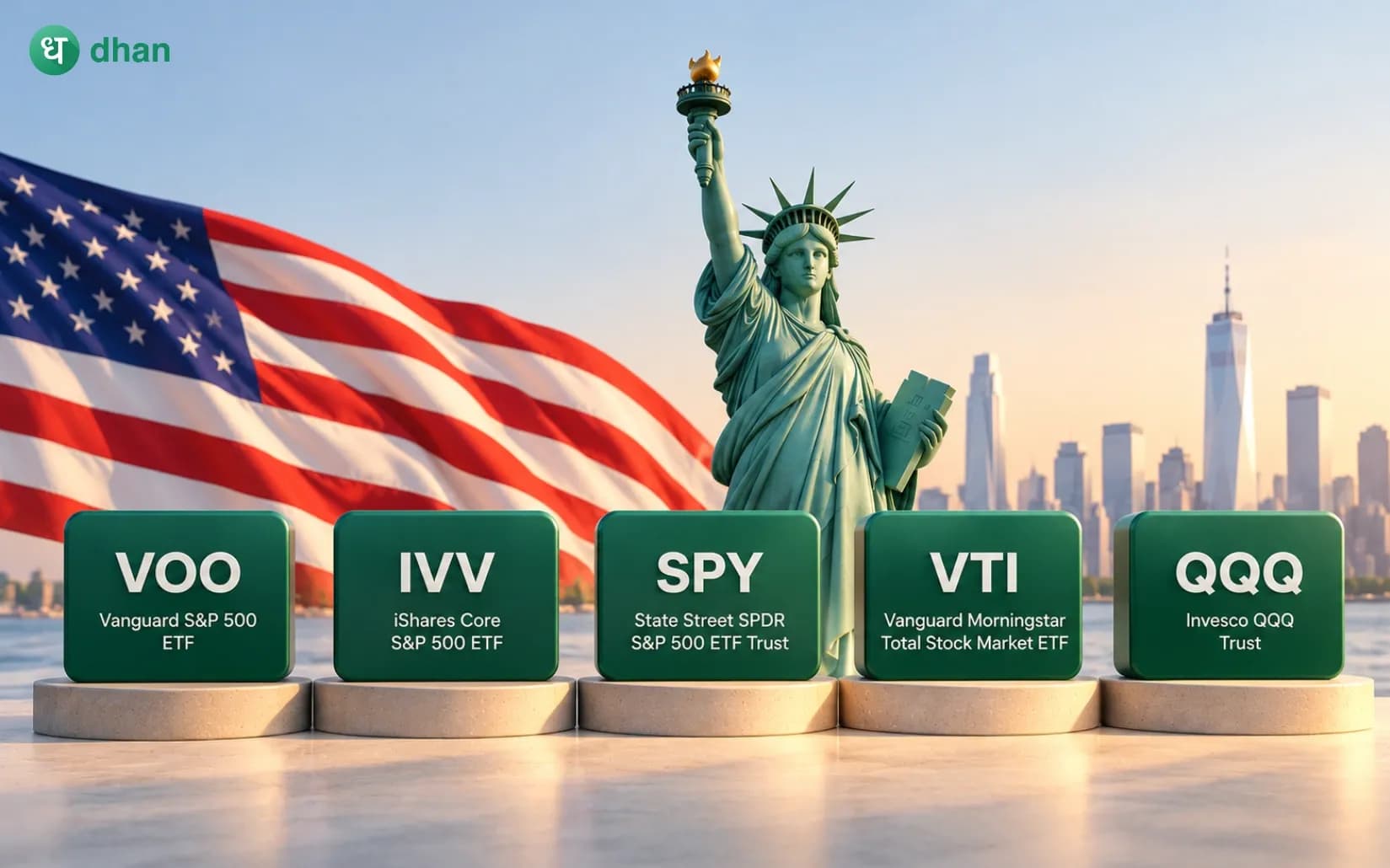
Resident Indians can invest through the Liberalised Remittance Scheme (LRS) of RBI through direct purchase of securities in overseas markets each year up to $250,000. There are platforms that offer to buy the QQQ ETF (which represents the underlying stocks in the Nasdaq 100) or the underlying Nasdaq stocks.
This route offers a more pure index exposure, but comes with a forex conversion cost and additional compliance requirements. Taking the mutual fund route is simpler and sufficient for most retail investors who are just beginning to invest.
Step-by-step: How to start a SIP in the Nasdaq 100
Follow these steps to avoid any unnecessary delays and set-up the first Nasdaq 100 SIP properly.
Step 1: Complete your KYC
Make sure you have an active and up-to-date KYC. It is an essential condition for all investments in India's mutual funds. The eKYC process on most platforms takes only a few minutes and is done with Aadhaar and PAN.
Step 2: Choose a fund with open subscriptions
Find out which Nasdaq 100 shares are on offer for fresh SIP registrations. The availability of funds fluctuates based on the overseas investment cap of SEBI. Always verify subscription status before proceeding.
Step 3: Decide your SIP amount and frequency
Minimum SIP amounts typically start at ₹100 per month. The majority of funds come with a selection of frequency choices, including daily, weekly, and monthly. The most common and easily tracked SIPs are monthly.
Step 4: Set up the SIP on your investment platform
Platforms let you search for the fund, enter your SIP amount, select a date, and link your bank account via mandate or UPI autopay. If KYC is completed, the process can be done in less than 10 minutes.
Step 5: Monitor and review periodically
SIPs are not a 'once and for all' process. Check tracking error, expense ratio, and subscription status of the fund every quarter. Generally, if your selected fund closes to new investments during the SIP, your platform will alert you to this change.
Tax treatment of Nasdaq 100 SIPs in India
Taxation of a SIP in a mutual fund invested in the NASDAQ100 index is based on foreign fund taxation rather than equity fund taxes. It is important to understand that many investors fail to know.
Held for under 2 years
Gains are added to your total income and taxed at your applicable slab rate.
Held for over 2 years
Gains are taxed at a rate of 12.5% as long-term capital gains.
Each SIP instalment is treated as a separate investment with its own acquisition date and holding period.
Dividend withholding
For mutual fund investors, the US 25% dividend withholding tax under the India-US DTAA is absorbed at the fund level. You do not need to file separately for this.
Plan your redemptions with holding periods in mind to reduce your tax outgo.
Key risks to understand before you start
There is no risk-free investment in a concentrated index. These are the ones that are particular to this index that should be taken care of.
Concentration risk
Nearly 50% of the Index is made up of seven companies. A correction in a mega-cap tech will have an impact on the performance of indices.
Interest rate sensitivity
The Nasdaq 100 tends to react highly to interest rate changes by the US Federal Reserve.
Regulatory availability
With SEBI's overseas cap, the fund in which you invest a SIP today may stop fresh investments on the day. These are real operational risks, and not uncommon.
Currency risk
The movement of USD/INR is going in both directions. A better rupee makes them give lesser returns in INR terms.
AI valuation risk
For now, there are worries that the AI valuations might not hold if monetisation doesn't reach expectations.
Start your Nasdaq 100 SIP the right way
A Nasdaq 100 SIP makes sense if you have a long investment horizon of at least five to seven years, can stomach high volatility, and already have meaningful domestic equity exposure. It is a high-risk, high-concentration index.
It should not be your first or only investment. Treat it as a global diversification layer on top of an existing India-focused portfolio. Start with an amount you are comfortable staying invested in through a 30-40% drawdown, because that is historically possible with this index.