What is the S&P 500?





Key takeaways:
- The S&P 500 is a market-capitalisation-weighted index tracking 500 prominent US publicly traded companies across 11 sectors, representing roughly 80% of the total US stock market value.
- It serves as the primary benchmark for US economic health and fund manager performance, with a long-term average annual return of approximately 10% through recessions and crises.
- Indian investors can access it via US ETFs, Indian mutual funds with S&P 500 mandates, or direct equity platforms under the Liberalised Remittance Scheme up to USD 250,000 annually.
- The index influences global market sentiment, making it essential for any internationally diversified portfolio.
The S&P 500 is one of the most closely monitored financial indexes in the world. It is widely utilised as a benchmark by millions of investors for the health of the US economy. The question that many readers of this blog must have heard before is "What is the S&P 500? and why is it important?"
The answer is much simpler than the answer you'll see in many articles on finance. It's not a stock that you actually purchase. Instead of that, it's a list, one that is carefully curated by a small group of 500 major U.S. companies.
Let's review its definition, operation, and why it is watched closely by investors worldwide.
S&P 500 explained in the simplest way
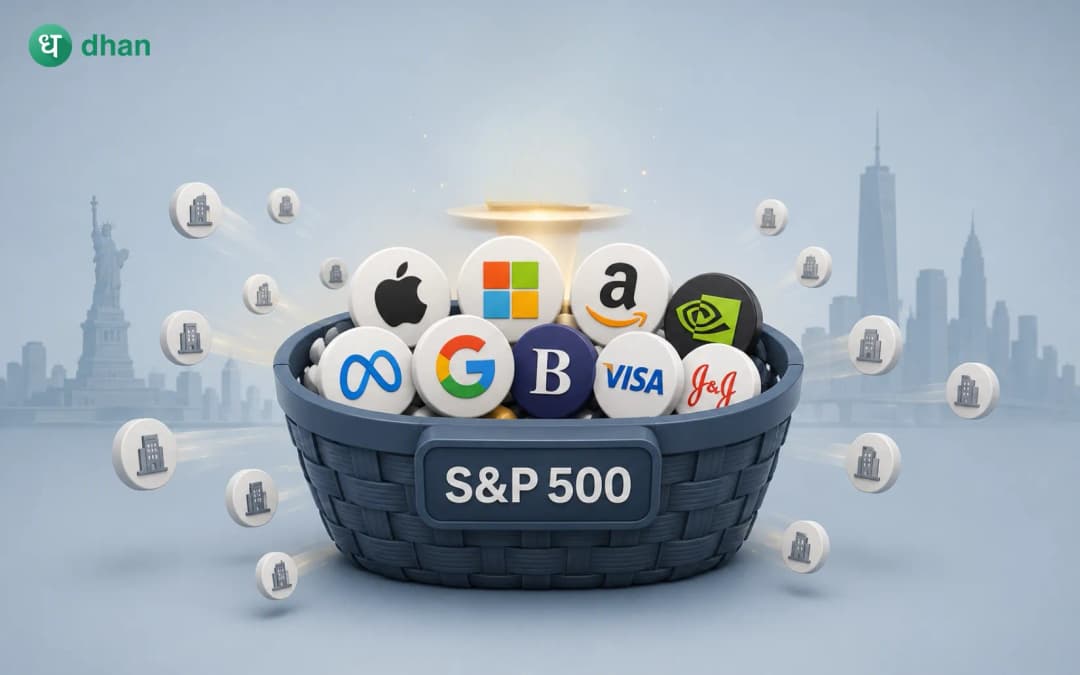
The S&P 500 is a US share index that reflects the total value of the 500 most prominent publicly traded stocks in the nation's capital. S&P stands for Standard and Poor's, the financial firm that created and maintains this index. The selection of these 500 companies is done based on the aspects of market capitalisation, financial viability and liquidity.
It includes 11 major industry groups as well, ranging from tech to healthcare, to energy to finance. These companies combined account for approximately 80% of the stock market's value in the United States.
What is the formula to calculate the S&P 500?
The market-capitalisation weighting method is used to determine the value of the index. This implies that the larger the business, the greater the effect on the index. A company with a market cap of around $3 Trillion moves the index more than one worth $50 Billion. The index value is updated in real time throughout every US trading session. The term the market is up today is frequently used in reference to the S&P 500.
Which companies form the S&P 500?
This index contains some of the most easily recognisable names in the business world. The top weight contributors are companies such as Apple, Microsoft, Amazon, Nvidia and Alphabet. There is no set ratio.
The list is reviewed on a regular basis by a dedicated S&P Index Committee. Companies can be added if they meet the eligibility criteria. They also may be removed if the company doesn't meet any of the criteria anymore because of size, liquidity or financial performance.
What is the purpose of tracking the S&P 500?
The S&P 500 is considered the benchmark for the performance of the US economy. A higher index indicates good overall health of companies and is a reflection of investor confidence. A steep drop indicates fear, loss of economic activity, or external factors.
Most of the professional fund managers and other professionals also use it as a performance standard. If a fund outperforms the S&P 500 over the long term, then it has performed well. That is also one of the reasons the index is widely watched by almost all investors first thing on a trading week.
What is the historical return of the S&P 500?
Over the long-term, the S&P 500 has provided an average annual return of approximately 10%. This includes several recessions, market crashes and inflation. The index fell sharply during the 2008 financial crisis, but has eventually moved on to record new peaks.
There was a dramatic sell-off in March 2020 when the pandemic hit, followed by one of the quickest turnarounds recorded in the markets. History has clearly demonstrated that patient investors have been rewarded for holding stocks through ups and downs in the market.
Can Indian investors invest in the S&P 500?
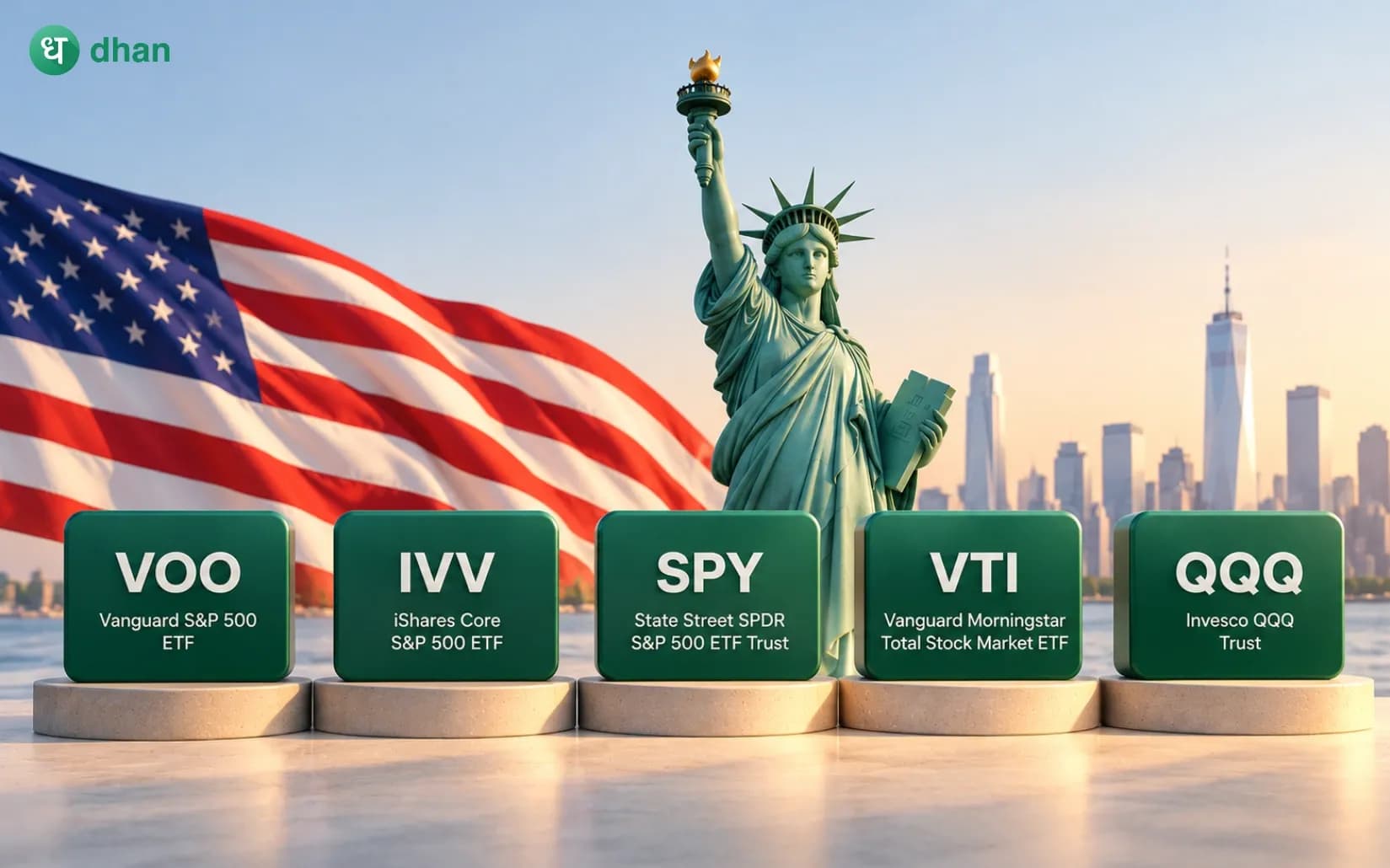
Yes, Indian investors can get exposure to the S&P 500 in various ways. These are a mix of U.S.-registered ETFs based on the index, Indian mutual funds where the investment mandate is the S&P 500, and direct equity platforms that enable international investing.
The Liberalised Remittance Scheme (LRS) allows Indian citizens to send up to $250,000 per year to make foreign investments. This renders it accessible, essentially, for most retail investors in India, too. The best route to take will depend on your tax status, investment goals, and risk tolerance to currencies.
Why the S&P 500 matters for global investors
More than 60% of the overall market capitalisation of the equities market is in the hands of the US market. The markets in Europe, Asia, and emerging markets such as India are impacted by what happens in the S&P 500. When the index drops sharply, selling pressure tends to increase all over the world.
Sentiment tends to rise in all other areas when a strong rally occurs. When investing in a stock market portfolio across the globe, there is no way an investor can afford to ignore the S&P 500. In a lot of ways, it's the one single biggest determinant of investor confidence worldwide.
Start your journey into the US markets
If you are interested in global investing but you are not yet ready for it, there is probably a need for you to understand the basics of the S&P 500. The index includes built-in diversification by 500 large companies and 11 sectors. Now, Indian investors have options that are real and easily accessible to participate in this index in their investments.
It's common to begin investing small amounts and gradually grow over time with increased knowledge. Initially, you should investigate the US Equity funds, international mutual funds, and platforms that are regulated for investing abroad. Obviously, the sooner you grasp the global markets, the more equipped you will be in order to build long-term wealth.