


What is Commodity Hedging?





Key takeaways:
- Commodity hedging helps businesses and market participants reduce the impact of unfavourable price movements in commodities such as crude oil, gold, silver, agricultural products, and natural gas.
- Futures, options, and over-the-counter contracts are commonly used to manage commodity price risk. Each method has different costs, obligations, and levels of flexibility.
- Hedging does not eliminate every risk or guarantee a profit. Its primary purpose is to make costs, revenues, or portfolio exposure more predictable.
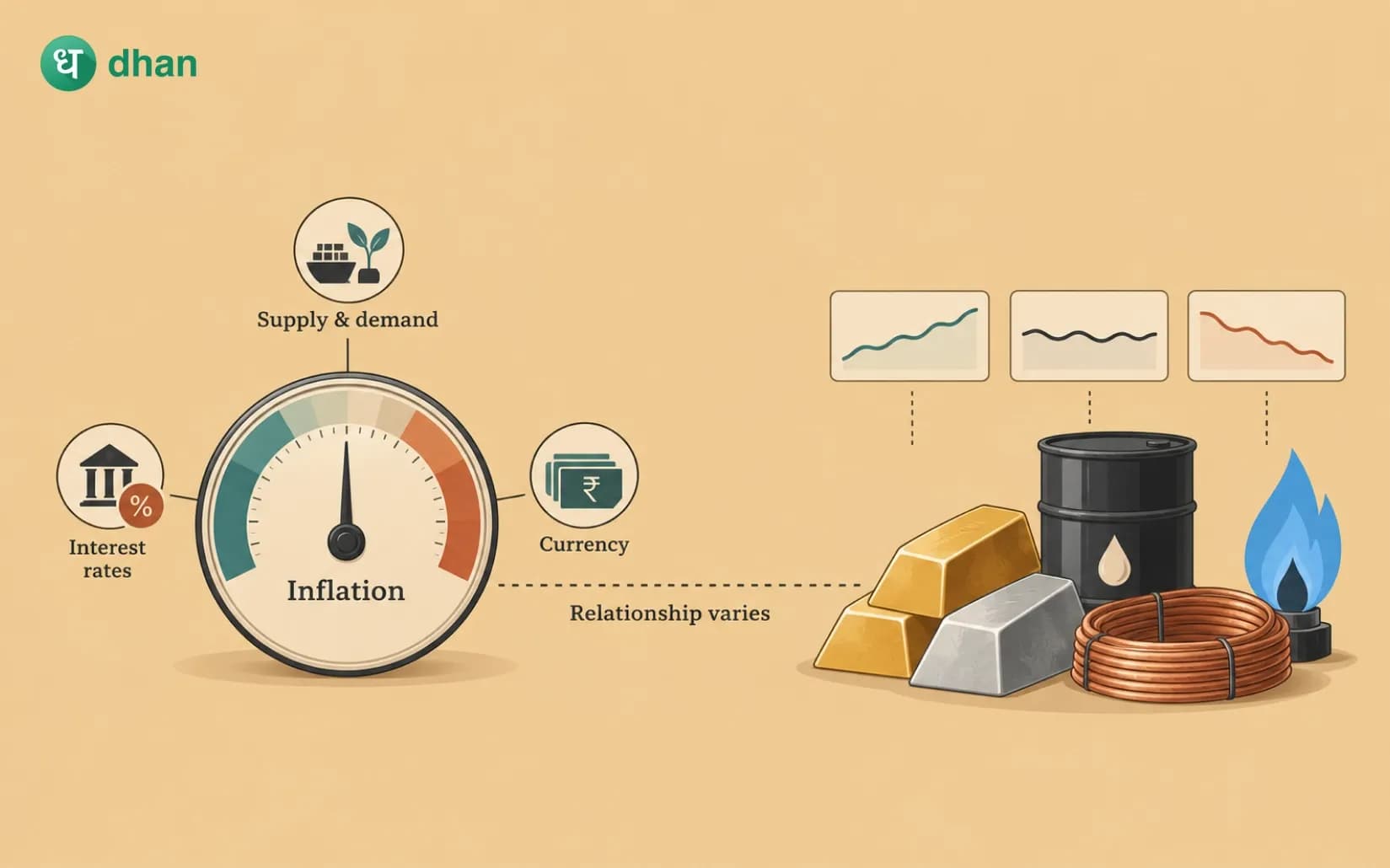
Commodity prices can change sharply because of supply disruptions, weather conditions, geopolitical developments, changes in demand and currency movements. These fluctuations can create problems for businesses that depend on commodities.
Think about a jewellery manufacturer who needs to buy gold next month. If gold prices rise before the purchase, the manufacturer may have to spend more than planned. Opposite to that, for a farmer, if crop prices fall before the harvest is sold, the income from the crop could decline.
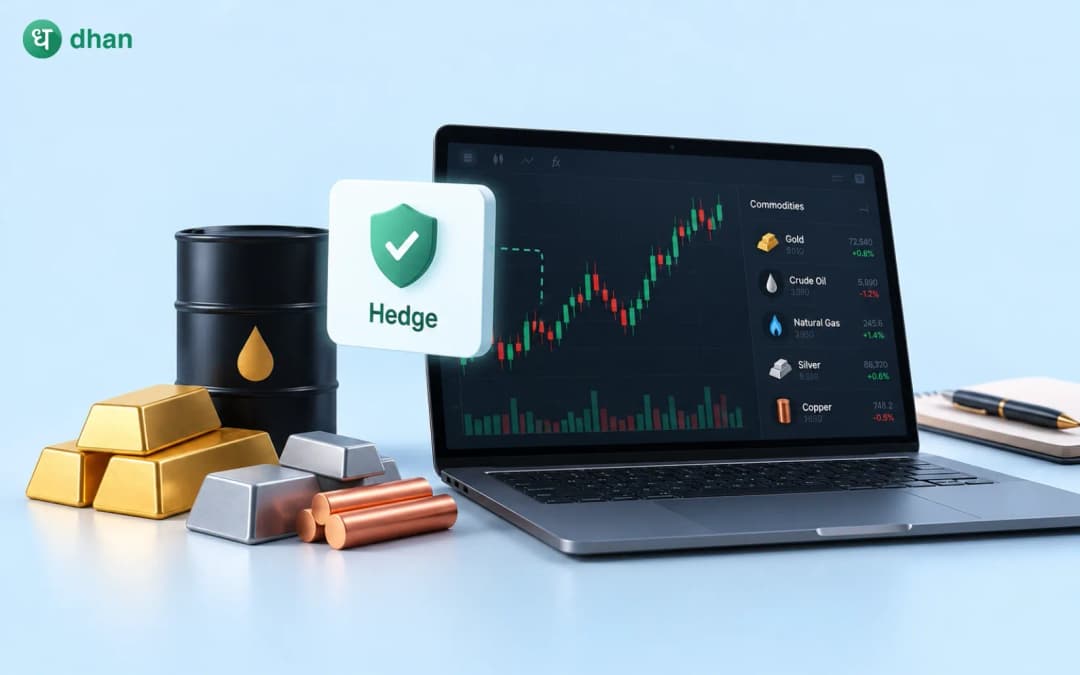
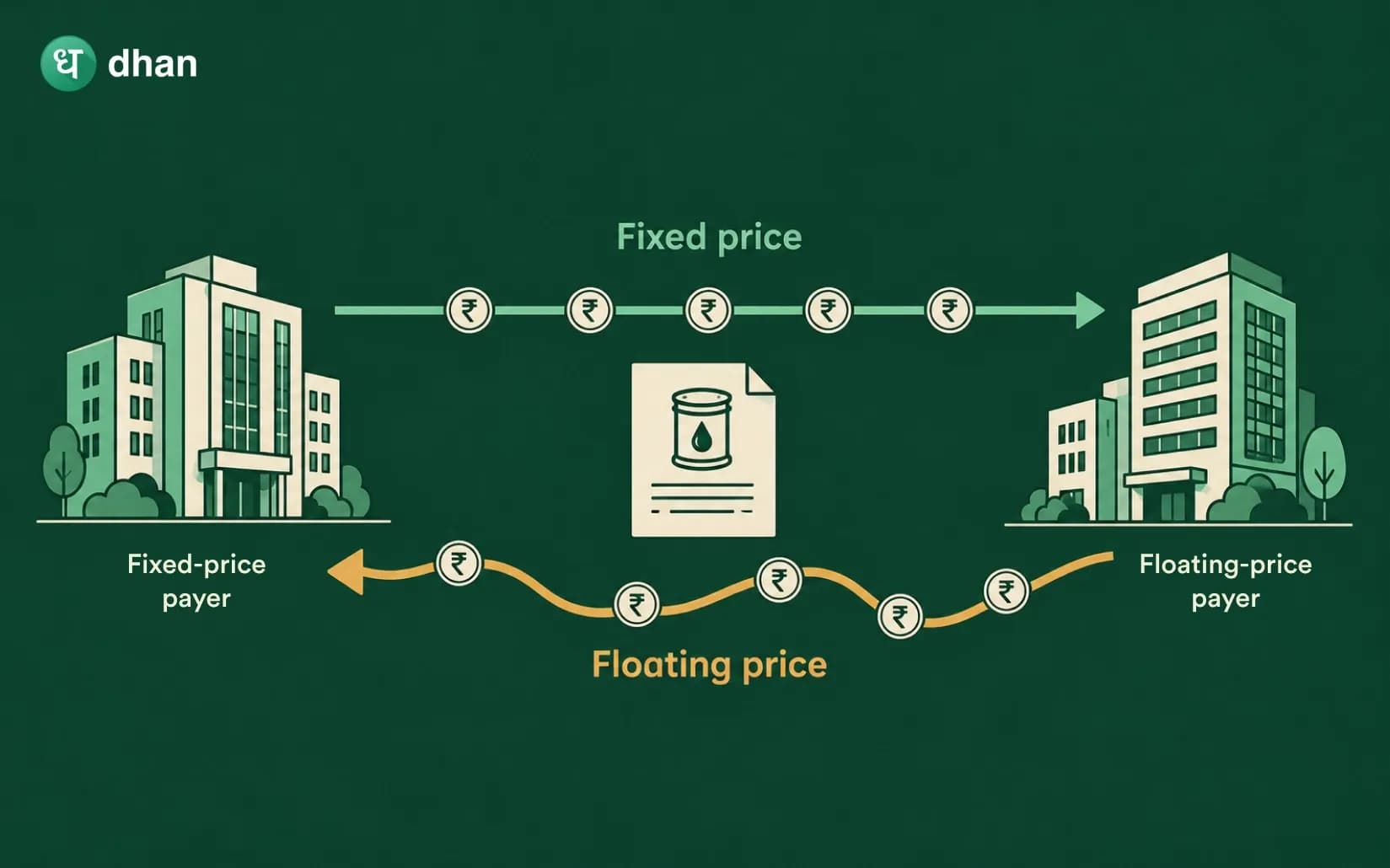
Commodity hedging helps address these uncertainties. It involves taking a position in a financial instrument to offset some or all of the potential impact of price movements in a physical commodity. Depending on the exposure and instrument, a hedge can help establish a purchase or selling price, protect a profit margin or make future cash flows more predictable.
Hedging is used by businesses with direct commodity exposure as well as market participants who trade commodity derivatives. However, the purpose of a hedge is different from that of a speculative trade. A hedge is designed to manage an existing or expected risk, whereas speculation involves taking a position to benefit from an anticipated price movement.
What is commodity hedging?
Commodity hedging is a risk management technique used to reduce the financial impact of changes in commodity prices. It involves taking a counterbalance position in a derivative like a futures or options contract, while holding or expecting to hold an exposure to the physical commodity.
A derivative is a financial contract whose value depends on an underlying asset or benchmark. In commodity markets, the underlying asset may be crude oil, natural gas, gold, silver, copper, wheat or another commodity.
For example, a company that expects to purchase copper in three months may buy copper futures. If copper prices rise, the higher cost of purchasing the physical metal may be partly offset by a gain on the futures position. If prices fall, the company may benefit from cheaper physical copper but incur a loss on the futures position.
The overall result depends on the relationship between the physical price and the derivative price, the contract specifications, transaction costs and the timing of the transactions.
Who uses commodity hedging?
Commodity hedging is relevant to different participants across the supply chain.
- Producers: Farmers, mining companies and oil producers may hedge expected production to reduce the risk of selling their output at lower prices.
- Manufacturers: Businesses that use metals, energy or agricultural products as raw materials may hedge expected purchases to manage input costs.
- Importers and exporters: Companies buying or selling commodities across borders may use commodity derivatives alongside currency risk management to address different sources of uncertainty.
- Commodity traders: Traders who hold physical inventory or have contractual buying and selling obligations may hedge price exposure while managing their supply commitments.
- Investors and speculators: These participants may trade commodity derivatives to express a market view. Such positions are not necessarily hedges because they may not offset an existing physical exposure.
How does commodity hedging work?
Commodity hedging generally follows a straightforward process: identify the exposure, choose a suitable instrument, establish the hedge and monitor it until the underlying transaction is completed.
Identify the price risk
The first step is to determine which commodity is involved, how much will be bought or sold, and when the transaction is expected to occur.
For example, a food manufacturer may need 10 tonnes of a particular edible oil in two months. The business faces a risk if the purchase price rises before the order is fulfilled.
Select a hedging instrument
The business then chooses a suitable instrument. Futures contracts can help establish a price level, while options can provide protection against certain unfavourable movements without requiring the holder to exercise the contract.
The choice depends on the level of protection required, the cost of the hedge, contract availability and the business's ability to manage margin requirements.
Take an offsetting position
A business exposed to rising purchase prices may buy futures, while a producer exposed to falling selling prices may sell futures. An options-based hedge may use a different position depending on whether the objective is to protect against a price increase or decrease.
Monitor the hedge
Commodity prices, expected production, purchase requirements and contract values can change. A business should review whether its hedge still matches its exposure, especially if the expected quantity or delivery date changes.
Futures positions may also require margin payments as prices move. These cash-flow requirements need to be considered even when the hedge is expected to offset losses on the physical transaction.
Close or settle the position
Once the actual buy or sell goes through, the hedger wraps up or settles the derivative contract. The overall outcome of both sides determines how well the strategy worked.
Common commodity hedging strategies
The choice of strategy depends on whether the hedger needs to buy or sell a commodity and how much price certainty is required.
Futures hedging
Futures contracts are standardised, exchange-traded agreements to purchase or sell a specified quantity of a commodity at a set price. Market participants utilise these instruments to hedge against physical price risk.
For example, consider a producer or buyer with upcoming exposure, such as a manufacturer planning an aluminium purchase in three months:
- If market prices rise: Gains realised on the long futures contract can help offset the increased cost of purchasing the physical metal.
- If market prices drop: The physical input can be acquired at a lower cost, balancing out losses sustained on the futures position.
Futures are useful when a business wants relatively direct price protection and can manage margin requirements.
Options hedging
A commodity option gives its buyer the right, but not the obligation, to buy or sell an underlying asset at a specified price, subject to the contract terms. The buyer generally pays a premium for this right.
To protect against potential price increases, a gold importer might purchase a call option.
- If gold prices rise: The option gains value, and it will help offset the higher purchase cost.
- If Gold prices fall: The importer may let the option expire and purchase gold at the lower market price.
Options can offer flexibility because the buyer is not obligated to exercise the option. However, the premium is a cost, and the option may expire without value.
Forward contracts
A forward contract is a private agreement between two parties to sell or buy a commodity at an agreed price on a future date. Unlike exchange-traded futures, forwards can often be customised to match the quantity, quality and timing of a business's requirements.
For example, an exporter expecting to sell a fixed quantity of a commodity may negotiate a forward selling price with a buyer. This can make expected revenue more predictable.
Cross hedging
Sometimes a suitable derivative for the exact commodity is unavailable or lacks sufficient liquidity. In such cases, a hedger may use a related commodity contract to offset part of the price risk. This is known as cross hedging.
For example, a business exposed to one grade of a metal might use a futures contract linked to a closely related grade. The two prices may move in a similar direction, but they will not necessarily move by the same amount.
Advantages of commodity hedging
Advantages of commodity hedging are as follows:
- A manufacturer can use futures or forwards to reduce uncertainty around the price of a future raw-material purchase. This makes budgeting and pricing decisions easier, although the final cost may still differ from the target.
- A farmer or mining company can hedge expected output against falling commodity prices. This may help the business plan around a more predictable revenue level, provided the hedge matches the quantity eventually sold.
- An options buyer can obtain protection against an unfavourable move while retaining some benefit from a favourable move in the physical market.
- Businesses with large commodity exposures can use hedging to make cash-flow estimates less sensitive to market fluctuations.
Disadvantages and risks of commodity hedging
The limitations and risks associated with commodity hedging are as follows:
- The price of the physical commodity may not move in perfect unison with the price of the derivative. Differences in grade, location, delivery date or market conditions can leave part of the original exposure unhedged.
- Futures positions may require additional margin if prices move against them. Although a hedge protects the business economically, the fund margin calls can create short-term cash-flow pressure.
- A business may produce less than expected, need a different quantity or change its purchase date. If the derivative position is larger than the actual exposure, it can create an additional risk rather than simply offsetting the original one.
To sum up
Commodity hedging helps businesses manage the uncertainty created by fluctuating prices of raw materials, energy products, metals and agricultural commodities. Futures, options and forward contracts offer different ways to address this risk, depending on the nature of the exposure and the level of flexibility required.
A good hedge will make costs or revenues more predictable, but it cannot eliminate all the risk. Basis differences, contract mismatches, margin requirements and transaction costs all affect the final outcome.
FAQs
What is commodity hedging?
Commodity hedging means taking a financial position to reduce the impact of price changes in a commodity that a business expects to buy or sell.
What are the main types of commodity hedging?
Common methods include futures hedging, options hedging, forward contracts and cross hedging. The appropriate method depends on the commodity, the exposure, the required level of price certainty and the costs involved.
Is commodity hedging profitable?
Commodity hedging is not primarily intended to generate profits from market movements. Its purpose is to reduce the financial impact of an unfavourable price change.
What is the difference between commodity hedging and speculation?
Hedging involves taking an offsetting position to manage an existing or expected exposure. Speculation involves taking a position to benefit from anticipated price movements.
Is commodity hedging risk-free?
No. Hedging can reduce exposure to certain price movements, but it may leave basis risk, liquidity risk, margin pressure, counterparty risk and contract mismatch.