What is Margin Pledge in Stock Market - How it Works?




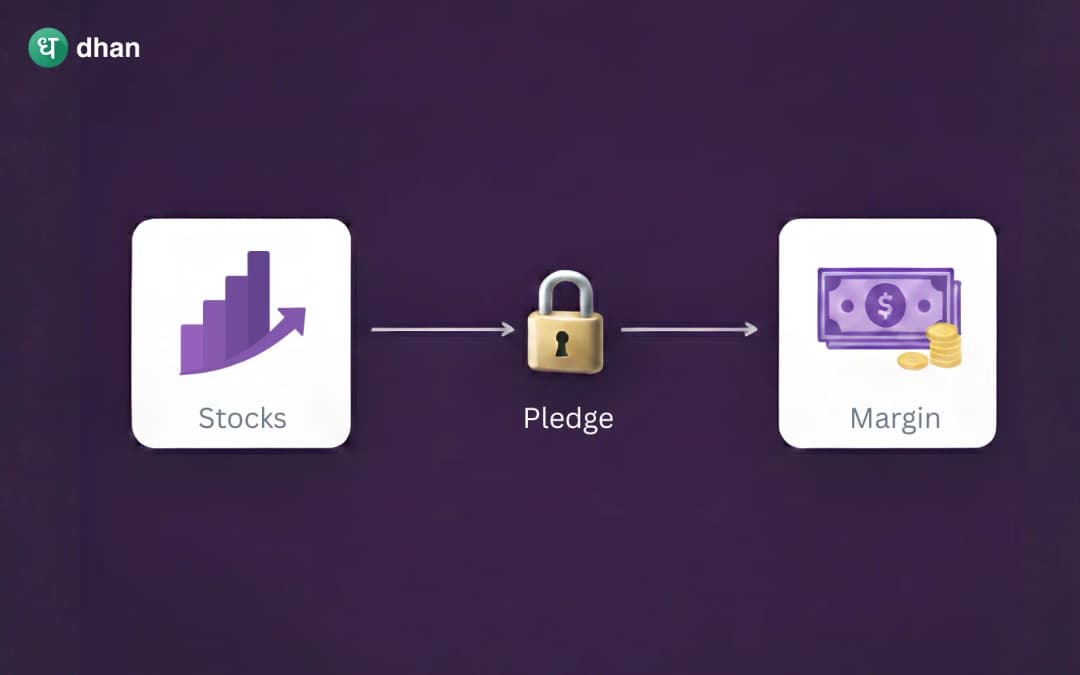


So to grab that opportunity, you pledge the existing stocks instead of selling your investment. This is known as a margin pledge.
Investors use their existing shares as collateral for obtaining margin from their broker through a margin pledge. This is introduced to protect investors while enabling better capital efficiency with a regulated, transparent, and safer system.
Let’s understand what is margin pledge in stock market, how it works, its benefits, and risks.
Understanding margin pledge in the stock market
Margin pledge is a facility that allows investors to pledge their shares as collateral in exchange for trading margin from their broker. In simple terms, you don’t sell your shares but temporarily pledge them to get margin for trading. It is like getting a gold loan. You don’t sell the gold, but you pledge it with a bank and get some cash.
When you pledge the shares, the ownership of the shares remains with you, but they will be marked as ‘Pledged’ in your demat account. This system is regulated by the Securities and Exchange Board of India (SEBI) to ensure transparency and investor protection.
The received margin you can use for intraday trading, futures and options trading, or margin trading.
Types of margin pledge usage
The margin received from the broker can be used for different trading purposes as given below.
- You can use the given margin for intraday trading.
- Margin pledge is widely used for selling options and trading futures.
- Some brokers allow Margin Trading Facility (MTF), through which you can buy stocks using pledged collateral.
Why was margin pledge introduced?
Now that you know what is margin pledge in stock market, let’s get in more detail. Earlier, brokers were using a system called Power of Attorney (POA). In this system, brokers had broader control over clients' securities, due to which there were chances of misuse. SEBI introduced the margin pledge mechanism in 2020 to tackle this issue and improve transparency.
The key objectives of margin pledge are listed below:
- Prevent misuse of client securities
- Increase transparency
- Ensure investor approval via OTP
- Protect client holdings
In the current system, shares cannot be moved without specific approval from the investor. This has made the margin system safer and investor-friendly.
How margin pledge works
All modern platforms, including Dhan, offer a user-friendly process for pledging the shares. Below is a step-by-step process for margin pledge.
- Log in to your broker’s platform and select the share you want to pledge. Submit the pledge request.
- After the successful submission of the pledge request, you will receive an OTP on your registered mobile number. Confirm the pledge request by entering the OTP. This step ensures that the broker cannot pledge your shares without your consent.
- The share you selected for pledging will be marked as pledged. They cannot be sold unless you unpledge them.
- Once your shares are pledged, the broker provides margin after applying a haircut. Haircut is the percentage reduction applied to the value of pledged shares to account for market risk.
For example,
- You pledge shares worth ₹1,00,000
- Haircut = 20%
- Margin available = ₹80,000
The haircut depends on various factors, like stock volatility, liquidity, market risk, and exchange guidelines. Highly volatile stocks may have higher haircuts (30–50%), while stable large-cap stocks may have lower haircuts (15–20%).
Charges Involved in Margin Pledge
Margin pledging is not free. Brokers charge a certain amount in exchange for the margin provided. These charges vary from broker to broker. Key components of these charges include:
- Pledge creation charges - Dhan charges ₹15 per ISIN per request. However, it varies from broker to broker.
- Unpledge charges - When you remove the pledge, similar charges apply.
- Some brokers may charge additional fees. Always check your broker’s pricing structure before pledging.
Benefits & risks of margin pledge
Although margin pledge provides additional trading margin, it has its own benefits and risks associated with it. We will explore some of its key benefits and risks.
Benefits of margin pledge
- One of the key benefit margin pledge offers is that you don’t need to sell your long-term investments in order to get additional margin. You retain ownership of the stocks.
- Even when you pledge the stocks, you can still receive the dividends and corporate benefits.
- Through these idle investments, you can generate additional trading margin, which results in better capital efficiency.
- Using pledged shares is often cheaper than taking a short-term loan.
- Since you don’t sell the shares, you avoid capital gain tax.
Risks of margin pledge
- If the market falls sharply, the value of pledged shares drops. If collateral value reduces significantly, you may receive a margin call.
- If you fail to maintain the required margin, the broker can sell your pledged shares.
- Easy margin availability may tempt traders to take excessive risk.
- In volatile markets, the haircut may increase, or the margin requirement may change.
Margin pledge vs selling shares
A simple comparison between margin pledge and selling shares is given below.
So, when to choose a margin pledge and when to sell the shares? For this, you can take a simple approach. When you believe in long-term holdings, or you need a temporary trading margin, or when you want to save tax, you can avail the margin pledge facility.
But if you don’t see future gains in the stocks, or you want permanent liquidity, or you want to reduce portfolio exposure, you may sell the shares.
Conclusion
Traders can use their current holdings as collateral without having to sell them by using a contemporary, regulated facility called a margin pledge. It improves capital efficiency and helps traders deploy funds more strategically.
However, like all leverage tools, it comes with risk. Understanding haircuts, margin requirements, and volatility impact is crucial before using this facility.
Used wisely, margin pledge can be a smart way to unlock the potential of your portfolio - without giving up ownership of your investments.
FAQs
What is a margin pledge in simple words?
Margin pledge is a facility that allows you to use your shares as collateral to get trading margin from your broker without selling them.
Does ownership of shares change after pledging?
No. After pledging, the share ownership of the shares remains with you. The shares are only marked as pledged in your demat account.
Is the margin pledge safe?
Yes. The system is regulated by the Securities and Exchange Board of India (SEBI) and requires OTP-based authorisation from the investor.
What is a haircut in a margin pledge?
Haircut is the percentage deduction applied to the value of pledged shares to account for market risk. For example, if the haircut is 20%, you will receive ₹80 margin for every ₹100 worth of pledged shares.
Are there charges for margin pledge?
Yes. Brokers usually charge pledge and unpledge fees per ISIN. Charges vary depending on the broker.
👉🏻 List of Stocks with margin pledge benefit
👉🏻 List of Mutual Funds with margin pledge benefit
👉🏻 List of ETFs and Bonds with margin pledge benefit
👉🏻 List of G-Sec and TBs with margin pledge benefit