Bullish Abandoned Baby





Key takeaways
- The bullish abandoned baby is a three-candlestick reversal pattern that often signals a potential shift from a downtrend to an uptrend.
- The pattern is considered stronger when it appears near an important support level and is accompanied by higher trading volume or other technical confirmation.
- Although it is a reliable reversal signal, traders should wait for confirmation instead of entering a trade immediately after the pattern forms.
Spotting a potential trend reversal at the right time is one of the most valuable skills a trader can develop. While no chart pattern can predict future price movements with complete certainty, certain candlestick formations provide early clues that selling pressure may be fading and buyers are gradually taking control.
The bullish abandoned baby is one such pattern. Although it appears less frequently than patterns like the bullish engulfing or morning star, many technical analysts consider it a strong bullish reversal signal because it reflects a significant shift in market sentiment.
The pattern develops after a sustained downtrend and consists of three candles that together indicate exhaustion among sellers and growing confidence among buyers. The pattern is called ‘abandoned’ because the middle candle has a gap between the previous candle and the next candle.
For traders, understanding how the bullish abandoned baby forms, what it represents, and how to confirm the signal can help improve decision-making while avoiding trades based solely on assumptions.
What is a Bullish Abandoned Baby?
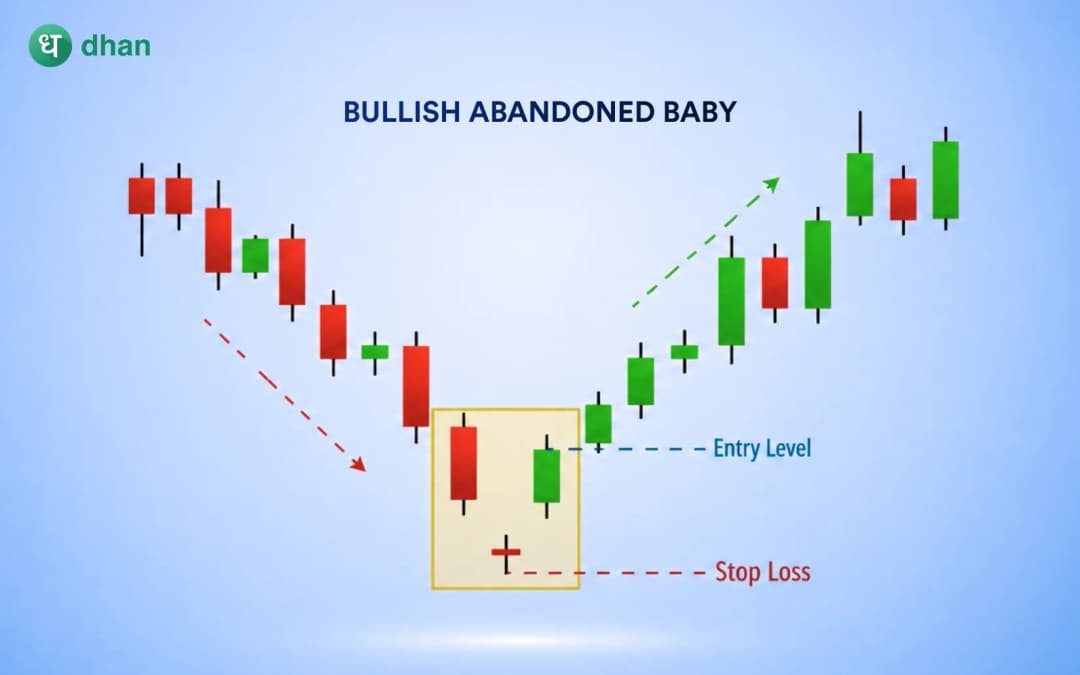
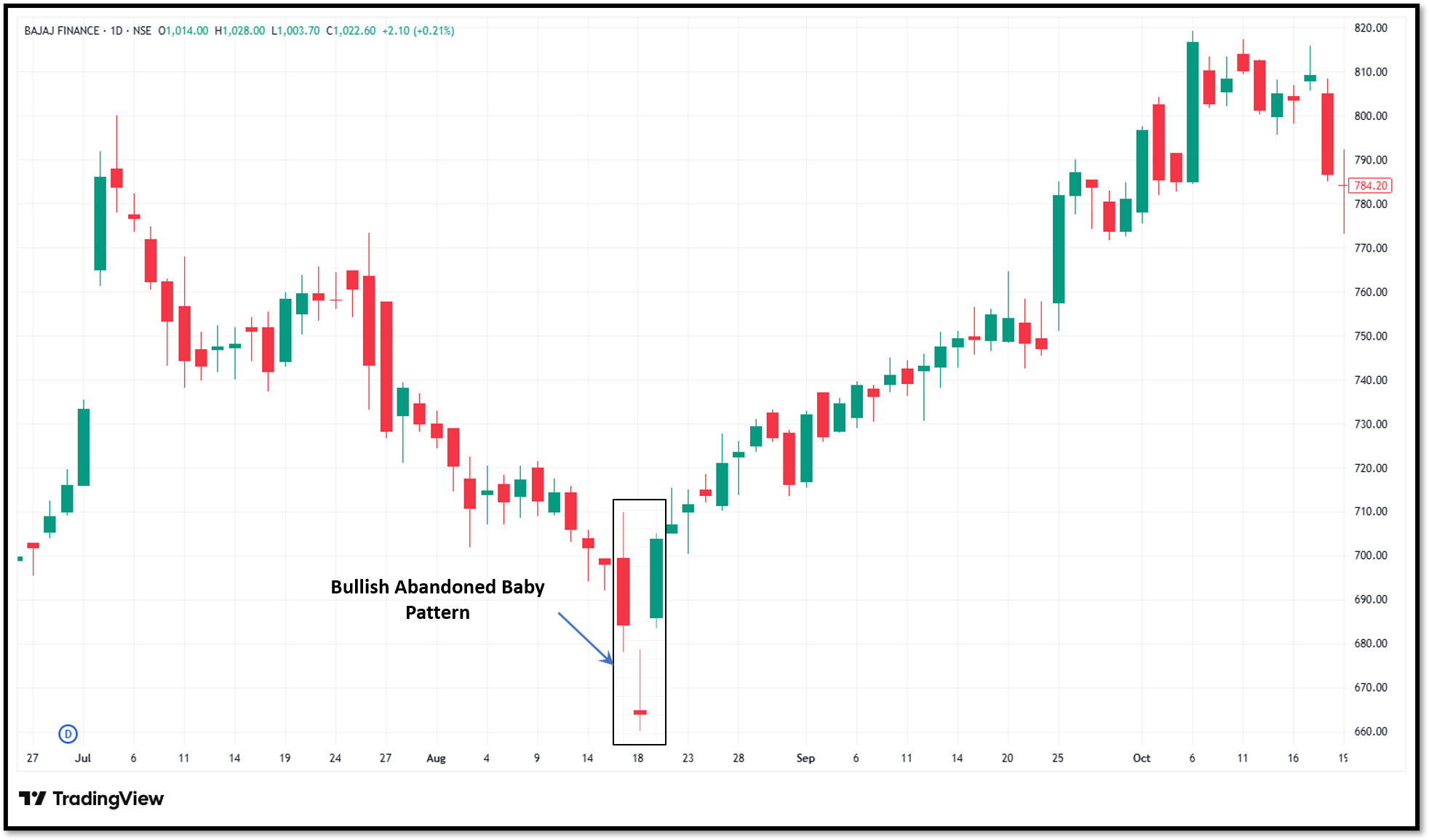
A bullish abandoned baby is a three-candlestick reversal pattern that appears after a prolonged downtrend. It suggests that bearish momentum is weakening and that buyers may be preparing to reverse the prevailing trend.
The pattern consists of three distinct candles:
- A big bearish candle that reflects strong selling pressure.
- A Doji candle that gaps below the first candle and represents market indecision.
- A strong bullish candle that gaps above the Doji and closes well into the body of the first bearish candle.
What sets the bullish abandoned baby apart from other reversal patterns is the gaps on either side of the Doji. These gaps indicate a sudden change in market sentiment.
Psychology behind the Bullish Abandoned Baby Pattern
Every candlestick pattern represents a struggle between buyers and sellers. The bullish abandoned baby reflects a gradual transition in market control.
The first candle shows that sellers remain firmly in control. Strong bearish momentum pushes prices lower, reinforcing the existing downtrend. At this stage, most market participants continue to expect further declines.
The second candle, which is a Doji, signals uncertainty. Although the market opens with a downward gap, neither buyers nor sellers manage to establish dominance during the session. The small real body of the Doji suggests that selling pressure is beginning to lose strength.
The final bullish candle shows the change in the market sentiment. Buyers enter the market with enough conviction to create an upward gap from the Doji, followed by sustained buying throughout the trading session. This sudden shift in momentum often indicates that market sentiment has changed from bearish to bullish.
The transition from strong selling to indecision and finally to aggressive buying is what gives the bullish abandoned baby its reputation as a reliable reversal pattern.
Structure of the Bullish Abandoned Baby Pattern
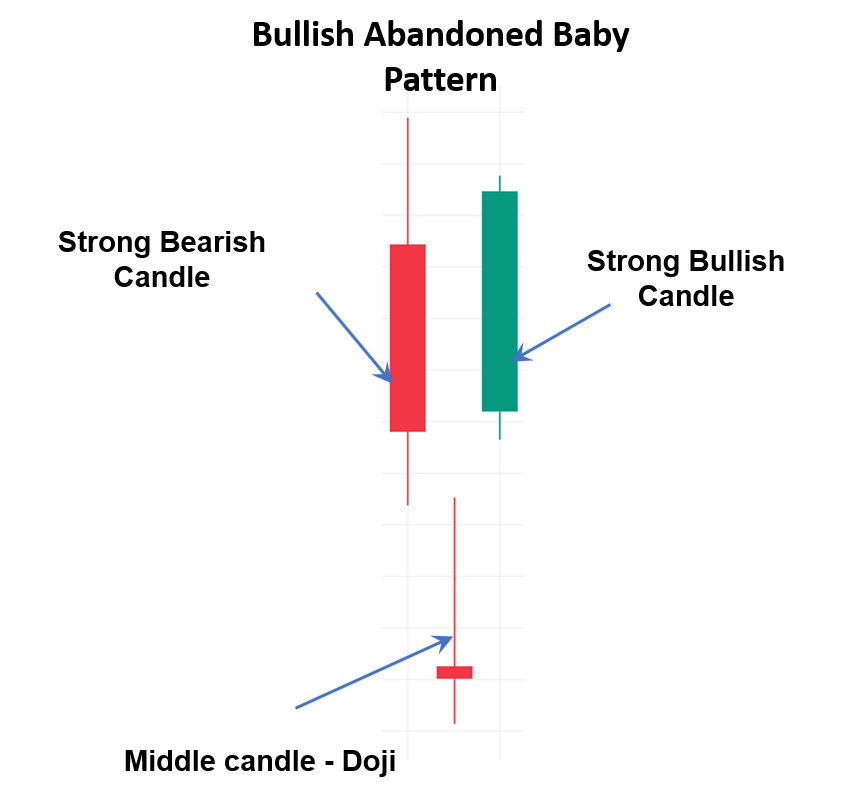
The bullish abandoned baby follows a clearly defined three-candle structure. Each candle plays an important role in confirming the potential reversal.
First candle
The first candle is a long bearish candlestick that continues the existing downtrend. It demonstrates that sellers are still dominating the market and are successfully pushing prices lower. Ideally, this candle should have a relatively large real body, reflecting strong bearish momentum.
Second candle
The second candle is a Doji that opens below the closing price of the first candle, creating a downward gap.
A Doji forms when the opening and closing prices are nearly the same, indicating indecision between buyers and sellers. The market pauses after an extended decline, suggesting that bearish momentum may be weakening.
Third candle
The final candle is a strong bullish candlestick that opens above the Doji, creating another price gap. As buying activity increases, the candle closes well into the body of the first bearish candle. A stronger close generally reflects greater buying conviction and increases confidence in the reversal.
How to identify a Bullish Abandoned Baby Pattern
Identifying the pattern correctly is more important, as it may increase the risk of false identification. Traders usually verify several conditions before considering it a valid bullish abandoned baby.
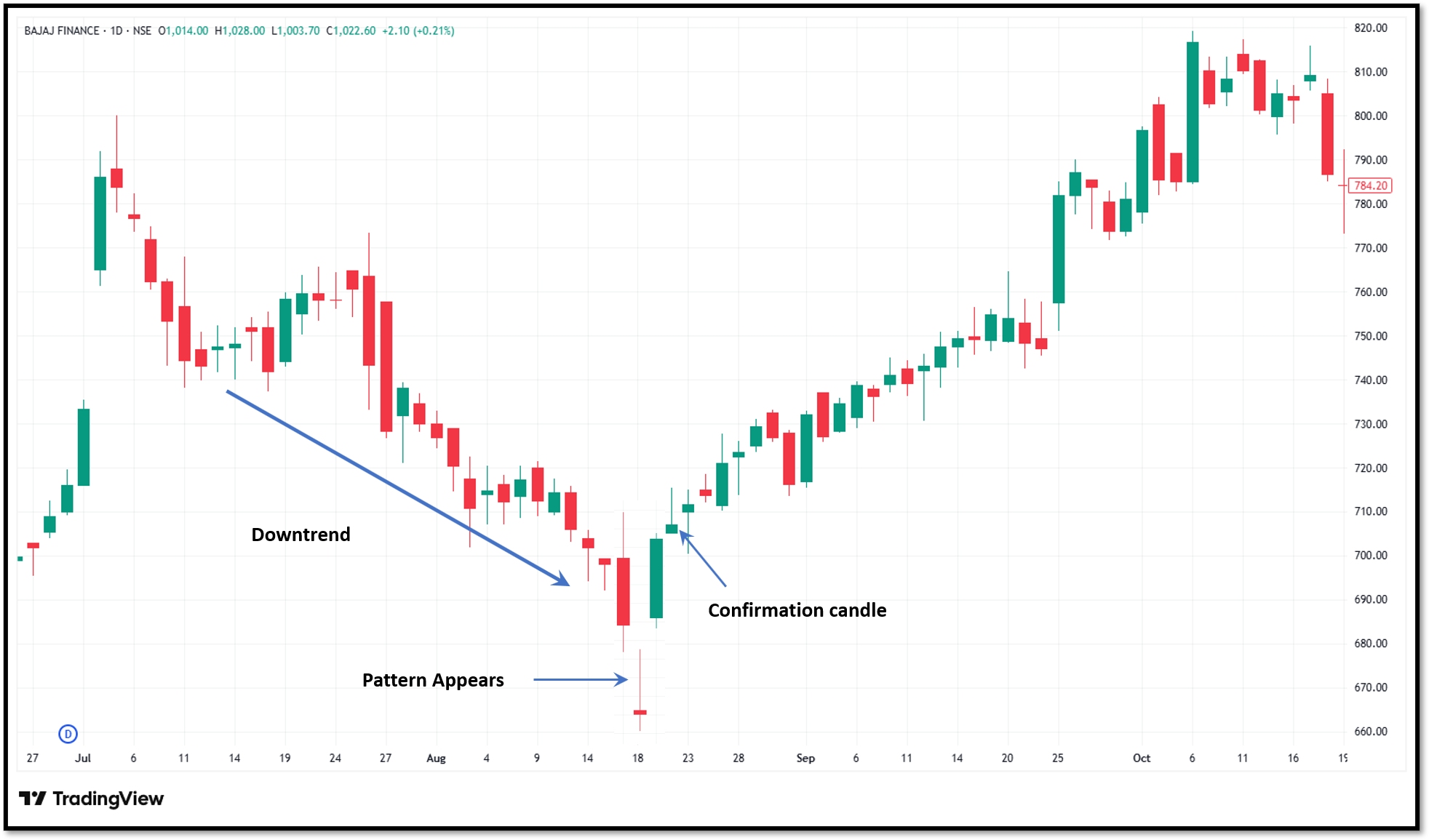
Confirm an existing downtrend
After a major price drop, the pattern should emerge. A sustained downtrend means that the sellers are in control of the market. Reversal patterns are more reliable when they occur after a trend has been established.
Strong bearish candle
The first candle should reflect high selling pressure. A relatively large bearish body suggests that market participants remain pessimistic before the reversal begins.
Doji with a downward gap
The middle candle should be a Doji or a candle with an extremely small real body. More importantly, it should gap below the first bearish candle. This gap creates separation between the candles and is one of the defining characteristics of the abandoned baby pattern.
A bullish gap
The third candle should open above the Doji with another gap. This upward gap shows that buyers have regained control of the market. The stronger the bullish candle, the more convincing the reversal signal becomes.
Wait for confirmation
Even when all three candles satisfy the pattern requirements, experienced traders rarely enter a trade immediately. The traders confirm the pattern by looking at one of the following:
- Increased trading volume
- A breakout above nearby resistance
- A bullish momentum crossover
- Positive RSI divergence
- Support from a longer-term trendline
How to trade the Bullish Abandoned Baby Pattern
Once the bullish abandoned baby pattern is confirmed, traders focus on planning the trade instead of reacting emotionally to the reversal.
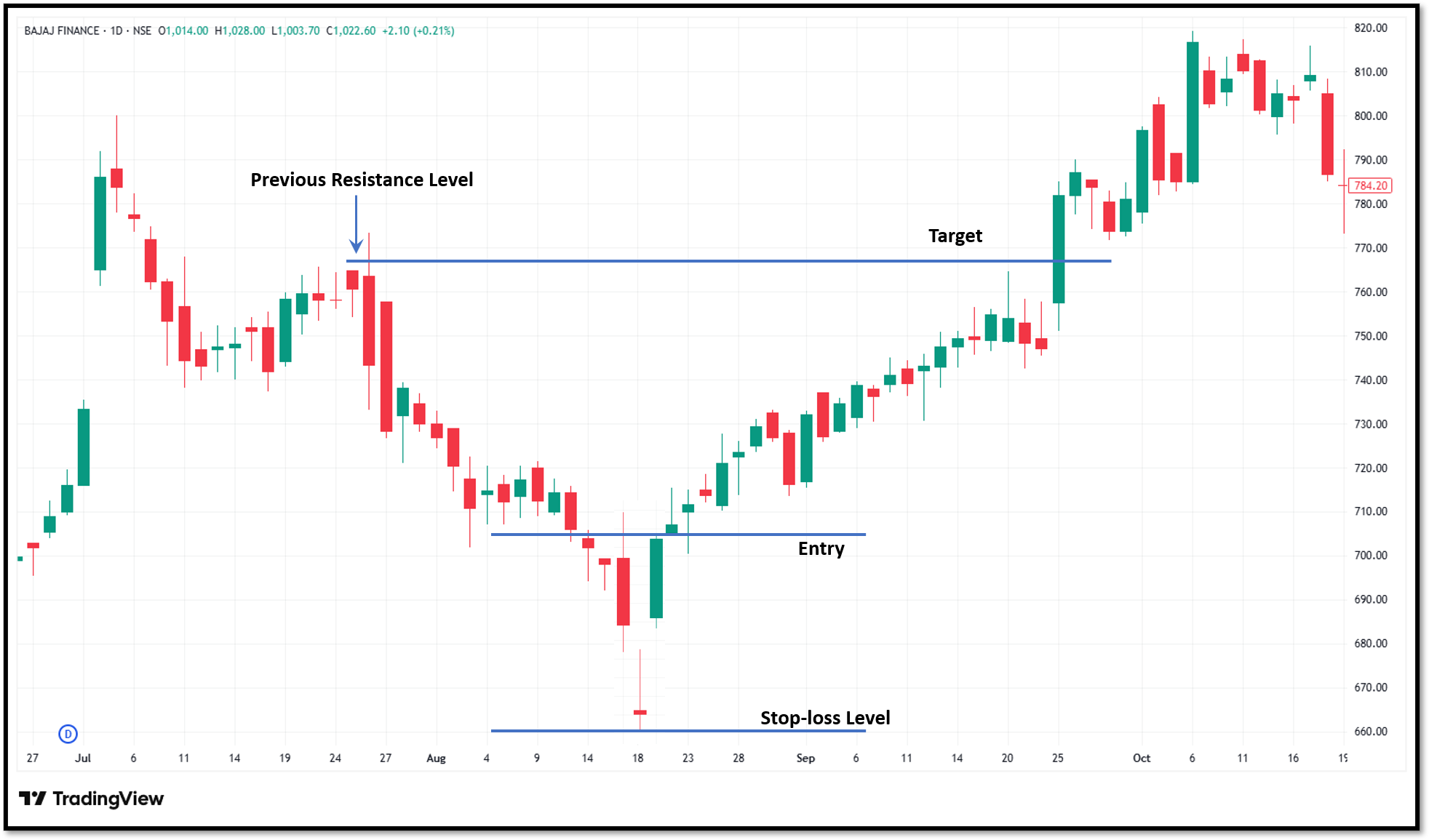
Traders usually enter a long position only after the third bullish candle closes or when the price moves above its high in the next session. It is important to wait for confirmation before acting because it allows us to see whether buyers are really in control or just a reaction in a market that has just bounced temporarily.
The stop-loss is often placed below the low of the Doji or below the lowest point of the entire pattern. If the price falls below this level, it may indicate that the bullish reversal has failed.
For profit targets, traders usually look at the next significant resistance level, previous swing highs, or use a predefined risk-to-reward ratio such as 1:2 or 1:3. Some traders also trail their stop-loss as the price moves higher to lock in profits while allowing the trend to continue.
Traders usually do not trade the pattern alone. They combine it with support levels, volume analysis, and momentum indicators, which increases pattern reliability.
Advantages of Bullish Abandoned Baby
The pattern has the following advantages:
- The pattern provides an early signal for potential trend reversal. Early identification of the reversal improves the overall risk-to-reward ratio.
- The pattern shows a clear shift in the market sentiment. This makes it easier for traders to understand the psychology driving the reversal.
- The pattern works well with other technical analysis tools like RSI, MACD and moving averages. These tools help increase the reliability of the pattern.
- The pattern can be applied across multiple markets, such as stocks, Forex, commodities, etc.
Disadvantages of the Bullish Abandoned Baby
Along with advantages, the pattern has the following limitations:
- The bullish abandoned baby pattern is comparatively less frequently formed. Also, as it requires specific price gaps on both sides of the Doji, genuine bullish abandoned baby patterns are uncommon.
- The pattern is also prone to false signals. It does not guarantee a successful reversal. Market news, unexpected events, or strong bearish sentiment can invalidate the pattern.
- It is observed that it is less effective in continuously traded markets like forex and crypto.
- The pattern requires confirmation before trading. Trading the pattern without confirmation can increase the risk.
To wrap up
The bullish abandoned baby is a reversal candlestick pattern that highlights a potential shift from bearish sentiment to bullish momentum. The unique three-candle formation, especially the gap around the Doji, indicates a shift from intense selling pressure to increasing buying interest.
However, no candlestick pattern should be viewed as a standalone trading signal. The most effective approach is to combine the bullish abandoned baby with support and resistance analysis, trading volume, momentum indicators, and sound risk management.
FAQs
What is a bullish abandoned baby pattern?
A bullish abandoned baby is a three-candlestick bullish reversal pattern that usually forms after a downtrend. It indicates that selling pressure may be weakening, and buyers could be taking control of the market.
What makes the bullish abandoned baby different from the Morning Star?
The biggest difference: price gaps. The bullish abandoned baby requires gaps before and after the Doji, but not the Morning Star.
Where should traders place the stop-loss?
Traders usually place the stop-loss below the low of the Doji or below the lowest point of the entire pattern to manage downside risk.
Which indicators work best with the bullish abandoned baby?
Common confirmation tools include RSI, MACD, moving averages, trading volume, and support and resistance analysis.
Can beginners use the bullish abandoned baby pattern?
Yes. Beginners can use the pattern, but they should use it with confirmation signals and proper risk management, not just the candlestick formation itself.