Calendar Spread Option Strategy explained




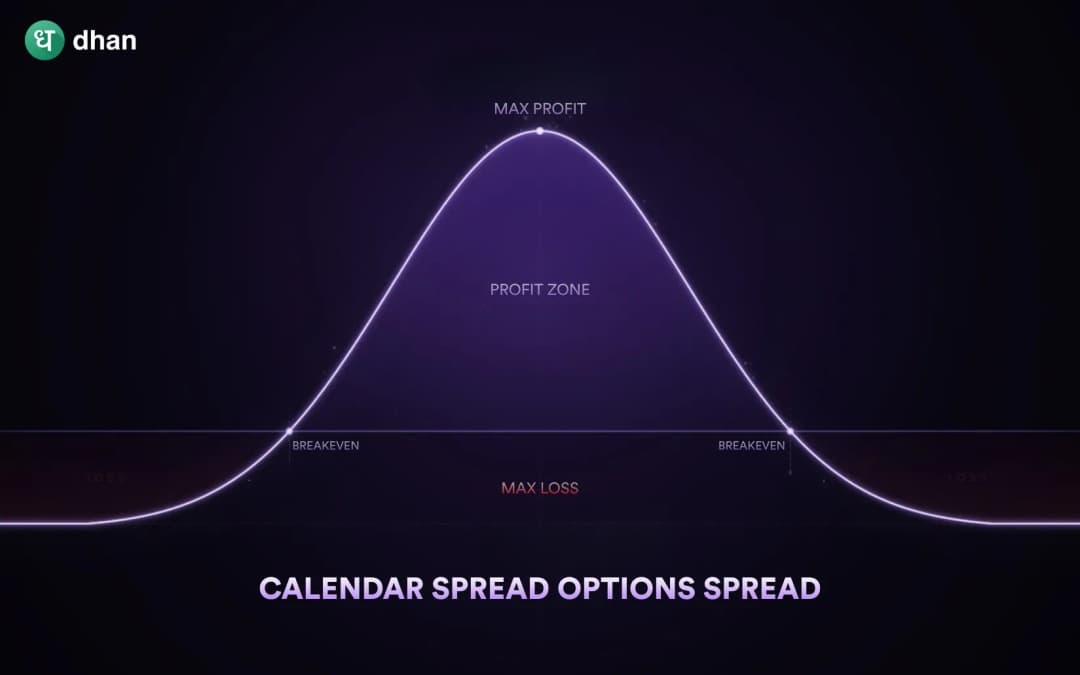



Markets don’t always move in a clear direction. More often than not, it drifts within a range until a significant event stirs it to action. While some might find it easier to capture large market moves, it’s important to remember that strong trends are rare, and you might end up waiting for long periods before making any move. This is why it’s vital to learn a few strategies for sideways markets. One of which is the calendar spread option strategy, which we will cover in more detail in this blog.
What is a calendar spread option strategy?
A calendar spread is an options trading strategy designed to be implemented in sideways, stable markets. This strategy involves two options with the same strike price but different expiry dates.
- You sell a near-term option
- You buy a long-term option
Both options are either calls or puts, and not a mix.
The idea is simple: you are betting that the option you sell will lose value faster than the option you buy.
How does the Calendar Spread Work?
To understand how the calendar spread option strategy works, you must first understand the concept of time decay. Also called theta, time decay is the rate at which the value of options declines as the date of expiration approaches.
The decrease in value accelerates the closer you get to expiry, because there’s less time for a trader to earn a profit from the option. So theoretically, an option that expires in a few months will have more value than an option expiring in less than 30 days.
Mechanics of Calendar Spread
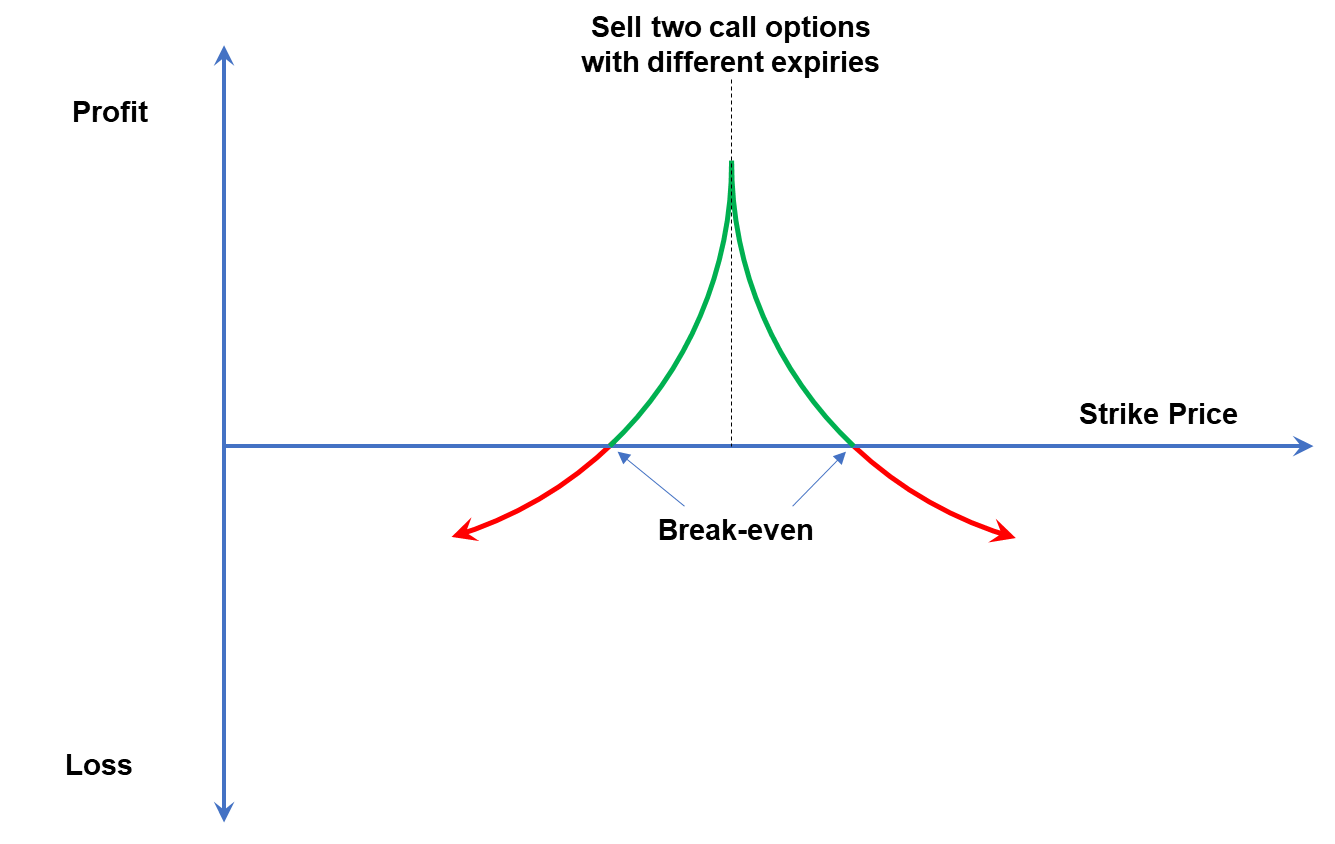
- The short-term option you sold loses value quickly as expiry approaches. You can then buy it back and take the net premium as profit, or hope it expires worthless and pocket the entire premium.
- Long-term options lose value more slowly, retaining your position’s worth and giving you continued exposure. You can continue to sell more short-term options against it, creating repeated income opportunities.
Understanding the calendar spread with an example
Let’s say Nifty is trading at 26,000. You expect it to stay at or around this level for the next two weeks.
Here’s how you can set up the calendar spread:
- Sell 26,000 call expiring this week
- Buy 26,000 call expiring next month
As you can see, both options have the same strike price, but different expiries.
How does it play out?
If Nifty stays close to 26,000:
Your short-term call loses value rapidly because why would someone pay a premium to buy at 26,000 when they can buy it directly themselves?
Also, with the expiry approaching, there isn’t much time for further movement. So, you can earn up to your entire premium if the option closes near 26,000.
The monthly call will continue to retain value because there is still room for the index to move. You can close this option as well to remain in profit or continue selling more short-term calls against it as long as the long-term call still has value. This is why calendar spreads are considered an income-generating strategy and not just a one-time trade.
Common mistakes traders make when using the calendar spread
Calendar spreads are seemingly simple on paper, but losses can pile up when traders make these mistakes.
Entering before a major event
RBI policy announcements, inflation data, or global news events can sharply increase volatility. And when volatility spikes, option prices can behave differently. Short-term options may not decay as expected.
Wrong strike price
Selecting strike prices far from the current price may cost less premium, but is also riskier, as the index may not move as much in the short time frame. Considering this is a sideways market strategy, choosing a large spread works against the strategy.
Holding a position for too long
Waiting until expiry to squeeze out every last bit of the premium can backfire with sudden volatility and late price movements. Smart traders close the position when they recover up to 60-70% of the short-term’s value.
Managing expectation is crucial to the success of the calendar spread, psychologically speaking. Do not expect this to yield a windfall. This strategy is meant to generate steady, time-based income, and not for capturing big market moves.
Who should use the calendar spread option strategy?
The calendar spread option strategy works best for those traders who prefer defined risk. Losses are limited by the long-term option, making it a safer alternative to naked option selling.
Furthermore, income-focused traders with patience will find this strategy useful. Consistent and structured selling of short-term options against a long-term position suits income-focused traders more than those looking for a big one-time payout.
This strategy, while it can be understood by beginners, is more suited for intermediate-level traders who understand the concept of options and time decay well.
To wrap up
If you want a structured, low-risk strategy to generate steady income in sideways markets, the calendar spread is a good place to start. You can make repeated quiet moves in a quiet market and keep your scoreboard ticking. Easy to understand and implement once you get the hang of options, time decay, and volatility, the calendar spread is a useful tool to have in your trading toolkit.
Implement the calendar spread on Dhan’s superfast trading platform. Manage your positions easily in Power Trade Mode and buy options in a single tap with Fast Trade. Explore the feature-rich Dhan trading platform with a free Demat account now.
FAQs
What is the ideal time to enter a calendar spread?
Calendar spreads are usually entered when there are about 15 to 30 days left for the near-term option to expire. This window allows time decay to work efficiently while reducing the risk of sudden price swings.
Can calendar spreads be created using put options instead of calls?
Yes. Calendar spreads can be created using either calls or puts, as long as both options have the same strike price and different expiries. The choice depends on where you expect the market to stay.
How does volatility affect a calendar spread?
Calendar spreads perform best in low or stable volatility conditions. A sudden rise in volatility can increase option premiums and disrupt the expected time decay of the short-term option.
Is it necessary to hold a calendar spread until expiry?
No. Most traders exit the position before expiry once a significant portion of the short-term option’s premium has decayed. Holding till expiry is not mandatory and can increase risk.
Can calendar spreads be adjusted if the market moves?
Yes. Traders can adjust calendar spreads by rolling the short-term option to a different expiry, shifting the strike price, or exiting the position entirely if market conditions change.