What is an ETF?






Key takeaways
- Exchange Traded Funds (ETFs) pool investor capital to invest in a diversified basket of securities such as equities, bonds, or commodities that track a specific underlying index.
- ETFs are listed on stock exchanges like the NSE and BSE, and they can be traded actively during trading hours just like shares.
- ETFs reduce company-specific risk, but they are not risk-free because their performance still depends on the assets or index they track.
As an investor, you may want exposure in the stock market, but you’re unsure about which individual stocks to pick or track daily. On the other hand, you may also be interested in mutual funds. However, you may want more flexibility and look for lower costs. This is the gap where ETFs (exchange-traded funds) fit in seamlessly. In recent years, these funds have gained popularity and are currently one of the fastest-growing investment options. Particularly, young and cost-conscious investors are opting for ETFs.
With ETFs, you enjoy the simplicity of mutual funds, while they can be flexibly traded like stocks. This means investors benefit from diversification and transparency while the pricing is based on real-time.
In this guide, we have comprehensively explained what is ETF, and whether it should be a part of your portfolio. We have also discussed how ETFs work, their benefits, and who should consider investing in this instrument.
What is an ETF?
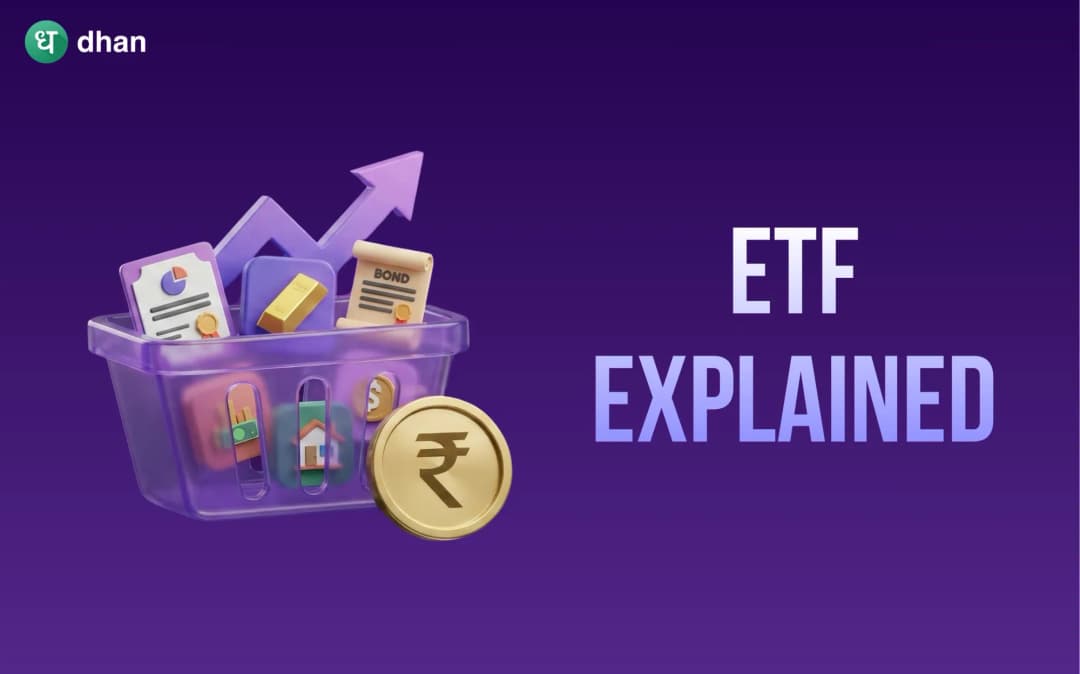
First, let’s understand what is ETF. This is an investment fund that holds a basket of assets, like:
- Stocks
- Bonds
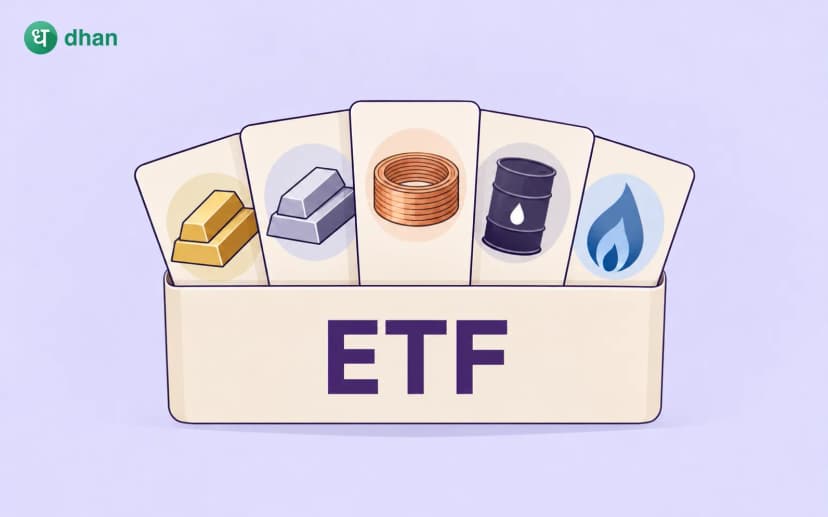
- Commodities
- A mix of the above
ETFs are different from mutual funds since they are listed on stock exchanges. So, you can buy or sell them just like shares.
In India, most ETFs track an index or an asset. For instance, a Nifty 50 ETF holds the same stocks as the Nifty 50 index in the same proportion. So, the value of an ETF moves in sync with the index. With ETFs, investors gain exposure to different securities through a single investment.
How does an ETF work?
Different fund houses have launched their ETFs, and they are responsible for managing these instruments. However, the returns from an ETF are determined by the performance of the underlying asset or index that it tracks.
During market hours, you can buy and sell ETFs in the stock market. Their prices fluctuate like shares, and this is determined by demand and supply. ETFs also have a NAV. It reflects the value of the underlying assets.
The participants in the market play a crucial role in maintaining the liquidity of ETFs. They also ensure that their prices remain close to their NAV. This is the reason ETFs usually trade close to their NAV.
With ETFs, you get the diversification of mutual funds along with the flexibility of stocks.
Types of ETFs investors can choose from
Investors can choose from different forms of ETFs based on their specific goals.
Index ETFs
Index ETFs track indices like Nifty 50, Sensex, or Nifty Next 50 present on NSE India and BSE. If you are looking for passive investing avenues for the long term, index ETFs will be a good choice.
Sector ETFs
As the name suggests, Sector ETFs track specific sectors like banking, IT, or FMCG.
Commodity ETFs
These ETFs track commodities like gold or silver. This gives you a convenient investment avenue without storing the metals physically.
International ETFs
With international ETFs, you gain exposure to global markets and foreign indices.
Debt ETFs
Debt ETFs invest in bonds and fixed-income instruments. Investors looking for income-focused portfolios often choose debt ETFs.
Therefore, there’s a purpose associated with each type of ETF. This makes them suitable for diversified portfolios.
Benefits of investing in ETFs
Now that you already know what is ETF, let’s understand how you can benefit from these investments.
Diversification in a single trade
Through ETFs, you can invest in a basket of securities. Only a single transaction is needed for this kind of investment. So, it eliminates the risk specific to stocks and reduces volatility in your portfolio.
Low cost structure
Most ETFs follow a passive strategy. As a result, their expense ratios are lower compared to actively managed funds. This helps you improve the returns over the long term.
High liquidity and flexibility
You can buy and sell ETFs anytime during market hours since they trade on exchanges. As a result, you retain greater control compared to mutual funds, which settle at the NAV at the end of the day.
Transparency
ETF holdings are disclosed regularly. This ensures investors always remain informed about where their money is invested. This goes a long way in building trust and clarity.
Suitable for multiple strategies
ETFs are ideal for creating wealth for the long term, investing in an SIP style, or tactical allocation. You can even use ETFs for short-term trading.
ETF vs mutual fund vs stocks: A quick comparison
When you compare ETFs to mutual funds, you enjoy several advantages. These include:
- The provision of intraday trading
- Lower costs
- Greater transparency
Mutual funds, on the other hand, are ideal for investors who prefer active management and don’t engage in trading frequently.
Compared to stocks, the key benefit of an ETF is the reduced risk of concentration. When you buy a single stock, you are exposed to risks specific to a company. ETFs, on the other hand, spread your investment across multiple securities to minimise this risk.
Therefore, you can strike a balance with ETFs, with both diversification and flexibility.
Who should consider investing in ETFs?
ETFs are ideal for:
- Beginners looking for a simple exposure to the market without picking stocks actively
- Long-term investors who want to build passive portfolios
- Investors who are cost-sensitive and want to benefit from compounding
- Traders who want exposure to specific sectors
If you want to participate in the market steadily and experience growth with minimal complexity, ETFs are worth considering.
Common misconceptions about ETFs
Since you know what is ETF, let’s clarify some common misconceptions about this instrument.
Some investors believe ETFs are only meant for experienced traders. Others believe that they don’t generate decent returns. In reality, the returns from an ETF depend solely on the assets it tracks.
Another myth about ETFs is that they are completely free from risk. This isn’t true, as they carry the same amount of risk as any other equity investment.
You need a long-term perspective when you evaluate the underlying asset. This will help you invest in ETFs with better insights.
Summing it up!
In this blog, we have comprehensively discussed what is ETF and how it works. These instruments have changed how investors balance between stocks and mutual funds. If you’re just starting out or refining your portfolio, ETFs are worth considering. They provide you with a simple way to remain disciplined while you invest. With a thoughtful approach, ETFs can be a strong component of your portfolio.
FAQs
What is an ETF?
An ETF is a fund that tracks an index or assets. It can be traded on the stock exchange.
Are ETFs better than mutual funds?
Compared to mutual funds, ETFs are more flexible and cost-efficient. However, mutual funds can be managed actively. So, consider your investment style to find out the one that suits you better.
Can beginners invest in ETFs?
Yes. ETFs are a beginner-friendly instrument. Particularly, beginners may look for index ETFs since they provide a broad exposure to the market.
Do ETFs pay dividends?
Some ETFs pay out dividends, while others reinvest them. This difference depends on how the ETF is set up.
Is ETF investment suitable for long-term goals?
Yes. ETFs are widely used for long-term investing, considering their low costs and diversification benefits.