History of the Stock Market in India




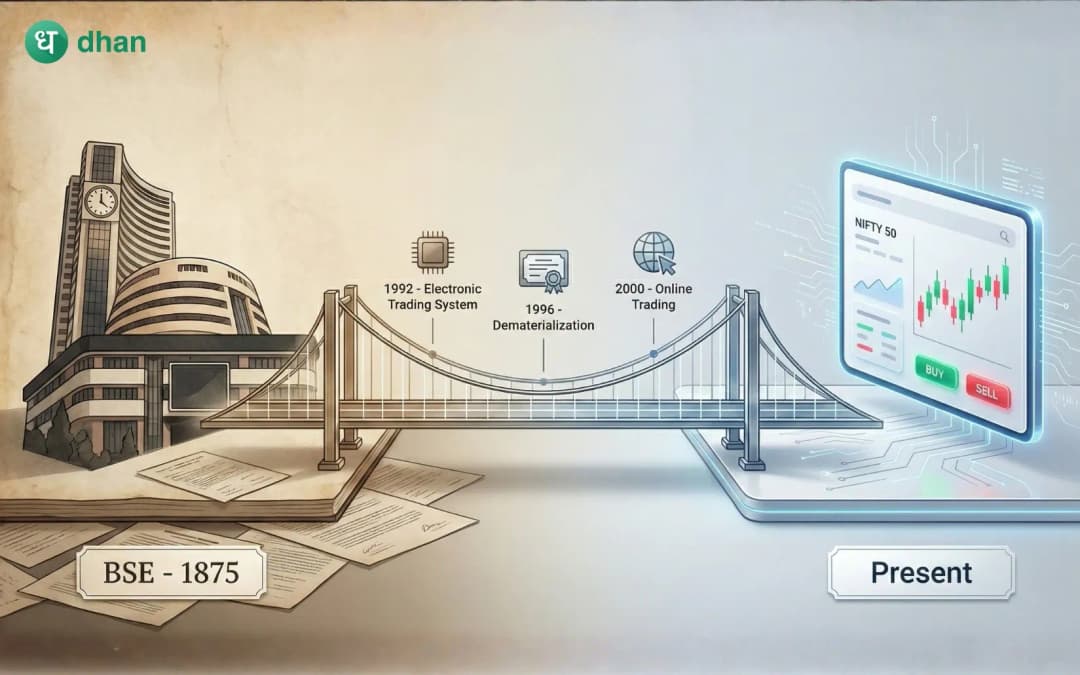



Today, the Indian capital market is accessible to several traders through modern trading platforms. However, the journey of the Indian stock market has not been an easy one. Rather, it has gone through a number of milestones that have played a major role in the development of the Indian stock market.
In this blog, we will explore the development and history of the stock market in India, which has helped it to reach the stature that it is today.
The early days of stock trading in India
The history of the stock market in India can be dated back to the mid-1800s, when the British ruled the country. The Indian economy was growing with the growth of industries such as cotton mills, textiles and banking. These sectors needed finance for expansion, and the idea of issuing stocks was one of the most prominent means of raising funds from the public.
However, there was no stock exchange at that time. A small number of stock brokers transacted in the trading of these shares among themselves at Bombay, now called Mumbai. According to records, there were 20 to 25 stock brokers who used to trade amongst themselves at a place near Town Hall, under a banyan tree.
As the volume of trade and number of traders increased, the stock brokers shifted their meeting place to Dalal Street, which became synonymous with Indian financial markets. During this time, there were several restrictions on stock trading, such as:
- The trading was based on personal negotiations between stockbrokers.
- Share certificates were issued and transferred physically.
- There was no set of rules for trading in the absence of regulatory authorities.
Despite the challenges, the system paved the way to the establishment of the first stock exchange in India, known as the Bombay Stock Exchange.
Establishment of the Bombay Stock Exchange (1875)
In 1875, the stock brokers operating in Bombay formally organised themselves into an association called the Native Share and Stock Brokers' Association, which later became the Bombay Stock Exchange (BSE).
The BSE was the starting point of organised trading in India. Over the years, BSE became the centre of capital markets in India, and it has played a significant role in financing the growth of India's industries. The milestones in the growth of BSE are:
- It is the oldest stock exchange in Asia, which was established in 1875.
- It is recognised under the Securities Contracts (Regulation) Act, 1956.
- It has created modern trading systems and market infrastructure.
Today, BSE is located in the Phiroze Jeejeebhoy Towers in Dalal Street, Mumbai and is one of the top stock exchanges in India.
Development of market indices – Sensex (1986)
As the number of participants in the Indian stock market increased and more and more companies got listed in the BSE, there was a need to measure the performance of the stock market. To solve this problem, the BSE launched its Index called Sensex in 1986.
Sensex tracks the performance of the top 30 largest and most actively traded stocks on BSE. These stocks come from various sectors such as banking, information technology, energy and consumer goods.
The Sensex is regarded as an indicator of the health of the Indian stock market. Investors, analysts, and policymakers use it to understand the trends in the market. An increasing Sensex indicates that the market is healthy, and a falling Sensex indicates that the market is uncertain.
Establishment of SEBI (1988)
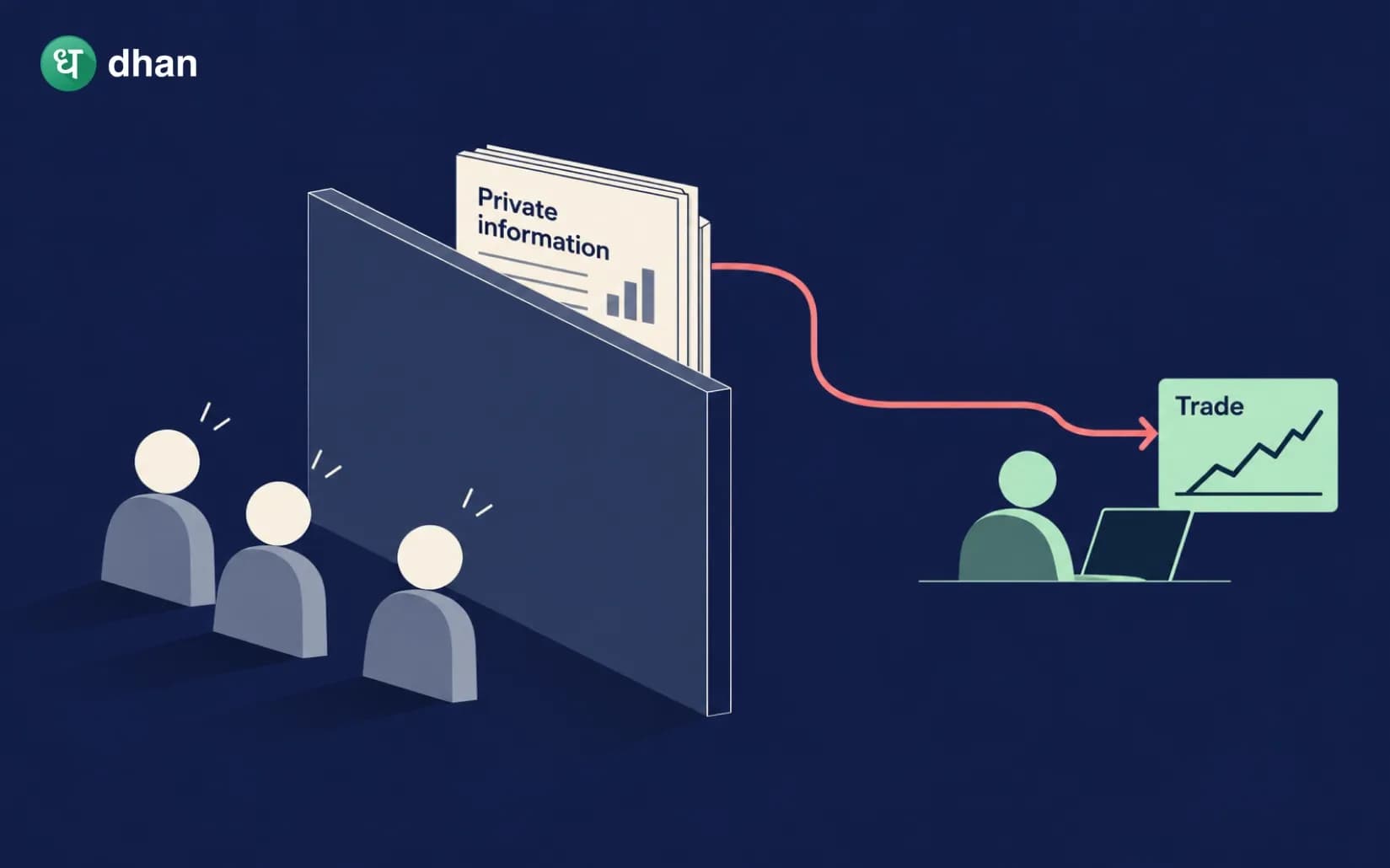
The Indian stock market experienced tremendous growth in the 1980s. However, this tremendous growth was accompanied by the problems of market manipulation, insider trading, and a lack of transparency.
The Government of India formed the Securities Exchange Board of India (SEBI) in 1988 with the aim of protecting the interests of investors and regulating the financial market.
The SEBI was formed as a non-statutory organisation. However, with the SEBI Act of 1992, SEBI was given the status of a regulator of the securities market after the occurrence of some financial irregularities.
SEBI is entrusted with the responsibility of supervising and regulating various participants in the capital markets, such as stock exchanges, brokers, mutual funds and portfolio managers. Its objectives include:
- Protecting the interests of the investors
- Bringing transparency to the Indian financial markets
- Regulating the intermediaries in the market
- Avoiding fraudulent and unfair trade practices
Today, SEBI is playing a central role in bringing stability and confidence to investors in Indian financial markets.
The 1992 securities scam and market reforms
One of the defining moments in the history of the Indian stock market was the Harshad Mehta securities scam of 1992.
Harshad Mehta was a stockbroker who exploited loopholes in the banking system to funnel large sums of money into the stock market. By artificially inflating the stock prices, he had caused a stock market rally, which eventually crashed down when the fraud became known.
The scandal led to massive losses to the investors and crippled their confidence in the Indian financial system. However, the scam also led to some major reforms, such as:
- Strengthening the powers of SEBI.
- Introducing norms of disclosure.
- Improving financial markets monitoring systems.
These reforms ultimately helped to create a more transparent and regulated market environment.
Setting up of the National Stock Exchange (1992–1994)
In order to modernise the Indian capital markets and to bring in more transparency, the National Stock Exchange of India (NSE) was set up in 1992.
Unlike traditional exchanges, which operated with physical trading floors, the NSE introduced electronic screen-based trading; this time, investors all over the country could participate in the financial market using computer networks.
The NSE was recognised as a stock exchange in 1993, and trading started in 1994. Initially, NSE started with the wholesale debt markets segment, later with the equity trading segment and later on with the derivatives markets.
Transition from floor trading to electronic trading
Before NSE, stock trading in India was mostly done by an open outcry method, where brokers would gather on the trading floor and verbally communicate buy and sell orders. Whilst this method was in use for some decades, it was inefficient and subject to human error.
In 1995, the Bombay Stock Exchange introduced the BOLT (BSE Online Trading for BSE) system, wherein orders could be placed in an electronic manner. Electronic trading systems had the following advantages:
- Faster order execution
- Increased transparency
- Less room for manipulation of the market
- Nationwide access to investors
This transition was a huge step towards the modernisation of the Indian stock market infrastructure.
Introduction of Demat accounts (1996)
Before the mid-1990s, investors held shares as physical certificates, which often got lost, stolen, forged and required lengthy transfer procedures.
To overcome these issues, the paper share certificates were replaced with the dematerialisation of the securities in 1996, which allows the investor to hold shares electronically via Demat accounts.
Two depositories were established for this purpose:
- National Securities Depository Limited, NSDL
- Central Depository Services Limited, CDSL
👉 Understand the difference between NSDL & CDSL demat account here.
Dematerialisation led to the reduction of time in the trading and settlement process, and made trading in Indian financial markets more efficient and safer. Today, nearly all securities transactions in India are done through Demat accounts.
Growth of derivatives trading in India
Another milestone in the growth of the Indian stock market was the introduction of derivatives trading in 2000.
Derivatives are financial contracts whose value is determined by underlying assets such as stocks, indices, or commodities.
The NSE introduced the trading of index futures in June 2000 and later options trading and stock futures. These instruments enable the investor to:
- Hedge against market risks.
- Make speculations about price movement.
- Manage portfolio exposure.
Over the years, India has emerged as the largest derivative market in the world when it comes to trading volume.
Rise of online trading platforms
The next stage in the growth of the Indian stock market was the introduction of online trading platforms and discount brokers in 2010.
The technological developments have made it possible to buy and sell securities directly from websites and mobile applications. Online trading platforms brought several innovations, including:
- Paperless account opening through Digital Know Your Customer (D-KYC)
- Low-cost brokerage models
- Trading applications for mobile devices
- Real-time market data & analytics
These developments played a major role in getting more retail participation in the Indian stock market.
Modern Indian stock market
Today, the Indian stock market is one of the most technologically advanced financial markets in the world.
Stock exchanges such as BSE and NSE have complex trading systems that handle millions of orders that occur daily. Nowadays, trading practices include:
- Algorithmic trading
- High-frequency trading
- Real-time settlement systems
- Advanced risk management tools
India has adopted the T+1 settlement cycles for quick clearing and settlement of the trades.
Future of the Indian stock market
The future of the Indian stock market is bright with rising growth in the Indian economy and increasing investor participation.
Several factors are likely to contribute to future growth, including financial literacy, growth of digital trading platforms and more startups initiating initial public offerings (IPOs).
The government is also taking initiatives to strengthen financial markets and investor protection to contribute towards the further development of India's capital markets.
Conclusion
The history of the stock market in India is representative of the overall development of the country's financial system. From trading under a banyan tree in Mumbai to the modern-day electronic exchanges that handle millions of transactions in a day, it has been quite a journey.
Key developments include the establishment of the Bombay Stock Exchange, SEBI, National Stock Exchange and the introduction of the electronic trading systems, which have shaped the modern Indian capital market.
As technology continually develops and more investors join the Indian stock market, it is likely to have an even greater role to play in the economic growth of the country.
FAQs
1. Which is the oldest stock exchange in India?
The Bombay Stock Exchange (BSE) is the oldest in India, and is also the oldest in Asia. It was formally set up in 1875 as The Native Share & Stock Brokers Association by Premchand Roychand.
2. What is the role of SEBI in the Indian stock market?
SEBI (Securities and Exchange Board of India) is the main regulatory body of the securities market in India. SEBI was established with statutory powers in 1992, and its main objectives include protecting the interests of investors, promoting the development of the Indian financial market and regulating the securities market. It oversees stock exchanges, brokers, mutual funds and other market intermediaries and makes sure that they follow fair and transparent practices.
3. What is the difference between BSE and NSE?
While both of them are the main stock exchanges of India, BSE is much older (established in 1875) with more than 5000 listed companies. Its benchmark Index is Sensex (30 companies). The NSE is relatively new (founded in 1992), and it was the forerunner in setting up electronic trading in India and has a benchmark index, called the Nifty 50. The NSE has more daily trading volume at present, in the derivatives (Futures & Options) segment.
4. What is the current settlement cycle for equities in the Indian stock market?
The present standard cycle of settlement of Equities is T+1 (Trade + 1 day), which was implemented in January 2023. This means that the funds and securities are settled on the next working day after the trade is conducted, which increases the capital efficiency and mitigates the risk to a great extent.
5. What is Dematerialisation (Demat)?
Dematerialisation is the process of transforming physical share certificates into electronic or digital format. This system was brought to India in 1996 by the depositories (NSDL, CDSL, etc.) to eliminate the risks associated with physical share certificates, like fake certificates, theft, and delays in stock settlement.