Home
Silver Rates
cityimages

Silver Rate Today

as on 22 Feb '26
coin
1 kg
2,69,629.00
(+5.04%)
coin
100 gm
26,962.90
(+5.04%)
coin
10 gm
269.63
(+5.04%)
Overview
Price by Cities
10 Days Trend
Monthly Trend
Silver 101
FAQs

Silver Rate Graph


Cost of Silver in Top Indian Cities

Cities
silvercoin1kg Silver
silvercoin100g Silver
silvercoin10g Silver
gold candle
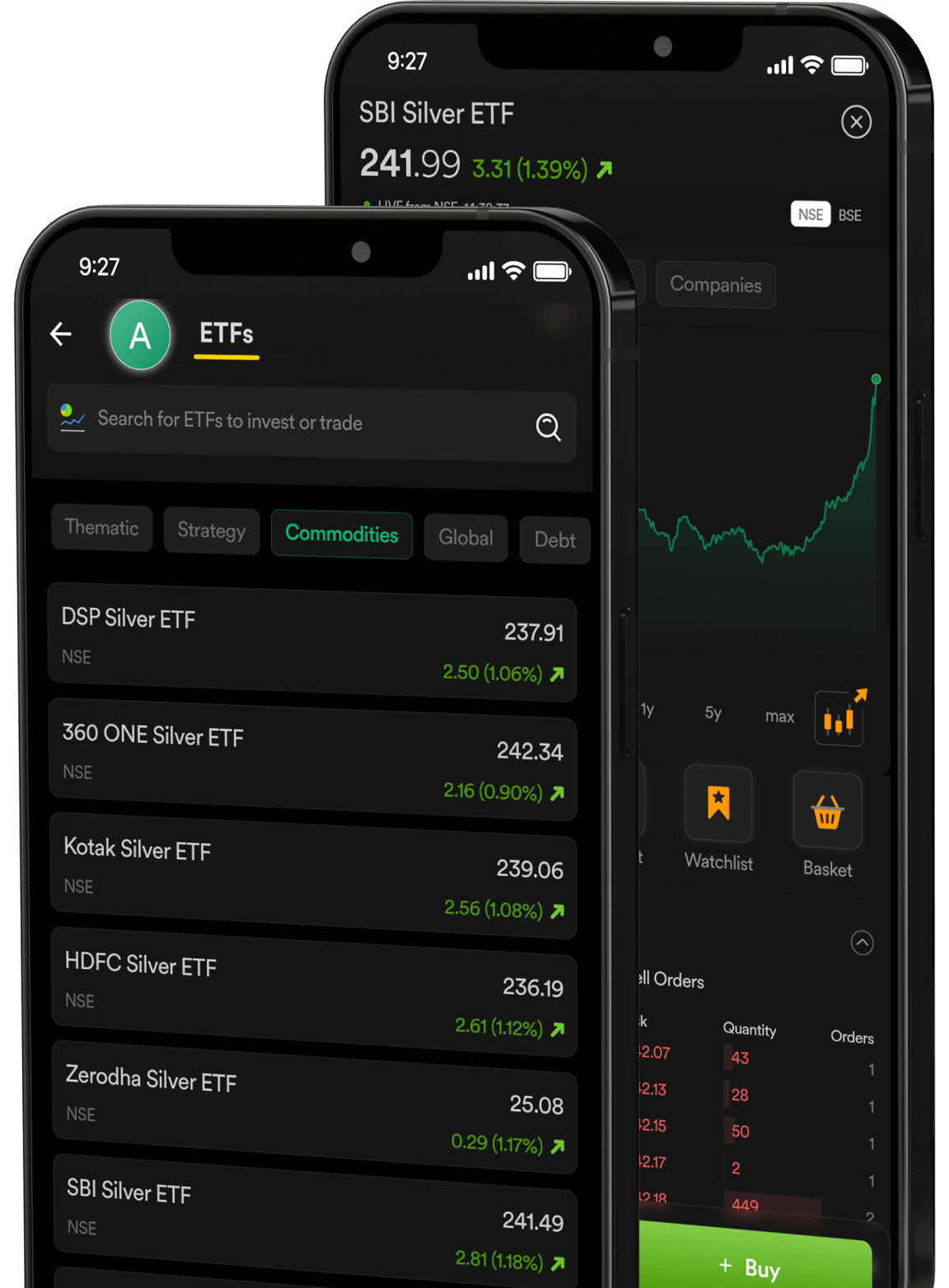
Create wealth with stability by investing in Silver ETFs

Last 10 Days Silver Price in India

gold coins
Add Silver to your portfolio with Silver Mutual Funds

Monthly Trend of Silver Rate


Silver 101

Silver has been a part of Indian culture and economy for millennia, where it has been used both as a precious metal for ornaments and as a valuable investment asset. India is one of the biggest consumers of silver in the world, and its silver demand is being driven by jewellery, industrial applications and investment purposes.
Understanding silver prices and their fluctuations, as well as different investments, is a must for traditional buyers and modern investors. Here is the overview of the silver rate in India.
Silver's history in India goes back to ancient times, with evidence from archaeological sites dating back to the Indus Valley Civilisation. Excavations in Harappan sites have found silver ornaments, utensils, and decorative pieces, indicating that silver was a precious metal even during the prehistoric period in India.
Ancient Indian texts like the Vedas mention silver by its Sanskrit name 'Rajata'. The silver metal was used extensively for making coins, vessels and jewellery during various Indian dynasties. The silver punch-marked coins were issued by the Mauryan Empire, and the silver drachmas were introduced by the Indo-Greek kingdoms, which circulated widely in northern India.
During the Mughal period, silver was an important currency in the Indian system. The rupee, a silver coin introduced by Sher Shah Suri, became the standard coin. The British colonial period continued to use silver in coinage until the mid of the 20th century.
Post-independence, India's silver market developed significantly. Economic liberalisation in 1991 opened up silver imports and linked the silver trade in India with the rest of the world. According to the World Silver Survey, the demand for silver in India has been consistently increasing, making it one of the top consumers of silver in the world, with demand spread across industrial, jewellery and investment sectors.
Silver is often referred to as the hybrid metal because of its unique position between being both a monetary asset (like gold) and an industrial commodity (like copper). Its worth is based on this dual nature:
  • Strategic asset: In the modern economy, silver is more than a precious metal; it is a critical strategic asset. It is one of the most electrically conductive materials and is irreplaceable in the transition journey to the modern green economy.
  • Store of value: Similar to gold, silver historically maintains its purchasing power over long periods, serving both as a hedge against inflation and currency.
  • Accessibility: Often referred to as the poor man's gold, silver is significantly more affordable than gold, making it accessible to small retail investors in India who want to gain exposure to the precious metals market.
  • Cultural significance: In India, silver anklets and vessels are known as Stridhan (wealth of women), which ensures financial security to women in emergencies.
While gold is often stored in vaults and jewellery boxes, silver is consumed for industrial purposes. Approximately 50% of the total global silver mined is used in industrial applications. Some industrial uses of Silver are:
  • Solar energy (Photovoltaics): This is the largest industrial driver of silver use. Silver is used in solar panels to conduct electricity. With the global shift to renewable energy, the demand for silver in the solar industry has skyrocketed.
  • Electric vehicles (EVs): An average EV vehicle consumes nearly twice as much silver as an internal combustion engine (ICE). It is used in battery packs, electrical contacts, and the complicated electronics that manage the vehicle.
  • Electronics & 5G: Almost every computer, mobile phone, and 5G tower contains silver, as it is the best conductor of electricity and also does not corrode easily.
  • Medical applications: Silver is a potent antimicrobial agent. Thus, it is used in wound dressings, creams, and as coatings for surgical instruments to prevent infections.
  • Brazing & soldering: Silver alloys are used in joining metal pipes, air conditioning parts and refrigeration.
There is often confusion among buyers regarding the terminology used for silver purity versus gold. Karat is used for Gold, not Silver. The term Karat (e.g. 22K, 24K) represents Gold purity only. Silver purity is not represented in karats. Silver purity is measured in fineness or percentage. It is a measure of the parts of pure silver per 1,000 parts of the alloy.
  • Fine silver (999) - This is the purist form of commercially available silver, as it is 99.9% pure silver. Also known as three nines fine, it is extremely soft and malleable and is thus unsuitable for everyday jewellery but best suited for physical investment products such as coins and bars.
  • Britannia silver (958) - Britannia silver has a purity of 95.8% pure silver and 4.2% as a mixture of other metals, usually copper. Historically, Britannia silver was important in an attempt to stop silversmiths from melting down sterling silver coins. It is less common in India, but some premium pieces of silver may use this standard.
  • Sterling silver (925) - Sterling silver is the most common standard of silver used for making jewellery and decorative objects. It contains 92.5% of pure silver and 7.5% other metals (usually copper). The addition of copper makes it more durable and harder, which makes it practical for everyday wear. Most of the silver jewellery sold all over the world, including India, is made according to this standard.
  • Coin silver (900) - Coin silver is 90% pure silver and was used in the making of coins. While less common today for jewellery, some pieces of vintage jewellery still follow this purity standard.
  • German silver (0%) - Despite its name, German silver contains no actual silver. It's an alloy of copper, nickel and zinc that looks like silver. German silver is not true silver and should not be confused with pure silver products.
Hallmarking is used to ensure the authenticity and purity of silver products. In India, the Bureau of Indian Standards (BIS) is responsible for the hallmarking of precious metals such as silver. A BIS hallmark on silver items certifies the claimed purity and provides traceability. The hallmark includes:
  • BIS logo: Shows certification by the Bureau of Indian Standards.
  • Purity/Fineness number: Indicates the silver content (i.e., 925 for sterling silver, 999 for fine silver).
  • Assaying and hallmarking centre mark: Identifies the centre that tested and certified the item.
  • Jeweller's identification mark: A code on an item that uniquely identifies the manufacturer or the seller.
  • HUID (Hallmark unique identification): Six-digit alphanumeric code for digital traceability.
Silver prices in India are affected by many global factors because India imports silver to fulfil its silver needs. Understanding these factors helps investors anticipate future silver price movements:
  • US dollar strength: Since silver is traded globally in US dollars, the strength of the dollar has an inverse effect on silver prices. A stronger dollar causes silver to be more costly to those who purchase it with other currencies, which can lead to a decrease in demand and vice versa.
  • Industrial demand: Unlike gold, silver has significant industrial uses. Economic growth, especially in the manufacturing, electronics and renewable energy sectors, has a direct impact on silver demand.
  • Interest rates: Changes in interest rates, particularly by the US Federal Reserve, have a significant impact on silver prices. Higher rates of interest make holding non-yielding assets such as silver more costly and can lead to a decline in silver demand. Lower rates make silver more attractive as an investment option.
  • Mining supply: Silver production from mines has a direct impact on global silver supply. Disruptions in key silver-producing nations, new mining regulations, or exhaustion of existing mines are reducing silver supply and driving up silver prices.
  • Gold-silver ratio: The historical relationship between gold and silver prices is useful for investors to determine relative value. When the ratio of gold to silver is high (i.e., when the price of gold is high compared to the price of silver), investors perceive silver as undervalued and buy more silver.
  • Geopolitical events: Political instability, trade tensions, or conflicts can push investors towards safe-haven assets such as silver, driving up the demand and price of silver during economic uncertainty.
  • Solar energy growth: The growing solar panel industry has a significant impact on silver demand because each solar panel requires 15-20 grams of silver. Growing renewable energy adoption is driving up industrial silver consumption.
Silver tends to exhibit counter-cyclical behaviour relative to equity markets. During periods of stock market volatility, investors turn to safe-haven assets, which drives up silver prices. Conversely, when equity markets perform well, some investors sell their silver investments, potentially lowering silver prices. However, this relationship isn't absolute, as silver's large industrial uses can sometimes be correlated with positive equity markets during economic expansion phases.
Since India is a net importer of silver, the USD/INR exchange rate directly affects the domestic price of silver. When the value of the Indian Rupee falls against the US Dollar, silver imports become more expensive, which implies higher domestic prices and vice versa.
For investors looking to gain exposure to silver without the hassles of physical storage, there exist several investment options for market participants.
  • Silver ETFs (Exchange Traded Funds): Silver ETFs are professionally managed funds that invest in silver-related assets. These ETFs are listed and traded on stock exchanges like the NSE and BSE. They have high liquidity, thus they can be bought and sold easily during trading hours, just like stocks.
  • Silver mutual funds: These mutual fund schemes invest in different Silver ETFs and provide indirect exposure to silver. They offer professional management and are suitable for investors who prefer systematic approaches to investment.
  • Digital silver: There are several companies that offer digital silver in partnership with reputed entities to buy and sell silver in small sizes. Digital silver offers the opportunity to buy in fractional grams with no physical storage. These silver investments are backed up by the actual physical holdings of silver in secure vaults.
  • Silver futures and options: Traded on commodity exchanges such as the Multi-Commodity Exchange (MCX). Silver Futures and options are available to market participants to take positions on the future price of silver. These require an understanding of leverage and carry higher risk with attractive opportunities for hedging and speculation.
Investing in silver via financial instruments has several advantages over holding physical silver:
AspectSilver ETFs/Mutual Funds
Physical Silver
StorageNo storage required; held in digital formRequires secure storage; risk of theft
LiquidityHigh liquidity; can sell instantly during market hoursLower liquidity; finding buyers may take time
CostsNo making charges; only fund management feesMaking charges (5-15%) for jewellery, storage costs
Purity concernsGuaranteed purity tracking benchmarkRequires verification; risk of impurity
Transaction easeInstant buying/selling through trading platformsPhysical inspection and verification needed
Minimum investmentCan invest small amounts (even buy fractional units)Minimum purchase quantities may apply
TransparencyPrices linked to market rates, ensuring complete transparencyPricing may vary by jeweller; less transparent
Additional benefits:
  • Tax efficiency: Financial instruments like Silver ETFs are more tax-efficient in the long term.
  • Diversification: Provides diversification to portfolios with core holdings in stocks and bonds.
  • No wastage: Physical silver jewellery has wastage during making, which is not recovered in sales.
  • Convenience: Can be easily bought and sold through demat accounts.
In Indian culture, the buying of silver on auspicious occasions is said to bring prosperity and good fortune. Favourable days for buying silver are:
  • Dhanteras: As per the Hindu tradition, silver is bought on this day to bring wealth and prosperity. Silver coins, utensils and jewellery are often purchased on Dhanteras.
  • Akshaya Tritiya: This is an auspicious day of the Hindu calendar and is considered good for making investments in silver.
  • Diwali: Many investors buy silver coins or jewellery on the occasion of Diwali as a part of the Lakshmi Puja celebrations. Indian stock exchanges also have a special Muhurat trading session on this day.
  • Pushya Nakshatra: This is an auspicious stellar constellation, and it occurs several times a year, making it auspicious to buy precious metals. When the Pushya Nakshatra falls on Thursday (Guru Pushya Amrit Yoga), then it is considered extremely auspicious to buy silver.
  • Ugadi and Gudi Padwa: These festivals are the New Year celebrations celebrated in different parts of the country and are supposed to be new beginnings in the Hindu religion. This is considered to be an auspicious time to invest in silver for good fortune for the whole year.
  • Navratri: The nine-day festival of Goddess Durga is considered auspicious for making big purchases (including silver).
The best time to buy silver really depends on market trends, economic indicators and an individual's investment goals. Historically, silver prices can be volatile over the short term but appreciated in the long term. Investors often look for periods of market downtrends or reduced demand to purchase silver at better prices.
Monitoring global economic conditions, US Dollar strength and interest rate changes may help identify potential buying opportunities. While the auspicious days do have a cultural and emotional value, they may not necessarily have the lowest silver prices.
Festivals have a large influence on the demand and silver price in India and contribute to a predictable seasonal behaviour in the silver market.
  • Demand surge: The major festivals such as Dhanteras, Diwali, Akshaya Tritiya, etc., cause a huge surge in the silver price.
  • Price impact: The increase in demand for silver items due to festivals and the shortage of silver production leads to an increase in the price of silver.
  • Wedding season: India's wedding season brings in large sales of silver jewellery. Gifting of silver items in weddings is a part of Indian tradition, and this leads to an increase in demand for silver ornaments in wedding months.
  • Cultural purchases: Apart from jewellery, festivals are a significant factor in purchases of silver idols, puja articles and decorative articles for religious ceremonies, which contribute to the aggregate demand for silver.
Some interesting facts about silver are:
  • Best reflector: Polished silver reflects 95% of the visible light spectrum, thus silver is used as a coating in high-quality mirrors, telescopes and microscopes.
  • Born with a Silver spoon: This phrase is not just about wealth; it is also about health. Historically, wealthy families would feed their babies with silver spoons because of the self-sanitising (antibacterial) properties of silver. It would kill germs in the food, which would keep the child healthier.
  • India is the biggest Importer: While Mexico and Peru are the biggest producers of silver, India is the biggest importer and consumer of silver.
  • Cloud Seeding: Silver Iodide is the compound used to make artificial rain (cloud seeding) in dry regions.
  • More volatile than gold: The silver prices are known to be 2-3 times more volatile than gold. In a bullish market, silver often outperforms gold in percentage terms, but it also crashes harder than gold in a bearish market.

FAQs of Silver Rates

Investors can buy silver ETFs and silver mutual funds directly from the Dhan platform. These instruments provide exposure to silver investments without physically having to possess the metal. On the Dhan platform, search for silver ETFs or mutual funds and invest with your Demat account.
People purchase silver for many reasons, including as an investment, a hedge, cultural and religious importance, industrial use, affordability and financial security.
The purity of the silver can be checked by looking at the sign of Hallmark on the silver items. ​The hallmark sign is assigned by the Bureau of Indian Standards (BIS), and includes the BIS logo, purity level and a unique HUID number, which are used as an assurance of genuine silver goods.
No, the price of silver is not uniform throughout the world. While global supply and demand factors determine an international benchmark price (usually quoted in USD), local factors result in variations in domestic silver prices. These include import duties and taxes, currency exchange rates, local supply and demand dynamics, making charges and transportation costs.
As of January 2026, it is estimated that there are about 6,41,400 metric tons of silver reserves in the world. However, the actual amount of physical, above-ground silver is much less than this because a significant portion of this silver is consumed in industrial applications or is lost in making jewellery.
The U.S. Geological Survey (USGS) expects there are an estimated 530,000 metric tons of silver reserves still in the ground that are currently economical to mine. Beyond proven reserves, there are still other resources of silver that may become economically feasible with advances in technology or increases in the price of silver.
According to the annual World Silver Survey 2025, the top five silver-producing countries are:
  • Mexico: Approximately 202.2 Million Ounces (24%)
  • China: Approximately 109.3 Million Ounces (13%)
  • Peru: Approximately 107.1 Million Ounces (13%)
  • Chile: Approximately 52 Million Ounces (6%)
  • Bolivia: Approximately 42.6 Million Ounces (5%)
These five countries account for over 60% of the world's total silver mine production. Silver is often extracted as a byproduct of copper, lead, and zinc mining and is not mined specifically.
India has approximately 8,000 metric tons (8 million kilograms) of silver reserves. It is the 11th largest holder of silver reserves in the world. As one of the largest consumers of silver in the world, India is heavily import-dependent to meet its needs for silver.


Turn Silver Prices into
Silver Investments with Dhan

Invest in Silver ETFs & Funds at ₹0 Brokerage
border

Explore  |  Sitemap

*All securities mentioned on this website are exemplary and not recommendatory.

*Current prices on the website are delayed by 15 mins, login to check live prices.

We are bullish on India, we are bullish on India's prospects to be one of the largest economies in the world. We believe that the stock market provides a unique opportunity for all of India's traders and investors to participate in the growth story of the country.

Yet, most investing & trading platforms in India have remained more or less the same over the past decade. Times have changed and retail traders and investors have become smarter about managing their trades and money. Modern traders & investors require an online trading platform that helps them keep up with the technological advancements of our time.

That's why we're building Dhan - to help you trade, to help you invest, and to help you participate in India's growth stock via the stock market with awesome features and an incredible experience.

©2021-2026 Raise Securities Private Limited (formerly Moneylicious Securities Private Limited). All rights reserved. CIN: U74999MH2012PTC433549 Raise Securities is part of Raise Financial Services.

SEBI Stock Broker Registration No: INZ000006031 | Depository Participant (CDSL) ID: IN-DP-289-2016 | SEBI Research Analyst Registration No: INH000023357
Exchange Membership No. : NSE: 90133 | BSE: 6593 | MCX: 56320
Registered & Corporate Office: Unit No. 2201, 22nd Floor, Gold Medal Avenue, S.V. Road, Beside Patel Petrol Pump, Piramal Nagar, Goregaon West, Mumbai – 400104, Customer Care: 9987761000.


For any query / feedback / clarifications, email at help@dhan.co.

In case of grievances for any of the services rendered by Raise Securities Private Limited, please write to grievance@dhan.co (for NSE, BSE and MCX) or grievancedp@dhan.co (for Depository Participant). Please ensure that you carefully read the Risk Disclosure Document as prescribed by SEBI, our Terms of Use and Privacy Policy. Compliance Officer: Mr. Manish Garg and Mobile: 8655740961 Email: complianceofficer@dhan.co To lodge your complaints using SEBI SCORES, click here.


Disclaimer: All communications with the client via chat, phone, or email are for support purposes only. Any commitments or statements made by the agent (human or virtual) shall not be binding on the company.


DHAN is a brand owned by Raise Securities Private Limited. All DHAN clients are registered under Raise Securities Private Limited. Clients are advised to refer to our company as Raise Securities Private Limited when communicating with regulatory authorities.


Procedure to file a complaint on SEBI SCORES: Register on SCORES portal. Mandatory details for filing complaints on SCORES: Name, PAN, Address, Mobile Number, E-mail ID. Benefits: Effective Communication, Speedy redressal of the grievances. You may refer the website https://scores.sebi.gov.in/ for more information. You may also download the SEBI Scores app to log a complaint Android: https://play.google.com store apps sebiscores iOS: https://apps.apple.com app sebiscores.


Disclaimer: Investment in the securities market are subject to market risks, read all the related documents carefully before investing. Brokerage will not exceed the SEBI prescribed limit


Attention investors:

  1. Stock brokers can accept securities as margins from clients only by way of pledge in the depository system w.e.f September 01, 2020.
  2. Update your e-mail and phone number with your stock broker / depository participant and receive OTP directly from depository on your e-mail and/or mobile number to create pledge.
  3. Check your securities / MF / bonds in the consolidated account statement issued by NSDL/CDSL every month.

Note: As a policy we do not give stock tips or recommendations and have not authorized anyone to give this on behalf of us. If you know anyone claiming to be a part of Dhan / / Raise or our associate companies or partners and offering such services, please report us on help@dhan.co. Important Information for Investors: To prevent unauthorized transactions in your trading / demat account, do not share your account details, credentials or any personal details with anyone. Keep your mobile number updated with your Stock Broker, Depository Participant and ensure that the same is registered with Stock Exchanges, Depository and KRAs. You will receive alerts and information on your registered mobile number / email for debit and other important transactions in your demat account directly from CDSL / Exchange on the same day. KYC is one time exercise while dealing in securities markets - once KYC is done through a SEBI registered intermediary (Stock Broker, DP, Mutual Fund, etc.), you need not undergo the same process again when you approach another intermediary. No need to issue cheques by investors while subscribing to IPO. Just write the bank account number and sign in the application form to authorise your bank to make payment in case of allotment. No worries for refund as the money remains in investor's account. This is issued in the interest of investors.


Investors should be cautious on unsolicited emails and SMS advising to buy, sell or hold securities and trade only on the basis of informed decision. Investors are advised to invest after conducting appropriate analysis of respective companies and not to blindly follow unfounded rumours, tips etc. Further, you are also requested to share your knowledge or evidence of systemic wrongdoing, potential frauds or unethical behaviour through the anonymous portal facility provided on BSE & NSE website. Issued in the interest of the investors.


Raise Securities Private Limited also known as Dhan is only an order collection platform that collects orders on behalf of clients and places them on BSE StarMF for execution. Client expressly agrees that Dhan is not liable or responsible and does not represent or warrant any damages regarding non- execution of orders or any incorrect execution of orders with regard to the funds chosen by the client or due to, but not being limited to, any link/system failure, delay in transfer of the funds on account of any unforeseen circumstances/issues in the banking system/payment aggregators or any other problems that may result in a delay in crediting the funds into the BSE Star MF's bank account. Raise Securities Private Limited (Dhan) does not engage in proprietary trading on its own account.


Mutual fund investments are subject to market risks, read all scheme related documents carefully before investing. Dhan is not a distributor or agent of any mutual fund. Mutual Funds are not exchange-traded products. Any related disputes will not have access to the Exchange-investor redressal forum or arbitration mechanism. For other disclaimers please refer https://dhan.co/advertisement-disclaimer/


Download client registration documents (Rights & Obligations, Risk Disclosure Document, Do's & Don'ts) in vernacular language: BSE | NSE | MCX


Kindly, read the Advisory Guidelines of BSE | NSE | MCX for investors as prescribed by the exchange with reference to their circular dated 27th August, 2021 regarding investor awareness and safeguarding client's assets

Important Links: SEBI | BSE | NSE | MCX | CDSL | SCORES | ODR Portal | Investor Charter for Stock Brokers | Investor Charter for DP | Investor Charter for Research Analyst | UCC Advisory | e-Voting for Shareholders | NCL Client Collateral details |
MCXCCL Client Collateral details

Important Information: Terms of Usage | Disclaimers | Privacy Policy | Grievances | Grievances RA | Risk Management Policy | Risk Disclosure | Advertisement Disclaimer | Referral Terms & Conditions | Saarthi 2.0 Mobile App for Investors