Home
Gold Rates

Current Gold Rate in India

24K Gold/10gm
23 Jan '26
1,59,468.00
-77.00(-0.05%)
22K Gold/10gm
23 Jan '26
1,46,179.00
-70.58(-0.05%)
18K Gold/10gm
23 Jan '26
1,19,601.00
-57.75(-0.05%)
Overview
Price by Cities
Last 10 Days Trend
Monthly Trend
Gold 101
FAQs

Gold Rate Graph for India


Cost of Gold in Top Indian Cities

Cities
24K Gold
22K Gold
18K Gold
gold candle
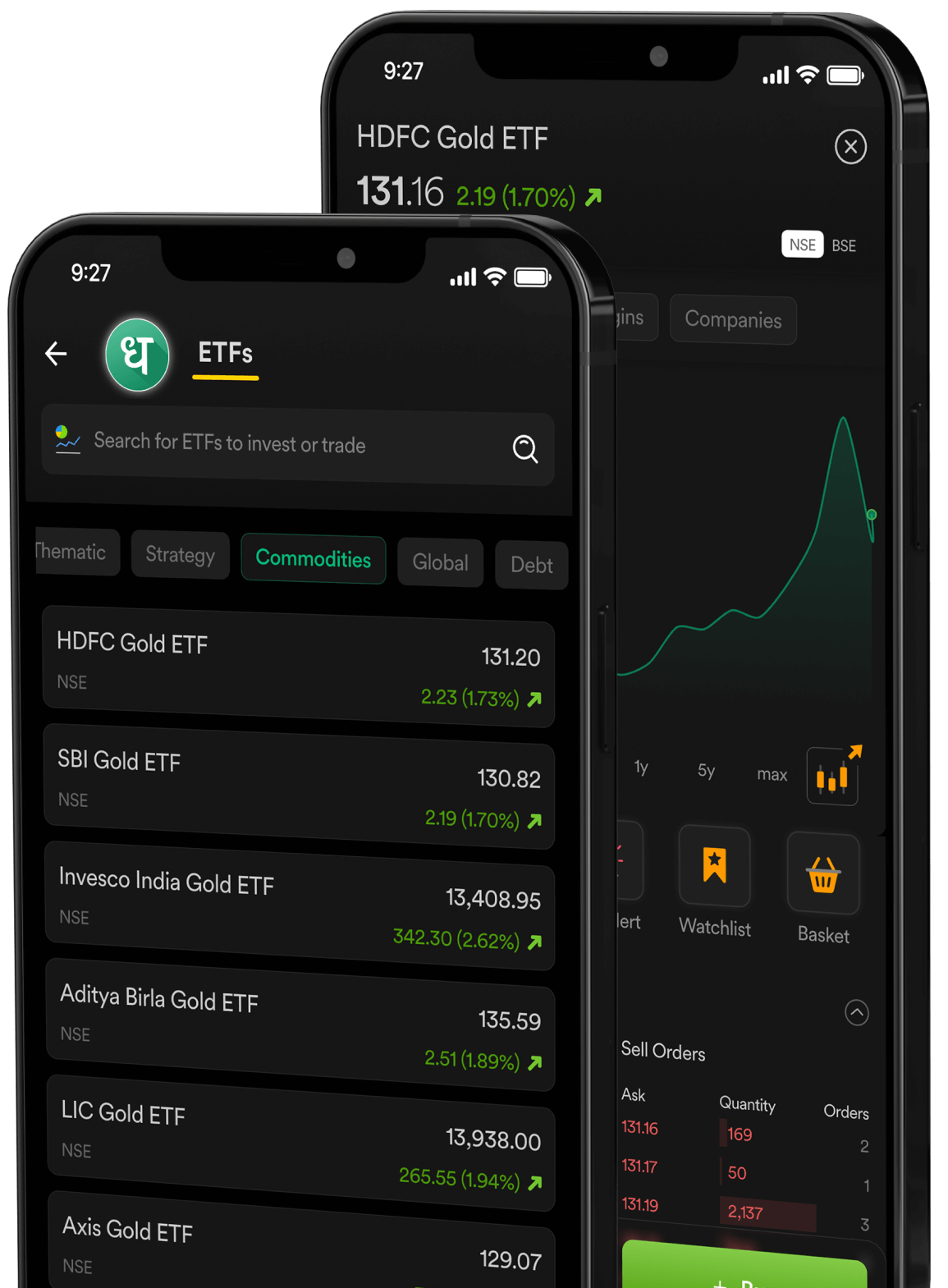
Create wealth with stability by investing in Gold ETFs

Last 10 Days Gold Price in India

Date
24K Gold
22K Gold
18K Gold
23rd January
1,56,840.00
1,43,770.00
1,17,630.00
22nd January
1,55,081.00
1,42,157.58
1,16,310.75
21st January
1,52,280.00
1,39,590.00
1,14,210.00
20th January
1,47,395.00
1,35,112.08
1,10,546.25
19th January
1,43,930.00
1,31,935.83
1,07,947.50
18th January
1,43,930.00
1,31,935.83
1,07,947.50
17th January
1,43,550.00
1,31,587.50
1,07,662.50
16th January
1,43,770.00
1,31,789.17
1,07,827.50
15th January
1,44,150.00
1,32,137.50
1,08,112.50
14th January
1,42,680.00
1,30,790.00
1,07,010.00
gold coins
Add Gold to your portfolio with Gold Mutual Funds

Monthly Trend of Gold Rate

Day
24K Gold
22K Gold
18K Gold
1st January
1,36,350.001,24,987.501,02,262.50
21st January
1,56,840.001,43,770.001,17,630.00
High
(20th Jan)
1,61,340.001,47,895.001,21,005.00
Low
(3rd Jan)
1,35,970.001,24,639.171,01,977.50
Change
+20,490.00(+15.03%)
+18,782.50(+15.03%)
+15,367.50(+15.03%)
Day
24K Gold
22K Gold
18K Gold
1st December
1,30,020.001,19,185.0097,515.00
31st December
1,35,210.001,23,942.501,01,407.50
High
(27th Dec)
1,42,570.001,30,689.171,06,927.50
Low
(8th Dec)
1,29,590.001,18,790.8397,192.50
Change
+5,190.00(+3.99%)
+4,757.50(+3.99%)
+3,892.50(+3.99%)
Day
24K Gold
22K Gold
18K Gold
1st November
1,23,150.001,12,887.5092,362.50
30th November
1,30,630.001,19,744.1797,972.50
High
(30th Nov)
1,30,630.001,19,744.1797,972.50
Low
(4th Nov)
1,21,630.001,11,494.1791,222.50
Change
+7,480.00(+6.07%)
+6,856.67(+6.07%)
+5,610.00(+6.07%)
Day
24K Gold
22K Gold
18K Gold
1st October
1,18,840.001,08,936.6789,130.00
31st October
1,23,150.001,12,887.5092,362.50
High
(16th Oct)
1,32,920.001,21,843.3399,690.00
Low
(2nd Oct)
1,18,680.001,08,790.0089,010.00
Change
+4,310.00(+3.63%)
+3,950.83(+3.63%)
+3,232.50(+3.63%)
Day
24K Gold
22K Gold
18K Gold
1st September
1,06,240.0097,386.6779,680.00
30th September
1,19,390.001,09,440.8389,542.50
High
(30th Sep)
1,19,390.001,09,440.8389,542.50
Low
(1st Sep)
1,06,240.0097,386.6779,680.00
Change
+13,150.00(+12.38%)
+12,054.17(+12.38%)
+9,862.50(+12.38%)
Day
24K Gold
22K Gold
18K Gold
1st August
1,01,500.0093,041.6776,125.00
31st August
1,06,030.0097,194.1779,522.50
High
(31st Aug)
1,06,030.0097,194.1779,522.50
Low
(19th Aug)
1,00,300.0091,941.6775,225.00
Change
+4,530.00(+4.46%)
+4,152.50(+4.46%)
+3,397.50(+4.46%)

Gold 101

Gold holds a high regard among the people of India because of its divine significance and as a symbol of ancient heritage. In India, people like to wear gold jewellery on festivals, big functions, or any momentous occasion in their life, and its possession often correlates with perceived status. This deep-rooted cultural connection to gold gives rise to its consistent demand, making it an integral part of Indian households passed from one generation to another.
Gold's value stems from several factors. ​It provides investors with a hedge against inflation, especially during economic downturns, and thus it serves as a safe haven for investors. ​For example, when interest rates decrease, the price of gold appreciates. ​Investing in gold gives investors a sense of security, as gold is a tangible asset. Its intrinsic appeal and low supply underlie its value, making it an attractive asset to invest in.
Gold purity is measured in karats in India. A higher karat means purer gold. Therefore, gold exists in different carats in the market. Some popular karats of gold are:
  • 24 Karat Gold: This is the purest form of gold, comprising 100% pure gold with no traces of any other metal. It is known as 99.99% pure gold, which is really soft in nature and hence not used directly in the making of ornaments.
  • 22 Karat Gold: Sometimes also referred to as "standard gold," as it contains about 91.67% pure gold, with a small percentage of impurities of the alloyed metals, such as silver or copper. The added alloys make it more robust and easier to use, allowing gold to be used in the making of jewellery.
  • 18 Karat Gold: This category of gold consists of 75% pure gold; it contains 18 parts of gold and 6 parts of other metals. It is used in fashion jewellery, rings, earrings, and premium watches, where aesthetics meet practicality, as it is less expensive than the above two.
  • 14 Karat Gold: It comprises 58.3% pure gold. 14K gold is well-suited for everyday jewellery due to its increased durability and resistance to scratches and wear.
  • 10 Karat Gold: It contains 41.7% pure gold. It is used in budget costume jewellery, industrial components, and dental work.
Hallmarking is one of the ways through which the Bureau of Indian Standards(BIS) ensures purity and authenticity in gold jewellery. A hallmark tag is a seal of purity for gold products, certifying the claimed purity and engraving the purity level along with the retailer's name.
This initiative brings transparency to gold jewellery shopping and saves consumers from getting duped with impure gold. While hallmarked gold guarantees quality, its price is the same as that of normal gold when sold to consumers.
The price of gold in India is dependent on various global factors, as India imports the majority of its gold from outside. Some global factors that affect gold prices are:
  • Fluctuations in International Markets: Gold prices are heavily dependent on the behaviour of international markets.
  • US Dollar Strength: The US dollar is a global determinant of the price of gold. Normally, if the US dollar strengthens, the price of gold weakens in the global arena.
  • Interest Rates: ​Changes in the interest rates, especially in the US, influence the gold prices. ​There will be a shift in the value of gold whenever there is an increase in interest rates by the US Fed to divert cash from the gold reserves to government securities and banking systems. ​Lower interest rates make gold more attractive because it does not yield interest.
  • Global Economic Development and Volatile Policies: ​A slowdown in global economic development or volatile policies can lead to investors seeking safe havens, pushing up gold demand and prices.
  • Central Bank Gold Reserves: ​If central banks like the Reserve Bank of India buy more gold for reserves, this increases the price of gold because the demand rises and supply is limited.
  • Quantitative Easing: QE brings more money into circulation in the economy, and this excess money coming into gold investments drives up gold prices. Conversely, a withdrawal of QE leads to a fall in gold prices.
Gold often acts as a counter-cyclical asset to the stock market. ​During periods of stock market volatility or economic uncertainty, investors tend to move towards gold as a safe-haven asset, which increases the gold prices. ​Conversely, when the equity markets are doing well, some investors may move out of their investments in gold, which can lead to a decrease in the gold price.
The relationship between gold prices and the USD/INR exchange rate is also significant. ​Since India imports almost all its gold, the value of the Indian Rupee against the US Dollar directly impacts local gold prices. ​When the Rupee value weakens against the Dollar, the cost of imported gold in INR increases, leading to higher domestic gold prices. ​Conversely, a stronger Rupee makes gold cheaper to import, potentially lowering prices in India.
There are several alternatives for investors who want to invest in gold without the hassles of physical storage or paying charges. Some of them are:
  • Gold ETFs: These are traded funds that are professionally managed and invest their corpus in gold. These ETFs or Stocks are listed and traded on the stock exchanges, similar to shares. They offer immediate liquidity, convenience, and track the price of domestic gold.
  • Gold Mutual Funds: These schemes primarily invest in Gold ETFs and related assets, offering another way to gain exposure to gold without holding it physically.
  • Sovereign Gold Bonds: The government periodically issues these government securities. ​They carry a fixed interest rate, like 2.50% credited half-yearly, and their redemption is available at the rate specified by the Reserve Bank of India. ​SGBs avoid risks associated with physical gold, like theft and storage issues.
  • Digital Gold: Many new ​platforms, in association with MMTC-PAMP, allow investors to buy and sell 24 Karat gold digitally. ​This offers investors flexibility in buying gold in small fractions without any storage worries.
Investing in Gold ETFs and mutual funds has numerous advantages over physical gold. Some of those are:
  • No Storage Issues: Digital gold, ETFs, and Gold Mutual Funds save investors from the hassle of storage, theft, or any other issue related to physical gold.
  • Liquidity: Gold ETFs trade on stock exchanges, the same as shares, providing high liquidity to investors as they can be purchased or sold at any moment on stock exchanges.
  • Cost-effectiveness: These investment options do not incur extra charges, such as making charges that are associated with physical gold.
  • Transparency: These option prices are set against the market rates, tracking the price of domestic gold; therefore, they provide complete price transparency to investors.
  • Diversification: By adding Gold ETFs and mutual funds to their portfolio, investors can diversify their investments and mitigate the risks associated with their portfolio.
Sovereign Gold Bonds (SGBs) are a government-backed instrument issued by the RBI, an alternative to physical gold. ​They are denominated in multiples of 1 gram of gold and provide investors with a fixed interest rate of 2.50% per annum, which is credited semi-annually.
SGBs are redeemable at the prevailing gold rate at maturity(8 years) and offer capital appreciation, along with exemption from capital gains tax upon maturity. ​SGBs can be purchased from commercial banks, the Stock Holding Corporation, post offices, and stock exchanges like NSE/BSE, providing easy gold investment accessibility to investors.
In India, buying gold during festivals and auspicious occasions is considered highly prosperous. Some of those days are:
  • Dhanteras: On this day, two days before Diwali, gold is brought in large amounts in India. This day is considered one of the most auspicious days to buy gold.
  • Akshaya Tritiya: It is another highly regarded day to buy gold in Hindu tradition, as buying gold is believed to bring prosperity to buyers.
  • Diwali: During Diwali, a special one-hour muhurat trading occurs to facilitate trading/ investing on the stock market in India, which also includes gold investment options.
  • Pushya Nakshatra: This is a specific stellar constellation that is considered highly favourable for gold investments. It occurs multiple times a year. If it falls on a Thursday, it is called Guru Pushya Amrit Yoga, which is considered exceptionally auspicious for gold buying.
  • Ugadi and Gudi Padwa: These festivals mark the Hindu New Year in various regions and are considered a fresh start, making them good days to invest in gold for prosperity throughout the year.
The ideal time to buy gold varies depending on market trends and the investor's personal financial goals. Historically, gold prices can be volatile in the short term but tend to justify their value in the long run. ​Investing in gold is best suited when its demand is low (off-season) or when prices decrease after a major event, while buying gold investments on auspicious days offers emotional value but often leads to gold buying at hiked prices.
Therefore, investors should keep a close eye on global economic conditions, currency performance (USD/INR), and interest rate movements to buy gold investments on market declines and benefit from lower gold prices.
Festivals significantly impact gold demand and prices in India. ​During auspicious times like Dhanteras, Akshay Tritiya, Diwali, Gudi Padwa, Ugadi, and Pongal / Makar Sankranti, the demand for gold rises, which often leads to a rise in gold prices. ​The limited supply, coupled with an increase in demand, adds to the fluctuation in gold prices. The wedding season also drives considerable gold purchases, leading to higher gold prices.

FAQs of Gold Rates

Investors can buy gold ETFs, gold mutual funds directly through the Dhan platform.
People buy gold for a variety of reasons. Some of those reasons are:
  • Safe Haven: The investment in gold is often considered a hedge against inflation and a safe-haven asset, which helps to diversify the portfolio.
  • Cultural and emotional value: In Indian culture, gold represents prosperity, wealth, and health. Also, the purchase of gold is part of the Indian tradition, especially on the occasion of weddings and festivals.
  • Financial Security: Gold is easily sold in times of financial crises. Therefore, many investors purchase it for ease of access to funds.
  • Status Symbol: Wearing gold jewellery is a fashion and a way to display the social status of a person.
The purity of the gold can be checked by looking at the 'Hallmark' sign on the ornaments. ​The hallmark sign is assigned by the Bureau of Indian Standards (BIS), containing the BIS logo, purity level of the metal, and a unique HUID number, which serves as an assurance and prevention of misrepresentation.
The reason why 22K and 24K gold differ in price is mainly because of their level of purity. 24K gold is 100% pure gold, whereas 22K gold is only around 91.67% pure gold - the rest is other metals mixed into the alloy (such as copper or silver). ​Since 24K gold is purer, it is often more expensive for each gram than 22K gold.
No, gold prices are not uniform all over the world. ​While the international factors, such as the global market conditions, affect the price of gold at a global level, there are some local factors that affect the domestic gold prices as well. ​These include import duties, local taxes (for example, GST in India), making charges, and demand and supply dynamics in local markets, and currency exchange rates. ​For example, the price of 24K gold in India on December 5, 2025, was ₹130,460 per 10 grams, while the price in Dubai was ₹112,816, which is a big difference.
As of December 2025, the estimated 216,265 tonnes of gold reserves have already been mined (mainly used in jewellery, investment, and central bank reserves), and another 64,000 tonnes of reserves are still underground (based on estimates from sources such as Visual Capitalist and the World Gold Council (WGC)).
While exact figures vary, as of December 2025 estimates have it at around 64,000 metric tons (tonnes) or gold in economically viable reserves (known deposits extractable with current tech), with the potential of a lot more in undiscovered or less accessible 'resources'.
As of December 2025, the top 5 gold-producing countries are China (380.2 tonnes), Russia (330.0 tonnes), Australia (284.0 tonnes), Canada (202.1 tonnes), and the United States (158.0 tonnes).
As of December 2025, India has a strong gold reserve amounting to a total of 800 tonnes of gold by the Reserve Bank of India (RBI) late in 2025, one of the top reserves in the world. Also, a large portion of gold in India is in private hands, in the form of jewellery and savings, with a total of trillions of dollars.


Turn Gold Prices into
Smart Investments with Dhan

Invest in Gold ETFs & Funds at ₹0 Brokerage
border

Explore  |  Sitemap

*All securities mentioned on this website are exemplary and not recommendatory.

*Current prices on the website are delayed by 15 mins, login to check live prices.

We are bullish on India, we are bullish on India's prospects to be one of the largest economies in the world. We believe that the stock market provides a unique opportunity for all of India's traders and investors to participate in the growth story of the country.

Yet, most investing & trading platforms in India have remained more or less the same over the past decade. Times have changed and retail traders and investors have become smarter about managing their trades and money. Modern traders & investors require an online trading platform that helps them keep up with the technological advancements of our time.

That's why we're building Dhan - to help you trade, to help you invest, and to help you participate in India's growth stock via the stock market with awesome features and an incredible experience.

©2021-2026 Raise Securities Private Limited (formerly Moneylicious Securities Private Limited). All rights reserved. CIN: U74999MH2012PTC433549 Raise Securities is part of Raise Financial Services.

SEBI Stock Broker Registration No: INZ000006031 | Depository Participant (CDSL) ID: IN-DP-289-2016 | SEBI Research Analyst Registration No: INH000023357
Exchange Membership No. : NSE: 90133 | BSE: 6593 | MCX: 56320
Registered & Corporate Office: Unit No. 2201, 22nd Floor, Gold Medal Avenue, S.V. Road, Beside Patel Petrol Pump, Piramal Nagar, Goregaon West, Mumbai – 400104, Customer Care: 9987761000.


For any query / feedback / clarifications, email at help@dhan.co.

In case of grievances for any of the services rendered by Raise Securities Private Limited, please write to grievance@dhan.co (for NSE, BSE and MCX) or grievancedp@dhan.co (for Depository Participant). Please ensure that you carefully read the Risk Disclosure Document as prescribed by SEBI, our Terms of Use and Privacy Policy. Compliance Officer: Mr. Manish Garg and Mobile: 8655740961 Email: complianceofficer@dhan.co To lodge your complaints using SEBI SCORES, click here.


Disclaimer: All communications with the client via chat, phone, or email are for support purposes only. Any commitments or statements made by the agent (human or virtual) shall not be binding on the company.


DHAN is a brand owned by Raise Securities Private Limited. All DHAN clients are registered under Raise Securities Private Limited. Clients are advised to refer to our company as Raise Securities Private Limited when communicating with regulatory authorities.


Procedure to file a complaint on SEBI SCORES: Register on SCORES portal. Mandatory details for filing complaints on SCORES: Name, PAN, Address, Mobile Number, E-mail ID. Benefits: Effective Communication, Speedy redressal of the grievances


Disclaimer: Investment in the securities market are subject to market risks, read all the related documents carefully before investing. Brokerage will not exceed the SEBI prescribed limit


Attention investors:

  1. Stock brokers can accept securities as margins from clients only by way of pledge in the depository system w.e.f September 01, 2020.
  2. Update your e-mail and phone number with your stock broker / depository participant and receive OTP directly from depository on your e-mail and/or mobile number to create pledge.
  3. Check your securities / MF / bonds in the consolidated account statement issued by NSDL/CDSL every month.

Note: As a policy we do not give stock tips or recommendations and have not authorized anyone to give this on behalf of us. If you know anyone claiming to be a part of Dhan / / Raise or our associate companies or partners and offering such services, please report us on help@dhan.co. Important Information for Investors: To prevent unauthorized transactions in your trading / demat account, do not share your account details, credentials or any personal details with anyone. Keep your mobile number updated with your Stock Broker, Depository Participant and ensure that the same is registered with Stock Exchanges, Depository and KRAs. You will receive alerts and information on your registered mobile number / email for debit and other important transactions in your demat account directly from CDSL / Exchange on the same day. KYC is one time exercise while dealing in securities markets - once KYC is done through a SEBI registered intermediary (Stock Broker, DP, Mutual Fund, etc.), you need not undergo the same process again when you approach another intermediary. No need to issue cheques by investors while subscribing to IPO. Just write the bank account number and sign in the application form to authorise your bank to make payment in case of allotment. No worries for refund as the money remains in investor's account. This is issued in the interest of investors.


Investors should be cautious on unsolicited emails and SMS advising to buy, sell or hold securities and trade only on the basis of informed decision. Investors are advised to invest after conducting appropriate analysis of respective companies and not to blindly follow unfounded rumours, tips etc. Further, you are also requested to share your knowledge or evidence of systemic wrongdoing, potential frauds or unethical behaviour through the anonymous portal facility provided on BSE & NSE website. Issued in the interest of the investors.


Raise Securities Private Limited also known as Dhan is only an order collection platform that collects orders on behalf of clients and places them on BSE StarMF for execution. Client expressly agrees that Dhan is not liable or responsible and does not represent or warrant any damages regarding non- execution of orders or any incorrect execution of orders with regard to the funds chosen by the client or due to, but not being limited to, any link/system failure, delay in transfer of the funds on account of any unforeseen circumstances/issues in the banking system/payment aggregators or any other problems that may result in a delay in crediting the funds into the BSE Star MF's bank account.


Mutual fund investments are subject to market risks, read all scheme related documents carefully before investing. Dhan is not a distributor or agent of any mutual fund. Mutual Funds are not exchange-traded products. Any related disputes will not have access to the Exchange-investor redressal forum or arbitration mechanism. For other disclaimers please refer https://dhan.co/advertisement-disclaimer/


Download client registration documents (Rights & Obligations, Risk Disclosure Document, Do's & Don'ts) in vernacular language: BSE | NSE | MCX


Kindly, read the Advisory Guidelines of BSE | NSE | MCX for investors as prescribed by the exchange with reference to their circular dated 27th August, 2021 regarding investor awareness and safeguarding client's assets


Important Links: SEBI | BSE | NSE | MCX | CDSL | SCORES | ODR Portal | Investor Charter for Stock Brokers | Investor Charter for DP | Investor Charter for Research Analyst | UCC Advisory | e-Voting for Shareholders | NCL Client Collateral details |
MCXCCL Client Collateral details

Important Information: Terms of Usage | Disclaimers | Privacy Policy | Grievances | Grievances RA | Risk Management Policy | Risk Disclosure | Advertisement Disclaimer | Referral Terms & Conditions | Saarthi 2.0 Mobile App for Investors